
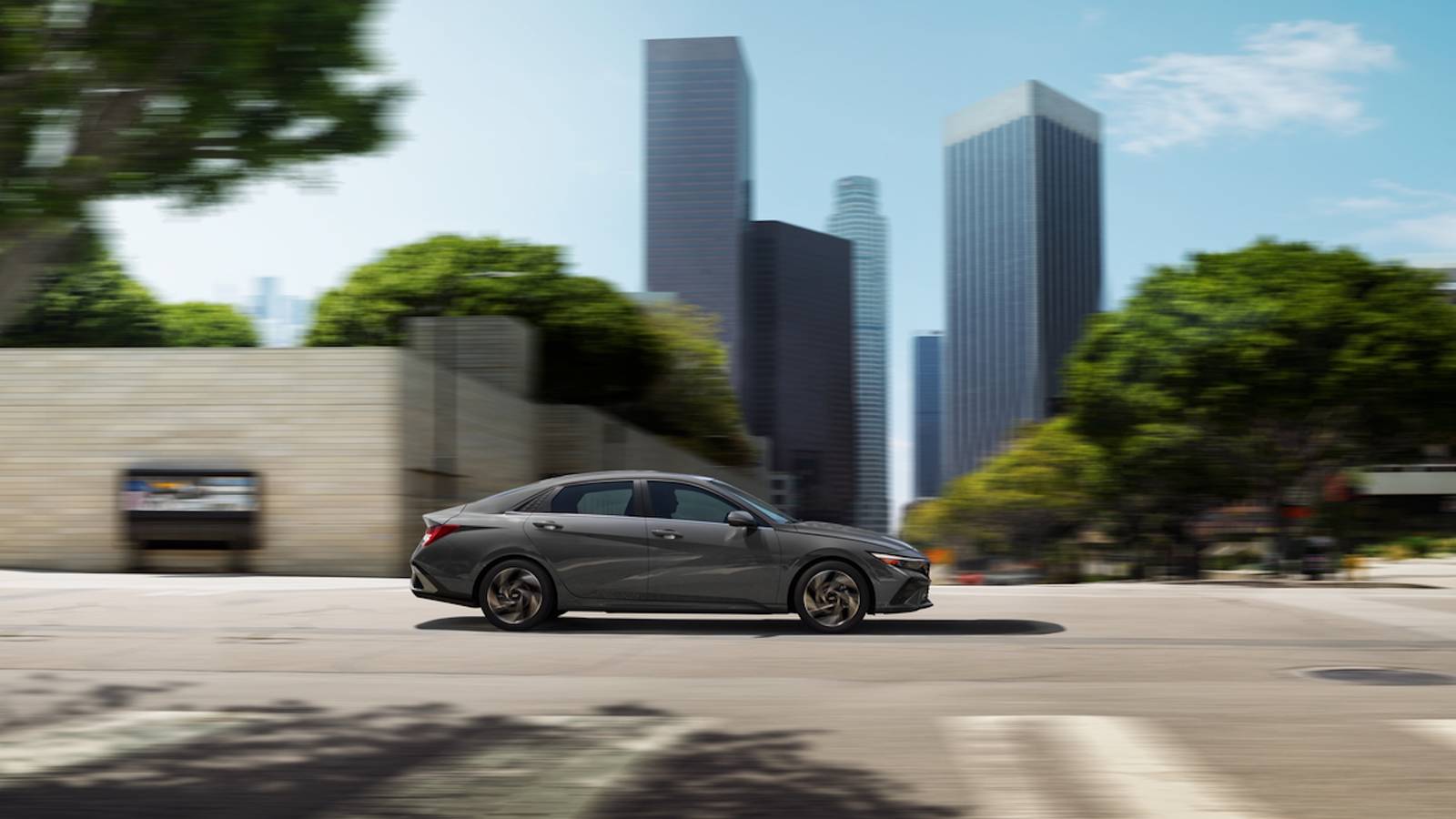
The Toyota Corolla Hybrid has become the default answer for sensible car buyers. You want efficiency, anonymity, something that just won’t stop working, done. But default doesn’t always mean best, and in the stampede toward the safest possible choice, something genuinely compelling is getting ignored in the corner of the showroom. The 2026 Hyundai Elantra Hybrid has the mileage, tech, comfort, and price to go toe-to-toe with Toyota’s golden child, yet shoppers breeze right past it like it’s a display refrigerator at a furniture store.
That’s the strange part. Hyundai finally built exactly what compact-sedan buyers say they want: real-world 50-ish mpg capability, a surprisingly upscale interior, the industry’s friendliest warranty, and styling that doesn’t look like a rental car melted in the sun. And still, crickets. If you’re hybrid-curious but don’t want to drive the same car as every Lyft driver in town, the Elantra Hybrid might be the answer to your hybrid woes.
The Hyundai Elantra Hybrid Might Surprise You

Hyundai has engineered the Elantra Hybrid to feel more composed than most compact hybrids. The 2026 Elantra Hybrid uses a naturally aspirated 1.6-liter inline-four paired with an electric motor to deliver a combined output that balances spirited acceleration with excellent fuel efficiency. While this isn’t a sports car, the integration between electric assist and gasoline delivers some real zip. The suspension tuning leans slightly toward comfort without sacrificing stability on twisty pavement, resulting in a ride quality that’s both composed and confidence-inspiring.

Fuel economy ratings rival those of the Corolla Hybrid without the lethargic response often associated with economy-oriented cars. Whether merging onto the interstate or navigating crowded city streets, the Elantra Hybrid’s powertrain is set to inspire trust rather than speed, but it’ll do a little of that too. Overall, this sedan’s dynamic character proves that hybrid efficiency doesn’t have to mean dull driving. It wraps efficiency in an engaging package that feels refreshing in a segment dominated by conservative choices.
Powertrain And Efficiency

The hybrid system in the 2026 Elantra couples a 1.6-liter gasoline engine with a permanent-magnet synchronous electric motor and a lithium-ion battery. This setup yields a combined output that is competitive with rivals and returns high highway mileage. Unlike some drivers’ perceptions of hybrids as slow or disconnected, the Elantra Hybrid feels purposefully tuned to deliver both economy and usable performance. Regenerative braking blends with traditional braking, making the car easy to drive in stop-and-go traffic, while still being useful.

Smooth transitions between power sources are hallmark strengths of the Elantra Hybrid’s drivetrain. This system prioritizes comfort and predictability over complexity, which reassures drivers unfamiliar with hybrid behavior. The result is a vehicle that rewards efficient driving practices without forcing them. Whether cruising on back roads or tackling daily errands, the Elantra Hybrid delivers efficiency without compromising everyday usability.
Handling And Driving Feel

Steering in the Elantra Hybrid isn’t sporty by any means, but it is weighted well for a compact sedan, offering clear feedback without feeling overly blah. Suspension tuning balances firmness and compliance, giving the car enough body control to stay composed without transmitting harshness to the cabin. Compared to the Toyota Corolla Hybrid, which can sometimes feel geared more toward maxing economy at the expense of feel, the Elantra Hybrid seems to find a strong middle ground.
The cabin is pretty quiet on the highway too, making the Toyota Corolla Hybrid seem deafening by comparison.
– Jared Rosenholtz, CarBuzz Journalist

The Hybrid Sedan That Returns The Best MPG
Japanese automakers are considered to be the hybrid masters, but when it comes to frugal sipping, this Korean hybrid takes the cake.
Tech And Comfort For Modern Life

Inside the 2026 Hyundai Elantra Hybrid, the first impression is a cabin designed for today’s connected driver. It’s not fancy, but the layout prioritizes ergonomics and visibility while integrating user-friendly tech that doesn’t overwhelm. A standard central touchscreen anchors the dashboard, providing clear access to navigation, media, and vehicle settings, while physical buttons remain within easy reach for climate controls. Cabin materials have improved over previous generations, with soft-touch surfaces and thoughtful accents elevating perceived quality beyond what’s typical for the class.

Front seats provide generous support without feeling overly firm, and rear seats offer enough legroom for adults on short to moderate trips. The overall seat layout strikes a balance between everyday comfort and long-distance usability, making the Elantra Hybrid a practical choice for commuters and small families alike. Additionally, cargo space remains competitive within the compact sedan segment, ensuring that weekly errands and weekend gear have a place without compromise.
Connectivity And Infotainment

Tech choices in the Elantra Hybrid focus on usability. The central touchscreen presents menus clearly, with logical navigation and responsive graphics. Wireless Apple CarPlay and Android Auto come standard, minimizing the need for wired connections and making it easy to stay connected on the go. Bluetooth streaming and USB ports are thoughtfully placed for driver and passenger convenience. While optional features like embedded navigation or premium audio are available on higher trims, the base setup already meets the needs of most drivers.

Voice recognition and steering-wheel-mounted controls allow drivers to manage common tasks without diverting attention from the road. Screen brightness adapts to changing light conditions, and menus remain legible in direct sunlight.

How This Hybrid Car Is Making Ownership Hassle-Free
This hybrid sedan keeps ownership costs low and comes with an affordable price tag.
Value And Long-Term Ownership

One of the strongest arguments for choosing the 2026 Hyundai Elantra Hybrid over the Toyota Corolla Hybrid is the value proposition — both upfront and over ownership. Pricing for comparable trim levels often undercuts the Corolla Hybrid while offering similar or better features, in some cases. Hyundai’s warranty program, known for its length and coverage, adds peace of mind for buyers considering a long-term purchase rather than a short-term lease. This combination of features, reliability reputation, and warranty coverage creates a compelling ownership case.

Depreciation in the compact hybrid segment can be unpredictable, but strong initial pricing and broad appeal should help the Elantra Hybrid retain value reasonably well. However, this is the one area where the Hyundai can’t compete with the Toyota. Toyota’s hold value like no other carmaker. Even still, combined with strong fuel economy and low maintenance costs relative to larger or more complex powertrains, total cost of ownership trends favor the Elantra Hybrid for budget-conscious buyers. For drivers who plan to keep their car for many years, these financial considerations often outweigh initial brand recognition or resale heuristics.
A Solid Warranty, Plus Respectable Reliability Scores

Hyundai’s warranty coverage remains one of the most generous in the industry, with long powertrain and bumper-to-bumper plans that extend beyond what many competitors offer. This warranty peace of mind can translate to lower ownership anxiety and real savings over time, especially if unexpected repairs arise outside typical maintenance. While the warranty is nice, what’s better than a warranty is a reliable car, and the Elantra Hybrid earned generally solid reliability scores from industry sources. The Elantra Hybrid emerges as a sensible choice for buyers who value confidence and predictability.

This Nissan Engine Outlasts Everything In Its Class
This engine family is known for its unparalleled durability, versatility across vehicle types, and numerous industry awards.
Real-World Cost Comparisons

Comparing total ownership costs between the Elantra Hybrid and Corolla Hybrid still favors the Elantra in many scenarios. Lower starting price, strong fuel economy, generous warranty coverage, and competitive insurance estimates add up over the years. For drivers who keep their vehicles for extended periods rather than trading every few years, these savings are meaningful. Even on the used market, the Elantra Hybrid’s combination of low cost of entry and strong feature content makes it an appealing choice for value-focused buyers.


Find 2024 Hyundai Elantra Hybrid and more cars for sale on our Marketplace

Maintenance costs for hybrid systems have improved significantly in recent years as automakers refine their designs. Routine service items remain straightforward, and regenerative braking tends to reduce wear on traditional brake components. These factors contribute to lower ongoing costs and a more rewarding ownership experience overall.

10 Affordable Hybrids That Are Great Investments For The Long Run
These models are sure to deliver years and years of commendable service at an affordable cost-to-own.
TopSpeed’s Take: The Elantra Hybrid Is Almost Too Good To Not Consider

The 2026 Hyundai Elantra Hybrid delivers a thoughtful blend of performance, comfort, technology, and long-term ownership sense that makes it one of the most underrated choices in the compact hybrid segment. While the Toyota Corolla Hybrid retains widespread name recognition and steady sales, the Elantra Hybrid provides equal or greater value in many areas that matter to real drivers every day. From engaging driving manners and efficient powertrain behavior to practical tech and strong warranty coverage, it’s an option worth serious consideration by anyone shopping for an efficient, enjoyable compact sedan. In a world where many buyers default to familiar models, the Elantra Hybrid stands out as the perfect Corolla Hybrid alternative that too few people are buying.
Sources: Toyota, Hyundai, EPA