
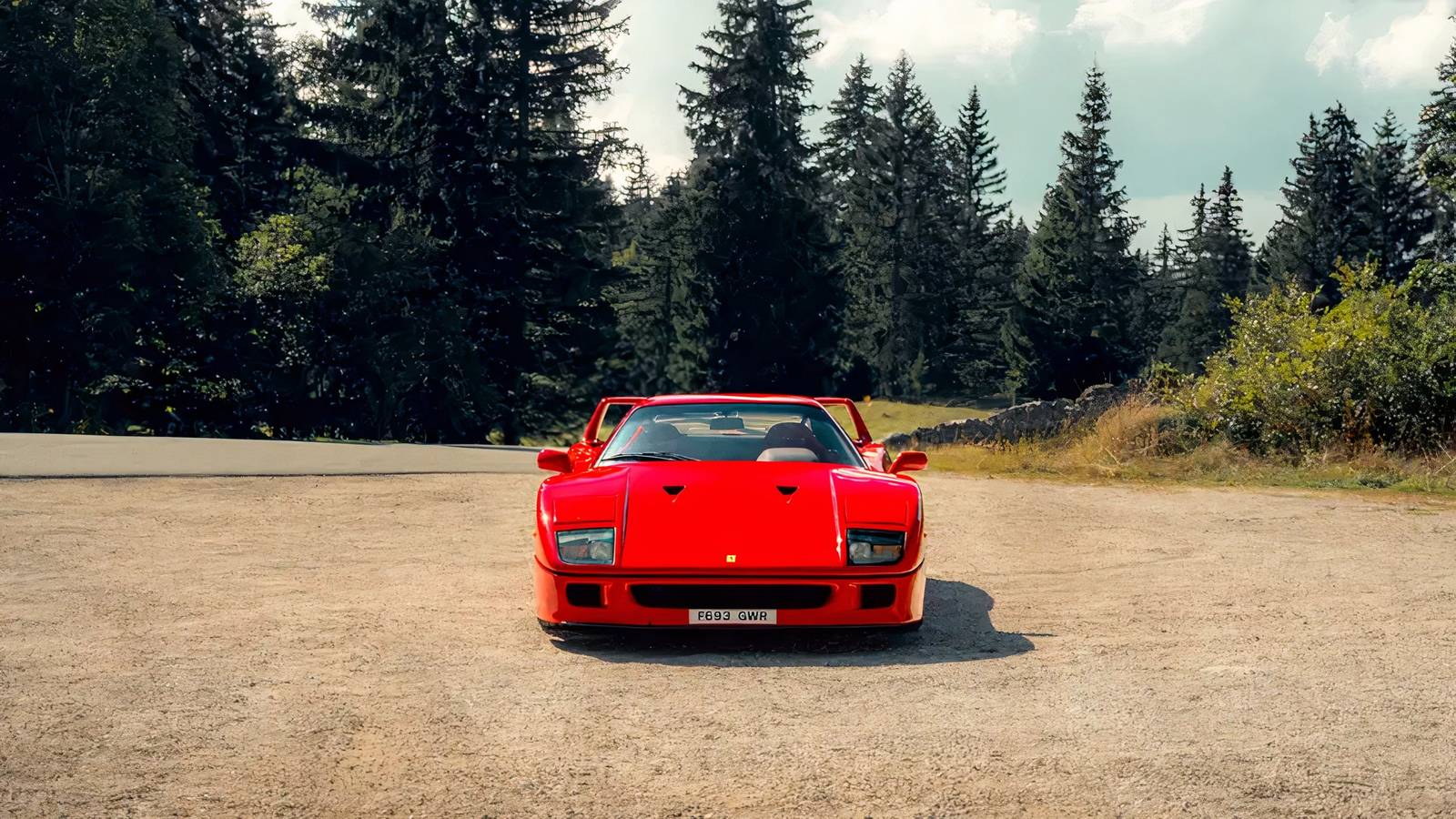
Here we have a quintet of very well-known supercars that helped make the 90s a very special time for performance and excess. They represent a varied bunch, but in the Top Trumps of late-20th-century rivalry, all were considered to be about as fast as you could go on four pieces of rubber, if not also cutting-edge when it came to engineering.
Nowadays, it’s clear that three decades have taken a toll on the best of the ’90s supercars’ performance, but by how much? We take some of the modern supercar offerings from the same manufacturers that made the original legends possible to see what’s changed, and if the new kids on the block are that much faster.
Lamborghini Diablo (1990-2001)
Modern Alternative: Lamborghini Revuelto
The first model in our list is an important one: the successor to the Lamborghini Countach, the Diablo. It was one of the first cars to surpass 200 mph (the Ferrari F40 hit 200 mph a few years earlier), and the model that would, during its lifetime, carry Lamborghini into VW ownership. Early models were rear-drive only, but the VT added all-wheel drive capability in 1993. Named after the Spanish word for ‘Devil’, the Countach’s successor was improved in many ways but lost some of the sharp-edged styling charisma of its predecessor. The Murcielago replaced the Diablo.
Of course, the Diablo was one of the fastest machines in the world at the time, although its 0-60 mph time is behind that of others in this list; the more powerful SV version (‘Super Veloce’) is often quoted with 0-60 mph times of less than four seconds. Its top speed certainly put it near the top of the pack at the start of the ’90s.

Today, the Lamborghini Revuelto continues to use a naturally-aspirated V12 engine, a rarity today, although it is paired with a hybrid system for a huge power output and all-wheel drive, thanks to two of the three e-motors powering the front wheels. Its 0-60 mph time is on par with the fastest hypercars today, although its top speed is beaten by many other rivals. $600,000 is a lot for a hypercar, but this is Lamborghini at its finest and still rocking a V12.
Basic Specifications
|
Lamborghini Diablo |
Lamborghini Revuelto |
|
|
Engine format |
5.7-liter, NA V12 |
6.5-liter, NA V12 hybrid |
|
Power |
485 hp |
1001 hp |
|
Torque |
428 lb-ft |
1,044 lb-ft |
|
Transmission |
5-speed manual |
8-speed automatic |
|
Drivetrain |
Mid-engine, rear-wheel drive |
Mid-engine, all-wheel drive |
|
0-60 mph |
~4.5 seconds |
2.2 seconds |
|
Top speed |
202 mph |
221 mph |
Ferrari F40 (1987-1996)
Modern Alternative: Ferrari F80
Of all the late 80s and 90s supercars, the Ferrari F40 is one of the most legendary, thanks to its iconic styling, incredible performance, and extreme nature. The last model to be signed off by Enzo Ferrari himself, the F40 was both the successor to the 288 GTO and celebrated the 40th anniversary of the marque. It used an evolution of the 288’s relatively small twin-turbo V8 and was loud, analog, and lacked almost any driver aids like power steering or ABS. Instead, it focused on lightweight performance and aerodynamics with cutting-edge materials like carbon fiber, Kevlar, and aluminum used in its construction.

The first well-known production car to hit 200 mph, the F40 was fast even by today’s standards, but like most models in this list, its 0-60 mph time is behind that of the best in the business today. For example, the F80, the spiritual successor to the F40, is the latest in the long line of flagship Ferrari hypercars that followed the 288 GTO and F40, including the F50, Enzo, and LaFerrari. Like most of the other modern successors on this list, the F80 is a hybrid, using electric assistance and advanced traction systems to provide impressive speed and handling even by today’s standards. It pushes the envelope even further than the F40 did, incorporating modern safety standards, driving aids, and hybrid tech without losing any of the focus on performance.
Basic Specifications
|
Ferrari F40 |
Ferrari F80 |
|
|
Engine format |
2.9-liter, twin-turbocharged V8 |
3.0-liter, twin-turbocharged V6 hybrid |
|
Power |
471 hp |
1,184 hp |
|
Torque |
426 lb-ft |
~800 lb-ft |
|
Transmission |
5-speed manual |
8-speed automatic |
|
Drivetrain |
Rear-mid-engine, rear-wheel drive |
Mid-engine, all-wheel drive |
|
0-60 mph |
~4 seconds |
2.2 seconds |
|
Top speed |
201 mph |
217 mph |

10 Supercars Everyone Should Drive Once In Their Life
Arguably the pinnacle of automotive excellence, these 10 iconic supercars should be experienced from the drivers seat at least once.
McLaren F1 (1992-1998)
Modern Alternative: McLaren Speedtail
McLaren‘s F1 needs no introduction either, thanks to the significant mark it left behind on the world of performance. Designed under the visionary gaze of chief designer and technical lead Gordon Murray, the McLaren F1 was born out of a desire to produce the ultimate driver-focused road car, with a focus on naturally-aspirated power, light weight, handling dynamics, and ideal weight distribution. Innovative materials were used, and features like power steering or ABS were not considered necessary. Its BMW engine was notable for not featuring turbos or superchargers, and despite this lack of forced induction, it became the fastest car in the world at 240 mph in 1998, a title held for 15 years.

Although not a direct successor to the F1, the Speedtail is a spiritual successor and an example of the changing engineering that characterizes the evolution of supercars over time. Its powertrain is now a twin-turbocharged V8, which has largely been the brand’s signature setup for most of its models. Unlike the F1, the Speedtail doesn’t have a raw, mechanical focus; instead, it combines a hybrid setup with a focus on aerodynamics and efficiency to achieve its impressive top speed. Its low-drag body style plays a direct part in its high-speed efficiency and gave birth to the name Speedtail. Built in 106 units and with a three-seat layout, there are references to the old F1, even if it will never capture the spirit of that former legend’s raw focus.
Basic Specifications
|
McLaren F1 |
McLaren Speedtail |
|
|
Engine format |
6.1-liter, NA V12 |
4.0-liter, twin-turbocharged V8 hybrid |
|
Power |
618 hp |
1,035 hp |
|
Torque |
479 lb-ft |
848 lb-ft |
|
Transmission |
6-speed manual |
7-speed automatic |
|
Drivetrain |
Rear-mid-engine, rear-wheel drive |
Front-engine, rear-wheel drive |
|
0-60 mph |
3.2 seconds |
~2.9 seconds |
|
Top speed |
240 mph |
250 mph |
Bugatti EB110 (1991-1995)
Modern Alternative: Bugatti Tourbillon
Arguably not valued as highly or well-known as it should be, the Bugatti EB110 is an important supercar and an impressive one at that. In 1987, businessman Romano Artioli acquired the brand, and a new, uncompromising car was conceived to celebrate 110 years since Ettore Bugatti’s birth. Unveiled in 1991, the aptly-named EB110 was indeed a showcase of engineering and performance: an F1-inspired, quad-turbocharged V12, a lightweight, carbon-fiber monocoque chassis, and an all-wheel drive system, instead of rear-wheel drive like many competitors. It was briefly the fastest car in the world by various metrics, and a Super Sport version turned up the heat even more by shedding weight and growing in output (now more than 600 horsepower).

Unfortunately, the brand encountered troubles, and fewer than 140 units were made before its bankruptcy. However, upon acquisition of the historic marque by the VW Group, the efforts of Artioli and the engineers at Bugatti paid off, with the boundary-pushing spirit of the EB110 living on and inspiring the Bugatti Veyron. The Veyron featured a quad-turbocharged engine too, albeit with a W16 layout, hitting an even higher top speed of 253 mph. The successor to the subsequent Chiron is called the Tourbillon, and it does away with the W16 and instead operates via a Cosworth-engineered V16, naturally-aspirated, and hybrid technology. It’s a big step forward in performance as well as efficiency, taking the EB110’s story into the modern age and performance to another level. The EB110 was impressive, and the Tourbillon, like the Veyron, smashes the ceiling of what’s expected.
Basic Specifications
|
Bugatti EB110 |
Bugatti Tourbillon |
|
|
Engine format |
3.5-liter, quad-turbocharged V12 |
8.3-liter, NA V16 hybrid |
|
Power |
552 hp |
1,775 hp |
|
Torque |
479 lb-ft |
1,464 lb-ft |
|
Transmission |
6-speed manual |
8-speed automatic |
|
Drivetrain |
Rear-mid-engine, all-wheel drive |
Mid-engine, all-wheel drive |
|
0-60 mph |
~3.4 seconds |
2 seconds |
|
Top speed |
212 mph |
277 mph |

The 1990s Sports Car That Could Keep Up With Ferraris For A Fraction Of The Price
Ferraris are considered the benchmark for supercar performance and luxury, but there is one car that gave the prancing horse a run for its money.
Porsche 959 (1986-1993)
Modern Alternative: Porsche 918 Spyder
Conceived of as a way to test and showcase Porsche’s advancements with turbocharging and all-wheel drive system, among others, the 959 was built to Group B rallying regulations. That infamous class in rallying from the early 80s would be cancelled before the Porsche 959 could participate, but this all-wheel drive supercar would still leave its mark on the automotive world. Its top speed fell just short of 200 mph, but its performance both in a straight line and even off-road was exemplary. Its all-wheel drive system, in particular, was proven in pre-production versions of the 919 in the Dakar rally. The 959, produced in under 350 examples, was advanced for its time, faster than almost any other car in its time, and paved the way for later versions of the 911 thanks to its implementation of all-wheel drive and twin-turbocharging.

There isn’t a direct successor to the 959, but Porsche engineers and designers have produced various special models that arguably similarly pushed boundaries like this 80s supercar. The Carrera GT, powered by a race-derived V10 engine and featuring design elements like carbon ceramic brakes, was another outlier. However, the clear modern successor to the 959 would surely be the 2013-2015 918 Spyder — an extremely fast hybrid supercar built to showcase cutting-edge engineering. It features a V8 engine, all-wheel drive like the 959, but comes equipped with two electric motors and even offers a limited electric-only range. It’s impressive for its incredible performance without the need for turbocharging or supercharging, and pushes the envelope further than the 959 could, although the 918 Spyder was not designed with rallying in mind like its 80s forebear. Both are technological showcases, either way, and continue to take supercar design forward.
Basic Specifications
|
Porsche 959 |
Porsche 918 Spyder |
|
|
Engine format |
2.8-liter, twin-turbocharged H6 |
4.6-liter, NA V8 hybrid |
|
Power |
444 hp |
875 hp |
|
Torque |
369 lb-ft |
944 lb-ft |
|
Transmission |
6-speed manual |
7-speed automatic |
|
Drivetrain |
Rear-engine, all-wheel drive |
Mid-engine, all-wheel drive |
|
0-60 mph |
3.6 seconds |
2.2 seconds |
|
Top speed |
197 mph |
214 mph |
Sources: Classic.com, Ferrari, Bugatti, Lamborghini, McLaren, Porsche