
The practical commuter car has been a staple facet of American life for decades, and its evolution is still ongoing. Yet, how exactly has the “daily driver” changed in the last thirty years or so? Well, one simple and clear observation is that cars are more expensive now, and the death of the small, cheap car is something we witnessed firsthand in recent years.
In 2026, the cost of simply existing in the U.S. has never felt more cumbersome. Much of the financial pressure that taxpayers feel stems from the trials and tribulations surrounding car ownership. With insurance premiums and monthly payments skyrocketing, many of us dream of simpler times when commuter cars didn’t cost a fortune. Curious to know how we got to where we are today? Stick around as we break down the evolution of the daily driver over the last thirty years.
1995–2005: The Era Of Simple Value

While the cars of the mid-90s and early 2000s may look like relics compared to their modern counterparts, the vehicles of this era provided simple value. Engine reliability, power, and fuel efficiency reached new heights in this era. The commuter cars from this era are still desirable because they are often cheaper and easier to fix when compared to modern cars. Certain examples, like the Toyota Camry and Honda Civic, can easily reach 200,000 miles or more, and many are still on the road daily even today.
The Dawn Of The Toyota Camry

The 90s saw the introduction of the first “widebody” Toyota Camry, the first Camry model designed specifically for the American market. The launch of the XV10 generation Camry (1991-1996) coincided with the introduction of the Lexus brand, and the debut Camry was effectively a Lexus wearing a Toyota badge. The amount of consideration put into this Toyota Camry was truly exceptional, and it is often stated that this was the closest a Toyota Camry ever came to resembling the build and quality found in the Lexus ES sedan. This attention to detail during this introductory generation has paid dividends since.
The Toyota Camry gained prominence by crafting the archetype for a perfect commuter car: comfortable, practical, reliable, good fuel economy, and cheap ownership costs. The dependable Japanese sedan shaped an entire era of commuting by shifting consumers’ focus to everyday dependability over cutting-edge innovation. By 1997, the Camry became the bestselling car in the U.S. for the first time. Since then, the Camry has retained that bestselling honor more often than not. It is no exaggeration to call the Camry the bestselling car in the U.S. by far within the last three decades. Its domination in this sense cannot be overstated, and the Camry is the clearest example of what a true commuter car should embody.
The Golden Era Of The Honda Civic

The EK generation of the Honda Civic (1996-2000) is among the most legendary Civic models of all time. The EK model was on the tail end of the golden era of the Civic that started with the introduction of the double-wishbone suspension design in the EF generation (1988-1991). The Honda Civic of this era was a true economical subcompact car, unlike the larger and more expensive Toyota Camry, which was viewed as a more premium option. As far as affordability, the late 90s Honda Civic was the perfect city car, and its great handling and small size made it ideal for everyday adventures in the city.
The sixth-generation Honda Civic (2001-2005) was a dramatic departure from its predecessor. Despite retaining similar exterior proportions, the Civic was roomier than before, but this came at the expense of its renowned handling capabilities. Yet, calling the sixth-generation Civic a disappointment is flat-out wrong. In 2002, the Honda Civic Hybrid debuted for the first time, shortly after the introduction of the first production hybrid model, the two-door Honda Insight. The 2003 Honda Civic achieved a stunning 59 MPG (combined) back then, an economy figure that bests even its modern counterpart. A 2026 Honda Civic Sedan Sport Hybrid may only achieve 49 MPG (combined), but it does offer 107 more horsepower than its decades-old predecessor. Decades on, the Honda Civic remains a benchmark model in everyday practicality.

How Your Next Honda Could Save You Thousands
This is why these three leading Honda models are bestsellers even during economic lulls.
2005–2015: Electrification Ramps Up

Although the early 2000s introduced electrification into the mainstream, the decade that followed pushed efficiency technology developments to new heights, making commuting more efficient than ever before. From the Toyota Prius to the Nissan Leaf, some of the most influential commuter cars were developed in this era. These models would shape the future of what would be considered the ideal daily driver, and their impact is still felt in automotive design to this day.
When The Toyota Prius Took Over

Although the Toyota Prius debuted in the U.S. for the 2001 model year, it was not until the second (2004-2009) and third generation (2010-2015) that it refined its allure as the ultimate commuter vehicle. While the Honda Insight introduced the concept of hybrid vehicles, the Toyota Prius popularized the technology. Along with the obvious benefits of a reliable hybrid platform, the second-generation Prius improved overall practicality by introducing the iconic and recognizable wedge shape that offered more interior roominess. Despite being longer and heavier, the second-generation was more efficient than its predecessor. The Prius’ growing appeal was clear as the second generation was also the first Prius generation to sell over a million units worldwide.
Despite utilizing the same powertrain as its predecessor, the third-generation Prius felt like the first time the hybrid was a complete and well-rounded vehicle. With a bump from 110 to 134 horsepower, the Prius no longer felt choked by its lack of output as it previously did. Instead, the practical hybrid functioned just like any other commuter car, but with exceptional gas mileage. Notably, the third-generation Prius was even more efficient than its predecessor, and the introduction of the plug-in hybrid model in 2012 marked a further step in expanding its global appeal. With 10 to 15 miles of all-electric range, the city efficiency of the Toyota Prius Plug-in Hybrid became even stronger, as the gas engine was only necessary at highway speeds.
The Nissan Leaf Introduces Us To EVs

The first-generation Nissan Leaf debuted in 2011 as the first global production electric vehicle. Only within the last five years was the Nissan Leaf dethroned as the bestselling plug-in electric car produced. While it may not sound like much now, the original Nissan Leaf achieved a driving range of about 75 to 84 miles in its most capable configuration in 2015. Back in 2011, Nissan did a study on Nissan Leaf owners, discovering that the average Leaf driver drove 37 miles daily with an average trip length of seven miles. Yet, considering the low price point of the Nissan Leaf, its limited mileage was less of a concern as it provided the practicality of a true commuter car with lower operational costs than a gas-powered vehicle. Importantly, the Nissan Leaf gave consumers a much better understanding of the reality of EV ownership as a daily driver. From range anxiety to home charging, the Nissan Leaf introduced an entirely new era of commuting culture into the public sphere.

The Buzz Awards: Nissan Leaf Named Car Of The Year For 2026
The mighty Nissan Leaf is a champion of value, technology, and quality, putting other EVs and internal-combustion cars on notice.
2015–2025: The Rise Of Crossovers And EVs

The past decade of daily drivers has seen the continued evolution of efficiency technology. Simultaneously, we also saw the rise of the crossover SUV and the fall of the sedan as the primary body style of choice among commuters. Despite the increased costs associated with crossovers, their perceived utility ushered them to the forefront of the public eye as the most desirable vehicle on the market. The Tesla Model 3 also became the bestselling electric vehicle ever produced, showing the real viability of EVs as daily drivers moving forward.
The New Crossover King Dethrones The Once Unstoppable Sedan

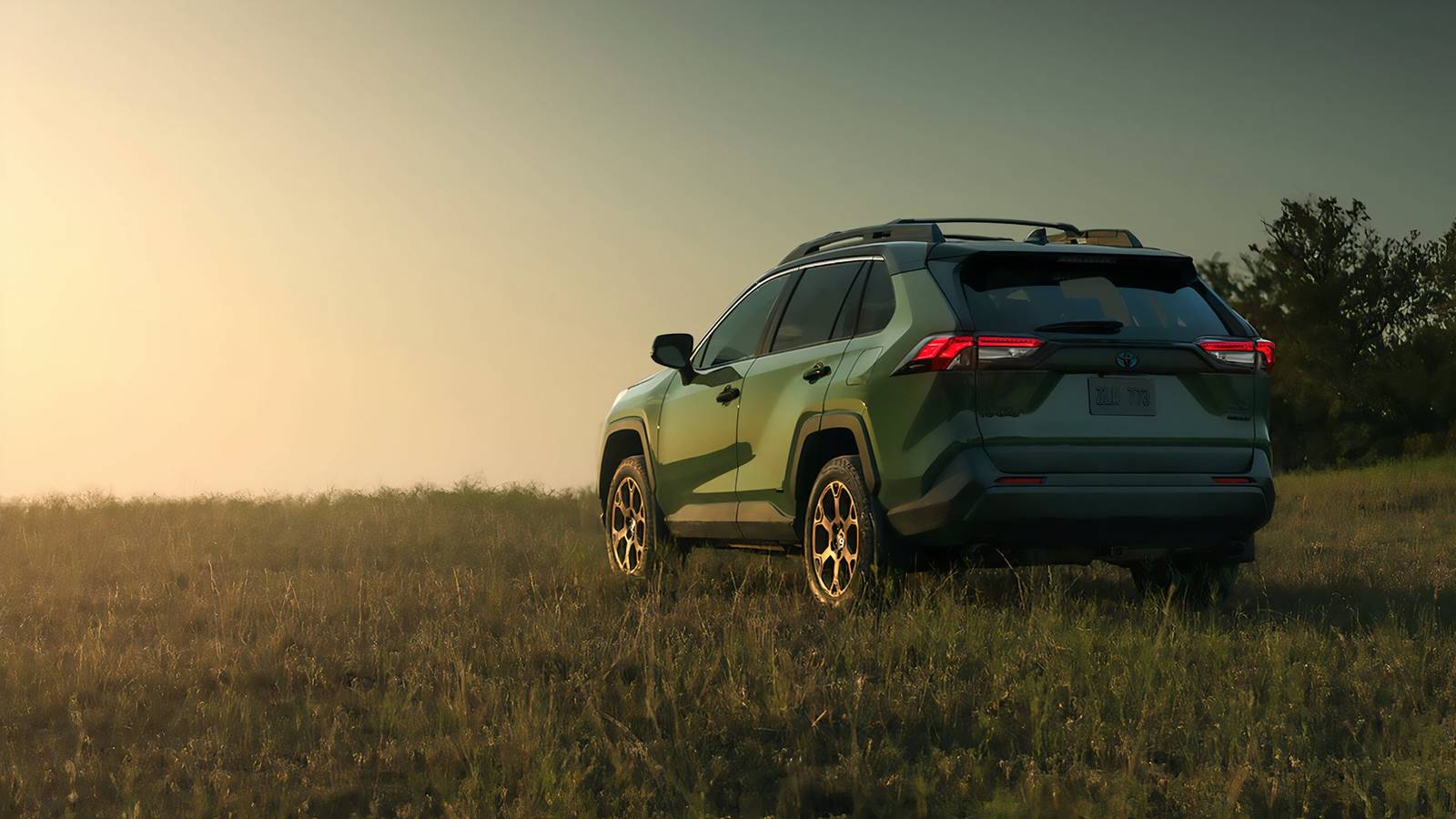
While the Toyota RAV4’s popularity has grown with every passing year since its introduction in the mid-90s, the success of the fourth-generation RAV4 (2013–2018) was unlike any SUV that came before it. The fourth-generation Toyota RAV4 started the ongoing trend of making crossover SUVs look and feel more appealing than their sedan counterparts. Sedan fatigue among consumers had been prevalent for some time, but the perceived increased functionality of a crossover as both a weekend warrior and a daily driver was the final nail in the sedan’s coffin.
Yet, it wasn’t until the 2016 model year, when the RAV4 Hybrid was introduced, that the viability of the crossover SUV as a legitimate replacement for the sedan became solidified. The 2016 Toyota RAV4 Hybrid would offer 32 MPG (combined), a substantial increase when compared to the 26 MPG (combined) of the standard gas model. Yet, it was the 34 MPG (city) of the hybrid model that truly distinguished it from the 23 MPG (city) of the gas model. Since then, the Toyota RAV4 has been a bestseller among all vehicles in the U.S. and has held the top spot in sales more often than not.
The Tesla Model 3 Redefines The Viability Of Electric Vehicles

The pioneering Nissan Leaf walked so that the Tesla Model 3 could one day run. While the Nissan Leaf was promoted as the first affordable EV model, the Tesla Model 3, introduced in 2017, solved many of the issues that plagued the Nissan sedan. These improvements worked, and in 2021, the Model 3 became the first electric vehicle to surpass one million global sales. Unlike the original Nissan Leaf, the Tesla Model 3 offered range, affordability, and performance all in one convenient package.
These improvements were made possible by the quality of the Model 3’s battery technology, combined with the brand’s cutting-edge software. Features like over-the-air updates provided an entirely new level of convenience for consumers, taking automobiles one step closer to being essentially a smartphone with wheels. Tesla’s supercharging infrastructure remains the gold standard today and played a significant role in the widespread adoption of electric vehicles. The Tesla Model 3, simply put, brought an entirely new level of convenience and capability to mainstream electric vehicles. We still haven’t reached the point where electric vehicles are undeniably convenient for the majority of new car shoppers, but the Tesla Model 3 showed that this future is clearer and more viable than we previously anticipated.