
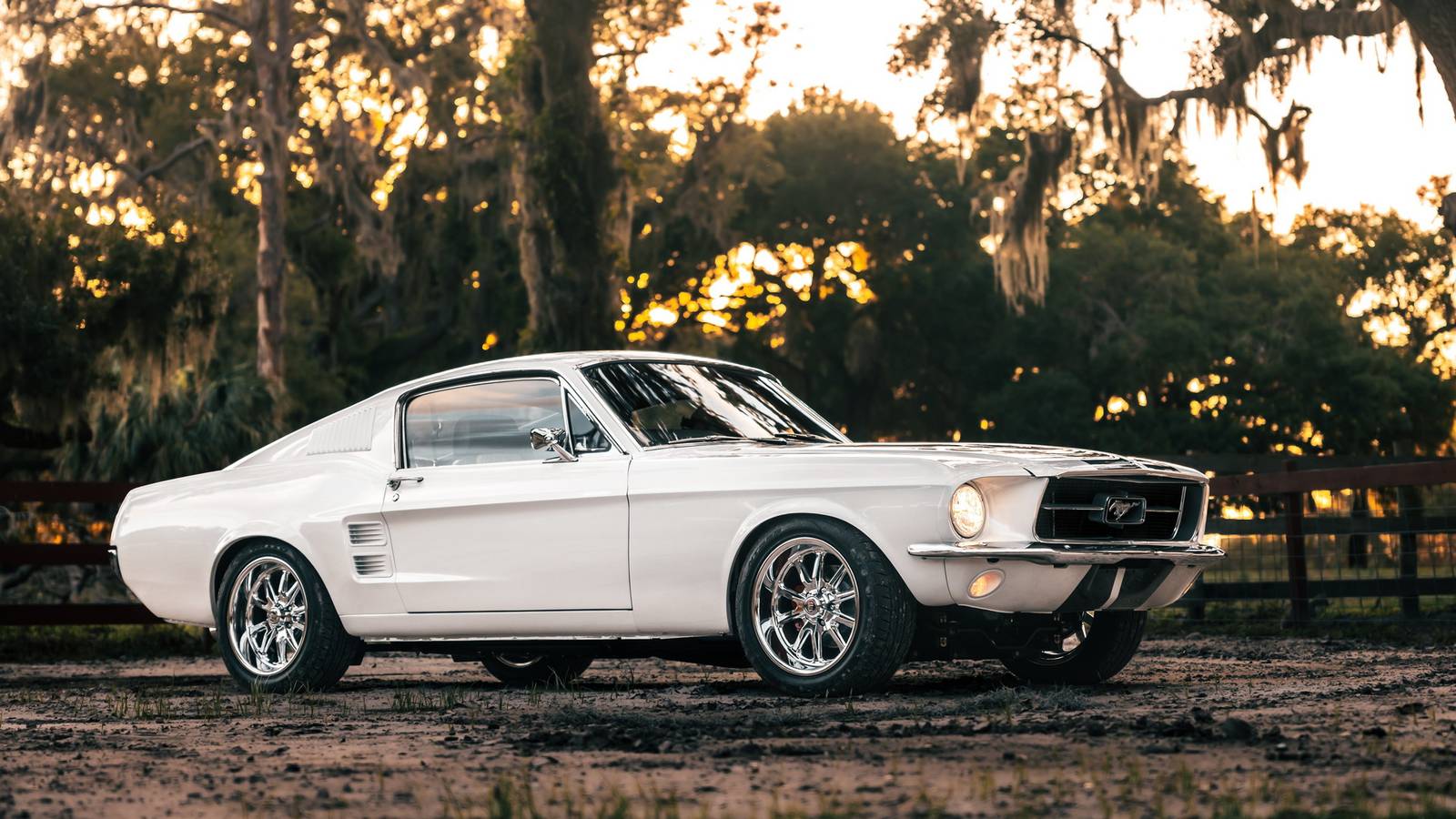
Okay, don’t forget the Civic. The Honda Civic is a great car. North American Car Of The Year 2025. You can get a new base model for about $25,000 and go up to the exciting 315-horsepower Civic Type-R for about $46,000. Of course, the car could depreciate by about 40 percent over five years. By then, you will still have a Civic, but the limited warranty will have run out. Or you could think about getting a restomod instead.
Just to make sure we’re on the same page, this is what a restomod is. Restomod is restoration and modification, and is normally a classic car that has been restored to still look vintage, but with its outdated mechanical parts upgraded with modern technology for better performance, safety, and comfort. It gives you a nostalgic style with modern drivability. You will often get features like fuel injection, A/C, and better suspension and brakes. And while some restomods can be really expensive, you should be able to get a good one for around the same ballpark price as a Civic.
Why Consider A Restomod?
The example in the video above looks superb, and it is a brilliant price. But unless you know the person who modded it, or really know what you are doing, buying a car like this just because it looks good could be risky. So why even consider a restomod when you can buy a new car or a newish used car and know exactly what you are getting?

People buy restomods because it is a unique opportunity to own a timeless classic car, but one with the reliability, performance, safety, and comfort of a modern car. It gives you the look and vibe of a vintage car, but without the hassle and cost of dealing with old tech and worn parts that could be difficult to replace.
Unique Aesthetics And Modern Functionality

New cars come with modern functionality, but most of them are boring and more or less look the same. Old cars, at least the kind popular with restomodders, are usually classics, the kind of cars people will look at when they pass. So a restomod combines that look with features like modern climate control, power steering, and great sound systems. And electric windows! Restomods often have modern engine swaps, like new crate engines, with features like electronic fuel injection, new wiring harnesses, and better transmissions. These make a car reliable to use as a daily driver or for long road trips.
Safety And Personalization

Old cars are cool, but they suck at safety. With a restomod, you should get modern safety features like airbags, ABS, and various kinds of aftermarket driver assistance, like a reverse parking camera or a blind spot monitor. While most restomods try to keep the look of the original car, they can be customized as far as the modder would like to go. The interior can be customized with new upholstery or even new seats, touchscreen infotainment can be added, or the original fascia can be kept, enhanced with leather, metal detailing, or wood paneling.

Ringbrothers Builds 1969 Ford Mustang Mach 1 Kingpin For SEMA
The latest creation is a ’69 Mustang with the supercharged heart of a monster.
Define Your Vision

Do some research and loads of thinking. What kind of car would you like? You may prefer a ’60s pony car, or a relaxed soft-top with huge fins. Maybe one of those boxy old-school trucks like the C10, or early ’60s with the round hood and big rear fenders? Or a classic VW bus? How about a ’70s 911, or one of those boxy Mustangs from the ’80s? Anything is possible.
What Level Of Restomod?

There are different levels of restomods, but these are usually defined as mild, medium/full, and pro-touring. The latter does not really fall within the scope of this article. These definitions are not cast in stone either, so you can have a mild restomod with elements of more obvious modification as well. A mild restomod is usually aimed at improving reliability, safety, and comfort, but without altering the car’s original appearance too much. It would typically involve replacing the carburetor with electronic fuel injection, putting in disc brakes, or dropping in an overdrive transmission for lower highway revs. Aftermarket suspension can be used without being obviously visible, while A/C and better sound are often included as well.

A medium or full restomod involves major modifications to the performance parts, while retaining the classic look to a certain extent. They normally involve an engine swap, like an LS or K, a completely new suspension setup, and reinforcing the chassis to cope with the greater power. The interior could be redone in leather, with custom gauges and proper infotainment systems. Exterior upgrades like better wheels and tires, smooth bumpers, and LED lighting can improve the look without changing the lines of the body.
Decide On Your Budget

While you can choose a base 2026 Honda Civic for $25,000 or double that with a fully loaded Type-R, the price range of restomods is wide open. With mild to full restomods, the price is made up of the cost of the original car, the parts used, and the labor involved.
Old, unmodified cars can be quite cheap, and there are loads of affordable aftermarket parts, but the labor can add to the cost. This is why a ‘normal’ restomod can cost you anything from the low $20,000 to easily north of $100,000. So set your budget, and stick to that.

Lynx GT1 Unleashes 1,200 HP: A Ford GT Restomod with Le Mans DNA
A track-only version is available with 1,500 horsepower.
Find The Right Builder/Seller

Buying a heavily modified old car from a classified advert is not recommended, unless you are really clued up on what to look for and how to spot problem areas. You would do better to buy through a reputable seller, or to have your own built by a good shop.
Research Reputable Sellers

Buying an already-built car is usually less expensive than commissioning someone to build one. If you know what to look for, websites like restomods.com or mainstream dealer sites like Streetside Classics could be the way to go. Or you could look at an auction house like Bring a Trailer, Mecum, or Barrett-Jackson.
Find A Good Builder

There are many renowned restomod builders in the US, but these shops tend to specialize in high-end cars, outside the scope of this article. Your best bet would be to find someone local to do the work, even to help you pick the right car for your project. The used car you think would work could have major underlying issues that can slow down the work and increase the price.

Ask for recommendations, such as online forums or social media groups. If there are local car clubs, you should find knowledgeable people there to guide you. If the builder you like has a website, check for portfolios and reviews, and ask for referrals to past clients. Obviously, you should visit the workshop and have a look. A good workshop is normally clean, organized, well-equipped, and free of clutter. Get a quote and timelines on the build up-front, and keep tabs on how the work is progressing.

From Commuter to Collector: How Older Hondas Are Gaining Value Fast
Older Honda and Acura models have become more valuable in recent years, and there are a few reasons why.
Key Quality Indicators When Buying

When buying a restomod, there are specific indicators that your purchase is valid and trouble-free. A good restomod will be well-finished, use high-end components, have proper documentation, and be basically a good drive. Paying a third-party professional to assess the car is advisable, unless you really know what you are doing.
Inspect Build Quality

When buying a restomod, it is vital to check the build quality, starting with the body and paint. Check surfaces and edges for roughness, panels that don’t match up, or any bubbly areas that would mean corrosion. Look at the wiring in the engine bay, which should be neat, whole, without patches or joins. The interior finishes should be clean and properly fitted, with all knobs and levers working, the seats adjustable as expected, and things like the A/C working properly.
Ensure Components Check Out

If the engine is new, ask for documentation and check if the specs and serial numbers match. Crate engines like a Ford Coyote or GM LT, and new transmissions will come with documents and warranties. Carefully check the brakes and suspension, as problems with these will not only be costly, but they may well be dangerous. This is where a knowledgeable third-party expert can be vital, if you don’t have the skills yourself. The bottom line is that you can get an affordable restomod with loads of personality and street cred for the same price as a Honda Civic. Should you? Up to you. But worth looking at anyway.
Sources: Bring a Trailer, Restomods.com, Streetside Classics