
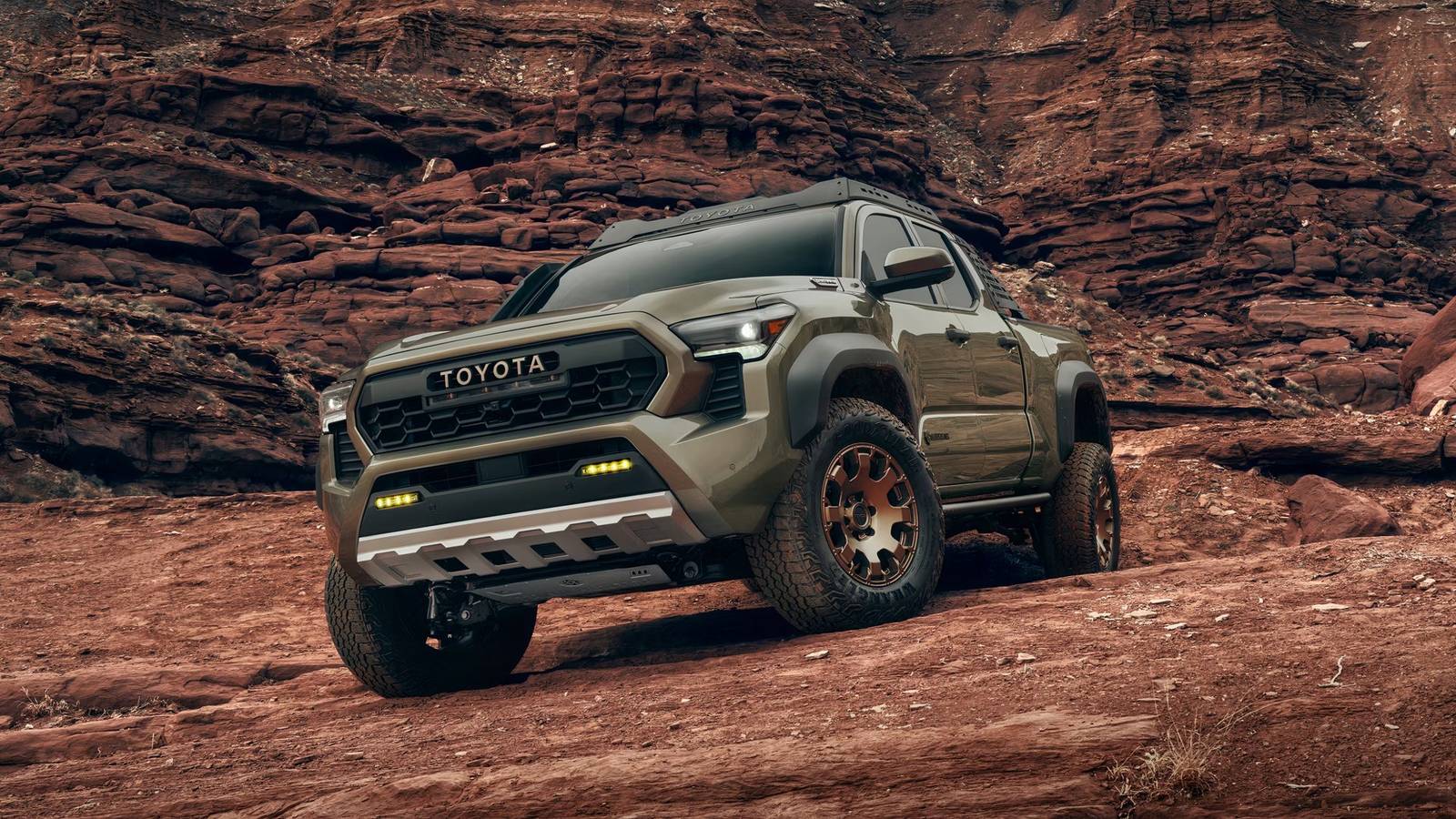
With electrification being the talk of the town, the midsize pickup truck segment is kind of stuck in an awkward place. Buyers want trucks that can tow, haul, and crawl over rocky trails, but they also want something that doesn’t punish them at the fuel pump every week. Full-size trucks have leaned into hybrid tech with big results, while midsize pickups have still mostly played it safe. The 2025 Toyota Tacoma Hybrid is Toyota’s attempt to finally bridge that gap. It doesn’t reinvent the Tacoma nameplate, but it does quietly reshape what a practical, modern midsize truck can be.
This isn’t a headline-chasing experiment or a token eco badge slapped onto a familiar formula. The Tacoma Hybrid feels like Toyota stepping back, looking at how people actually use these trucks, and asking a simple question: how do we make it better without losing its soul?
A Hybrid That’s Built Like A Truck First

The biggest story here is the powertrain. Toyota calls it the i-FORCE MAX system, and while the name sounds like something pulled from a sci-fi movie, the idea behind it is straightforward. At its core is a 2.4-liter turbocharged four-cylinder engine paired with an electric motor integrated into the transmission. Together, they produce around 326 horsepower and a hefty 465 pound-feet of torque.
Toyota Tacoma Hybrid Engine Specifications
|
Engine |
i-FORCE MAX 2.4L turbocharged inline-4 hybrid powertrain |
|
Horsepower |
326 HP @ 6,000 RPM |
|
Torque |
465 LB-FT @ 1,700 RPM |
|
Transmission |
8-speed Electronically Controlled Automatic Transmission |
|
Drivetrain |
4WD with electronically controlled 2-speed transfer case |
That torque figure matters more than the horsepower. The electric motor fills in the gaps where turbo engines can feel lazy, especially at low speeds. In daily driving, that means smoother takeoffs from a stoplight and less effort when climbing hills or merging onto highways. Off-road or while towing, it translates to easier, more controlled power delivery without the engine constantly hunting for the right gear. Importantly, Toyota didn’t design this hybrid system to turn the Tacoma into a fuel-sipping commuter car. The electric motor doesn’t exist to let you glide silently through parking lots for miles. Instead, it works as a torque booster and efficiency helper, stepping in when the truck would normally work hardest.
Driving off immediately, you’re aware of the hybrid system. It works efficiently and quickly switches between modes so as not to lag at all. In fact, I found it to be far more responsive than the GMC Canyon’s turbo-four (non-hybrid) powertrain.
– Garret Donahue for TopSpeed
Real-World Efficiency Shows Progress

On paper, the Tacoma Hybrid looks respectable. EPA estimates land in the low to mid-20s combined, depending on trim and drivetrain. Compared to older V6 Tacomas that struggled to crack 20 mpg in real-world use, this is a meaningful step forward. In practice, the numbers depend heavily on how you drive and which version you choose. Around town, where stop-and-go traffic gives the hybrid system more chances to do its thing, drivers can see fuel economy in the mid-20s without trying too hard. The electric motor helps smooth out starts, and the engine doesn’t have to work as aggressively at low speeds.

Highway driving tells a different story. At steady speeds, especially with larger off-road tires, roof racks, or a loaded bed, fuel economy can dip into the high teens. That might sound disappointing for a hybrid, but aerodynamics won’t suddenly improve because there’s a battery under the seat, and a boxy truck pushing air at 70 mph still needs fuel to do it.

2025 Toyota Tacoma TRD Pro Driven: Humble No More
It has bounce house seats and a hybrid powertrain. We check out the surprisingly complex 2025 Tacoma TRD Pro.
The Toyota Tacoma Hybrid’s Design Is Familiar, Sharper, More Purposeful

Visually, the 2025 Tacoma Hybrid doesn’t shout about its electrification. That’s a good thing. Toyota resisted the urge to turn it into a rolling science project. Instead, the Tacoma keeps its rugged proportions while adopting a more modern, angular look. The front end is bolder, with a wider grille and sharper lighting elements. The body lines are more pronounced, giving the truck a planted, muscular stance. It still looks like a Tacoma, but one that’s been working out and paying attention to its posture.

Hybrid-specific design cues are subtle. You might notice small badges or trim differences, but nothing that shouts out “electrified.” That restraint feels intentional. Toyota knows Tacoma buyers value toughness and familiarity, and the hybrid doesn’t challenge that identity.
The Interiors Are Modern Without Feeling Cold

Step inside the 2025 Tacoma Hybrid, and the biggest change is how current everything feels. Previous Tacomas were known for durability, but not cutting-edge interiors. This generation closes that gap. The dashboard design is clean and functional, with large buttons and knobs that make sense in a truck. The infotainment screen is bigger and more responsive than before, with wireless smartphone integration that works as expected. Digital displays provide useful information without overwhelming the driver.

Toyota also paid attention to materials. You won’t mistake the Tacoma for a luxury SUV, but it no longer feels cheap or dated. Depending on trim, you can get heated seats, a premium audio system, wireless charging, and a surround-view camera system that’s genuinely helpful when parking or maneuvering off-road.

How The Toyota Tacoma Became America’s Favorite Mid-Size Pickup
The trusty and much-loved Toyota Tacoma is the U.S.A.’s favorite mid-size pickup truck – here is how it shot to fame on our roads and trails.
There’s A New Platform Beneath the Skin

One of the most important updates isn’t visible at all. The 2025 Tacoma rides on Toyota’s TNGA-F platform, the same basic architecture underpinning vehicles like the Tundra and Land Cruiser. The frame is stiffer, which improves handling and ride quality. On-road, the Tacoma feels more composed than previous generations, with less bounce over uneven pavement and better steering confidence at highway speeds.

Off-road, the added rigidity helps the suspension do its job more effectively, keeping tires fairly planted and traction almost predictable. Suspension tuning varies by trim, but across the board, the Tacoma Hybrid feels less truckish in the old-school sense. That doesn’t mean it’s soft or disconnected. It simply feels more refined, like Toyota finally decided that comfort and capability don’t have to fight each other.
Capability Hasn’t Been Sacrificed

A common fear with hybrid trucks is that efficiency comes at the cost of capability. The Tacoma Hybrid does a good job of proving that wrong. When properly equipped, it can tow upwards of 6,000 pounds and handle healthy payload figures that are perfectly usable for weekend projects, outdoor gear, or work equipment.

Off-road trims keep the features that made the Tacoma a favorite among trail enthusiasts. Four-wheel drive is standard on hybrid models, and systems like crawl control and multi-terrain select are still part of the package. The electric motor’s instant torque actually helps in low-speed off-road situations, where precise throttle control matters more than raw horsepower. The result is a truck that feels confident in a wide range of environments.

2026 Toyota Tacoma Interior And Exterior Picture Gallery
The 2026 Toyota Tacoma has been updated with stronger powertrains, advanced tech, upgraded off-road capability, refined comfort, and bold new styling.
Is This Toyota’s Final Answer?

Calling the Tacoma Hybrid a complete solution to the fuel economy problem might be overselling it. What it really represents is a realistic step forward. Toyota didn’t chase extreme mpg numbers or headline-grabbing electric-only range. Instead, it focused on improving efficiency where it matters most, while making the truck stronger and more pleasant to live with. For buyers coming from older Tacomas, the difference is noticeable. The truck will feel quicker, smoother, and more modern while using less fuel in everyday situations. For those cross-shopping competitors, the hybrid gives Toyota a compelling argument without relying on gimmicks.

In the end, the 2025 Tacoma Hybrid isn’t about proving a point, but about acknowledging that trucks don’t live in a vacuum. They commute, they road-trip, they haul, and they explore. Toyota’s hybrid approach respects all of those roles. It may not solve the fuel economy problem overnight, but it shows a clear path forward, one that feels thoughtful and realistically usable.