
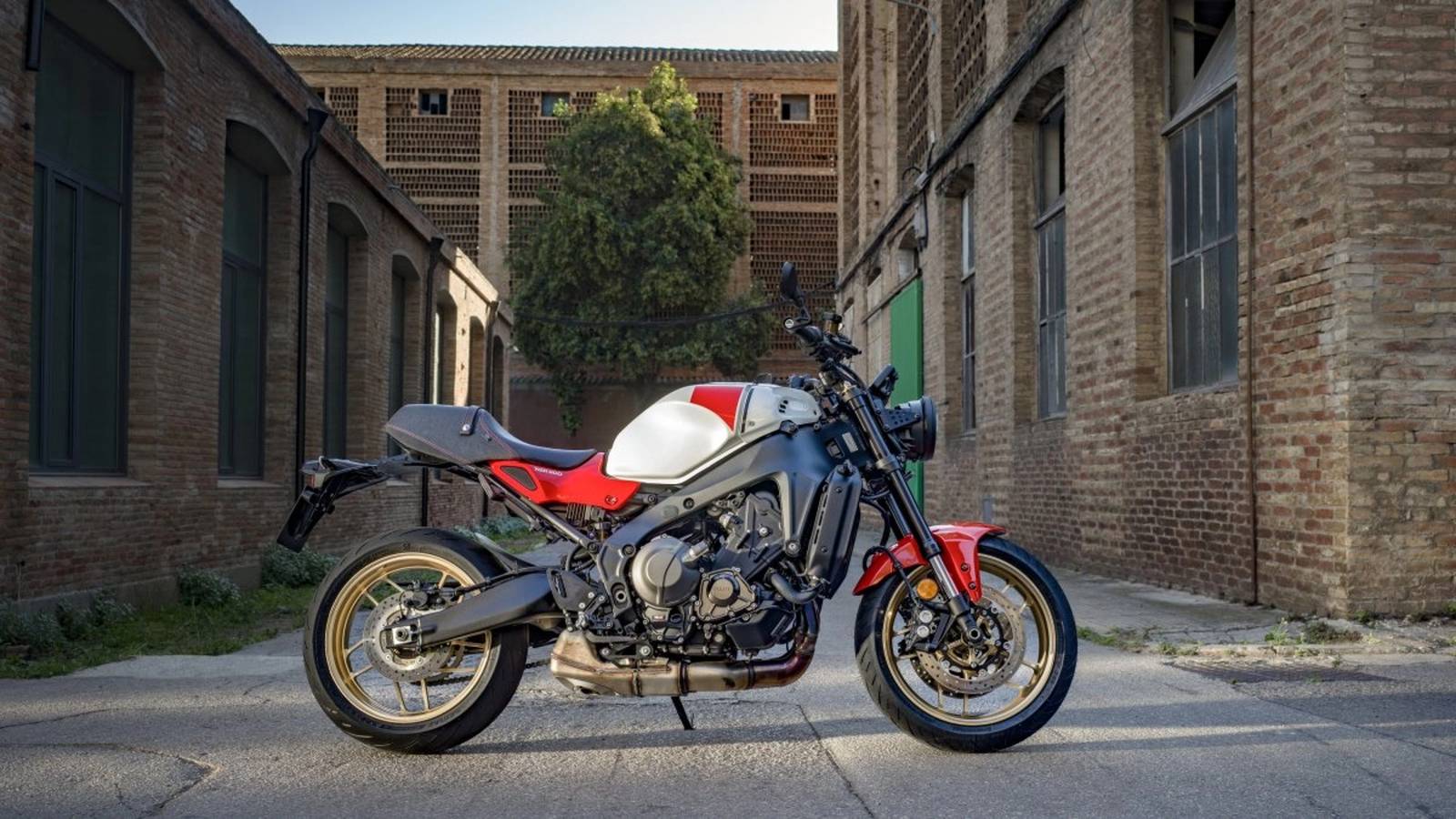
We’d all love a million bikes, but for most of us, life hits us hard in the wallet. We need to stay loyal to a single bike to avoid financial ruin. Then, what is the right motorcycle? There is no easy or definitive answer, but in a way, the best all-around motorcycles are invariably naked motorcycles if you intend to stick to tarmac. Among these, a roadster makes sense, as the retro styling is universally appealing, and the looks won’t age as quickly as something that is modern.
It will retain the modern tech of a new model, so you should have the conveniences of today. Oh, and we’re open to slightly older models simply because they are proven to be reliable. We know what to expect, and that is extremely important for a do-it-all bike. If you agree, you’ll be happy to know there are a few strong contenders. One roadster truly stands out, though, by promising to do commuting, canyon runs, and café nights exceptionally well.
The Yamaha XSR900 Is The Roadster That Does Commuting, Canyon Runs, And Cafe Nights

There are a few naked bikes that have the breadth of ability that the MT-09 has. And the XSR900, for some, is an even better prospect because it is a wolf in sheep’s clothing. That doesn’t mean that it looks mundane; it is the most complete of all the XSR models, design-wise, with the right proportions. It’s just that the old-timey looks conceal what a thoroughly modern motorcycle that is always willing to play. No matter what you want to do with it, it is capable.
Yamaha XSR900 Price: $10,599

The XSR900 is priced at a slight discount compared to the MT-09, but when you look at the competition, you realize it is quite reasonably priced. Yamaha has been generous with the features, giving it everything you’d expect from a middleweight premium naked. Of course, this is an older platform than most in the segment today, but it still can keep up with the best of them, especially given the electronics it has.
The XSR900’s Crossplane Engine Is Always Ready To Play

The CP3 crossplane inline three-cylinder engine needs no introduction. It is one of the greats, offering strong torque across the rev range without sacrificing the fun of a powerful top end. The numbers are 117 horsepower (at 10,000 RPM) and 68.6 pound-feet (at 7,000 RPM) from the 890 cc mill. The wildly different soundtrack is a bonus. Its six-speed transmission is fitted with a third-gen quickshifter. The clutch is an assist and slip one as well, and a chain provides drive to the wheel.
Moving on, it has a by-wire throttle, and there is a six-axis IMU as well. As a result, the XSR900 gets ride modes, cornering traction control, three levels of slide control, selectable wheelie control, and a back slip regulator to prevent rear wheel lockup or chatter under aggressive engine braking. You can also electronically limit the top speed of the motorcycle.

10 Modern Classics That Bring Retro Cool Without the Headaches
From retro icons to fresh takes, these bikes prove old-school still rules
The Most Modern Chassis In The Segment

The XSR900’s chassis, like the engine, is long in the tooth but still one of the finest in class. This is a die-cast aluminum twin-spar frame borrowed from the MT-09. That means it is two halves bolted together, but it is still rigid enough for whatever fun you might have planned for the weekend. The swingarm is a simpler box-section one, but it is also made from aluminum.
Suspension comes from KYB, with adjustability for the USD forks as well as the monoshock. Braking is done by four piston radial calipers mounted on the inverted front forks, and a Brembo radial master cylinder improves feel. The rear 245 mm disc is paired with a two-piston fixed caliper. Cornering ABS is part of the XSR’s electronic arsenal. Bridgestone Battlax Hypersport tires of the sizes 120/70 and 180/55 are fitted to spinforged alloy rims.
Yamaha XSR900 Dimensions
This is a middleweight, so it has manageable dimensions. It is nearly 85 inches long, with an almost-32-inch seat height. The 425-pound wet weight compares favorably against everything else in the segment, including nakeds with parallel-twin engines, which, in an ideal world, should have been lighter.
A Modern Feature Set Is Standard On The XSR900

The XSR900’s feature set focuses on being useful. Yamaha has given it a 5-inch TFT display, which is a necessity given the six-axis IMU and all the features it brings to the table. It has navigation via Garmin StreetCross, and it is also equipped with cruise control that can be enabled from 25 MPH on in third gear. Other features include self-canceling indicators that also have a lane-change feature.
With the kind of features the XSR900 offers for around $2,000 over the XSR700, it is very easy to recommend the upgrade, or to skip the smaller XSR altogether, simply because the 900 is such a well-rounded machine. There’s also the fact that you could order the ‘Racer’ kit for the 900 and make it look like a vintage racer.

10 Modern Classics That Blend Heritage With Cutting-Edge Tech
These retro-style bikes offer modern performance to go along with their classic designs.
Yamaha XSR900 Competition

The XSR900 is part of quite a crowded segment. There is the OG, the Triumph Speed Twin 900, and at $10,745, it is an extremely tempting option. However, if you want your retro roadster to hunt apexes with, it’s not going to keep up with the more modern ones. There is the left-field option, the BMW R 12 nineT. It is unique with its boxer engine and shaft drive, and undoubtedly premium, but at $17,245, it is way too expensive to be considered here.

That leaves us with the Kawasaki Z900RS. This follows the retro formula a little differently, with a trellis frame housing an inline four-cylinder engine. The displacement puts it somewhere between a middleweight and a liter bike, but its performance is decidedly middleweight. It is significantly heavier than the XSR900 as well. It does offer the howl and smoothness of an inline four, but it also costs a couple of thousand dollars more than the Yamaha.
Yamaha XSR900 Vs Kawasaki Z900RS
|
Model |
Yamaha XSR900 |
Kawasaki Z900RS |
|
Price |
$10,599 |
$12,899 |
|
Engine Type |
I3, crossplane |
I4 |
|
Displacement |
890 cc |
948 cc |
|
Power |
117 HP @ 10,000 RPM |
115 HP @ 9,300 RPM |
|
Torque |
68.6 LB-FT @ 7,000 RPM |
73 LB-FT @ 7,700 RPM |
|
Curb Weight |
425 LBs (wet) |
476 LBs (wet) |
Source: Yamaha Motorsports