
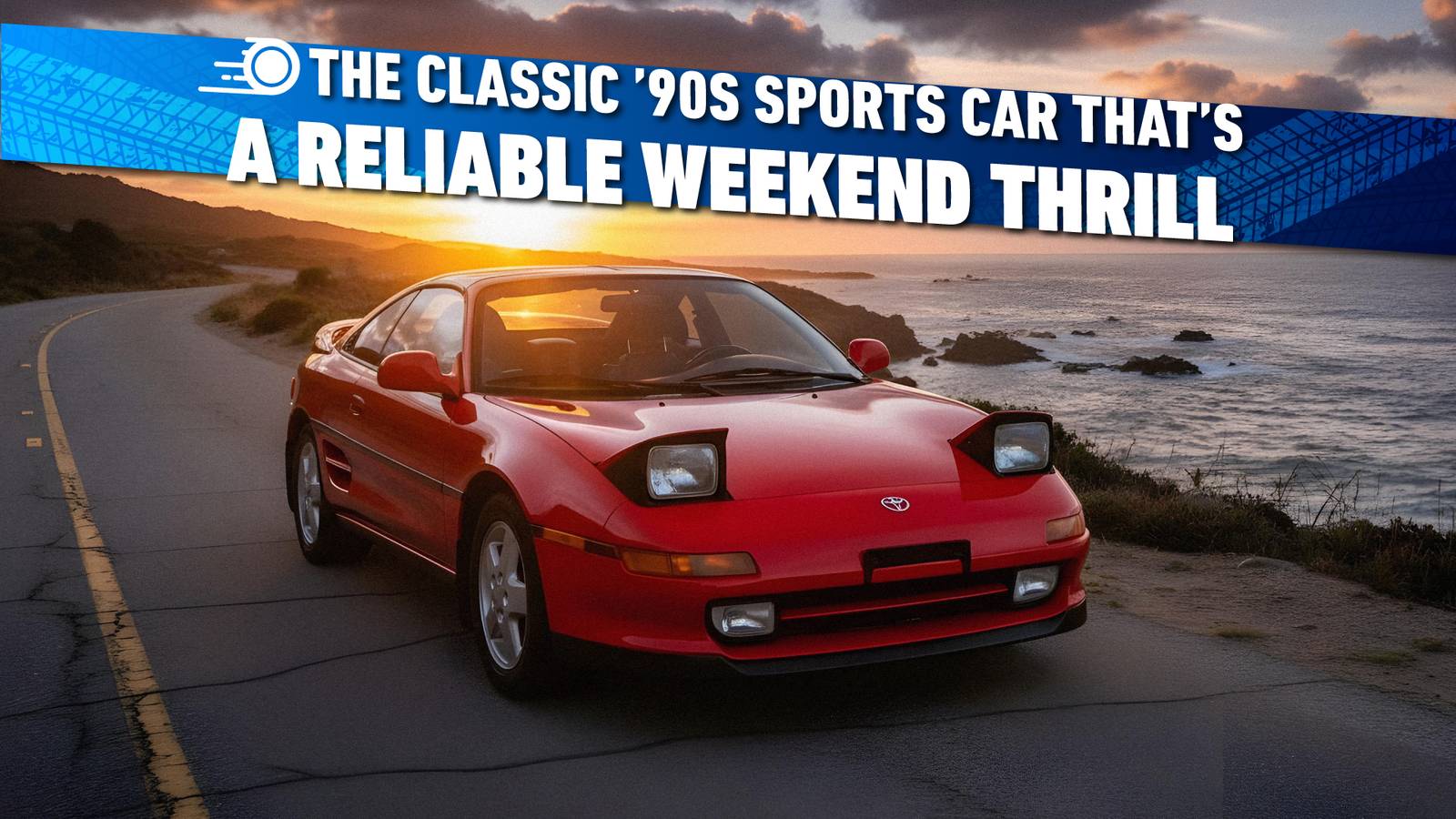
In an era dominated by turbocharged muscle and headlines about horsepower wars, the Toyota MR2 stood apart in the 1990s as a purist’s sports car. While many contemporaries chased peak speed figures or bragging rights, the MR2 focused on something far subtler: the sheer joy of driving. With its mid-engine layout, lightweight chassis, and intuitive dynamics, Toyota’s two-seater offered a visceral connection between driver and machine that few vehicles of its time could match. On winding backroads and twisty canyon passes, it felt alive, a willing dance partner eager to translate every input into motion.
But the MR2 wasn’t just a fleeting flash in the pan. Built with Toyota’s attention to quality and reliability, even decades after production ended, many MR2s still put smiles on the faces of weekend enthusiasts. Unlike some exotic mid-engine sports cars that can devour wallets with maintenance costs, the MR2’s simplicity and Toyota’s engineering ethos result in ownership that’s as rewarding as its performance.
A Back-To-Basics Roadster That Prioritizes Driver Enjoyment

When the Toyota MR2 debuted, it wasn’t designed to break acceleration records or top speed lists. Instead, its mission was far more elemental: build a small sports car that feels right behind the wheel. With a low-slung body, mid-mounted engine, and rear-wheel-drive configuration, the MR2 embodied the timeless principles that make sports cars memorable. Toyota’s engineers kept weight in check, used crisp, purposeful steering, and fashioned a chassis that responded to driver inputs with remarkable fidelity.

Inside, the MR2 doesn’t dazzle with luxury; it doesn’t need to. The cabin is snug, purposeful, and focused entirely on giving the driver intuitive control. Gauges are clear, the gear lever slots into place with satisfying precision, and the pedals are positioned for crisp heel-to-toe shifts. There’s no flabby power steering or excessive electronic intervention to dilute the experience; instead, you get raw feedback and a sense of what the car is doing at all times. It’s a throwback to a purer era when cars were built to be felt, not just driven.
A Driving Experience That’s Full Of Character

What truly sets the MR2 apart is its balance. With the engine nestled between the wheels, the car feels tightly wound, eager to turn into corners with a low moment of inertia that makes direction changes feel instantaneous. Enthusiasts often compare the sensation to that of far more exotic machinery, an impressive feat for a Toyota that, on paper, seems modest. The result is a sports car that rewards skill, invites exploration, and makes every twisty road feel like a playground. Crucially, the MR2 doesn’t demand perfection. While it’s sharp and responsive, it remains predictable at its limits, a characteristic that builds confidence rather than fear. For drivers who want to push harder without risking disaster, the MR2’s balance and feedback make it a true companion on the road. It’s not about being the fastest; it’s about being the most fun.

Mazda’s Forgotten Masterpiece: A 2000s Icon Revisited
With big power in an affordable and practical package, the Mazdaspeed3 was a hot hatch ahead of its time, and here’s why it deserves a comeback.
Bulletproof Engineering That Makes the MR2 Dependable

One of the most compelling reasons the MR2 remains a favorite in the used sports car market is Toyota’s engineering reliability. At a time when sports cars were often associated with finicky mechanics and hefty maintenance bills, the MR2 bucked the trend by being refreshingly robust. Toyota’s philosophy of building cars that simply last permeates every major system in the MR2, from its drivetrain to its suspension components.

The heart of the MR2 varies by generation. Early models featured naturally aspirated four-cylinder engines known for their smooth power delivery and long service life. Later, turbocharged versions introduced in the mid-’90s, particularly in the second generation, added a new dimension of performance without sacrificing Toyota’s hallmark durability. These engines, when maintained properly, can endure high mileage with few issues, a testament to careful engineering and quality control.
Sourcing Parts Easy And Affordable

Routine maintenance items such as timing belts, water pumps, and valve adjustments are straightforward for experienced technicians, and parts availability is excellent thanks to the MR2’s popularity and Toyota’s extensive parts network. Unlike rare exotics, where a single gasket can cost more than a weekend getaway, sourcing components for an MR2 is generally affordable and uncomplicated. Enthusiast communities and aftermarket specialists have also ensured that both OEM and upgraded parts are plentiful. The MR2’s chassis and suspension were designed with both performance and longevity in mind. Durable control arms, resilient bushings, and robust subframes mean that, with regular inspections, these cars can handle spirited driving without succumbing to rapid wear. And because the MR2 lacks many of the overly complex systems found in modern sports cars, there’s less to go wrong, another boon for owners who prefer to spend time driving rather than troubleshooting expensive electronics.

10 Forgotten JDM Icons That Deserve A Comeback
These ten forgotten JDM icons represent some of the most innovative and exciting cars to come out of Japan.
Perfectly Balanced Handling That Still Feels Alive

Where the MR2 truly earns its enthusiast status is in how it moves. Mid-engine cars have long been celebrated for their balance, and the MR2 is no exception. With the engine positioned just ahead of the rear axle, weight distribution is nearly ideal, allowing the car to change direction with alacrity and offer feedback that feels immediate and pure. This poised demeanor transforms tight mountain roads from challenges into invitations. The MR2’s suspension was designed to complement its layout, featuring independent setups at both ends that soak up imperfections without sacrificing control. On smooth pavement, the car feels taut and composed. On rougher surfaces, it remains surprisingly resilient, never jarring or unsettled. The steering, while unassisted by modern electric systems, delivers tactile information that connects the driver to the road in a way that many contemporary sports cars simply cannot replicate.

But balance isn’t just about physics; it’s also about emotional engagement. In the MR2, every corner becomes an interactive experience. Approach a turn too quickly, and the car will let you know, first through the seat of your pants, then through the wheel. Yet it doesn’t punish you with abrupt behavior. Instead, it nudges and invites you to adjust, refine, and perfect your line.

This interplay between car and driver is at the heart of what makes the MR2 so special. For many enthusiasts, the MR2’s handling is its defining characteristic. It isn’t about raw speed; it’s about rhythm and flow. Whether carving through a canyon road at sunrise or navigating backroads on a crisp autumn afternoon, the MR2 makes every moment behind the wheel feel intentional and alive. Even after all these years, few cars in its price range deliver such a concentrated dose of driving pleasure.

Affordable Ownership And Strong Aftermarket Support

One of the most attractive aspects of the MR2 today is how accessible it remains. Unlike many classic sports cars whose values have soared beyond the reach of everyday enthusiasts, the MR2’s market prices remain relatively reasonable. This affordability extends beyond purchase price, insurance premiums are typically modest, fuel economy is respectable for a performance-oriented car, and maintenance costs are predictable thanks to the vehicle’s mechanical simplicity. For those who enjoy personalization, the MR2 world is rich with aftermarket support. From suspension upgrades that further refine handling to tasteful aero pieces that enhance aesthetics, there’s a vibrant ecosystem catering to every level of enthusiast. Performance tuners offer turbo upgrades, engine management solutions, and exhaust enhancements that can significantly boost output without compromising reliability. Brake and wheel packages can transform the car’s stance and stopping power, while interior upgrades bring modern comfort to the classic cockpit.

This aftermarket vitality is more than a convenience; it’s a community. MR2 owners and clubs around the world share knowledge, organize meetups, and host track days where drivers can explore the full potential of their cars in a supportive environment. For newcomers to the classic sports car scene, this sense of camaraderie makes the MR2 not just a car, but a gateway into a passionate enthusiast culture. Moreover, because the MR2 was produced in significant numbers, replacement parts, both OEM and performance-oriented, are widely available and affordable. There’s no waiting months for rare components or paying exorbitant fees for basic items. This ease of ownership lowers the barrier to entry and keeps the joy of driving front and center.
Sources: Toyota U.S., The Drive, RepairPal, Classic.com