
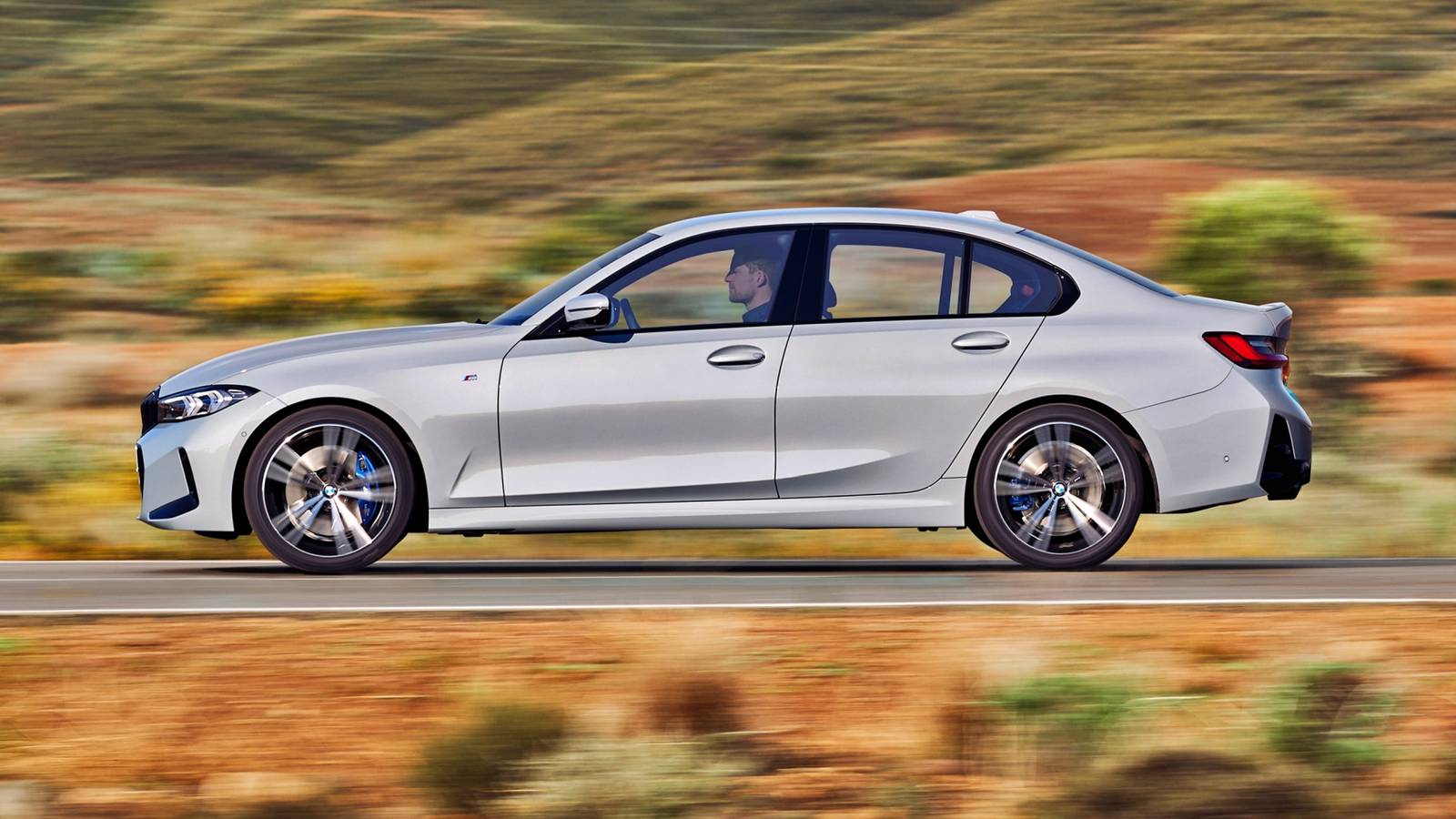
Like many luxury German brands, BMW has been portrayed as a maker of vehicles that are likely to spend more time in the garage than on the road. There is no denying that owning and maintaining a BMW can be expensive, but that doesn’t mean they are automatically unreliable.
Over its long history, BMW has produced some exceptionally reliable models that are renowned for achieving high mileage with proper maintenance. Some of the most reliable BMW models ever made have earned a reputation for Japanese-grade dependability. Below, we are taking a look at what BMW models are going to serve you the best in the long run.
1973–1981 BMW 5 Series (E12)
All Hail The Long-Living M30 Inline-Six

Built between ’73 and ’81, the E12 5 Series not only looks like all sorts of old-school BMW class, but can be exceptionally reliable. You get a sleek yet domineering body, classic kidney grilles, a pointed nose, and taut lines running down the side; it is a 1970s BMW at its most alluring. Today, you can pick up a BMW 5 Series E12 for the average auction price of $11,206, and for that, alongside the sultry build and classy cabin, you get one of the most reliable BMW engines ever created: the M30 inline-six.
There are three M30 engines primarily used in the E12 5 Series: the 2.8-liter M30B28 inline-six, the 3.0-liter M30B30 inline-six, and the 3.5-liter M30B35. While all are renowned for their durability, thanks to cast-iron blocks and simple by modern-day electronic standards, it is the 169-horsepower 2.8-liter M30B28 inline-six under the hood of the BMW 528i that has proved itself for reliability, with reports that owners have put over 300,000 miles on them and are still going strong.
1982–1985 BMW 5 Series (E28)
A Rock-Solid Inline-Six And Fewer Electronics

Slightly newer than the above 5 Series, the 1982–1985 BMW 5 Series (E28) is a collector’s dream. It boasts a slightly more aggressive look; the small kidney grille alongside the double-set headlights gives it an undercover ‘rally’ look about it, and it comes equipped with the famously hardy M20 inline-six; specifically, it is the M20B27 found under the hood of the BMW 528e that should see the most miles and makes the E28 a very reliable BMW.
This SOHC, low-revving (around 4,800 rpm) inline-six was designed for low-stress driving; it boasts thick cylinder walls, a rock-hard bottom end, and only trickles out around 121 horsepower. It isn’t the most powerful BMW ever created, but it does ooze style, and owners have said that if you keep on top of timing belt changes and replace aging vacuum lines, there is no reason that it can’t keep rolling on for between 300,000 and 400,000 miles. Look out for rust in the engine bay, though, which has been reported as a major downfall for them.
1988–1991 BMW 3 Series (E30)
Mechanical Simplicity And High-Mileage Examples

At the center of the 1988–1991 BMW 3 Series (E30)’s longevity is undoubtedly its mechanical simplicity, range of rock-solid M20 inline-six engines, and the relative lack of electronic interference compared to modern-day BMW 3 Series models. Owners on BMW forums have claimed to keep these classic 3 Series going for way over 300,000 miles with simple maintenance and making sure timing belts are changed when they are meant to be, rubbers are replaced when worn, and taking care of the cooling system. Specifically, it is the M20B25-equipped 325i models that are renowned for seeing high miles.
One example kept rolling on for a staggering 1 million miles. This was a lab rat E30 325i that was run nearly continuously as a test by Mobil Oil, and was run in controlled conditions, but it does show that the E30 can see the high miles. If you are looking at buying a 1988–1991 BMW 3 Series, rust and aftermarket additions can ruin its chances of staying dependable, so it is worth checking around the engine bay for rot and asking what has been done to ‘improve’ the model you are looking at.
1994 BMW 3 Series
Enviable Owner Reliability Ratings Say It All

According to reviews on Kelley Blue Book (KBB), the 1994 BMW 3 Series is an exceptionally reliable BMW to own. Among 549 owner reviews, it has earned an average reliability rating of 4.7 out of 5, with 90-percent of owners recommending it. With so many owners saying how dependable it is, there isn’t much more the ’94 BMW 3 Series can do as a reliable compact sedan. The sturdiest 1994 BMW 3 Series model you can get is the 325i, which comes equipped with a 2.5-liter DOHC M50B25 inline-six good for 189 horsepower.
Compared to later versions, the 1994 MY’s M50B25 is relatively mechanically straightforward with only a single VANOS system to maintain, a strong cast-iron block with an aluminum head, and a timing chain instead of a belt. Of course, keeping the cooling system in check and replacing the plastic intake manifold (which is prone to cracking) is key to keeping it running well. If you find a rust-free, untampered-with example, you could join other owners who have claimed to drive over 300,000 miles in them.
1999–2006 BMW 3 Series (E46)
High Owner Ratings And One Of The Most Reliable Engines Under The Hood

Between 1999 and 2006, BMW rolled out the E46 3 Series, a fun-to-drive, aggressive-looking, and most importantly, very reliable BMW. Owner reviews on KBB from 1999 to 2006 have rated it very highly for dependability. The 1999 MY receives a reliability rating of 4.7 out of 5, while all other subsequent MYs get 4.5 for reliability.
RepairPal quotes a $739-per-year maintenance bill, which sounds expensive, but it is actually one of the cheaper BMW models to maintain, while reports of 300,000-mile models are not uncommon. One owner has even claimed to put 700,000 miles on a 2000 323ci, showing that these machines were built to last. The 2000 BMW 323ci boasts a M52B25 NA DOHC inline-six good for 168 horsepower, and is kitted out with relatively simple electrics for the era, a cast-iron block, and is very smooth running, so it is little surprise that people keep them going for so long. Again, rust can be their downfall, so do a proper inspection of the wheel arches and engine bay before driving off in one.
“Reliable vehicle. Gets you where you need to go. Very dependable. No matter what kind of weather – winter, fall, or summer, it will get you where you have to go.”
Owner review of their 2000 BMW 3 Series on Kelley Blue Book
2003–2008 BMW Z4 (E85)
A Dependable Modern Classic Roadster

Boasting a classic roadster silhouette, a low-slung body, and a choice between two reliable M54 inline-six engines, the 2003–2008 BMW Z4 is everything enjoyable about BMW models in one package. There are two flavors of M54 inline-six for the E85 Z4: a 2.5-liter unit under the hood of the 2.5i that kicks out up to 200 horsepower, and a 3.0-liter M54B30 inline-six good for up to 255 horsepower in the 3.0i and 3.0si.
The M54 inline-six is known as one of the most reliable modern BMW engines, and thanks to a sturdy DOHC configuration, single VANOS system, and robust block, maintenance is relatively straightforward compared to some of the more finicky BMW mills out there. The highest KBB reliability ratings for the E85 BMW Z4 are for the 2003 and 2005 MYs, which both receive 4.8 out of 5 and a 95-percent recommendation rate. Cooling system failures are the most recorded problem with the M54 inline-six, but if you notice overheating, coolant leaks, or discolored coolant and address the problem, there is no reason why M54-powered Z4s can’t see more than 200,000 miles of use.
2008–2013 BMW 1 Series (128i)
Boasts The N52 Inline-Six And A Lot Of Owner Love

Sold here in the U.S. between 2008 and 2013, the BMW 1 Series may only be available on the used market, but it makes for a very reliable used BMW model. Prices today range from $6,500 to $14,500 for the most powerful latest iteration; all MYs have been rated 4.6 out of 5 on KBB, and the highest rated MY on J.D. Power, reliability-wise, is the 2013 BMW 1 Series, with a rating of 89 out of 100. It is a lot of sporty BMW hatchback for not a huge amount of money.
The most likely 1 Series to see high mileage is the 128i, which comes equipped with a NA N52B30 inline-six good for 230 horsepower. What makes the 128i’s engine so reliable compared to some of its similarly aged counterparts is that it boasts a timing chain, instead of a belt that needs changing periodically, and a strong Double VANOS system. Maybe most importantly, though, it is naturally aspirated, so no turbocharger problems to worry about. Oil leaks and typically BMW cooling-related issues are the most common complaints, but there are very common claims of 250,000+ miles being put on these models.
2016 BMW 3 Series (F30)
Modern Refinement, Bulletproof Engines, And High Ratings

Boasting an 83 out of 100 J.D. Power reliability rating and a 4.5 out of 5 KBB reliability rating, the 2016 BMW 3 Series (F30) has earned a very dependable reputation. Owners regularly claim to put 250,000+ miles on the 2016 3 Series with proper maintenance. At the center of this is the modern and durable set of engines that are available.
Under the hood of the 328i sits an N20B20 turbo-four good for 240 horsepower, which itself is a durable engine known for its strong bottom-end, but owners have reported chain tensioner problems. It is the N55B30 inline-six under the hood of the 335i that is arguably the more reliable of the two. The 2016 335i’s turbo-six can kick out 300 horsepower and is renowned for its smooth running, strong VANOS setup, timing chain (smaller risk of catastrophic engine failure), and a very robust TwinScroll turbo. On top of the strong engine choices, the 2016 BMW 3 Series is built upon a very durable chassis, strong suspension, and boasts a corrosion-resistant coating underneath.
2016–2018 BMW X5 (F15)
Durable Inline-Six And High Reliability Ratings

The 2016–2018 BMW X5 (F15) is one of the most reliable BMW SUVs ever created. On J.D. Power, the 2016 to 2018 BMW X5 has received reliability scores that range from 80 to 84 out of 100, with the 2018 MY garnering the most favorable feedback. The standard suspension is durable and tough; high-strength steel is used for the chassis, and owners have reported that the shocks and bushings on their X5 have lasted for 100,000 miles before needing replacement.
The xDrive35i and sDrive35i models come with the most renowned engines in the lineup: the N55B30 inline-six. Like the above 3 Series, the 2016–2018 X5’s N55 turbo-six is known for its smooth running, sturdy timing chain, robust bottom end, and impressively hardy TwinScroll turbocharger. On top of the 300 horsepower it sends out and its torquey feel, many owners have said that with simple maintenance (oil changes, caring for the cooling system, and replacing rubbers and seals), they have put over 200,000 miles on them.
2020–2022 BMW 3 Series (G20)
A Modern Lesson In Luxury Dependability

Despite modern BMWs having a reputation for high maintenance costs and finicky builds, the 2020–2022 BMW 3 Series is an exemplary model that shows you can have your cake and eat it. Two engine options deserve special attention: the B48 inline-four under the hood of the 330i, and the B58 inline-six under the hood of the M340i. Both are reliable BMW engines, but the B58 is one of the best modern BMW engines available. In the M340i, the turbocharged B58B30 can churn out 320 horsepower, get you to 60 mph in around 4.4 seconds and reach top speeds of 155 mph (limited).
You get a lot of power and great sprinting ability, and it is very reliable. This is courtesy of a strong cast-iron block, a smooth feel balanced out by the six-cylinder configuration, a closed-deck design, which improves cylinder strength under boost, and a timing chain. Owners on J.D. Power have rated the 2022 BMW 3 Series 84 out of 100 for reliability, and while it is relatively new and the chance of seeing hundreds of thousands of miles is low at the moment, some owners have already put 150,000 miles on theirs with simple maintenance.
Sources: Classic.com, J.D. Power, Kelley Blue Book, RepairPal, CarEdge, E46 Fanatics, and Bring A Trailer.