
Toyota has always been very good at making small cars feel intentional. Not cheap. Not compromised. Just… small. This proficiency in small car making isn’t overly special to Toyota. Many Japanese competitors have a similar gift. However, compared to American carmakers, always chasing bigger everything, Toyota perfected the art of building compact vehicles that last forever, drive better than expected, and occasionally slip something downright weird into the lineup.
This list celebrates the best small Toyota cars of all time. Some are iconic sports cars, some are workhorses, and some feel like engineering experiments that somehow escaped into the real world. All of them prove that Toyota’s smallest ideas often leave us utterly charmed.

Why Trump’s Plan For Micro Cars In The U.S. Would Be Awesome—But Impossible
Affordability is the prime problem for car buyers. It won’t be solved via tiny cars. But there’s a kernel of promise in Trump’s offhand comment.
Toyota Pixis (Kei Truck)
Overall Length: Approximately 133.7 inches

The Toyota Pixis is the smallest car on this list, and it’s not even a car. The Kei trucks are special because they are not trying to impress anyone. These micro machines are built to comply with Japan’s kei vehicle regulations, for which the Japanese government offers tax breaks for vehicles that are under 11.2 ft long and have engines smaller than 660 cc. The Pixis keeps things delightfully simple. A tiny footprint, upright cab, and a flatbed out back make it more tool than toy, but that’s exactly the appeal.

Power comes from a 660cc three-cylinder engine producing roughly 50 horsepower, paired with a manual or automatic transmission. Rear-wheel drive is standard, with all-wheel drive available on some models. Payload capacity (772lbs) is shockingly usable for something this small, and visibility is excellent thanks to the cab-over design.
The Pixis represents Toyota at its most pragmatic. It exists to work, fit anywhere, be cheap, and sip fuel while doing it. In a world full of oversized trucks pretending to be rugged, the Pixis just does the job.
Toyota Sports 800
Overall Length: Approximately 141 inches

The Sports 800 is Toyota’s original small sports car, and it feels like a doodle done in aluminum and optimism. Introduced in the mid-1960s, it was tiny even by the standards of the time, with an emphasis on light weight and efficiency rather than raw speed. Think Japanese Mini Cooper.

Under the hood sat an air-cooled, flat-twin engine producing about 45 horsepower. That doesn’t sound like much, and it isn’t, but the car weighed under 1,300 pounds. Rear-wheel drive, a four-speed manual, and a removable roof panel made it feel more like a scaled-down European roadster than anything else Toyota was building at the time.
The Sports 800 matters because it established Toyota’s small-car philosophy early. Lightness matters. Balance matters. Efficiency can be fun. Every compact Toyota that followed owes something to this undeniably beautiful little pioneer.

10 JDM Legends You Can Import And Daily Drive In 2025
Enthusiasts rejoice! These JDM icons can now be legally imported in the U.S. Just remember that the driver’s seat is on the other side.
Toyota Starlet Turbo
Overall Length: Approximately 146.5 inches
The Starlet Turbo is what happens when Toyota takes a sensible economy car and decides to party. Based on the humble Starlet hatchback, the turbocharged version transformed it into a genuine hot hatch long before that term became mainstream.
Power came from a 1.3-liter turbocharged four-cylinder, producing around 135 horsepower. In a car weighing under 2,000 pounds, that was more than enough to cause chaos. Front-wheel drive, a five-speed manual, and minimal electronic interference made it feel raw, quick, and unfiltered.

The Starlet Turbo never tried to be refined, and that’s why enthusiasts love it. It’s a reminder that small Toyotas can be playful, punchy, and just a little bit unhinged when the engineers are feeling generous.
Toyota Sera
Overall Length: Approximately 152 inches

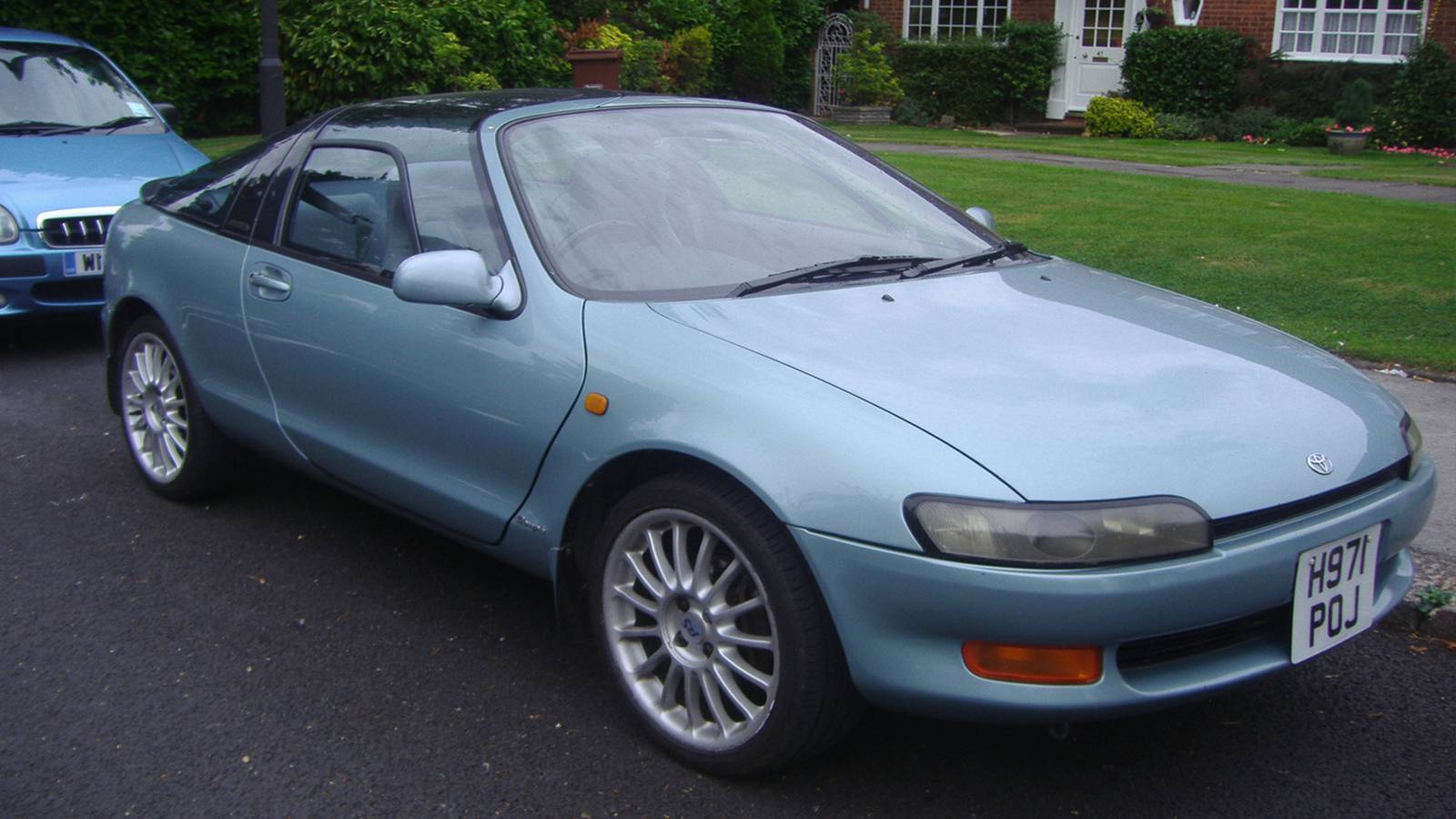
Here’s the real star of the show. The Toyota Sera looks like it fell out of a concept car show and into a production line by accident. Built in the early 1990s, the Sera is famous for its very unusual butterfly doors, which swing up and forward in dramatic display like a bug trying to look bigger, so a bird doesn’t eat it. It’s still one of the most visually distinctive cars Toyota has ever produced.

Mechanically, the Sera is far more normal than it looks. It uses a 1.5-liter naturally aspirated four-cylinder producing around 110 horsepower, driving the front wheels through a manual or automatic transmission. Honestly, a bit of a let-down considering how wild it looks. Still, the chassis is derived from the Starlet, prioritizing light weight and efficiency over outright performance.
The Sera’s charm is its refusal to be boring. It’s not fast. It’s not practical. But it is so joyful. Toyota built it simply because they could, and that alone makes it special.

10 Legendary Toyota Engines That Refuse To Die
These are the engines that built Toyota’s legacy of reliability.
Toyota MR2
Overall Length: Approximately 155.5 inches for early generations

The Toyota MR2 is the smallest mid-engine sports car Toyota ever built, and still one of its boldest moves. First launched in the mid-1980s, the MR2 placed the engine behind the driver, sent power to the rear wheels, and wrapped it all in a compact, lightweight package that looked like something from a comic book.

Engine options ranged from naturally aspirated four-cylinders to turbocharged units producing up to 200 horsepower in later models. Manual transmissions were common, curb weight stayed low, and handling was sharp enough to keep drivers grinning. The MR2 wasn’t forgiving, but it was rewarding.
What makes the MR2 legendary is that it felt exotic without being fragile. It delivered balance, precision, and drama at a price normal humans could afford. A small Toyota with big supercar energy.
Toyota Corolla (Sixth Generation)
Overall Length: Approximately (167.3 inches)

The sixth-generation Corolla is the largest car on this list, but it still qualifies as small by modern standards. Introduced in 1987, this generation refined everything Toyota had learned about compact cars and packaged them into something nearly indestructible.

Engine options included a range of four-cylinder units producing roughly 90 to 115 horsepower, paired with manual or automatic transmissions. Most models adopted front-wheel drive, improving interior space and ride comfort. Fuel economy was strong, maintenance was simple, and reliability was unmatched.
This Corolla didn’t chase excitement. It chased perfection through consistency. It’s the car that turned Toyota’s reputation for dependability into a global truth, one commuter at a time.

This Special Miata Shares Something Unbelievable With The Ferrari F40
The Miata is the patron saint of performance for regular folks, but a V-6 takes this restomod to the next level.
TopSpeed’s Take
The best small Toyota cars aren’t about excess. They’re about intention. Whether it’s a kei truck built to work, a mid-engine sports car built to thrill, or a Corolla built to outlast civilization, Toyota’s smallest cars consistently deliver more than expected. There is something really special about these super underpowered, little cars that is undeniable once you’ve driven a few. It forces perspective on what we Americans think we need.