
Here’s the near-term bad news on the EV front: Brands are dropping models for the U.S. The most recent EV to get mothballed for American buyers is the Kia EV 4. This midsize-ish model was meant to be a ladder up in EV ownership to the bigger, and more expensive EV 6. Carmakers know that younger buyers are hungry for EVs, so Kia slashing the EV 4 is bad news for that brand. Today, the cheapest Kia EV 6 will run you $42,900. That’s “cheap” for an EV, but it’s not inexpensive vs., oh, the leading-selling crossover in America, the Toyota RAV4, which starts at $31,900.
EV sales crested 10 percent of all cars sold before $7,500 federal incentives evaporated, but they’ll be lucky to reach anywhere close to five percent of sales for the fourth quarter of 2025. Then again, there are really great deals on EVs right now.
And we’re about to see a whole new wave of EVs that, arguably, aren’t just more affordable, but that are more specifically targeted directly at their gas competitors. Here’s where the EV market stands right this second—and where it’s headed.

How This Budget EV Offers Impressive Range Without Breaking The Bank
If you’re planning to buy an electric vehicle that offers a decent range, but doesn’t burn a hole in your wallet, you need to check this one out.
Bargain Shoppers To Aisle 5!

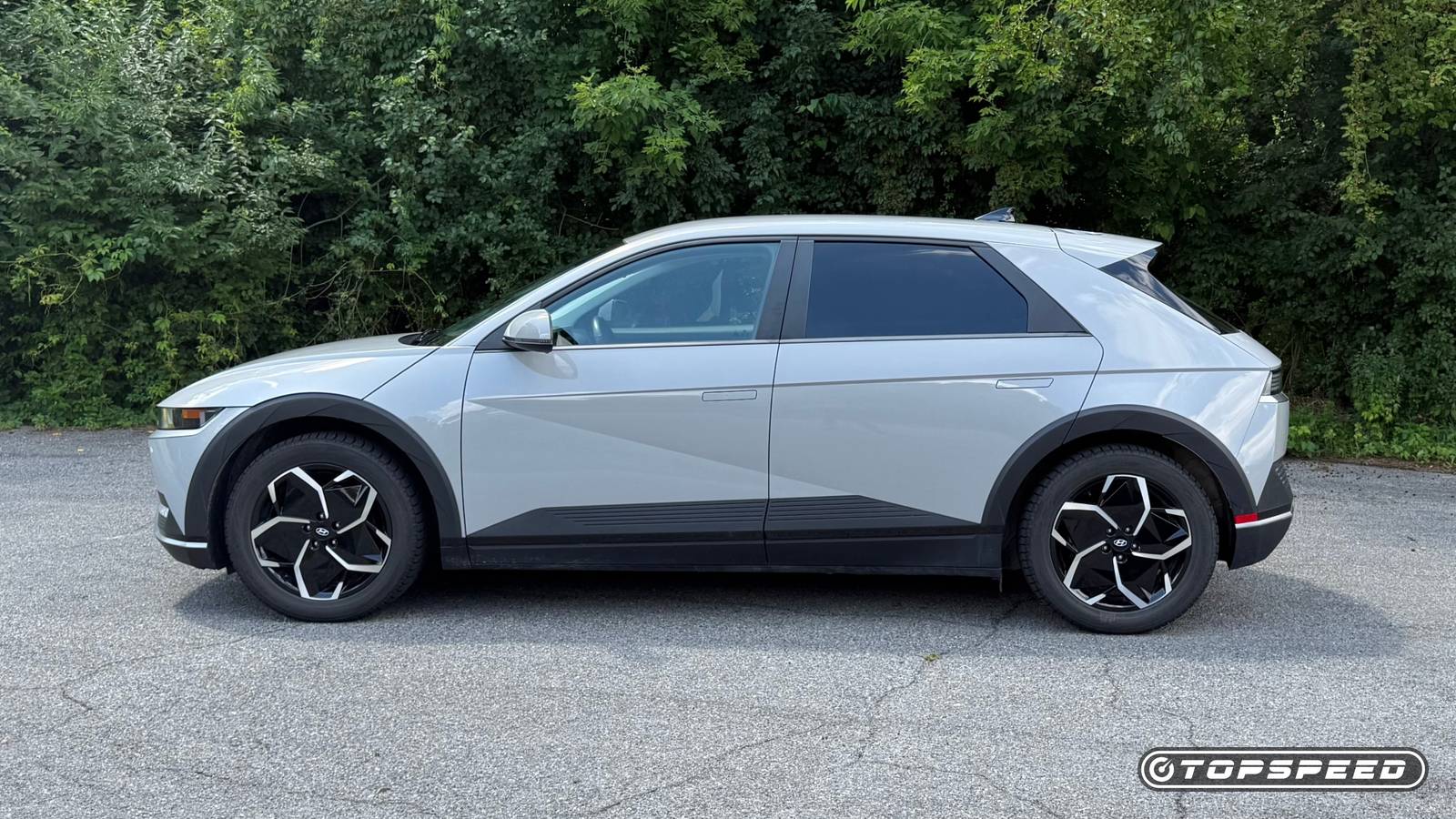
The first twist in the plot has been carmakers slashing EV prices. The 2026 Hyundai Ioniq 5 now starts at $35,000. That’s a massive, $7,600 cut vs. what that same car ran in 2025. Or, put another way, that’s a total offset of the expired federal incentive. Hyundai also has $249-a-month lease rates on the SE RWD Standard Range. Add in $4,000 down, and you’re spending $10,000 in total over the life of that loan, which isn’t a bad deal for just about any lease. Also, we think the Ioniq 5 is pretty dandy, for what that’s worth.
Ford’s Also Discounting Its Mach-E

The base MSRP of the Mach-E is $37,995. That’s more than the Ioniq 5, for a smaller car. But Ford’s also offering zero-percent financing on 72-month leases and no money down on the Mach-E. Since the average car payment has crested six percent, the math on zero-percent financing is definitely worth penciling out. If you’d rather lease, that’s reasonable, too. You’d pay $259 a month, with $4,459 down.

Why A Range-Extended Ford Lightning Will Be Great For The Pickup Truck Business
Newfangled Scout is already headed this direction, but Ford’s reboot is going to lift the entire pickup segment.
Is The Ioniq 6 Toast?

This probably feels like a strange question to be asking about a car that just got a hotter twin in the form of the Ioniq 6 N that will come in limited quantities to the U.S. next year. That 641-horsepower beast would seem to be a cherry-on-top exclamation point for Hyundai’s EV presence. Yet there have been a bunch of rumors swirling that Hyundai has been planning to nix sales of the Ioniq 6 this coming year. Perhaps that wouldn’t be too shocking. Even with last-minute EV shoppers this past summer, Hyundai has actually sold fewer Ioniq 6s this year vs. their 2024 pace. Hyundai neither confirmed nor denied stopping sales of the Ioniq 6 for 2026:
“More details will be released on U.S.-market availability for the regular Ioniq 6 in the near future. Stay tuned for more information.” —Hyundai Spokesperson
The $33,600 Chevy Equinox EV Is A Steal

It would be a dereliction of duty not to mention the Chevy Equinox EV while we bang on about bargains. The $33,600 base price is right in line with gas crossovers that compete for the same buyer, and Chevy’s also offering zero-percent deals for 60-month terms. Again, because of higher interest rates, any time you can lock in a no-interest payment, you’re looking at a much more affordable loan.
Toyota, Subaru, Chevy, And Nissan To The Rescue

There are two leaders emerging for EV affordability in the coming year, the revamped $29,990 Chevy Bolt and the $31,845 Nissan Leaf (both prices include destination charges). These two are similarly sized, roughly on the scale of small crossovers like the Subaru Crosstrek. Why would you pay more for the Nissan? Perhaps to get the 303-mile maximum range of the Leaf, vs. 255 miles for the Bolt. FYI, the Leaf is out now—while the Bolt won’t hit dealers until early 2026.
Rivals To The Bolt And Leaf

The mention of the Crosstrek is apt because there are four twin Toyota-Subaru EVs coming in 2026. The smaller duo is the Subaru Uncharted and the Toyota C-HR. While we don’t have exact specs, having sat in both of these they each seem to have slightly tighter quarters than either the Bolt or Nissan Leaf. Subaru has already said the Uncharted will start at $36,445, but we don’t yet know the C-HR’s starting MSRP.
Off-Road EVs, Too

If space is what you need, the better to haul your gear to a mountain cabin, then instead look to the Subaru Trailseeker and the Toyota bZ Woodland. These wagon-ish crossovers are very much of the scale of the Subaru Outback, and with lifted bodies, AWD, 8.3 inches of ground clearance, and very specifically programmed off-road capabilities that take advantage of EV-specific torque, this pair may offer the most exciting tech to come to affordably-priced EVs in 2026. We’re expecting prices in the mid-$40,000 range. To be honest, that’s not bad for EVs that finally compete vs. other four-wheel-drive crossovers for dirt-chewing capability.

Why Toyota Had To Adopt This Technology From Subaru
The untold story of Toyota’s reliance on Subaru’s groundbreaking feature
Not Dead, Just Shifting

FYI, just because a brand kills off a model doesn’t mean they’re ditching EVs. Acura, for instance, axed the Acura ZDX SUV as incentives fizzled. But that was always just a placeholder for the brand. The ZDX was based on the Honda Prologue, and both the Acura and Honda are just the Chevy Blazer EV underneath. The move to drop the ZDX was smart, because it makes way for Acura’s in-house built RSX, which will share a platform with Honda’s forthcoming 0 Series crossover. Both are radical styling and platform departures for the shared brands, so winding down ZDX as the RSX comes along is pretty key. Likely, both the 0 Series and RDX will debut by the end of 2026.
Rivian, Slate, Will Offer Alternatives

It’s easy to think this is just a story about affordability. It’s not. It’s about market mix. Up until this point, there’s been a lot of sameness to EVs. As much as buyers say that EVs are too expensive (and that’s very real), there’s also a reality that we all like variety. When the Tesla Model S arrived it was utterly game-changing. It was faster than anything that ran on gas. Buyers suddenly realized EVs could be cool. But as they became mainstream, the novelty wore off. Tesla not only whiffed on the Cybertruck, but buyers realized a tablet plastered to the dash in place of real instrumentation was a hack, not a benefit. And Tesla wasn’t alone in losing the plot.
TopSpeed’s Take

Today, the market shift is real. Mainline carmakers like Toyota, Nissan and Honda are about to step into the EV market with both feet, and more niche players like Volvo with their EX30, Rivian with their forthcoming R2 and R3, and Slate Auto with their affordable Truck will showcase a variety of alternative formats and stylistic experiments that will seem cool and different. We’re not just about to see genuine price parity on EVs vs. their gas counterparts. We’re about to see creativity that reflects the broader auto market, regardless of propulsion. Incentives might be dead, but buyers are going to stay interested in EVs because the tech benefits of ultra-quiet, very fast cars are real—as is never visiting a gas station, and paying less for fueling and maintenance.