
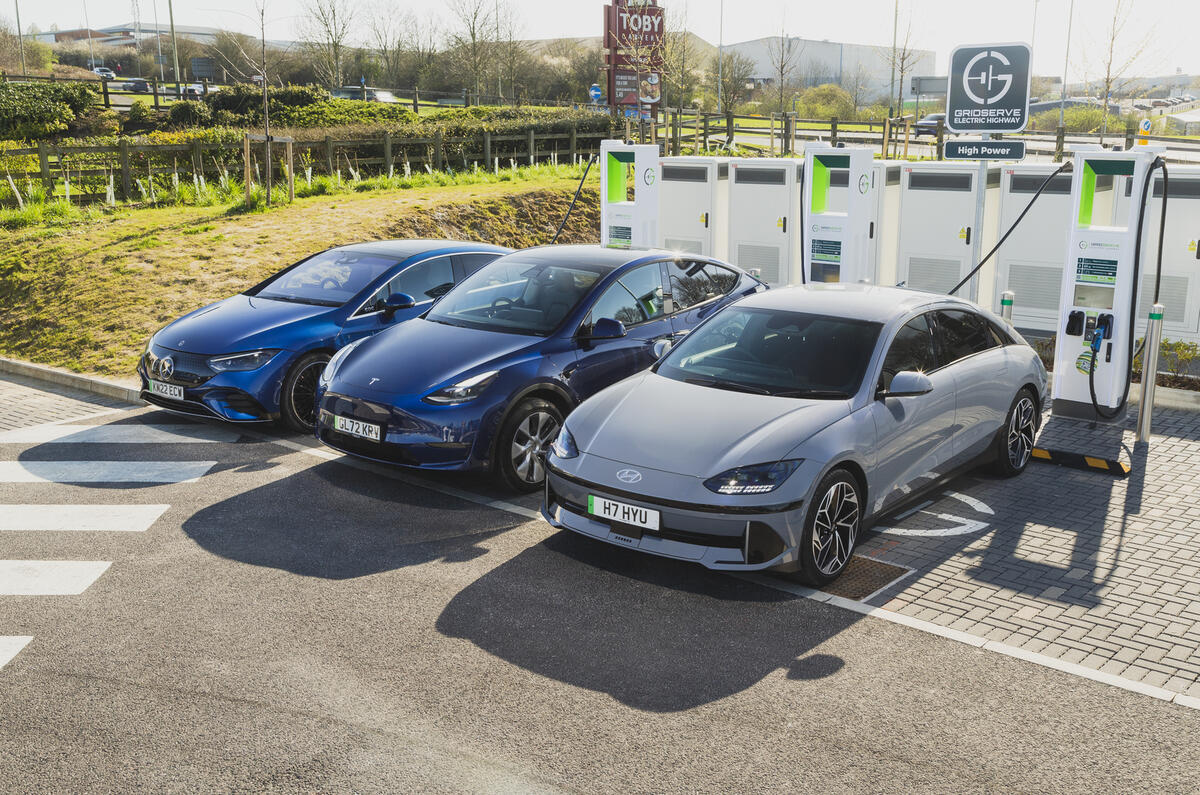
The government is set to launch a review that will consider whether to soften the zero-emission vehicle (ZEV) mandate targets for electric car sales from 2027-2035.
To be launched imminently, the review is set to last six weeks. It will look to consult with car makers, wider industry and other stakeholders to reduce the proportion of EV sales that car makers need to make between 2027 and 2035, at which point all new vehicles must be zero-emissions under the current plan.
There is a fear within government that the ZEV mandate will begin to impact the viability of brands operating in the UK, putting jobs at risk.
This will be a significant consideration of the review. However, it’s also possible that no changes will be made, or just minor edits, with all options said to be on the table still.
Even so, the review will undoubtedly be welcomed by nearly all legacy car makers, who have long argued that the targets aren’t reachable and don’t keep pace with market interest in EVs. This will be their chance to have their say on the record and try to influence a change in the policy.
The ZEV mandate was introduced in 2024 and 22% of sales had to be electric. It rose to 28% in 2025 and is at 33% this year. Next year’s target, the first impacted by the review, is at 38%. From there it rises sharply to 52% in 2028, to 66% in 2029 and to 80% in 2030. There are no set target for the years between 2030 and 2035 (100% electric) at this stage.
The wider view of industry is that this is simply not achievable. The most recent set of car sales data published by the Society of Motor Manufacturers and Traders revealed that EV sales rose 44.5% year on year from July 2025 but the current run rate of EV sales this year is still only one in four, when one in three is needed.
One review has already taken place on the ZEV mandate. This lowered fines for non-compliant cars sold from £15,000 to £12,000 and allowed a greater degree of flexibility between banking and borrowing EV sales against future years, as manufacturers introduced electric cars as different rates.
Low-volume car makers were also given more time to apply and certain exemptions applied, while hybrid cars were confirmed as being allowable for sale from 2030 until 2035.
The review would be the first major policy intervention into the industry by the Andy Burnham administration.
There is a genuinely held fear about what impact the ZEV mandate will have on car makers that have invested in facilities and people in the UK over many years and what it will do to their viability and therefore jobs.
There is also awareness that new Chinese entrants to the market aren’t suffering in the same way as the legacy car makers in having to make a pivot towards EV. They won’t lose out on jobs or cancel any market investment into the UK in the way that existing stakeholders will.
The full scope of the review isn’t yet known, but it’s possible that targets for the years 2031 to 2034 could also be set. There’s no indication yet if the 2035 deadline itself is up for review.
However, given the role that the UK car parc plays in the wider net-zero legislation for 2050, it has long been anticipated and accepted that an overwhelming majority of new car sales must still be electric by 2035 if the legally binding net-zero by 2050 will be realised.