
That means there are few physical controls, with the drive selector moving to a column stalk and the climate controls integrated into the touchscreen.
However, this will run new software, entirely different from that in the current cars and promising a “short user interface journey”.
The centre console is shown as a flat surface but will open to reveal cupholders and cubbies.
In the back, the GT will be configured with two seats and a fixed centre armrest as standard, although a normal bench may also be offered.
Thanks to the bespoke EV architecture, rear leg room should be comparable to that of the full-size Range Rover, while a full-length glass roof will let in plenty of light. Rear door access and head room are said to be very accommodating despite the sloping roofline.
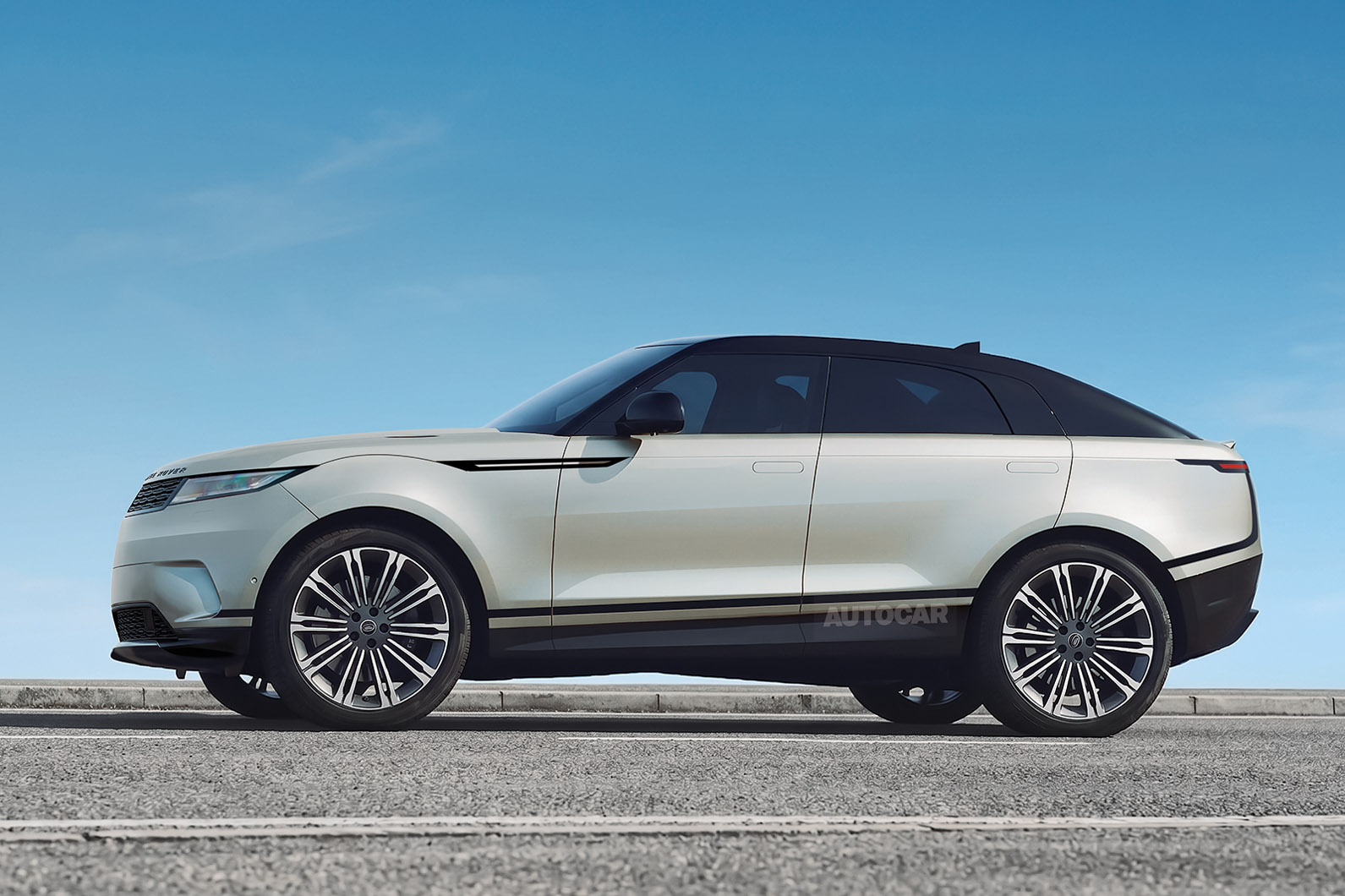
The GT will be the first car to use the new EMA platform for smaller and mid-sized Land Rover and Range Rover models.
It was pitched originally as a flexible architecture with multi-powertrain compatibility and later as a pure-EV platform engineered exclusively to take battery power, but JLR has recently confirmed that cars on EMA will, in fact, offer the choice of hybrid or fully electric systems, in line with global market trends.
The second EMA-based car is expected to be the new Defender Sport, a smaller and more affordable take on Land Rover’s flagship 4×4.
This is expected to in effect replace the Discovery Sport and possibly the Range Rover Evoque.
Q&A: Martin Limpert, Managing Director, Range Rover
Will existing Range Rover buyers take to the new electric models?
“We think Range Rover EVs are a culmination of everything the brand has stood for over the past 56 years. It’s more refined and more effortless with one-pedal driving and faster traction management. If there’s one car where an electric powertrain makes sense, it’s a Range Rover. We have plenty of people on the waiting list who are asking when the electric Range Rover is coming.”