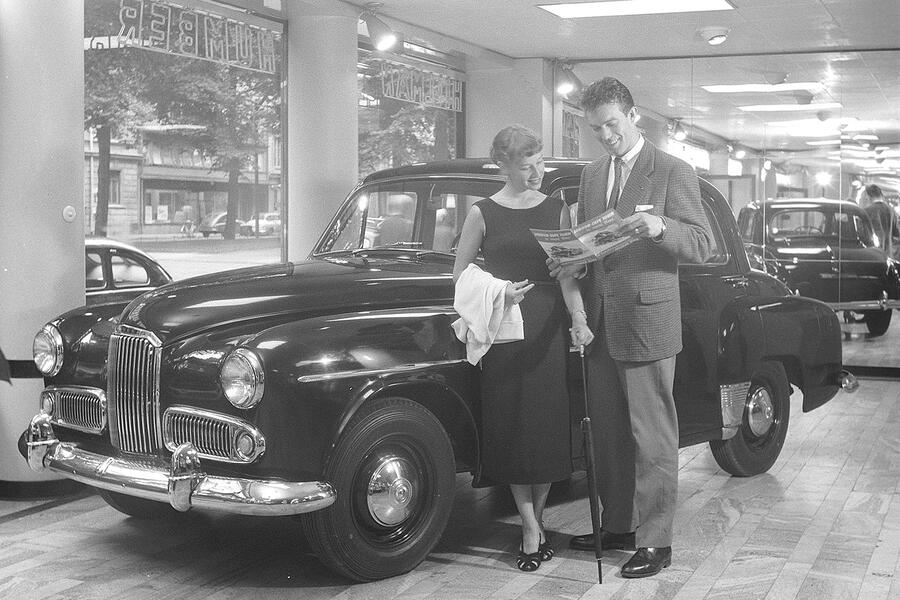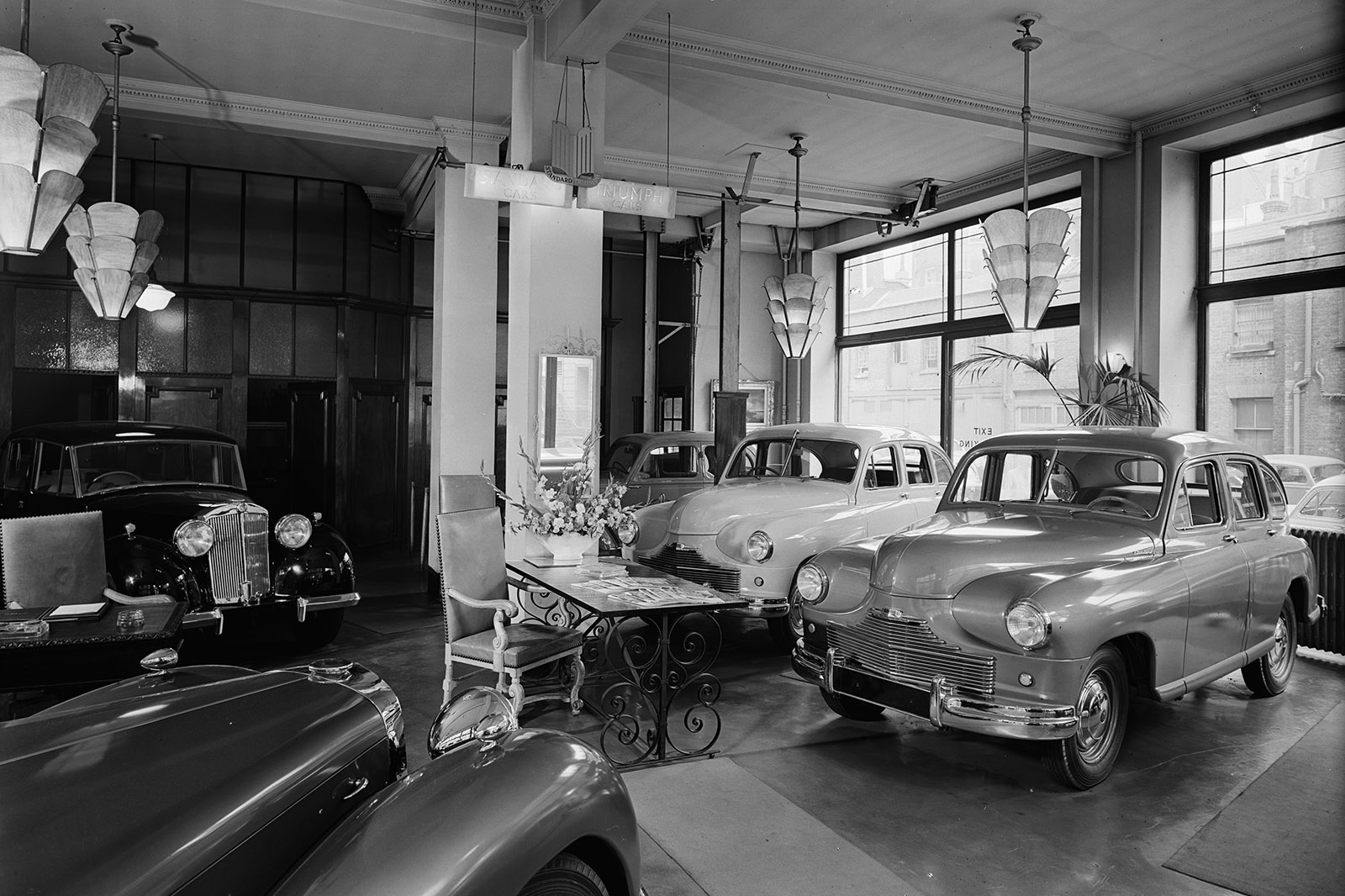
Despite empty purses and a 66% sales tax, demand for new cars was strong – and unfulfilled – in post-war Britain
Porsche recently created a special 911 to celebrate the 75th anniversary of the firm’s British debut, at the 1951 motor show in London.
“[The 356’s] extremely low build and smooth lines, apart from its being the first German car to be shown at Earls Court since the war, should arouse considerable interest,” commented Autocar. “This beautifully streamlined, high-performance coupé, based on modified Volkswagen mechanical components, has a surprising capacity for high cruising speed and low fuel consumption.”
Among the 64 car makers present, Porsche was the sole representative of Germany, and one of just 11 from mainland Europe – not that it mattered because, as we pointed out, “none of these cars of Continental origin can normally be purchased in this country. But to the vast majority, nor can any other car. When it will once again be possible for the ordinary mortal to attend the show as a prospective purchaser remains to be seen. Until then, he can but stand – and stare – and wish.”
The misery of the war was to blame. Britain’s debt had more than tripled, leaving it with £21.4 billion to repay, or £434 per citizen (£16,630 today), despite selling many of its foreign assets, yet it needed to spend huge sums on importing food and reconstructing its bombed cities and industries.
Severe austerity and an export drive was the new Labour government’s drastic solution, its motto being “export or die”.
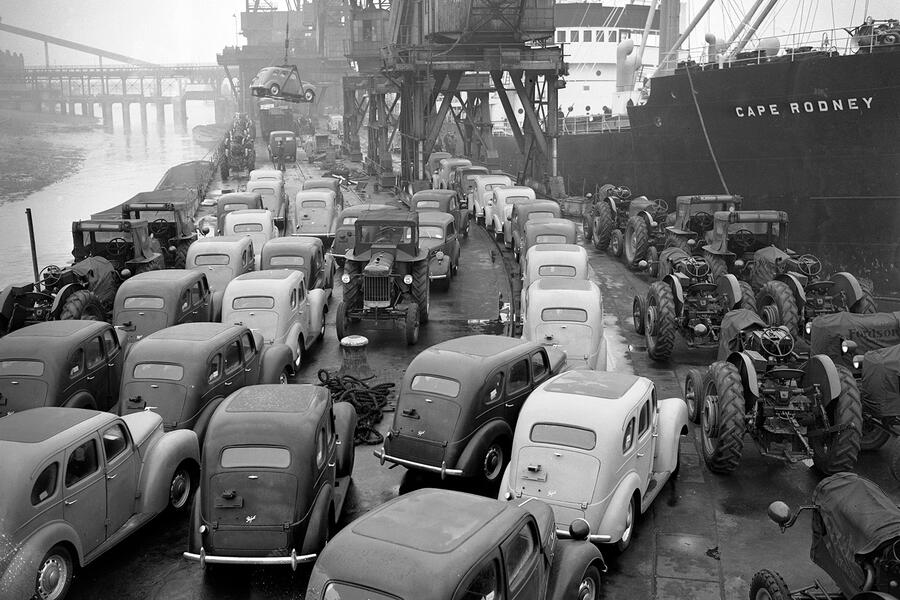
Makers of all goods were set record-high export targets-that for cars being three-quarters of all production. This drive was enforced by the Ministry of Supply allocating steel only to those car makers that hit their targets. With so much reconstruction and such an industrial expansion needed around Britain, demand for this vital raw material far outstripped supply, so it had to be carefully rationed among key industries.
Having switched back from war work remarkably quickly, British factories built 335,000 cars in 1948 and shipped an unprecedented 68% of them abroad-mainly to the US, Empire and Commonwealth. Waiting lists for new cars in Britain grew rapidly, despite empty purses and a hefty purchase tax of 66%, and in many cases eventually stretched to five years.
“The stage, then, was perfectly set for the racketeer and the unscrupulous but ‘within the law’ trader,” we explained. “All that was necessary was to buy as many cars as possible and sell them as quickly as possible. This is not a jungle law; it is peculiar, in its victimisation of others, to civilisation. It has been done with genuine second-hand cars. It would have been done with new cars, to such an extent that hardly a single new car would have reached a genuine buyer at list price plus purchase tax. This is no exaggeration; the corruptive influence of the inflated prices offered for new cars was such that very few people would have had the moral fibre to resist it.”
What had stopped such lucrative scheming was a ‘deed of covenant’ system enforced from July 1946 by the British Motor Trade Association, which bound a buyer not to sell his car within six months without the BMTA’s consent, at pain of a penalty amounting to 45% of the list price of the car plus purchase tax.
It took just six months for this to be challenged in the high court – but the judge sided with the BMTA, granting an injunction restraining one Charles Falco from reselling his Vauxhall. The result was important, we reported, in that it established the legality of the covenant.
Another injunction was granted a few months later to restrain “a firm of dealers from inducing purchasers of new cars to break the contract” in the form of a cheeky calendar image. In March 1947 the bound period grew to 12 months, as waiting lists continued to lengthen, worsened by a coal shortage halting factories.
Another notable court case came in late 1948, as London dealers Roy Salvadori (a future Formula 1 star) and William Mansfield were found to have conspired to personally breach the covenant and procure breaches by others, “adopting every available means to cover their tracks and resorting to false names, false addresses and false documents”.
The covenant period was doubled once more in December 1950, to our dismay, and remained applicable to certain models until January 1953.