
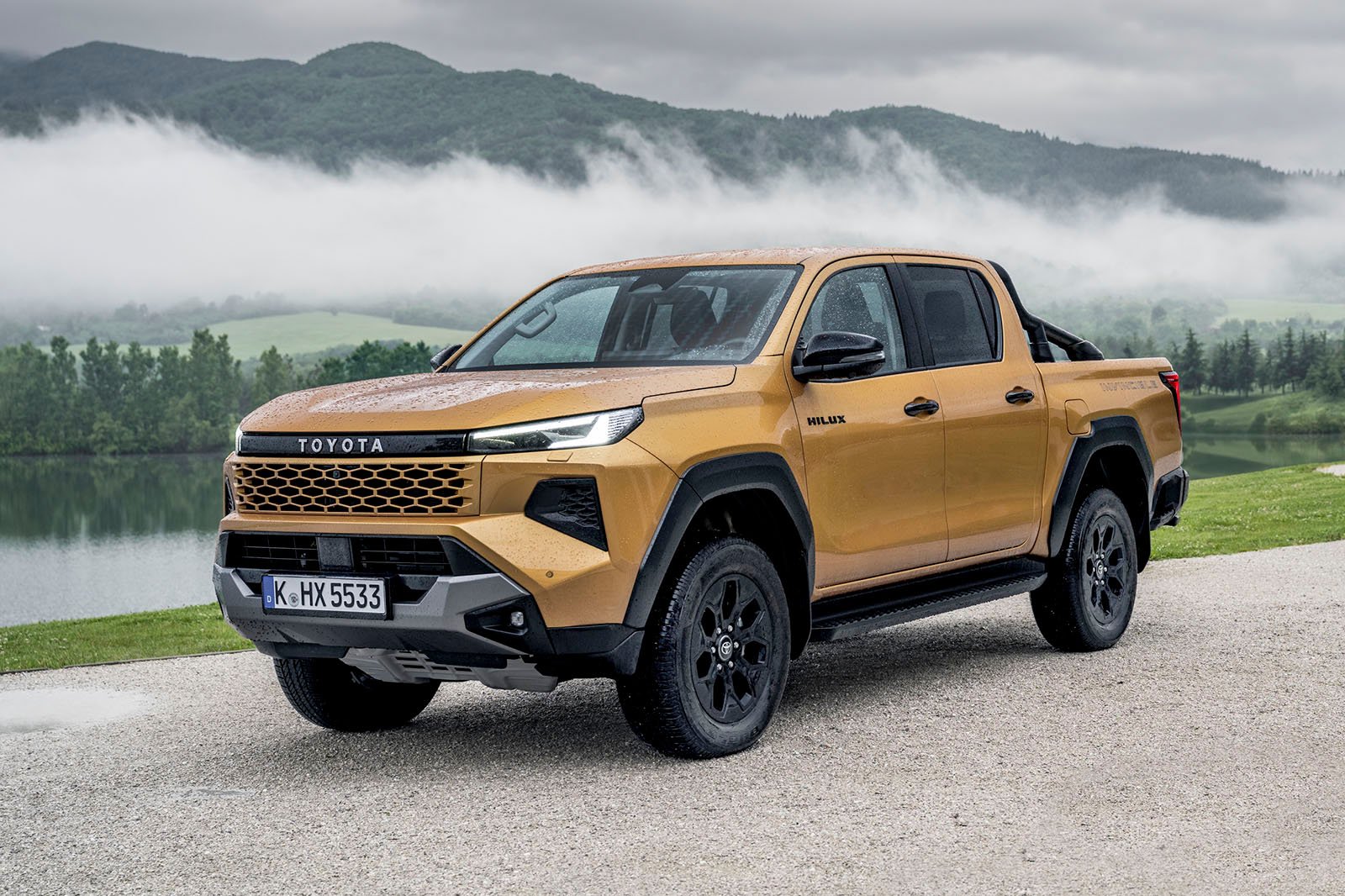
The Hilux retains its separate body-on-frame design from last time, although the chassis’ side-rail thickness has been increased, the front crossmember has been stiffened and redesigned to accommodate electrically rather than hydraulically power-assisted steering and the front suspension towers have been strengthened.
There are double wishbones at the front with redesigned lower arms, new bushes and a stiffer anti-roll bar; and a rigid rear axle suspended on leaf springs. The spring and dampers rates have been retuned all round.
There are new mounts for the engine and body as well, plus the body receives 36 new spot welds for better stiffness and isolation.
By autumn 2026 Toyota is going to offer a rear-seat delete option, fitted and homologated in the UK before registration when cars land here, which will restore the double-cab to commercial tax status (not unlike the way it turns Land Cruiser 4x4s into commercial vehicles).
Toyota says users would prefer that over the single-cab Hilux, because it gives them somewhere dry and (relatively) secure to store gear, which is what they mostly use the back seats for anyway.
The load bed is the same as before except for new steps at the sides and rear. There are more basic variants elsewhere, but here we get a 48V mildly hybridised 2.8-litre four-cylinder diesel engine making 201bhp, which is carried over without mechanical change from the previous Hilux, where it made its debut in 2025.
There’s a fully electric version too, but this 48V diesel will remain the volume choice. It comes exclusively with an automatic gearbox.
There will be four trim grades, Active, Icon, Invincible and Invincible X, with pricing from around £44k-£54k.