
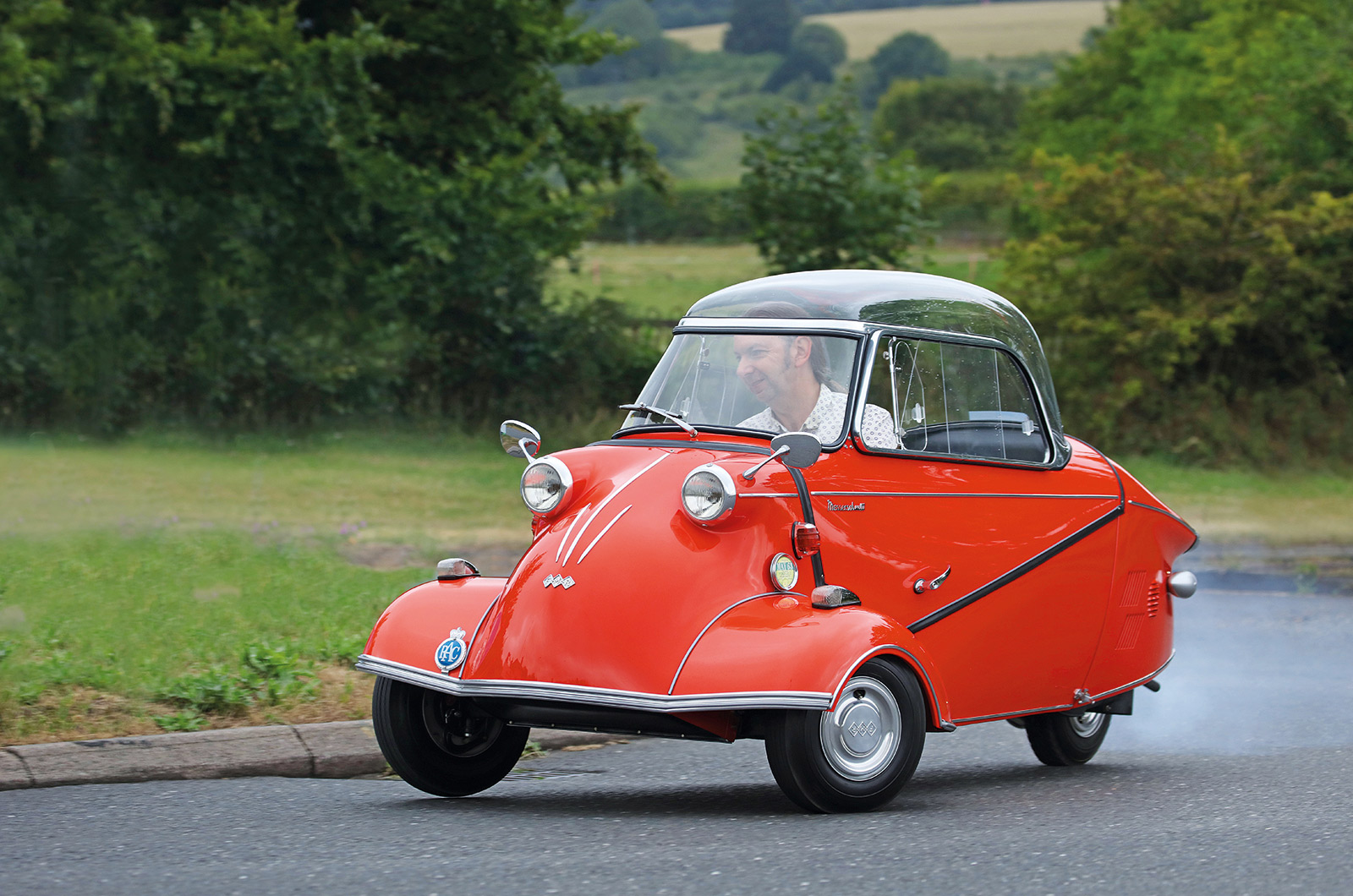
SNCAN Inter (1953)
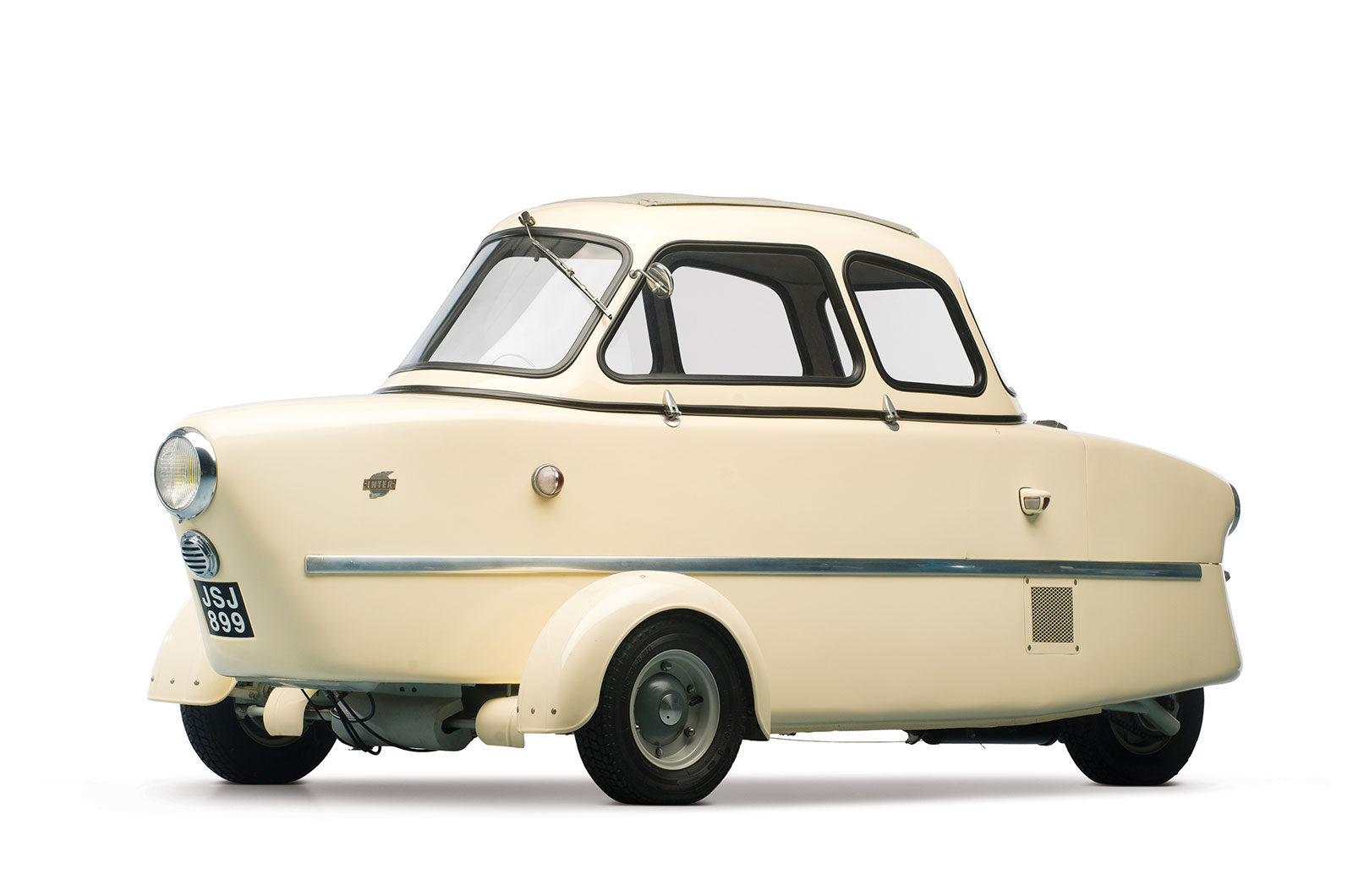
SNCAN was an aircraft builder that switched its attention to making cars. Just like the Messerschmitt, the Inter seated two in tandem and was powered by a 175cc engine. Early examples featured front wheels that could be folded in so the car could be pulled through a standard front doorway, enabling it to be stored inside.
Brutsch Spatz (1954)
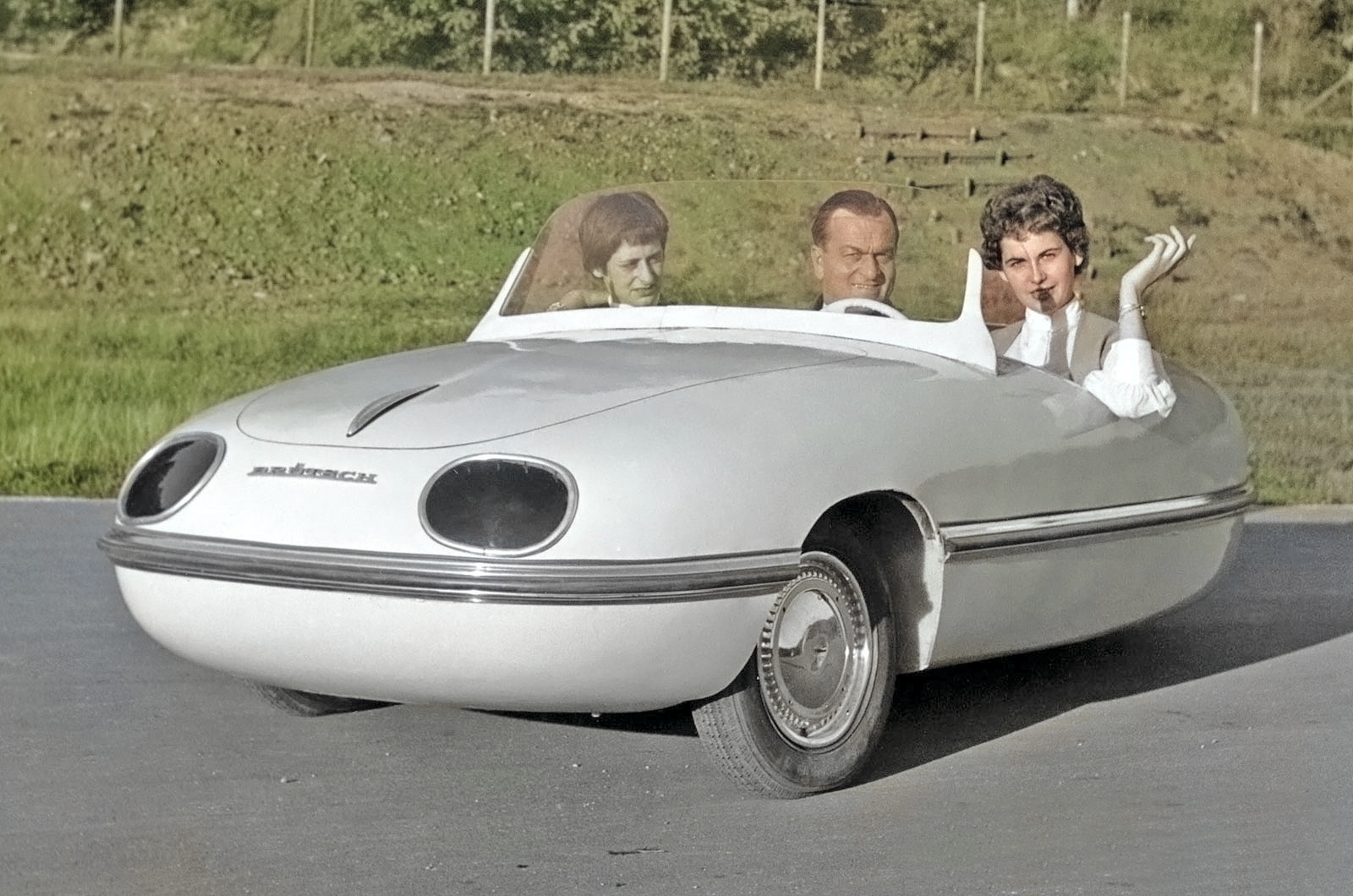
Egon Brutsch (1904-1988) was one of the most prolific microcar designers of the 1950s, but he didn’t enjoy much commercial success. His first car was the Spatz, with a 191cc single-cylinder engine. Instead of a chassis the Spatz featured a glassfibre monocoque – which fell apart because it was too weak. This led to the car being banned in Germany, which proved something of a setback.
Gordon (1954)
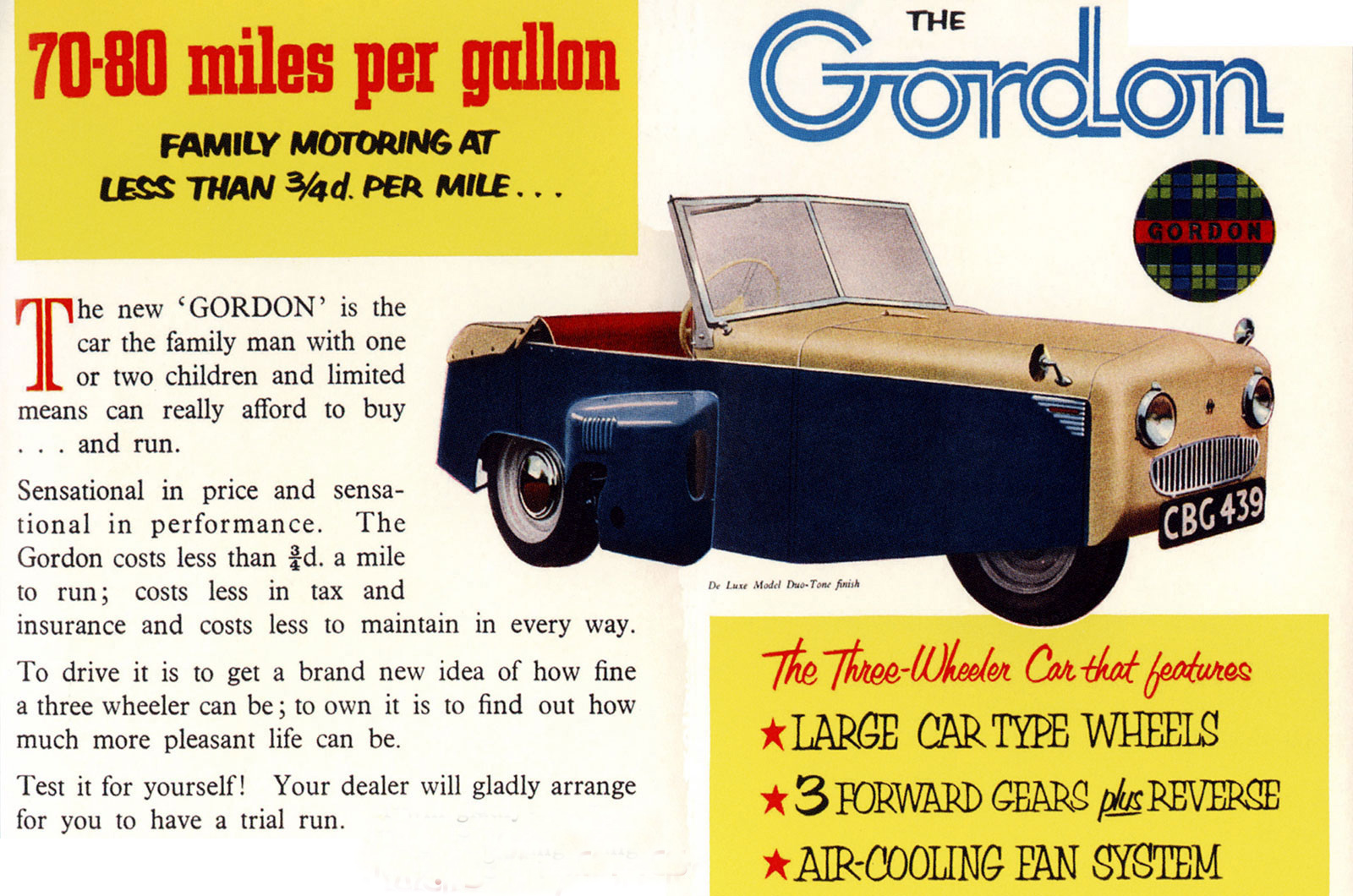
Vernon Industries was the company behind the football pools – the company that made some lucky people very wealthy overnight. It also made this abomination, which presumably no pools winner ever rushed out to buy. The 197cc engine sat outside the bodywork on the driver’s side and this provided a 45mph top speed.
Despite this, Vernons claimed the Gordon was “Britain’s finest three-wheeler family car”. We beg to differ.
Avolette (1955)
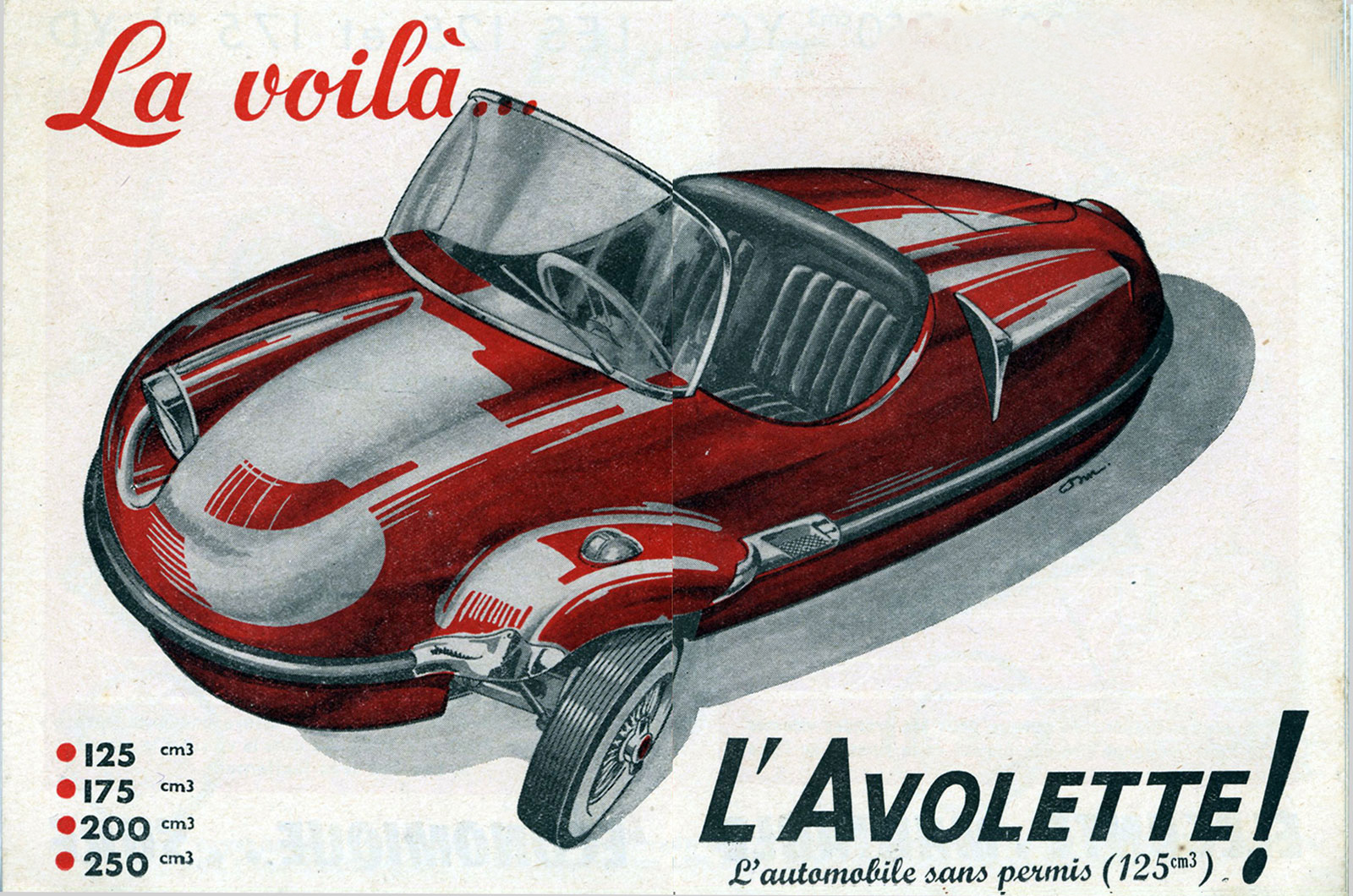
Another Brutsch creation, the Avolette was licensed by French company Air Tourist, which improved the styling to make the car more appealing, as is evident from this picture. The standard powerplant was a 175cc single-cylinder unit, but for those who craved performance a 250cc engine was optional.
Messerschmitt KR200/201 (1955)
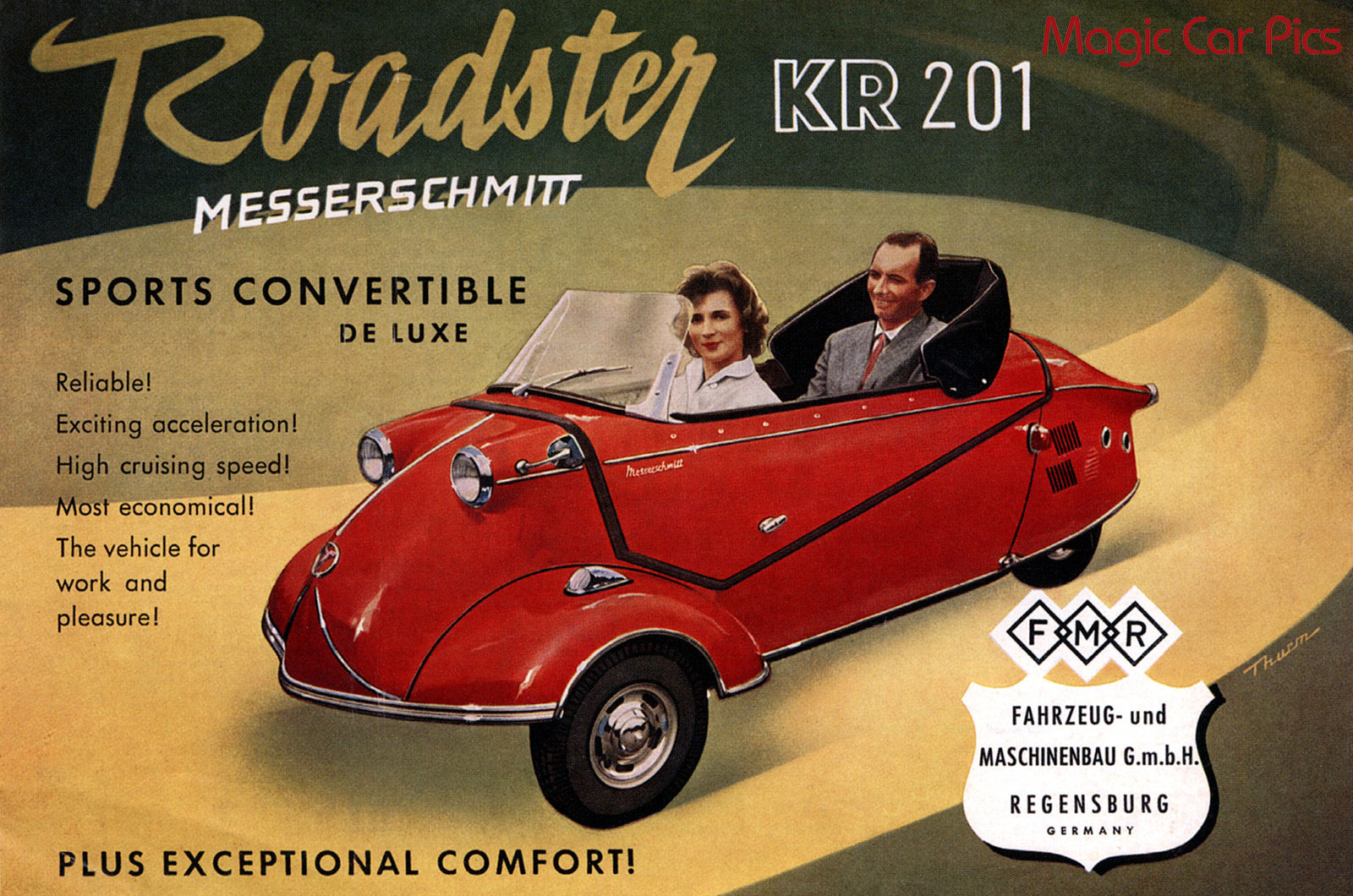
When Willy Messerschmitt (1898-1978) was banned from making aircraft at the end of the second world war, he moved into car manufacturing. His first creation was the 1953 KR175; nearly 20,000 were made, and its successor the KR200 appeared in 1955. This featured a 191cc engine and tandem seating for two.
About 30,000 of these were sold by the time production ended in 1964, and the company returned to the aircraft industry.