
That new gearlever lives within a cockpit to which you can introduce the (rather pleasing imo) option of Alcantara for the door tops, dash top and steering wheel rim. Otherwise it’s largely as you were in here: a two small seats and enough elbow room if you’re friends, with a bit of cubby space behind, a compact glovebox and a not-bad boot.
Fit and finish is simple and classy. There are some sensible ergonomic touches like bespoke buttons, multifunction rotary dials, a phone charging pad that places your phone high enough that you can safely read its map and BMW-sourced column stalks and paddles.
There isn’t the same level of robustness of feel of, say, a Porsche 911 to which the Supersport is similar in price, but that’s an inevitability of its low-volume, hand-built finish. If you really want precision and repeatable quality, they would have to bemade by the tens of thousands.
While Morgan would like the Supersport to be solid enough to move from the third or fourth car in somebody’s garage to the second, it remains a special car and it feels it. Besides, who else makes a car with these specifications and this layout?
The 1170kg Supersport lies in a land between true lightweight sportsters like Ariel Atoms and Caterham Sevens and major marques’ heavier roadsters.
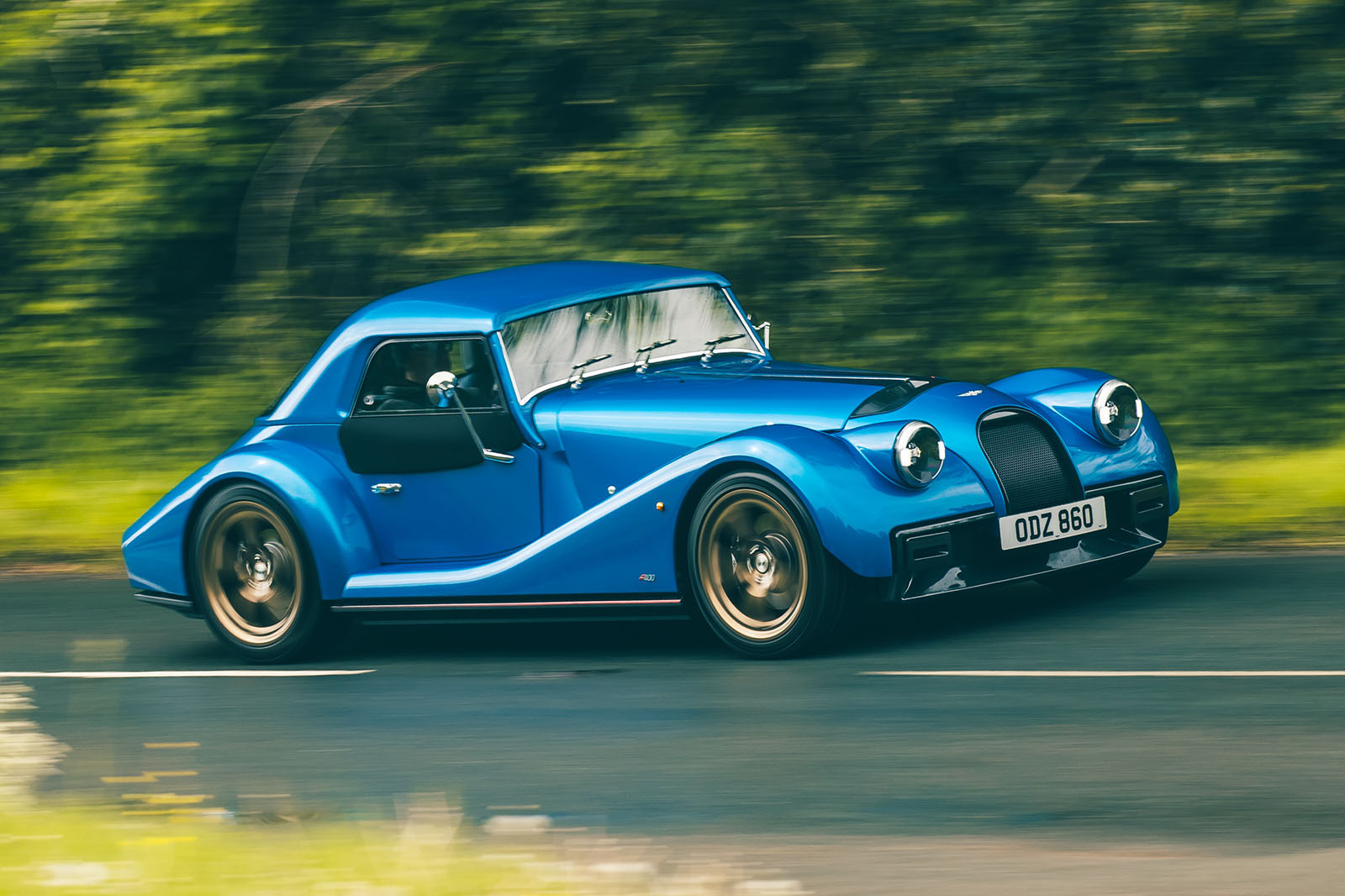
It’s a unique experience in either base or 400 form. So you’re seated low and snugly, with an evocative view out past the three diddy windscreen wipers and across the shapely bonnet, wings and light surrounds. You’re situated well back in the car and visibility is good: the mirrors let you see the rear wings and that hardtop, which I have on today because of iffy weather, is very airy.
The driving position feels very straight and probably you will find your left leg rests naturally against the transmission tunnel. A right arm would rest on the door top if that were flatter, but it’s a laid-back, GT-ish driving position.