
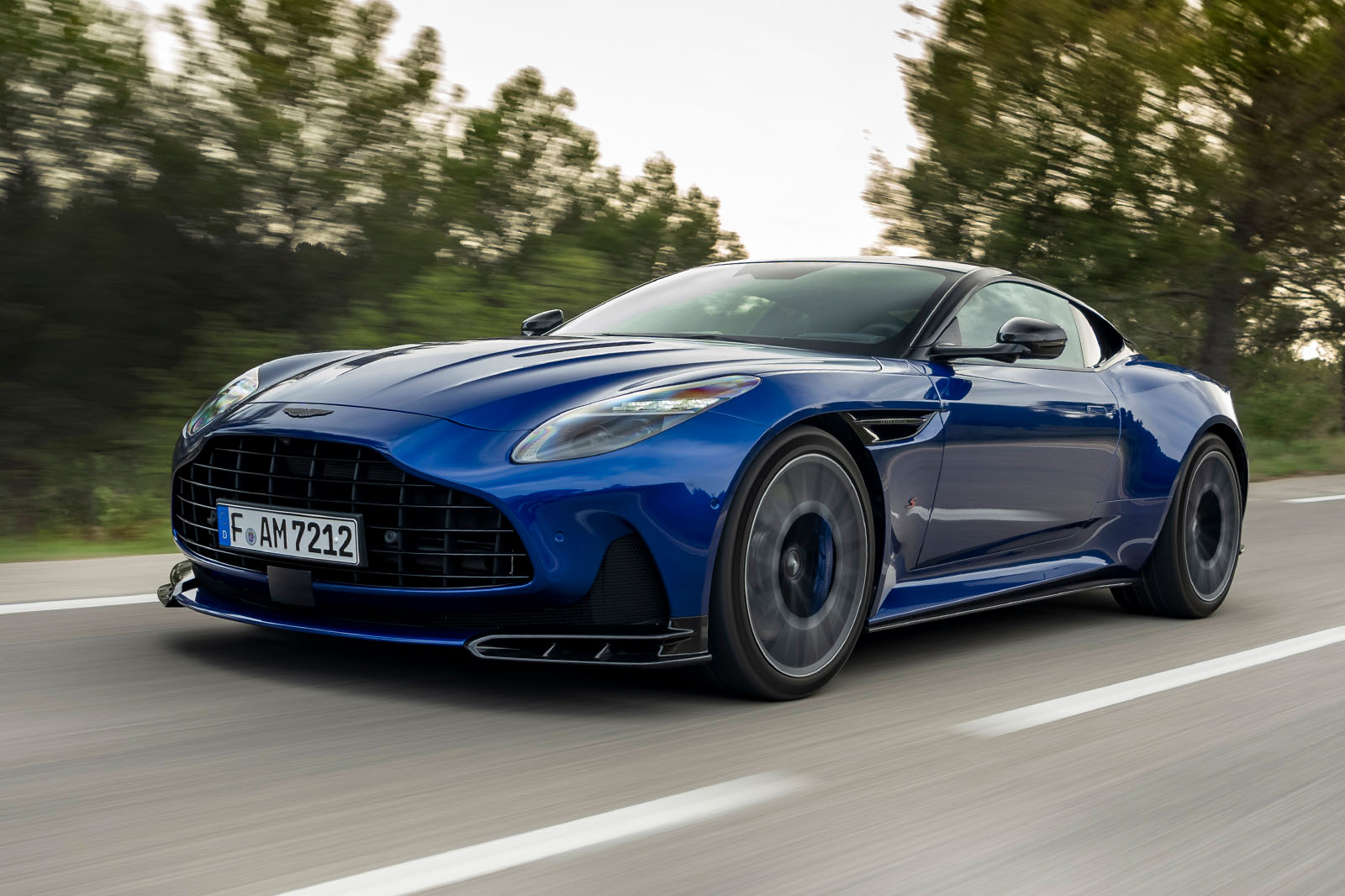
The treatment applied here is predictable in its performance agenda, but also pretty detailed and wide-ranging. It starts with the DB12’s AMG-sourced 4.0-litre twin-turbo V8, which is recalibrated for a fatter torque curve and headline power hiked by 20bhp; to 691- in all. An updated eight-speed transaxle automatic gearbox puts that power to the road via a recalibrated torque-vectoring Bosch ‘E-Diff’, and then the rear wheels; even if it only helps contribute to 0-62mph sprinting potential cut, relative to the regular DB12, by a solitary tenth of a second.
The running gear makeover, meanwhile, takes in Bilstein DTX adaptive dampers (retuned to take advantage of the saving in unsprung mass delivered by standard fitment of carbon-ceramic brakes) which, Aston claims, make the car’s close body control more linear and also ultimately more effective, allowing more wheel travel at low speeds – but also better outright body control at higher speeds.
At the rear axle, a stiffer anti-roll bar has been fitted; while revised wheel geometry dials in enough negative camber that you can clearly see it when the car is parked. These changes, in turn, give the front wheels a stronger platform to push against on turn in, sharpening cornering agility while also better reigning in rear-axle stability; while revisions to the EPAS power steering up front look to filter through better off-centre steering precision and tactile feel.
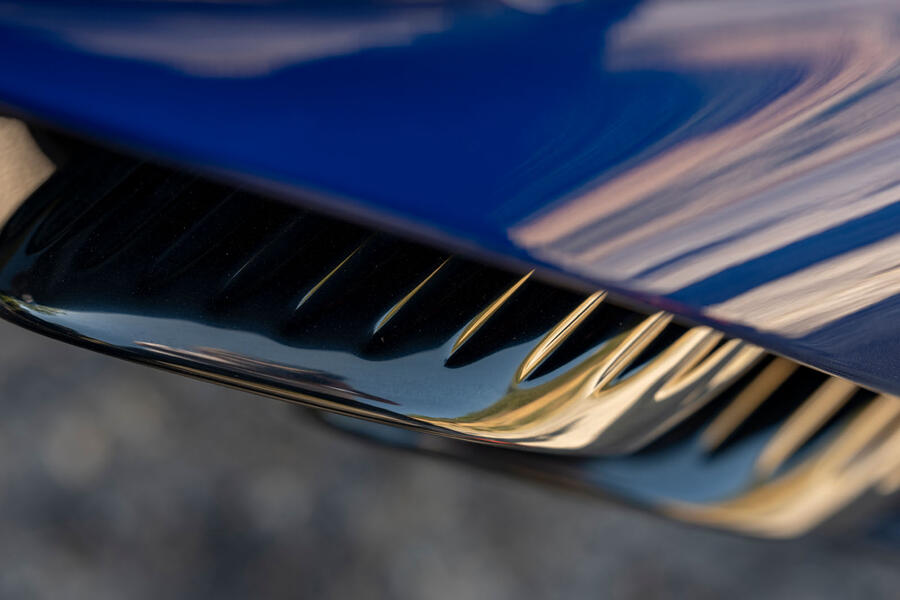
The DB12 S’s bodywork gets some noticeable but understated revisions also. The usual chin spoiler, sill extensions and extra bonnet louvres come in; and a fairly subtle fixed lip spoiler on the boot (there in place of the regular DB12’s ‘aeroblade’ active system) helps to offset the added weight of the beefed up, F1-style aero ducting around the corners of bumpers.
The net effect is that, counting those carbon brakes, the DB12 S weighs 38kg less than a standard DB12 without any factory extras: and, if you go for Gaydon’s new lightweight titanium active sports exhaust (both it, and the standard steel one, have a new ‘stacked’ quad pipe look) you can boost that weight-saving to just under 50kg. While clearly far from potentially transformative, that might still be considered worth having – even on an 1800kg–plus GT car.