
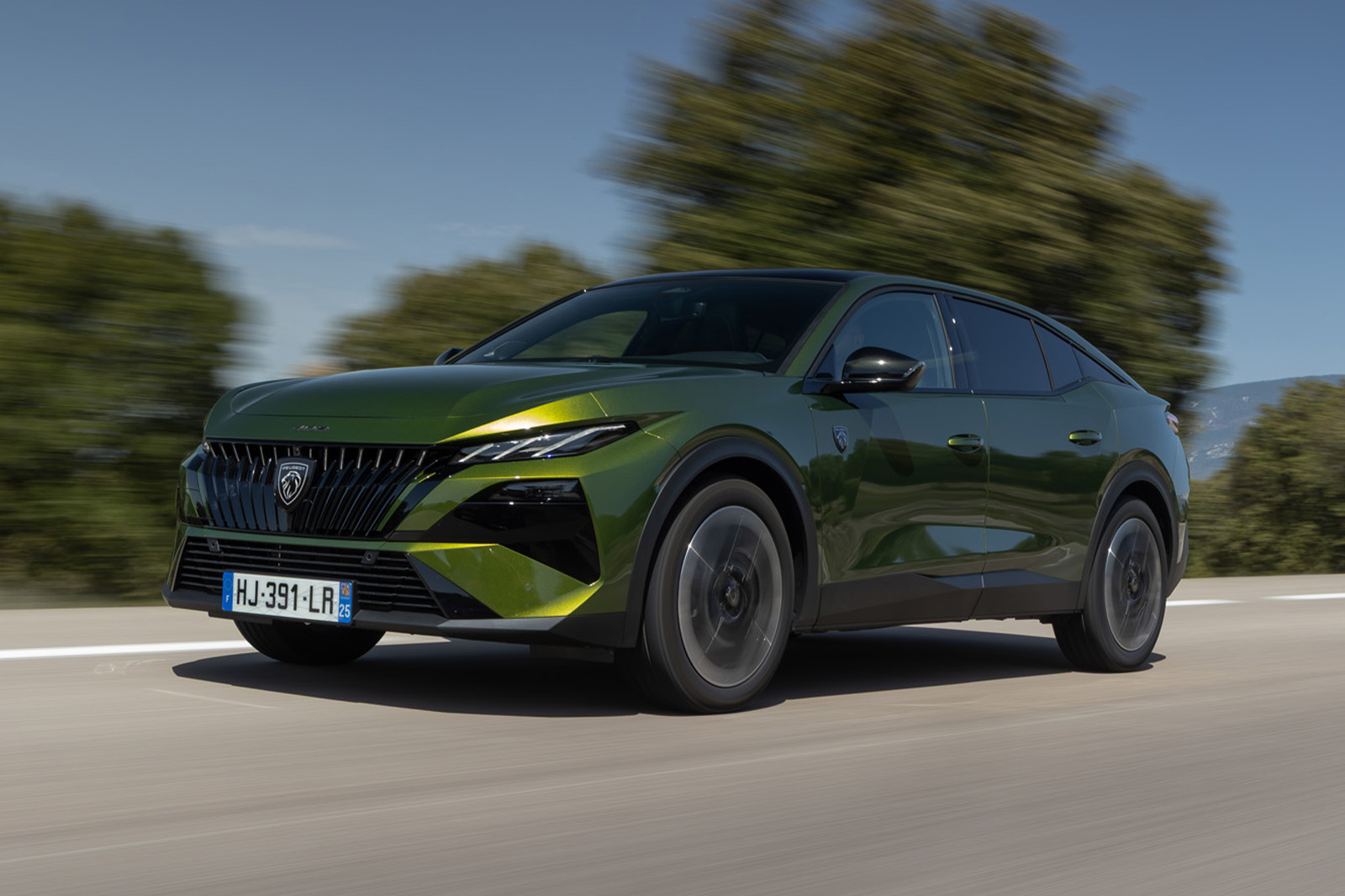
Were you to slide from the confines of, say, the similarly conceived Mercedes-Benz GLC Coupé and into the 408, the French car’s deficit in visual impact and materials quality wouldn’t be night and day. Far from it. Peugeot has raised its game considerably in recent times, and the cockpit of the 408 represents the current culmination of its efforts to be more premium.
Slimline air vents neatly inhabit the upper edge of an artfully contoured dashboard and the transmission tunnel of our GT-spec test car had a finish akin to what you would expect to find on high-end German kitchen goods.
The display inside the instrument binnacle also has a surprisingly convincing 3D effect, and the three-strata control array – consisting of a touchscreen display, a touch-sensitive menu panel and then a row of physical toggle-type switches – marks an interesting and urbane approach. We like it.
The 408 also has sound ergonomics that befit its personality. The high window line and concave dashboard give the cabin something of an amphitheatre atmosphere, which is what you generally find in purpose-built GTs.
The multi-textured front seats are broad and enveloping, with plenty of electric adjustment, as well as heating and massage functions, if you opt for the Driver & Passenger Seat Pack.
With familiarity, even the tiny but substantial rim of the leather-trimmed steering wheel of Peugeot’s i-Cockpit sits in the hands with ease, although even in its lowest setting it obscures the bottom of the instrument panel.
On a related note, rear visibility is limited, but this is the price paid for that wickedly sloping rear windscreen. Mostly, this is a fine place to while away miles.
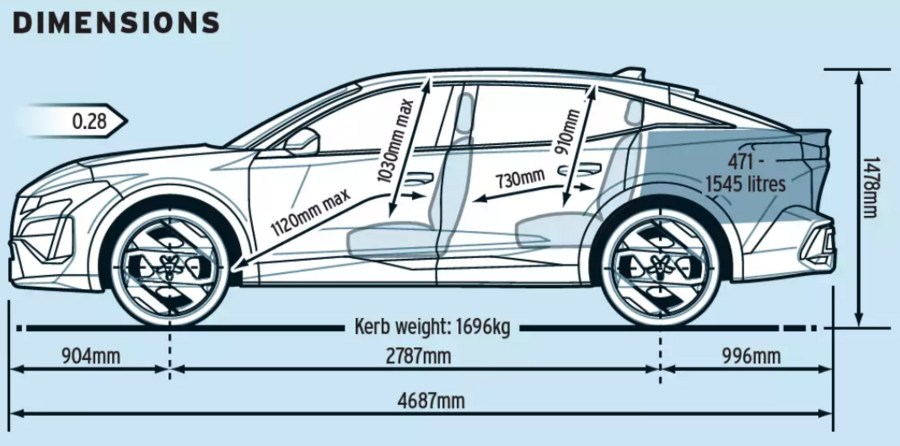
More prosaically, oddment storage is good, as is leg room for rear passengers. The 408 beats the departed 508 in this respect, although if outright luggage space is a concern, the 508 SW’s 530 litres of boot space comfortably trumped the 471 litres of the 408 PHEV.
Multimedia system
Plenty of the details inside the 408 are recognisable from other former PSA brands in the Stellantis stable, and it’s no different for the infotainment system.
The car’s central, 10in touchscreen is large enough to avoid frustrating users but not so large as to feel overly imposing, as seems to be the current trend.
The software sometimes shows latency issues, but on the whole works seamlessly, and the graphics are adequately crisp. There is a physical volume dial too, as well as steering wheel controls.
Peugeot’s fastback also includes the brand’s customary i-Toggles, which sit in a row below the touchscreen proper and provide useful shortcuts to functions such as the media player, climate, navigation and smartphone pairing. Wireless Apple CarPlay and Android Auto is available here, too.
As a family car, the 408 is well furnished with charging and data ports. The car has two USB-C ports in the front and two more in the back. There’s a 12V socket to be found both in the front of the cabin and in the boot of the car.