
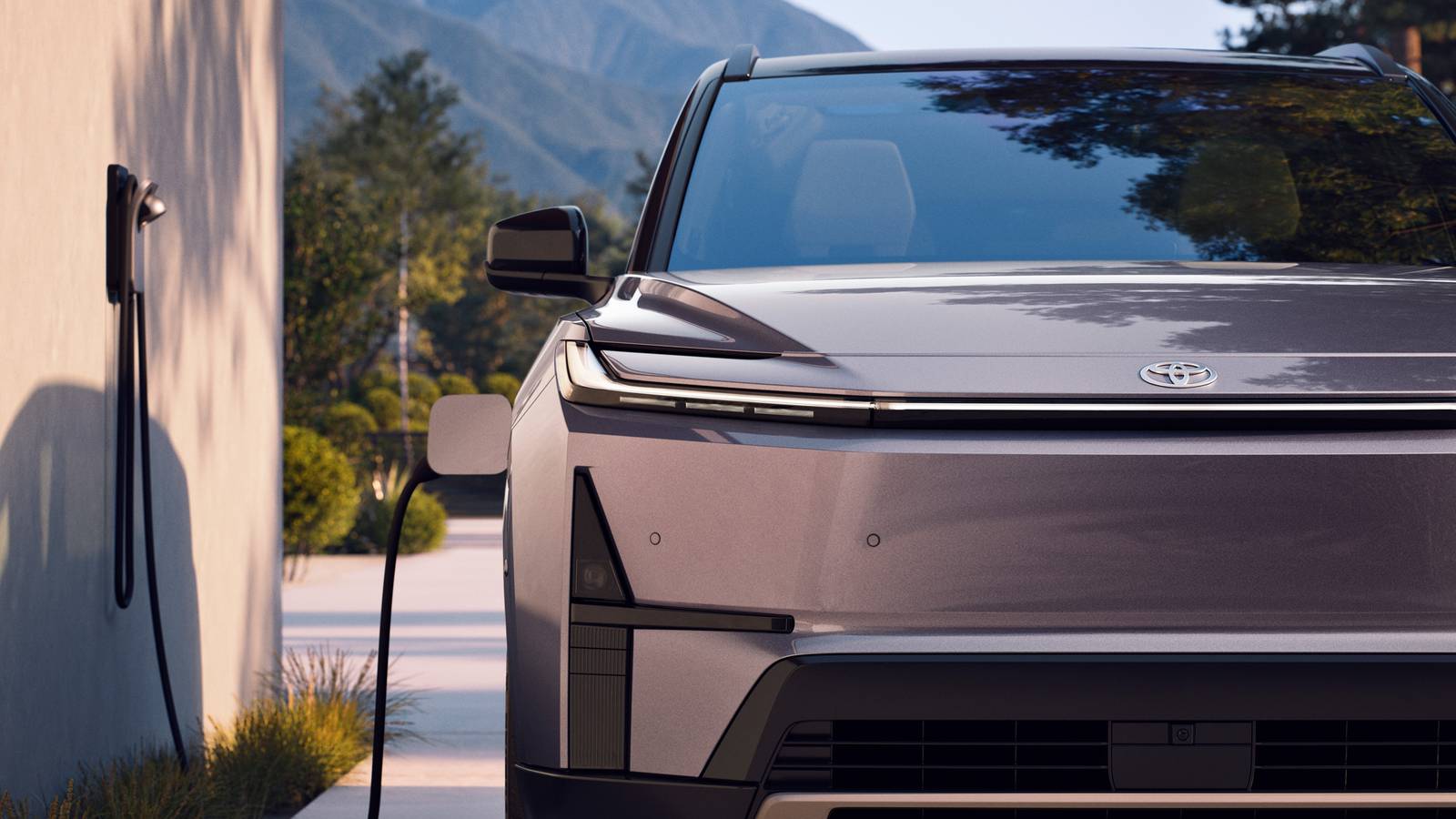
Toyota continues to pivot its U.S. portfolio toward a utility-first strategy, leaning heavily into a diverse range of crossovers and SUVs. These typically balance rugged capability with urban practicality, to a greater extent than key rivals. This shift reflects a broader market trend where high-riding vehicles have become the preferred choice for American families and adventure-seekers alike. It prompts the manufacturer to refine its lineup with more specialized trims geared toward off-roading and premium comfort.
Regarding electrification, Toyota maintains its multi-pathway philosophy. Doing so prioritizes a broad hybridization strategy over an immediate transition to a fully electric fleet. It standardizes hybrid powertrains across most of its popular utility segments to reduce fleet-wide emissions and improve fuel economy. This means that its customers don’t need to change their daily driving or refueling habits. While expanding its battery-electric offerings to satisfy growing regional demand, the core of its current approach remains focused on high-volume hybrids and plug-in hybrids that leverage proven reliability and existing infrastructure.
The State Of EVs In 2026

As of early 2026, the U.S. electric vehicle industry is navigating a complex reset period. Characterizing this is a significant shift from policy-driven demand to market-driven fundamentals. Following the expiration of the federal Clean Vehicle Tax Credit in September 2025, the new EV market share stabilized at six percent, according to Cox Automotive. This is a notable decline from the 10.6 percent peak seen in late 2025. The initial decline was caused by the removal of point-of-sale rebates, which led to year-over-year sales drops for many major automakers. However, the industry is seeing a stabilizing trend as manufacturers pivot toward more aggressive pricing and expanded hybrid offerings.
The regulatory landscape has also evolved. While the old $7,500 credit has ended, the 2026 One Big Beautiful Bill Act introduced a new incentive structure focused on onshoring. This offers an annual loan interest deduction of up to $10,000 for American-made EVs. Infrastructure continues to be a primary focus, with the National Electric Vehicle Infrastructure program now in full swing across 42 states to fill charging gaps on major highways. Ultimately, while the growth trajectory has slowed compared to previous years, the entry of more affordable 2026 models and a rapidly expanding used EV market suggest the industry is maturing into a more sustainable, long-term growth phase.
Toyota Remains Crossover First

Over the last decade, Toyota has strategically elevated its SUV lineup to capture a more premium segment of the market by transitioning to a unified global architecture that prioritizes structural rigidity and refined driving dynamics. This foundational shift allowed engineers to lower the center of gravity and adopt more sophisticated suspension geometries, resulting in a high-quality drive feel that bridges the gap between mass-market utility and luxury-tier composure.
To complement these mechanical gains, the brand has aggressively overhauled its interior philosophy, replacing utilitarian plastics with soft-touch materials, brushed aluminum accents, and leather-wrapped touchpoints while standardizing advanced digital cockpits and larger high-definition infotainment displays. By integrating comprehensive suites of active safety technology and luxury-leaning features like panoramic sunroofs, multi-zone climate control, and ventilated seating, Toyota has repositioned its SUVs as sophisticated lifestyle vehicles that offer a level of refinement and technological depth previously reserved for dedicated prestige brands.

The Dependable SUV That Owners Never Seem To Let Go
Is there a dependable SUV with a strong track record that you would own for years and never let go? There’s one that seems to be favored by many.
Toyota’s Conservative Approach To Electrification

Toyota has realized that trust is a far more powerful currency than novelty. The Japanese brand made that choice while other automakers scrambled to invent new sub-brands for their electric debuts. By rebranding the 2027 Highlander as an EV-exclusive model, Toyota is ending the era of its unsuccessful bZ model line. It instead leans into decades of reliability and brand equity.
The upcoming Highlander EV is currently set to become the brand’s first U.S.-manufactured electric vehicle. Production will commence in Georgetown, Kentucky, in late 2026. For the American family, the Highlander name already serves as a shorthand for dependability. Toyota is betting that this established loyalty will convert EV-hesitant buyers more effectively than any futuristic rebrand ever could.
Massive Investments Into Electrification

According to Business Insider, this transition is underpinned by a massive $13.9 billion investment in a North Carolina battery facility, which will supply the SUV’s 95.8-kWh battery pack. The Highlander’s edge lies in its practical utility and impressive power outputs. By integrating NACS Supercharger access and V2L capabilities for tailgating, Toyota is targeting conquest customers who left for Tesla but now crave the familiar utility of a seven-seat stalwart. This is a strategic pivot that prioritizes the Highlander identity over powertrain specification. It proves that, for the mainstream buyer, a reputation for never letting the family down is more of an attractive trait than flashy designs and overbearing technology.
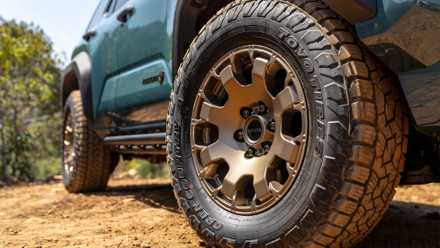
The Rugged Toyota SUV Built For Owners Who Plan To Keep It Forever… And It’s Not The Land Cruiser
This SUV delivers reliability, body-on-frame toughness, and off-road power, making it a top pick for long-term SUV ownership.
A Dramatic Shift In Design

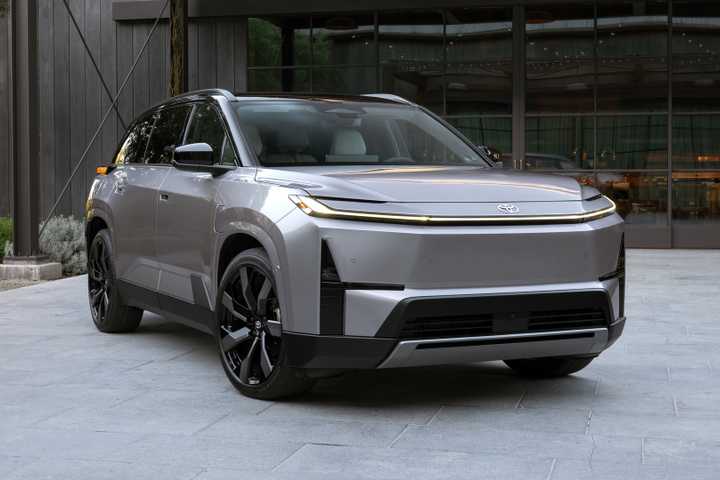
The 2027 Toyota Highlander undergoes a radical exterior transformation from the 2026 Toyota Highlander to match its new electric identity. This includes the adoption of the brand’s hammerhead front fascia characterized by a closed-off grille and slim, full-width LED lighting. The vehicle’s silhouette is notably sleeker and more planted than the 2026 model. Key dimensional changes include a roofline that sits nearly an inch lower, a width increased by over two inches, and an 8.0-inch wheelbase extension that pushes the wheels further toward the corners.

Aerodynamics are heavily prioritized through the introduction of semi-flush door handles and new wheel designs, ranging from 19-inch alloys with full aerodynamic caps on the XLE to massive 22-inch alloy wheels on the Premium and Limited trims. The 2027 color palette introduces sophisticated new shades like Everest, Spellbound, and Reservoir Blue, while also offering modern two-tone configurations such as Wind Chill Pearl or Heavy Metal paired with a contrasting Midnight Black roof.
Sticking True To Tactile Interior Ethos

The 2027 Toyota Highlander’s interior undergoes a significant shift toward the premium market by adopting a panoramic glass dash that merges a 12.3-inch driver display with a standard 14-inch infotainment touchscreen into a single digital interface. An 8.1-inch increase in wheelbase over the previous model provides a third row that accommodates full-sized adults, complemented by a new L-finesse motorized seating system for effortless one-touch access.

Toyota elevates material quality through an extensive use of SofTex upholstery and soft-touch surfaces across the dash and doors, while the center console is redesigned with synthetic-suede-lined dual wireless charging pads and a wider storage shelf. To further distinguish it from the 2026 model, the 2027 version introduces a 64-color ambient lighting system that integrates with safety alerts. It also features the largest glass panoramic roof that Toyota has ever installed to a vehicle. Joining this is an enhanced acoustic glass applied throughout the cabin to ensure a more refined and quieter electric driving experience.
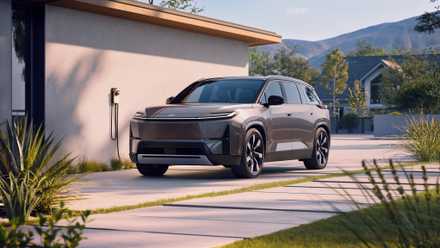
2027 Toyota Highlander Interior And Exterior Picture Gallery
The 2027 Toyota Highlander goes fully electric as the brand’s first three-row BEV for the U.S., offering up to 320 miles of range and seven seats.
Improving On Interior Space

The 2027 Toyota Highlander sees a dramatic increase in interior volume thanks to the adoption of an all-electric drivetrain. The most noteworthy improvement is an 8.1-inch wheelbase extension that brings the total measurement to 120.1 inches, effectively surpassing even the larger Grand Highlander. While the overall vehicle height is slightly lower by nearly an inch to improve aerodynamics, the electric platform’s flat floor allows for a third row that provides 1.5 inches of additional legroom and 1.0 inch of extra headroom compared to the 2026 model.

This shift effectively reclassifies the Highlander from a tight three-row model to a proper adult-carrying SUV, with cargo capacity also benefiting from the redesign. Space behind the third row increases from 16 to 18.5 cubic feet, while the maximum cargo volume with all seats folded expands to roughly 87.5 cubic feet. These dimensional gains mean that while the Highlander remains smaller than the Grand Highlander in total length, its interior packaging offers a superior wheelbase-to-cabin ratio that significantly narrows the gap in passenger comfort.
Impactful EV Drivetrains

The 2027 Toyota Highlander evolves into a fully electric SUV, marking a radical departure from its predecessor by outright abandoning internal combustion engines. For the new model, you’re only going to have access to two variations of a battery-electric system.
The front-wheel-drive XLE trim serves as the entry point, featuring a single electric motor that produces 221 horsepower and 198 pound-feet of torque. If you are seeking more capability, the dual-motor electric all-wheel-drive system increases total output to 338 combined hp and 323 lb-ft of torque.
Two Capable Battery Options

The 2027 Toyota Highlander features two distinct battery capacity options, depending on your drivetrain choice, with the goal of meeting different family needs. The standard 77.0-kWh battery provides a manufacturer-estimated range of 287 miles in front-wheel-drive configurations, which drops to 270 miles when equipped with the dual-motor all-wheel-drive system. If you want to improve on this figure, you can upgrade to the larger 95.8-kWh battery, standard on the Limited and optional on the XLE all-wheel-drive.

- Base Trim Engine
-
Electric
- Base Trim Transmission
-
Single-speed Automatic
- Base Trim Drivetrain
-
Front-Wheel Drive
- Base Trim Horsepower
-
221 hp
- Base Trim Torque
-
198 lb-ft
- Make
-
Toyota
- Model
-
Highlander
- Segment
-
Midsize SUV
The upgrade boosts the estimated driving range to a more appropriate 320 miles. Charging convenience is significantly improved via a standard NACS port, granting direct access to the Tesla Supercharger network. When using a DC fast charger, both batteries will replenish from 10 percent to 80 percent in about 30 minutes under ideal conditions. For home charging, the integrated 11-kW onboard charger allows for a full replenishment in about seven hours for the smaller pack or nine hours for the larger one when connected to a 240-volt level two station.
Sources: Toyota, Business Insider and Cox Automotive.