

For a topic like this, the adventure touring segment is often the go-to choice. That’s not the wrong choice, either, because while most motorcycles are built around a certain level of comfort, they are often specialized towards focusing on one particular trait over the others. Take sport bikes, for example. These machines thrive in fast-paced, corner-covered tracks. Cruisers, on the other hand, enjoy long straight highways and coastal roads.
But the ADV bike is built a little differently. Manufacturers pour their heart and soul into these machines, balancing them for different situations. These bikes are meant to sit steady on straight highways, carve corners on a mountain pass, and even take on the odd dirt trail or two, all in a single day’s journey. The ADV is meant for those who don’t really want different keys for different locks, but a single master key that does it all.
What “All The Bases” Really Means
Touring Test Vs. City Reality

For a bike that covers all the bases, touring comfort must go hand-in-hand with city rideability. The city offers slow-moving traffic, bumps and potholes, traffic lights, and a lot of surprise visits from pedestrians. On the other hand, touring means long hours in the saddle at high speeds with a lot of wind in your face. Motorcycles need to balance these needs out. Things like wind protection, upright ergonomics, and luggage space are crucial on the highway, while low-speed balance, smooth throttle response, and even heat management become a necessity in the city.

Most modern ADVs have become kings in this particular space. Bikes like the BMW R 1300 GS, the Triumph Tiger 1200 GT Pro, and even Harley-Davidson’s Pan America 1250 Special offer a lot of capability in addition to spacious seating, cruise control, adaptive suspension, and just enough protection to take on wild weather changes on the highways. In the city, these bikes still hold their ground thanks to their balanced weight, width, and mild engine manners at low speeds.
Adventure Touring And Reliability

Then you have adventure touring — a whole segment only dedicated to ADVs. Highway rides and city streets are good and all, but when the road turns to lose gravel, the ADV is capable of handling it on its own. You don’t have to own a separate bike just for that purpose, and most ADVs regularly go from cities to highways to the road less traveled within a single day’s journey.

But this comes with its own perils. Heat, dust, and miles and miles of roads with no mechanic in sight have forced manufacturers to build their machines sturdy and durable. And there is one motorcycle, despite the brand’s previous reputation for delicate Italian design, that has made a decent name for itself.
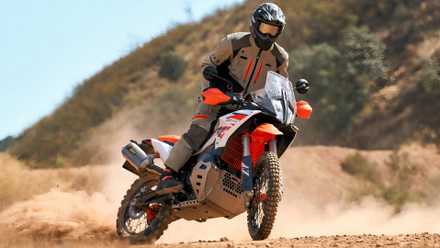
10 Adventure Bikes That Get Surprisingly Good Fuel Economy
The most fuel-efficient adventure motorcycle on this list is a city-friendly bike with an automatic gearbox and an under-$9,500 price tag.
The Ducati Multistrada V4
The Unmistakable Ducati

The Ducati Multistrada V4 carries the Italian design that the manufacturer is famous for. However, this time around it’s not delicate. The tall windshield, high tank, and broad bars offer a commanding presence on the road. But unlike some other ADVs, it’s not bulky, but athletic with its rather slim proportions. It’s no Africa Twin or Tenere 700, but it’s not a GS Adventure either. Rider ergonomics are designed to reduce fatigue over long distances with a plush seat, which is adjustable, and an adjustable windscreen tailors wind deflection to your preference.
The Multistrada’s V4 Has Real-World Manners

Powering the Ducati Multistrada V4 is Ducati’s V4 Granturismo engine. This liquid-cooled unit produces 170 horsepower and 91 pound-feet of torque. Now, these numbers are already dramatic, but the finer detail lies in how the power is delivered. If you take a look at the website, you will see that while the power curve is fairly steep, the torque band is largely flat, peaking as early as 8,500 rpm. What this means is that you have enough grunt throughout the rev range for a wide set of conditions. Low-speed city crawling becomes easy while high-speed highways are not a problem. The six-speed gearbox, too, is paired with Ducati’s own brand of bi-directional quickshifter. This broad spread of talent is exactly what we want in an ADV.
The Chassis Is Adaptable, Too

The V4’s chassis is built around an aluminum monocoque frame. This design choice is what keeps the bike’s dimensions compact while still offering the stiffness that is needed in an ADV. Suspension comes via a 50mm USD fork and a monoshock, both fully adjustable with remote preload adjustability for the rear.
The wheels, too, signal mixed-surface intent with a 19-inch front and a 17-inch rear. You may not be completely at ease on technical trails, but bad roads and light gravel should not toss you around as much as a 17-inch road-biased setup would. The riding geometry factors into the chassis design as well. The 61.7-inch wheelbase and a 24.2-degree rake make for a very stable motorcycle at speed. Combine that with the tall 33.1-33.9-inch seat height, and you have a commanding view of the road in front of you.
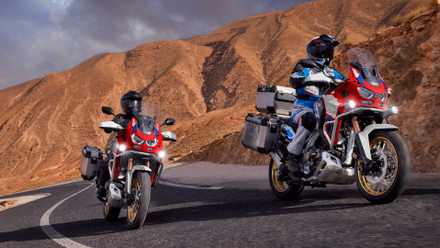
The Bike That Feels Right No Matter Where You Ride
There are no wrong situations when it comes to the Honda Africa Twin Adventure Sports!
Why The Ducati Covers All The Bases
Rider Aids And Creature Comforts Are Aplenty

The Multistrada V4 is loaded with electronics. Cornering ABS, Ducati Traction Control, wheelie control, ride modes, power modes, and cruise control all come standard. Ducati Skyhook Suspension is also available on the S variant, along with Ducati’s radar-based adaptive cruise control, forward collision warning, and blindspot detection. The five-inch TFT screen on the base variant comes with smartphone connectivity via the Ducati Connect app, giving you navigation, calls, and music management.
And Finally, Reliability

Now, Ducati’s relationship with reliability is a bit turbulent, especially with the early 2000’s models. They carried quirks, expensive maintenance, and often mechanical nuances tied to their complex desmodromic systems. These days, Ducati is far more reliable, and you can see that in the Multistrada. The V4 Granturismo engine was designed specifically with durability in mind. Ducati mentions oil change intervals at every 9,000 miles or two years, and a major ‘Desmo Service’ at every 37,000 miles. This is very reassuring for a rider who wants to use their bike often for long tours rather than keep it covered for months at a time.
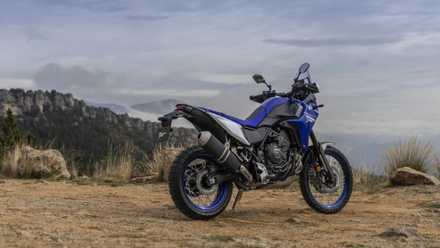
10 Adventure Bikes That Can Truly Handle The Wild
These adventure bikes are more at home away from home
The Ducati Multistrada V4 Has A Reasonable Starting Price
MSRP: $19,995

Now, it’s not as cheap as the Yamahas and the Kawasakis, but Ducati’s pricing on the base Multistrada is pretty much in line with the other premium ADVs, such as the Adventure GS, the Pan America, and even the 2024 KTM 1290 Super Adventure. Priced at a base of $19,999, there are a lot of options to choose from, but if you want them standard, you can opt for the high-spec models as well, with the V4 RS variant topping the line at $39,995.
Sources: Ducati