
There was a time when buying a budget SUV meant accepting compromise. Lower prices usually came with trade-offs—cheap interiors, underwhelming performance, and a general sense that you were settling for less. These vehicles were built to meet a price point, not exceed expectations. That’s no longer the case.
Today, the definition of a “budget SUV” has changed. Buyers expect more—more comfort, more technology, and more refinement—and automakers have responded. The gap between mainstream and premium has started to shrink, and in some cases, it’s becoming harder to justify spending significantly more. That shift has created a new kind of value proposition.
Why Budget SUVs Are Getting Seriously Good
Buyers Expect More Than Just Affordability

People who want to buy things today know more than ever. Expectations have changed because it’s now easy to find reviews, comparisons, and information about real-world ownership. Affordability is still important, but it’s not enough on its own anymore. People who buy cars want ones that feel well-made, are comfortable, and can handle everyday life without any problems. Automakers have taken notice. Instead of stripping features to keep prices low, many brands are now focusing on delivering a more complete package. That means better materials, improved ride quality, and technology that was once reserved for higher-end models.
Competition Has Also Intensified

With so many SUVs competing in the same space, standing out now requires more than just pricing. Brands need to offer something distinctive—whether that’s design, driving experience, or overall value. Mazda, in particular, has leaned into this shift. Rather than chasing volume alone, it has positioned itself as a brand that delivers a more premium experience without the premium price tag—and the CX-50 is a clear example of that approach.

The Crossover That Delivers BMW Performance At Honda Prices
The Mazda CX-5 delivers BMW-like driving excitement at Honda-level prices, making it one of the most rewarding compact SUVs in its segment.
The 2026 Mazda CX-50 Quietly Overdelivers
A Rugged-Looking SUV With Premium Intentions

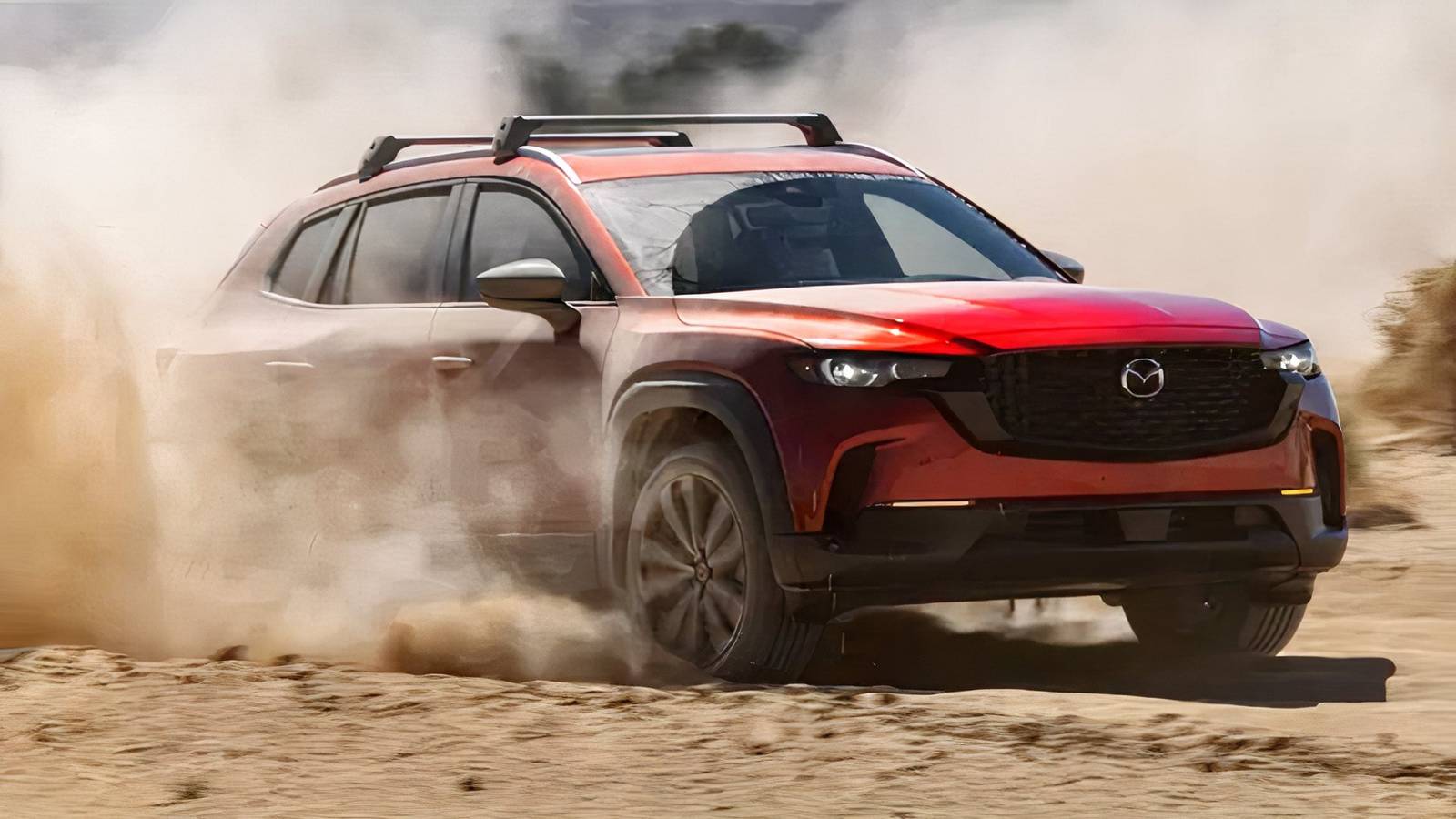
At first glance, the 2026 Mazda CX-50 looks like it belongs in a higher price bracket. Its design is more rugged and purposeful than many of its competitors, with a wider stance, strong body lines, and a planted look that gives it real presence. Squared-off wheel arches and a lower, wider profile enhance its more athletic, outdoors-focused appeal, particularly in trims like the Meridian Edition. It’s a confident design—one that doesn’t rely on excessive styling to stand out.
Inside, The CX-50 Takes A More Restrained Approach

Rather than overwhelming occupants with screens and gimmicks, the cabin focuses on simplicity and usability. Mazda has built a reputation for interiors that feel more premium than their price suggests, and the CX-50 follows that formula. The materials are carefully chosen, with soft-touch surfaces, leather upholstery options, and a clean dashboard layout. The overall design is simple but well done, making the space appear upmarket and elegant without being too busy.

Technology is also well judged. Depending on the trim, the CX-50 offers features like Apple CarPlay, Android Auto, available wireless connectivity, and a premium Bose sound system. A full suite of driver-assistance features is also included, enhancing everyday usability without adding unnecessary complexity. The focus here is balance—and that’s what makes it work.

This Doesn’t Look Like An Affordable SUV, But It’s Priced Like One
The Mazda CX-30 is a subcompact SUV that defies expectations, offering a premium look and feel without the high price tag of luxury vehicles.
What You Actually Get For The Money
Real Practicality And How It Stacks Up

The CX-50’s value becomes even clearer when you look at what it offers in practical terms. Cargo space is competitive, with around 31.4 cubic feet behind the rear seats and up to 56.3 cubic feet with the seats folded. While that’s slightly less than some rivals like the Toyota RAV4 or Hyundai Tucson, the CX-50’s wider and lower cargo area can be more usable in real-world scenarios—especially for larger or bulkier items. It’s also important to note that the CX-50 is a two-row, five-seat SUV, which aligns with most compact SUVs in the U.S. market. Buyers needing a third row will need to look at larger vehicles.

Where things get interesting is in comparison to premium alternatives. The CX-50 actually offers more cargo space than some entry-level luxury SUVs like the BMW X3 and Mercedes-Benz GLC, both of which prioritize design and driving dynamics over outright practicality. While those models may offer more refined rear-seat comfort, the Mazda holds its own when it comes to usability and value. That balance between practicality and design is part of what makes the CX-50 stand out.

The SUV That Delivers Mercedes-Level Luxury Without The Price Tag
This Japanese SUV is an underrated premium deal.
Where It Surprises You On The Road
Comfort, Capability, And Everyday Usability

This is where the Mazda CX-50 separates itself from many competitors. Under the hood, it offers multiple engine choices in the U.S. A naturally aspirated 2.5-liter four-cylinder produces around 187 horsepower and 185 pound-feet of torque, while the available turbocharged version delivers up to 256 horsepower and 320 pound-feet of torque on premium fuel. There’s also a hybrid variant, pairing a 2.5-liter engine with electric motors for a combined output of around 219 horsepower, aimed at improving efficiency.
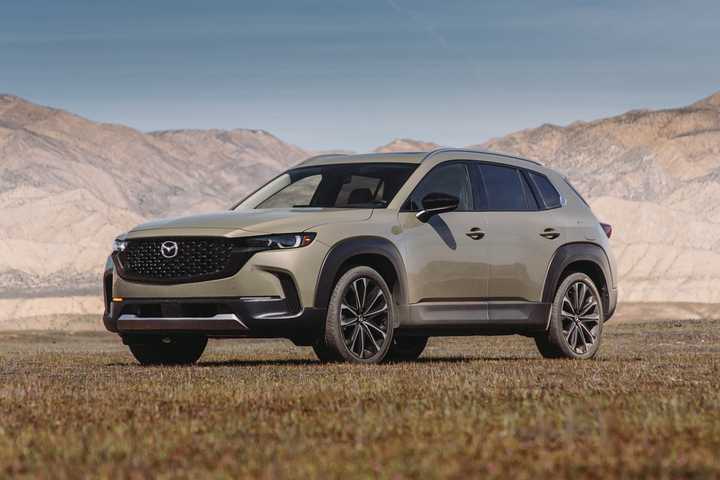

- Base Trim Engine
-
2.5L SKYACTIV-G I4 ICE
- Base Trim Transmission
-
SKYACTIV-Drive 6-speed automatic
- Base Trim Drivetrain
-
All-Wheel Drive
- Base Trim Horsepower
-
187 HP @6000 RPM
- Base Trim Torque
-
185 lb.-ft. @ 4000 RPM
- Base Trim Fuel Economy (city/highway/combined)
-
24/30/26 MPG
- Make
-
Mazda
- Model
-
CX-50
- Segment
-
Compact SUV

That gives buyers flexibility depending on their priorities—efficiency or performance. Importantly, all CX-50 models come standard with all-wheel drive, which is a meaningful advantage in a segment where AWD is often optional. Mazda has long focused on driving dynamics, and while the CX-50 isn’t positioned as a sporty SUV, it benefits from that philosophy.
That Balance Translates Well Into Everyday Use

Reviews consistently highlight its composed handling and responsive steering compared to typical compact SUVs like the Toyota RAV4 and Honda CR-V. It avoids the overly soft, disconnected feel found in some rivals, instead offering a more controlled and confident driving experience.

Whether navigating city streets or cruising on the highway, the CX-50 leans toward a more stable and predictable feel. The turbocharged engine, in particular, is frequently noted for its strong low-end torque, which makes highway merging and overtaking feel more effortless than in many mainstream alternatives. Refinement is another strength often mentioned in reviews, with excellent noise insulation helping keep the cabin relatively quiet at speed. Overall, it delivers a level of polish that exceeds expectations at this price point.

The Mainstream SUV That Quietly Matches Lexus In Long-Term Owner Satisfaction
This Japanese SUV proves you don’t need a luxury badge to enjoy Lexus-like ownership satisfaction over the long haul.
Why It Makes More Expensive SUVs Harder To Justify
Premium Feel Without The Premium Price Tag

This is where the CX-50’s value becomes clear. In many ways, it delivers an experience closer to that of a premium SUV than a traditional budget option. The design is more refined, the interior is more considered, and the overall execution feels more polished than many competitors in the same price range.

Yet it remains accessible. In the U.S. market, the CX-50 typically starts in the low-to-mid $30,000 range, reaching into the mid-$40,000s for higher trims. That places it alongside mainstream rivals like the Toyota RAV4, Hyundai Tucson, Kia Sportage, and Subaru Forester.

Step up to premium alternatives like the BMW X3 or Mercedes-Benz GLC, and pricing quickly climbs into the $50,000–$60,000 range once options are added. Those vehicles still offer advantages—more power, more advanced technology, and stronger brand recognition.

But for many buyers, those differences don’t necessarily translate into a better everyday experience. The CX-50 covers the essentials—and then some. It’s comfortable, practical, well-built, and offers enough performance for daily driving. It delivers a level of refinement that exceeds expectations without demanding a premium price.

And that’s what makes it stand out. The smartest choice isn’t always the most expensive one—it’s the one that delivers where it matters most. And in that respect, the Mazda CX-50 does far more than you’d expect. But I would urge buyers to drive all rivals first and then make an informed decision; sometimes preferences do play a role in your final purchasing decision.
Sources: Mazda, J.D. Power, Edmunds