
There’s something uniquely American about the idea of covering vast distances on two wheels. From the endless straights of the Midwest to the sweeping curves of the Rockies and the coastal drama of California’s Highway 1, the United States practically invites long-distance motorcycling. It’s not just about getting somewhere but how you get there.
Over the decades, that culture has shaped an entire category of touring motorcycles. Big fuel tanks, weather protection, relaxed ergonomics, and engines that hum along for hours without complaint—these aren’t luxuries in America; they’re essentials. But somewhere along the way, expectations changed. Riders didn’t just want comfort anymore. They wanted performance, precision, and technology layered into the experience.
Desirable Qualities Of A Good Long-Distance Motorcycle

A single spec doesn’t define a proper long-distance motorcycle. It’s a balance of several key traits working together seamlessly. First, there’s comfort, arguably the most obvious requirement. A seat that doesn’t punish you after 100 miles, a riding position that avoids strain, and wind protection that reduces fatigue all matter far more than outright speed. Then comes stability. At highway speeds, especially across varying terrain and weather conditions, a bike needs to feel planted. Crosswinds, uneven pavement, and high-speed sweepers should feel manageable, not stressful.

And finally, there’s power, but not in the way sport bike riders think about it. On a tourer, power is about effortlessness. It’s the ability to overtake a truck without downshifting twice or to climb a mountain pass fully loaded without drama. The U.S. market offers a wide spectrum of options: traditional V-twin baggers, adventure bikes doubling as tourers, and dedicated sport tourers. Yet very few manage to blend all three qualities — comfort, stability, and power — without leaning too heavily toward one.

The Motorcycle Built For Effortless Long-Distance Riding
Built for endless miles, this American grand tourer blends V‑twin muscle, plush comfort, and advanced touring tech for effortless long rides.
The BMW K 1600 GT Nails Comfort, Stability, And Power
Base Price: $26,885

The BMW K 1600 GT has been around for over a decade, but it has aged in a way that feels intentional rather than outdated. Since its debut in 2011, BMW has steadily refined the platform, most notably with updates to meet emissions standards, improve electronics, and enhance rider comfort. Within BMW’s lineup, the GT occupies an interesting space. It sits alongside the more luxurious GTL and the more stylized Bagger, but it avoids becoming either. The GT is the one that leans into riding without giving up the comforts expected of a premium tourer. That’s the essence of the “Grand Tourer” philosophy here.

The GT isn’t just about crossing states; it’s about enjoying the process. Compared to the GTL, it feels more engaged, slightly sportier. Compared to the Bagger, it feels more purposeful and less about aesthetics. And that’s where the magic lies. The K 1600 GT manages to blend sport-touring agility with cross-country luxury in a way that feels surprisingly natural. It’s not trying to be everything—it just happens to do a lot of things exceptionally well.

The Touring Motorcycle That Feels Like A Gold Wing Without The Price Tag
This BMW touring bike has a lot of similarities with the Gold Wing, including a six-cylinder engine and a unique suspension setup.
An Unrivaled Inline-Six Engine Powers The K 1600 GT
Silky Smooth Power Delivery

At the heart of the bike sits a 1,649cc inline-six engine — something that still feels almost excessive in the world of motorcycles. However, once you ride it, “excessive” starts to feel like the point. Producing around 160 horsepower, the engine isn’t just powerful—it’s incredibly refined. Inline-six configurations are inherently smooth, and BMW has leaned into that characteristic fully. There’s almost no vibration, just a steady, turbine-like surge of power.

What’s more interesting is how compact the engine is. BMW engineered it to be unusually narrow for a six-cylinder layout, which helps keep the bike’s center of gravity lower than you’d expect. That translates into better balance at low speeds and more confidence when maneuvering a machine of this size. It’s the kind of engineering detail you don’t think about—until you ride it.
Torque On Demand

Numbers tell part of the story. With roughly 132 pound-feet of torque available, the K 1600 GT doesn’t need to be pushed hard to deliver performance. On the highway, this means effortless overtakes. You roll on the throttle, and the bike responds immediately—no hesitation, no need to hunt for the right gear. It just goes.

And then there’s the sound. Unlike the thump of a V-twin or the high-pitched scream of a four-cylinder, the inline-six produces a smooth, layered exhaust note. It’s subtle at cruising speeds but builds into something richer and more mechanical as you open it up. Not loud, not aggressive—just deeply satisfying.

The Tourer Built For Riders Who Plan To Keep It Forever
No other touring bike holds up like this one. It’s the last bike you’ll ever need to buy for long-term, real-world use.
Engineering for Unshakeable Stability
The Duo-Lever Front End Advantage

One of the defining features of the BMW K 1600 GT is its Duo-lever front suspension system. Unlike conventional telescopic forks, this setup separates steering and suspension functions. In practical terms, that means less brake dive. When you grab the front brake hard, for instance, while entering a downhill corner, the bike remains more level and composed. It doesn’t pitch forward in the way many motorcycles do. That stability becomes especially noticeable during long rides. You’re not constantly adjusting your body position to compensate for the bike’s movement. Instead, everything feels controlled, predictable, almost calm.
Dynamic ESA: Intelligence in Motion

BMW’s Dynamic ESA (Electronic Suspension Adjustment) takes things further. The system continuously adapts damping based on riding conditions, speed, and load. Add a passenger or luggage, and the bike automatically compensates. Hit a rough patch of road, and the suspension adjusts in real time to maintain comfort and control.

It’s easy to dismiss electronic suspension as a luxury feature, but on a bike designed for long-distance touring, it becomes essential. It ensures that the bike feels consistent—whether you’re riding solo on a Sunday morning or fully loaded on a cross-country trip.

The Adventure Motorcycle That Makes Long Trips Feel Effortless
The Harley-Davidson Pan America combines a powerful V-twin, semi-active suspension, and modern tech to make long rides feel effortless.
Unrivaled Long-Distance Comfort
Aerodynamics And Wind Management

Wind fatigue is one of those things you only notice when it’s bad. Fortunately, the K 1600 GT handles it exceptionally well. The electronically adjustable windscreen allows riders to fine-tune airflow on the move. Lower it for more airflow in hot weather, raise it for better protection on long highway stretches. BMW also includes subtle aerodynamic elements like integrated deflectors that help manage the airflow around the rider. The result is a calmer pocket of air, reducing noise and fatigue over long distances.
Ergonomics Designed For The Long Haul

The riding position strikes a careful balance. It’s more upright than a sport bike but slightly forward-leaning compared to a full-dress tourer. BMW calls it an “active” riding position, and that description fits. You’re comfortable, but you’re also engaged. You feel connected to the bike rather than just sitting on it. Add to that heated seats and grips, and the K 1600 GT becomes a year-round machine in many parts of the U.S. Cold mornings, high-altitude rides, or late-night stretches become far more manageable with those features in play.

The Time Japan Made A Better Touring Motorcycle Than The Rest Of The World
Here’s the touring bike that has always set the pace for other tourers to follow.
Cutting-Edge Technology And Rider Aids
The 10.25-inch TFT Command Center

Modern touring isn’t just about mechanical capability; it’s about information and connectivity. The K 1600 GT’s 10.25-inch TFT display acts as the bike’s control hub. Navigation, media, ride data — it’s all integrated into a single interface. The system pairs with a smartphone and can display full-screen maps, reducing the need for external devices. Control comes via BMW’s Multi-Controller, a rotary interface that lets you navigate menus without taking your hands off the bars. It takes a little getting used to, but once it clicks, it feels intuitive.
Adaptive LED Technology

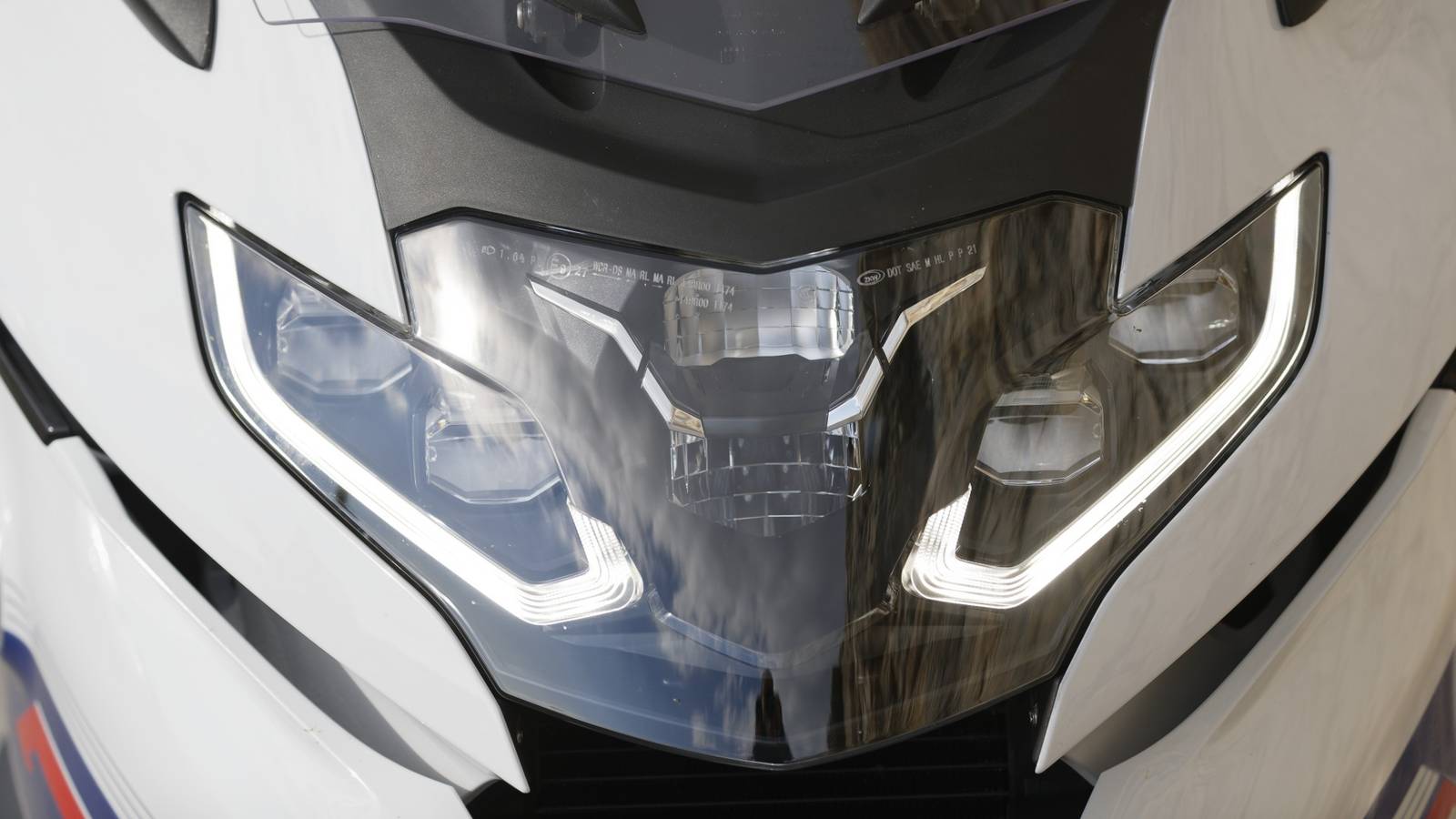
Night riding is where the GT quietly shows off. Its adaptive LED headlight adjusts based on lean angle, effectively “looking” into corners as you turn. On winding mountain roads, this makes a noticeable difference. Instead of riding into darkness mid-corner, you get better visibility exactly where you need it. It’s one of those features you might not think about when buying the bike—but once you’ve experienced it, it’s hard to go back.

The Touring Bike With Honda Reliability And First-Class Comfort
This BMW motorcycle combines Honda-like reliability with luxury touring comfort, featuring a durable six-cylinder engine and unique suspension.
The Ultimate Transcontinental Express

It takes the core elements that matter — comfort, stability, and power — and elevates them with engineering precision and thoughtful technology. The inline-six engine delivers effortless performance. The chassis and suspension provide unwavering stability. And the ergonomics and features ensure that long days in the saddle feel less like endurance tests and more like experiences to savor.

What you end up with is a motorcycle that shrinks distances—not by going faster necessarily, but by making every mile easier, smoother, and more enjoyable. In a market filled with capable machines, the K 1600 GT stands out because it doesn’t force compromises. It doesn’t ask you to choose between comfort and performance, or between luxury and engagement. It simply gives you all three—and makes it feel natural.
Sources: BMW Motorrad