
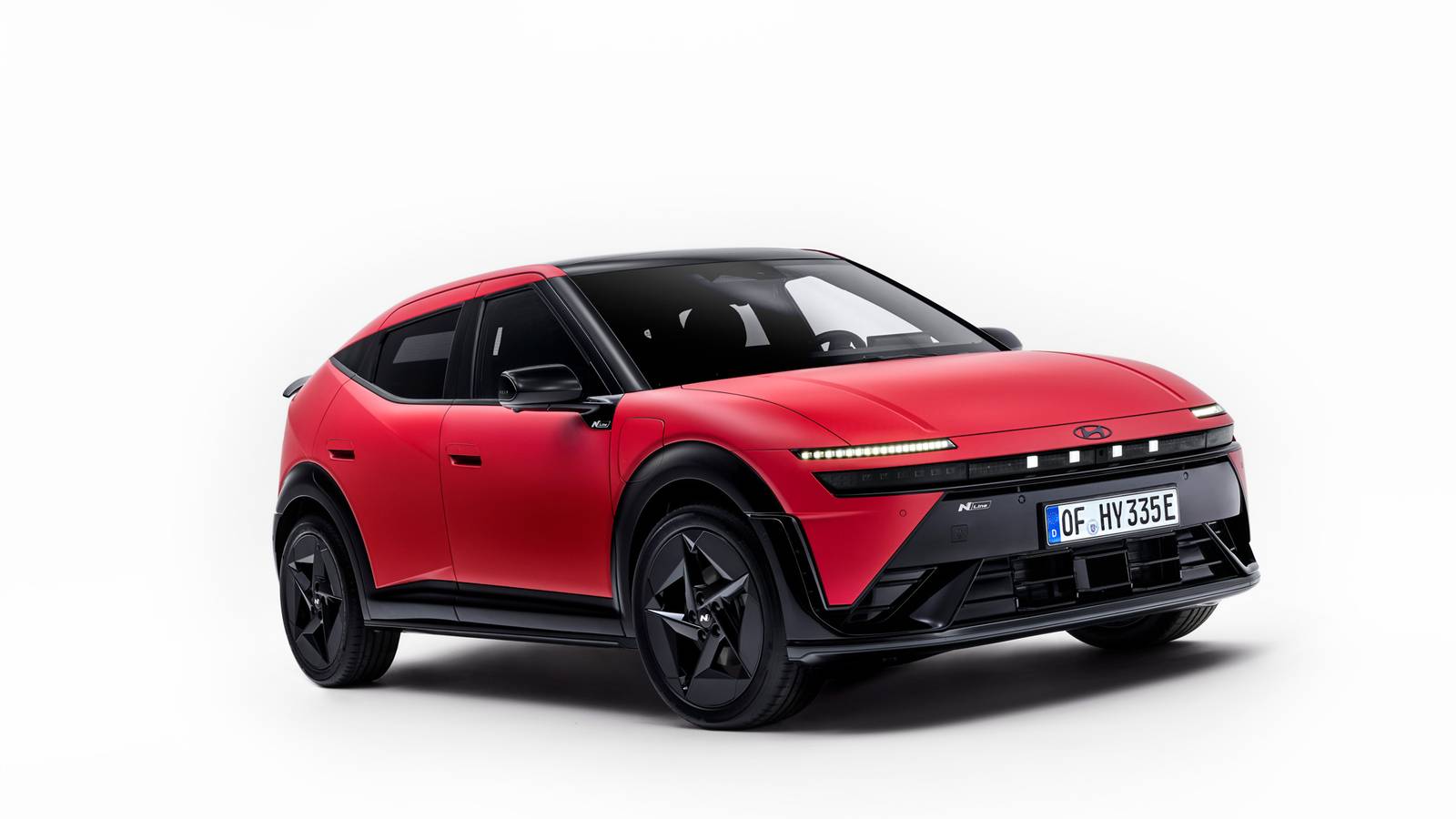
Hyundai is bringing its IONIQ brand to the compact EV segment with the all-new IONIQ 3, a fully electric hatchback engineered specifically for European drivers. Built on the 400-volt E-GMP platform, it targets a class-leading 496 km WLTP range in Long Range trim and a segment-best 0.263 drag coefficient thanks to its new “Aero Hatch” silhouette.
The IONIQ 3 also debuts Hyundai’s Pleos Connect infotainment system in Europe, pairs fast DC charging (10-80% in roughly 29 minutes) with 22 kW AC capability, and packages genuine five-seat comfort and a 441-litre boot into a footprint aimed squarely at young families and first-time EV buyers.

2025 Hyundai Ioniq 5 vs. 2025 Honda Prologue: The Battle Between Bold Design And Quiet Confidence
One of these lovely EVs has some important advantages over the other.
17

Hyundai’s designers treated the IONIQ 3’s cabin less like a cockpit and more like a small living room. The “Furnished Space” approach arranges elements like pieces of furniture, creating a warm, intuitive environment rather than a tech-heavy dashboard wall.
16

A long wheelbase and completely flat floor open up real legroom and headroom front and back. The rear bench is engineered to comfortably seat three adults — a genuine rarity in the compact EV segment, where the middle seat is usually a punishment.
15

Luggage capacity checks in at 441 liters (roughly 15.6 cubic feet), expected to set the benchmark for the class. That figure splits into a 322-liter (11.4 cu-ft) main trunk plus the integrated 119-liter (4.2 cu-ft) Megabox tucked beneath the load floor for concealed storage.
14

Textiles take inspiration from natural landscapes and 1970s Italian furniture design, blending recycled and bio-based materials throughout the cabin. It’s a refreshing break from the gray-plastic monotony that still dominates much of the affordable EV space.
13

Higher trims add Relaxation Seats, heated and ventilated front and rear chairs, dual-zone automatic climate control, and ambient LED lighting. A BOSE® Premium Sound System handles the audio side, rounding out an interior that feels a segment above its sticker price.
12

Hyundai’s designers hid subtle details throughout the cabin — small moments of discovery meant to reward curious owners over time. It’s a playful touch that underscores the IONIQ 3’s broader mission: make everyday electric mobility feel personal, not clinical.
11

The IONIQ 3 is the latest Hyundai to wear the brand’s “Art of Steel” design language, inspired by the raw tension and purity of steel production itself. Surfaces are pared down to a few deliberate volumes, creating a clean, precise look that reflects how sheet metal naturally behaves under pressure.

This EV Hits The Sweet Spot In Terms Of Price, Performance, And Range
Starting at less than $40,000, it delivers impressive performance and over 350 miles of range.
10

Hyundai is calling the IONIQ 3’s body style an “Aero Hatch,” a new typology that balances slippery aerodynamics with maximum interior space. A low, sleek front end flows into a roofline that runs straight over both rows before dropping sharply into the rear spoiler — a shape that’s as functional as it is distinctive.
9

All that aero work pays off with a targeted drag coefficient of just 0.263, expected to lead the compact EV segment. Lower drag means more usable range from the same battery, which is a big reason the Long Range variant can target 496 km WLTP.
8

Signature pixel lighting front and rear reinforces the IONIQ family identity, giving the hatch a tech-forward face after dark. Look closely and you’ll spot four central dots — a nod to the letter “H” in Morse code, a quiet bit of brand signature baked into the design.