
Classic trucks usually don’t gain relevance over time. The standard trend is that they peak, plateau, and then fade into irrelevance. To buck that trend, the truck in question has to be something truly exceptional—a diamond in the rough that most enthusiasts still don’t even know exists.
The reasons why this truck may be gaining relevance aren’t always obvious at first. Sometimes it has to do with looks and durability, other times it’s about its timing. The true outliers have all three. That’s exactly what is happening with an unassuming pickup from the late 1970s and early 1980s, which is no longer a relic but a rising icon.
The Differing Appeal Of Classic Trucks

Just because a vehicle is old, does that make it a classic? Not necessarily. By the time most cars hit 20 years of age, they are irrelevant. The vehicles that deserve the title of “classic” and that manage to stand the test of time tend to follow a specific formula. They combine visual simplicity with real-world usability to create a timeless product, rather than an outdated one.
The Design That Defines “Classic”

Once you start to take a look at older trucks of at least 40 years of age, you may notice a trend in their overall design. There is a reason certain older trucks are immediately recognizable as classics, even to people who know nothing about cars. They tend to have clean body lines, compact proportions relative to modern vehicles, and simple design languages. Modern vehicles, in contrast, are stylized to the point of gaudiness.

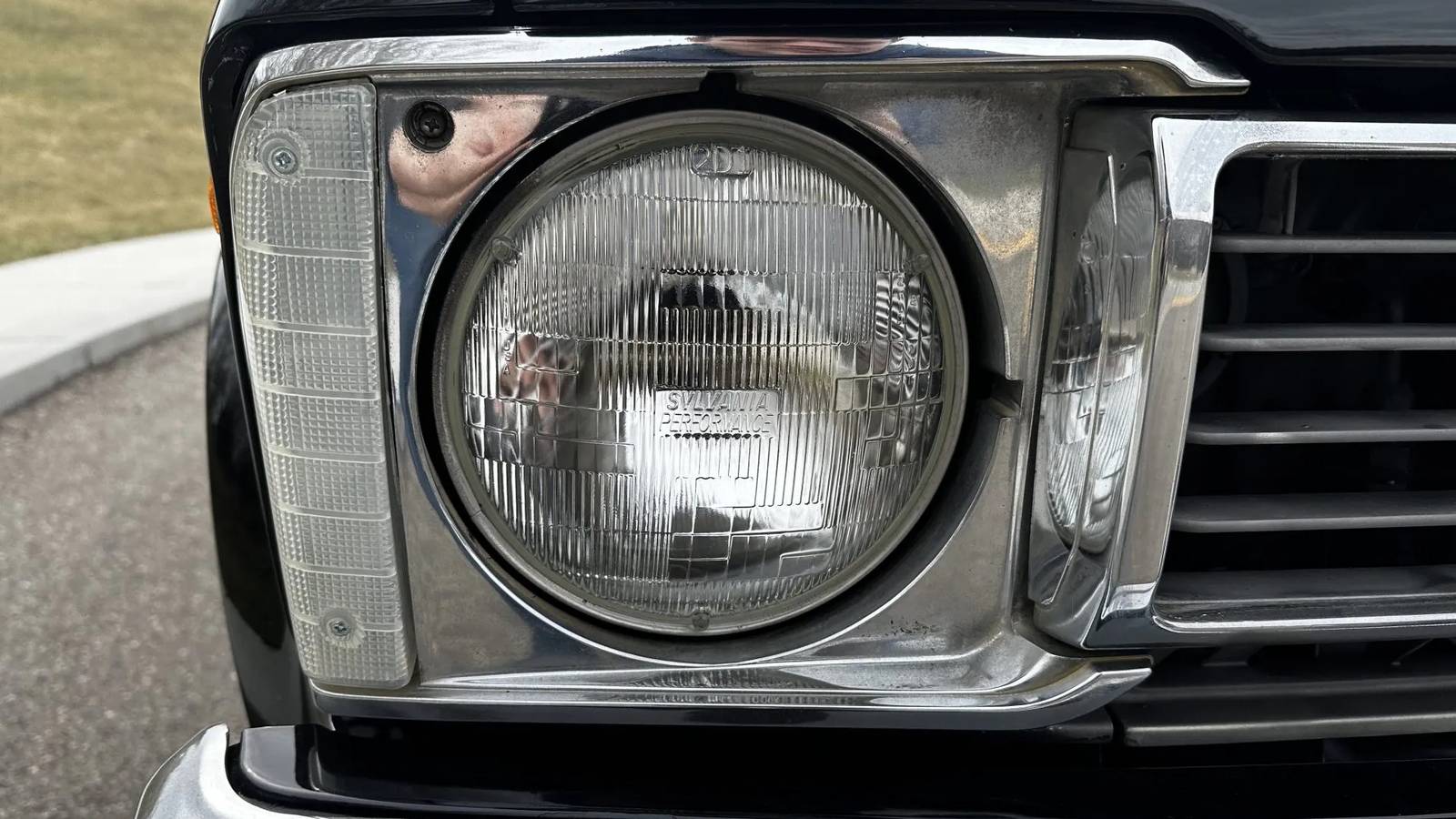
Perhaps no design motif is more defining of classic status than the use of round headlights. Just by seeing round headlights, you know the vehicle in question is not of this era. Round headlights are synonymous with classic vehicles and essentially function as a visual timestamp. Round headlights may not tell you the exact year or model, but you know from them alone that the vehicle is at least 40 years old. That visual simplicity gives certain trucks a nostalgic appeal that has only strengthened over time.
Simplicity Is Key

Another factor in making a truck worthy of being called a classic is its continued functionality. Older trucks often rely on more straightforward engineering that allows them to remain approachable even years after production has ceased. It’s a simple formula: fewer electronics = fewer problems. Long-term survivability is key for any classic, because if it’s too much of a headache to actually keep alive and on the road, its value instantly diminishes.

A simple mechanical foundation does more than just improve reliability. It also provides a lower barrier to entry for ownership. Enthusiasts are more willing to take on a challenge they feel they can understand, even if they are wrong. Over time, that accessibility keeps certain worthy models alive while also reinforcing their reputation and value.

10 Classic Trucks That Are Now Worth More Than You’d Think
These 10 classic trucks may surprise you with their price tags in 2025.
No Fade In Functionality

Just because a classic truck looks cool doesn’t mean it automatically sustains long-term relevance. For a classic to gain appreciation over time, it needs to remain useful in a modern context.
Classic Trucks That Still Feel Useful

A lot of classic trucks seem great until you have to take them in traffic on the highway. Often, these vehicles have limited power, responsiveness, fuel economy, or general drivability for today’s roads. This is where a select few models stand apart. Some late-1970s and early 1980s models strike a rare balance between vintage charm and everyday usability. These trucks are totally capable of maintaining highway speeds without much effort while still delivering decent fuel economy. This desirable combination makes them more than just weekend toys for car shows. These vehicles still function as legitimate transportation, even decades down the road.
The Value Of Durability

Then there is the question of real-world reliability. This factor will shape how a vehicle is perceived decades after production has concluded. Trucks that offer above-average durability standards often gain momentum as the years pass, especially when more examples remain in working condition. Global recognition is also a factor. Certain trucks are known for withstanding extreme environments and conditions, building a sort of mythology surrounding their durability. Once a legend exists, it rarely fades away. Often, the tales of legends only compound and become more fantastic over time, adding to the continued appeal with each new generation of enthusiasts.

10 Classic Pickup Trucks That Are Still Dirt Cheap
The pickup truck market is white hot and doesn’t seem to be cooling off. However, there are still a few classic trucks that are relatively affordable.
The Toyota Hilux Is The Classic Truck That Is Only Getting Better

As we mentioned, if you want an old-school truck that’s worth keeping, and you actually want to drive it regularly, there are only so many legitimate choices available. If we were to narrow the list down to one option that is still gaining attention, value, and relevance, it would be the 1981 Toyota Hilux.
The 1979 To 1981 Toyota Hilux Is A Bucket List Truck

Most younger casual enthusiasts don’t even remember a time when the Toyota Hilux was available in the U.S. As a result, there is the common misconception that the Hilux was a JDM and global market product only, and we only got the Tacoma and 4Runner. The reality is that the Hilux, also known as the Toyota Pickup or Truck, was the first Toyota truck available in the U.S. back in 1969 and had a 25-year production run in the U.S. market.

The Hilux was also the first (partially) American-built Toyota model. Yet, the Hilux’s fall from grace was real as the more consumer-focused Tacoma took its place in 1995 and eventually became the more popular truck that still exists today. Nowadays, you will seldom see a Hilux of any generation in traffic, but a Tacoma is a dime a dozen.

The third-generation Hilux (1979-1983) is the embodiment of everything that makes a classic truck age gracefully, but the 1979 to 1981 models are the most desirable of the bunch. These trucks are the final iteration of the round headlight design before Toyota transitioned to a more modern square design after 1981.

That might seem like a minor detail, but classic truck enthusiasts view this as a defining characteristic. It’s not that there is anything wrong with the square headlight Hilux models, but they just don’t look as classic and cool as their round headlight counterparts. Beyond pure aesthetics, the 1979 model year was also the introduction of factory 4WD for the Hilux, which transformed this compact pickup into the competent off-roader that it is recognized as today.
The Underpinnings Of Greatness

The next thing that makes the 1981 model year specifically stand out is the introduction of Toyota’s iconic 2.4-liter 22R inline-four. This workhorse four-banger may not be the most refined engine, but it offers great durability and simplicity. Importantly, it also offers modest performance and decent fuel economy in such a way that it still feels relevant today. It has enough power to cruise at highway speeds, and fuel economy in the low 20 MPG range is achievable.

In a truck with so little power, tire size and wheel weight play a large factor in both acceleration and fuel efficiency. Its predecessors, like the 17R and 20R, are simply too underpowered to keep up with the increased demand of modern highways. The full 129 pound-feet of torque of the 22R is available at an impressive 2,800 RPM, a feat that was uncommon at the time in engines of this size and cylinder count. This torque delivery was made possible by the increased efficiency of the cylinder head’s hemispherical design.
Then There Is The Serviceability Of The 22R

With a carburetor for fueling and an engine bay with plenty of room to work, this inline-four engine is as simple as it gets. You won’t be dealing with modern ECUs or TCUs here. Wondering if your engine is running right? Listen to how it idles. With the turn of a flat-head screwdriver on the carb, you can make whatever adjustments might be necessary. Want a little more power? Get an aftermarket carb and headers, and advance the timing. A 22R is as straightforward as an engine can get while still being relevant enough to be useful in a modern setting. Off-roaders have known this for decades, but enthusiasts in the mainstream are only recently starting to take notice.

10 Used SUVs Under $20,000 That Crush Off-Road Trails
These 10 budget SUVs won’t break the bank, but will still take every trail like a champ.
The Modern-Day Relevance Of A Toyota Hilux

Let’s be very clear: if you want a vehicle with airbags, ABS, and a safety suite, you are reading the wrong article. Yet, for a select few who understand the deal, these trucks have quietly started to surge in value as the broader market takes notice.
From Workhorse To Collector Item

Less than a decade ago, Hilux models of all generations were largely overlooked and mostly only changed hands between owners who were in the know at modest prices. During this time, a sub-$2,000 Hilux in salvageable condition was a relatively easy find, but in 2026, the market had shifted. If we look at the average sale price of all N30 generation Toyota Hilux models in the last year on Classic.com, the figures are landing in the low $20,000 range.
Clean, relatively low-mileage examples, especially five-speed 4WD models, command the highest premiums. Although Classic.com often only represents the top one percent of the market, it’s clear that these trucks are getting more recognition among collectors than ever before. After all, these Hiluxes do offer a strong blend of durability, usability, and classic appeal: a collector’s ideal recipe.
Why It’s Cooler Now Than It Was Before

You’ve seen the reels of some old-looking Hilux with a .50 cal machine gun jerry-rigged into the bed in some war-torn country. You’ve seen the videos of those 1,000-horsepower Hiluxes cutting through massive dunes on big tires like they were butter in the Middle East. Everywhere across the globe, people are still taking full advantage of the Hilux’s versatility all these years later. Yet, with every passing day, fewer clean examples remain, and even the fixer-uppers seem less common.

As a cultural icon, the Hilux story is vast, but still being written. Off-roading and overlanding are more mainstream than ever before, and with it comes renewed attention to platforms like the Hilux. It’s vintage, analog, and has off-road appeal. It doesn’t get much cooler than that. As more people recognize it, this once-overlooked pickup is slowly becoming a recognized classic.
Sources: Toyota, Classic.com