
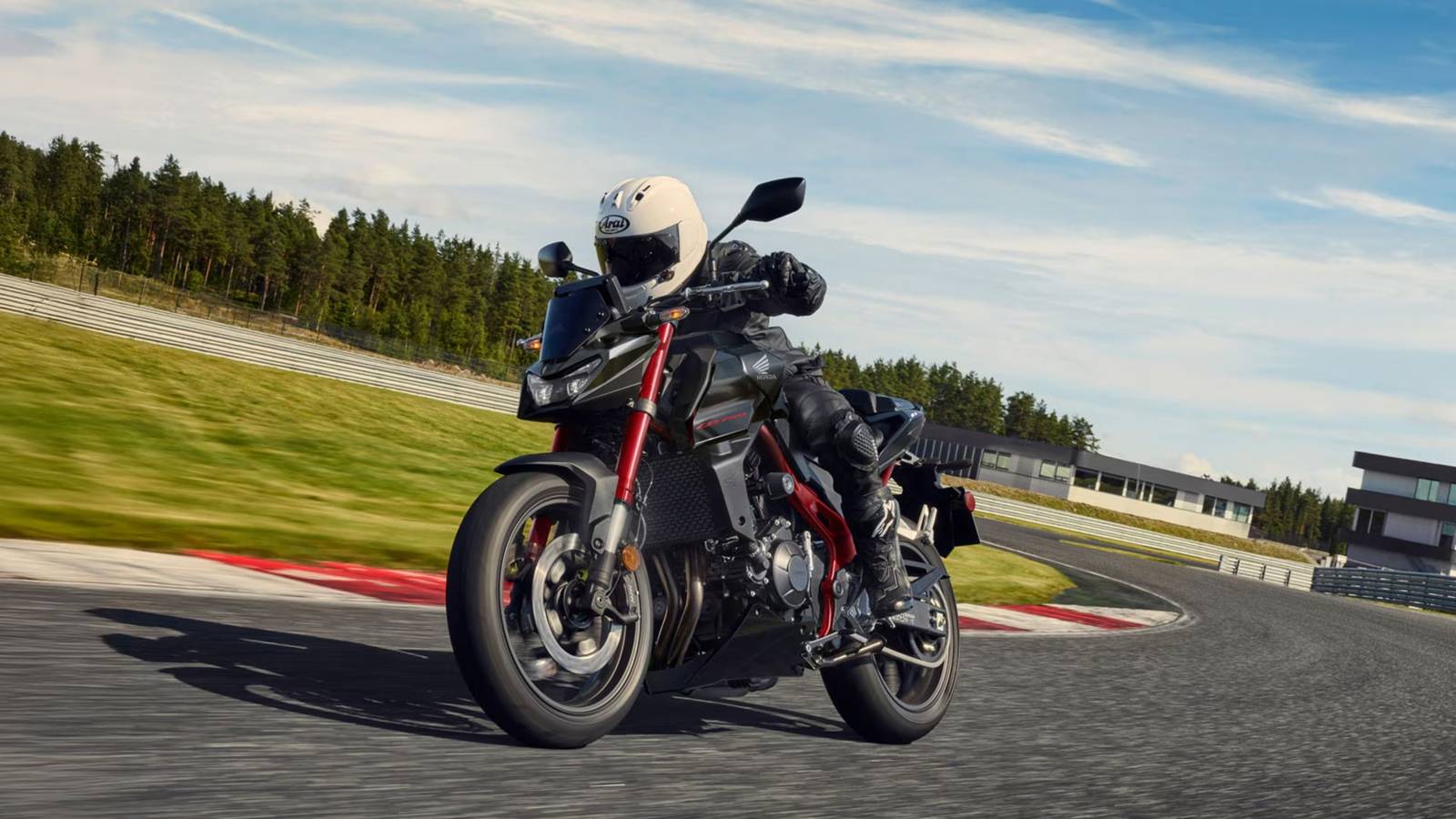
Motorcycles inherently ask for attention; that’s a given. Take the Harleys and Indians, for example. You will hear them coming from a mile away with their loud, low rumbling engines. Then you have the BMWs, the Ducatis, and the Kawasakis that just scream their lungs out. And it’s not just the sound they make, but the way they look, too. Even sitting idly by in a parking lot, you will notice it out of the corner of your eye, and you will turn to look at it.
Honda is no stranger to such attention-grabbing games. It has got things like the Gold Wing, the Fireblade, and the Africa Twin for this. Not to mention some of the cruisers, like the Fury or the Rebel. Mostly, however, the CBR-maker likes staying lowkey. Most of its bikes get the basics right without setting segment standards or wooing away the riders. One of its newest middleweight naked bikes is a prime example of the same approach.
The Beauty Of Bikes That Don’t Scream For Attention

There is a reason why some motorcycles become everyday companions while others remain weekend indulgences. Extreme performance figures or exotic designs, everything that tells you to take another look, don’t often speak towards everyday rideability. These bikes are good, sure, but they also tend to be limited to a subculture. Most times, the bikes with the most delicate design tend to outlast everything else. These bikes aren’t used for spectacle, but rather to appreciate the fine art of motorcycling.

They do not indulge in competition or last-mile connectivity. What they do best is comfort and predictability. They don’t punish you for riding through the city, nor do they complain about taking the highway. In fact, they’ll do both fairly well, and in the US, where motorcycling is a niche hobby, they’ll stand out. But in large packs, these bikes will rarely get noticed, even though they keep up with the group.
The rivals that chase balance

Now, the middleweight segment has become more of a battleground for such low-key and balanced bikes. Manufacturers like Kawasaki, Yamaha, and Suzuki all try to get into that sweet spot of edgy, yet usable. Take Kawasaki’s Z650, for example. Despite its flowy, captivating design, it offers a smooth, predictable throttle with a nice upright sitting position. Then you have the Yamaha MT-07, which brings in a lot of torquey fun, but it also has a little edgy design that’s somewhat eye-catching, but a little dismissive, too. And, who can forget the Suzuki SV650, a cult classic that has one of the simplest designs in the market today. But we’re here to talk about a Honda and the one that particularly stands out in their lineup.

10 Hondas That Hold Value Better Than Their Rivals
The Honda bikes that have now become collector specials.
Enter The Underrated Honda CB750 Hornet

Now, as far as design goes, the CB750 Hornet isn’t exactly mellow. Yet, it isn’t as flashy or in your face as a Ducati Streetfighter V2, either. Place it in a group, and it starts to fade. It starts looking like any other streetfighter. That, along with its simple liveries and lack of a screaming howl, ensures it doesn’t scream for attention anywhere it goes. However, if you dive deeper, you’ll soon realize that it can well and truly trump its rivals in terms of abilities.
755 cc Of Torquey Machinery

Powering the CB750 Hornet is a 755 cc liquid-cooled parallel-twin engine that produces 90.5 horsepower and 55.31 pound-feet of torque. That is higher than nearly all of its middleweight rivals, regardless of the engine layout. Built around Honda’s Unicam architecture, it gets a 270-degree counterbalanced crankshaft, and everything put together delivers very strong torque. Now, this is given to you throughout the rev band, but the torque is particularly stronger in the low to mid-range section. Honda has made sure that the throttle response is tight and immediate with a linear power curve.
E-Clutch To Make Life Simpler

One of the standout features of the Honda CB750 Hornet is its E-clutch system. It’s been added to a lot of Honda bikes lately, and it’s a pretty useful tool within city limits. Don’t mistake it for a fully automated gearbox. You still have to shift between the six gears with your foot, but using the clutch is entirely optional. The bike’s computer controls the clutch electronically, choosing when to engage and disengage, allowing for smoother starts and easier low-speed riding when you would otherwise be feathering the clutch lever. It even handles rev-matching, too, so it reduces the jerks and interruptions you get if you’ve never thought about learning that technique. Stop-and-go traffic is where the e-clutch really shines. You can just let the bike handle the clutch, letting you focus on just moving forward, slowly.

The Honda Built For Riders Who Want It All
A true all-rounder, the Africa Twin Adventure Sports ES merges rugged capability with refined touring features for riders who demand more
The Chassis Complements The Engine

Like we’ve already mentioned, the engine functions a little more on the aggressive side. But the chassis is built to complement that. Built on a steel diamond frame, the Hornet’s short 55.9-inch wheelbase allows for a very fluid motorcycle. Rigidity and flexibility are balanced well enough that it should feel stable on the highways with enough agility to throw it from side to side around traffic. Moving on, suspension comes from a set of 41 mm Showa Separate Function Big Piston Forks and a Pro-Link rear monoshock. Braking duties are handled by dual 296 mm discs up front, bit by radial-mounted four-piston calipers and a single 240 mm disc at the rear.

What all this transforms into is a very well-behaved machine, regardless of whether you’re tearing down the highway or commuting to work in peak hours of traffic. There is enough bounce for a comfortable ride, but it is stiff enough in the corners. The almost upright seating position is another added bonus. The seat height is low (31.3 inches), and the tubular bars are tall for easy reach. Add to that the 432-pound heft, and you should have an easy-to-ride machine.
Technology Is Limited To The Essentials

The Hornet doesn’t boast excessive tech. It comes with the basic safety aids like ABS and Honda Selectable Torque Control (fancy way of saying traction control). There is a five-inch full-color TFT display that gives you all your ride-specific information. You also get Bluetooth connectivity via the Honda RoadSync app, allowing you to enable navigation, calls, and even music control. Finally, there are four ride modes: Standard, Sport, Rain, and User.

10 Reasons We’d Pick The New Honda CB750 Hornet Over The Yamaha MT-07
The Honda CB750 Hornet is more powerful and more affordable than the Yamaha MT-07.
The CB750 Is Priced Well

Now, Honda has always had a way of refining simplicity. Honda not only dabbles in the big bikes but has several commuter bikes that are built for the masses in markets like India, cementing their capability in providing simple, comfort-focused machines. The CB750 is one of those stories that is written to bring two worlds together. It is for those who want a motorcycle that can do a lot of things well, be it commuting within the city or maybe even carving up a mountainside. Accordingly, the bikemaker has kept the price super competitive. At just $7,999, this undercuts all of its Japanese and European rivals. You should also know the price has been the same since its debut in the US, even after the recent update brought a few extras. Big ups, Honda!
Source: Honda Powersports