
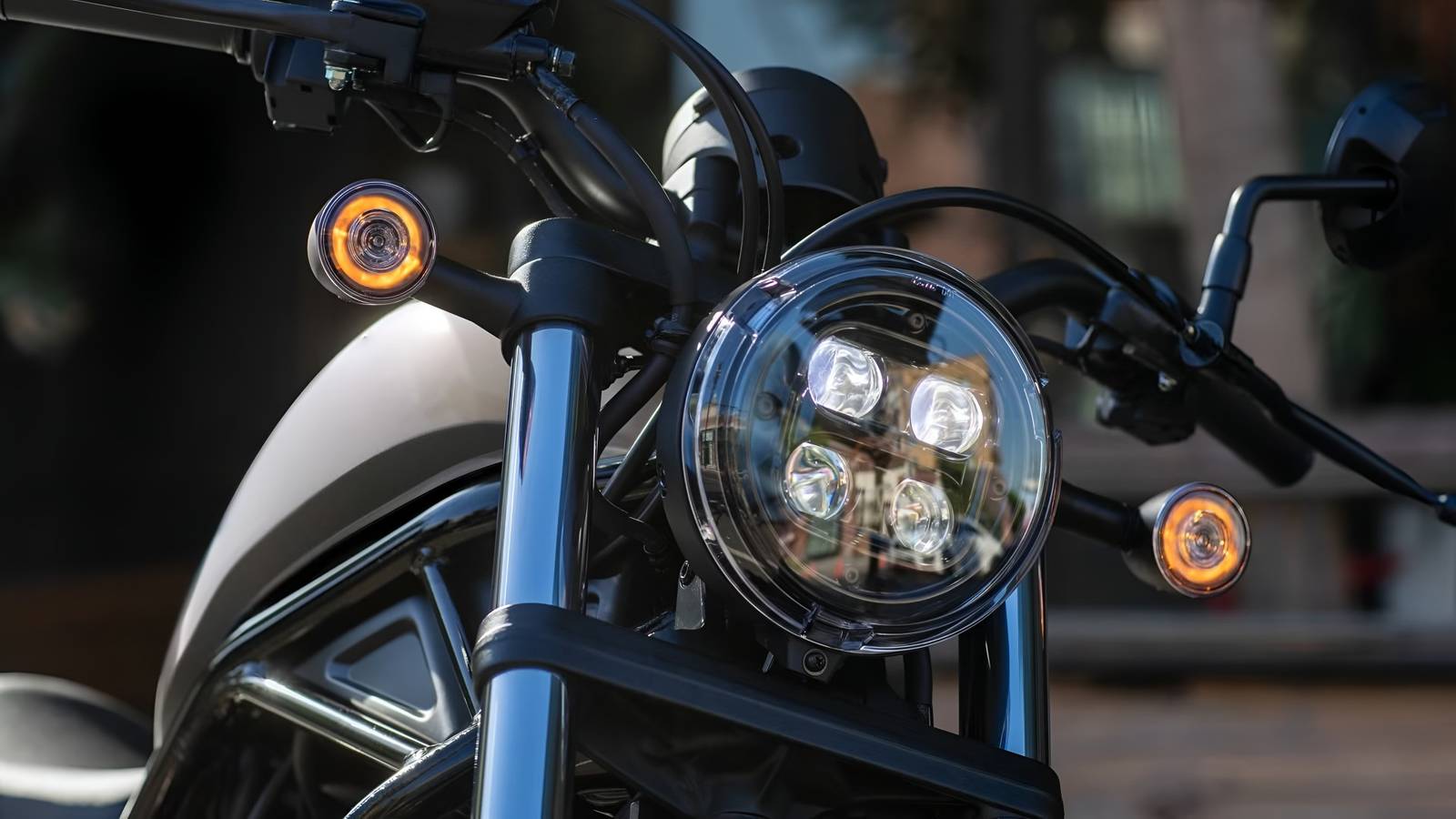
The world of entry-level cruiser bikes shapes a motorcyclist’s love for these low-slung, stylish machines. Accordingly, this segment is quite vibrant. It is made possible by metric cruisers that perfectly balance classic-inspired styling, tractable performance, accessible dimensions, and, most importantly, proven reliability.
In this space, a particular Honda cruiser bike has our attention. It is a proven motorcycle and the perfect stepping stone to bigger cruiser bikes. Beyond the common notion, this neo-retro Honda also surprises us as a forever motorcycle, thanks to its engine’s proven track record of nearly 100,000 miles. We delve deeper into this less popular cruiser bike and tell you why it deserves your undivided attention.
Japanese Offerings Are The Flagbearers Of ‘Forever’ Cruiser Motorcycles

Japanese bikes are what first come to mind when we talk about forever cruiser motorcycles. This is because reliability and durability are the deciding factors, and Japanese motorcycles have a history of making very reliable bikes without compromising the style that defines a cruiser.

Prime examples include the Kawasaki Vulcan 900 Series and the Yamaha Bolt R-Spec. The Vulcan packs a 903 cc liquid-cooled V-twin that has been flexing its muscles since 2006. Whereas, the Bolt R-Spec has been in existence since 2014, with its 942 cc air-cooled V-twin going strong. Both these mills have stood the test of time with commendable reliability and longevity.

10 Affordable Cruisers That Refuse To Break Down
These cruisers are unflappable, and you can be sure they’ll get you there AND home!
But A Budget Japanese Cruiser As A Forever Motorcycle Is Still A Tough Call

All “forever” Japanese cruiser bikes that we mentioned above are either middleweight or liter-class offerings that offer ample urban and highway performance to keep the rider busy throughout the ownership cycle. But the same cannot be said for budget cruisers. These have much smaller, frugal engines that score high on efficiency but low on punch. This is also why entry-level cruisers fit like a glove for newbies.
A budget Japanese cruiser bike might offer elevated durability and refinement, but it will leave the rider craving more in long-term performance and riding dynamics. This is the case with most budget cruiser bikes. But the baby Honda Rebel 500 disrupts the norm and shows otherwise by putting forth a strong and balanced case of a lifelong companion.
The 2026 Honda Rebel 500 Is An Unexpected Lifetime Cruiser Bike

At the affordable end is the $5,349 Honda Rebel 300, which has been making a lot of buzz for being the most affordable cruiser bike with an electronic clutch. At the other end of the spectrum is the $9,699 Honda Rebel 1100, a formidable rival to the Harley-Davidson Nightster, with a powerful Africa Twin-derived parallel-twin engine that delivers an impressive power-to-weight ratio. Between these two extremes sits the balanced Rebel 500 that impresses in silence.

For $6,799, it packs a versatile parallel-twin engine, gets a slipper clutch, is lightweight, has a flexible chassis, and flaunts minimal styling. Shelling out an extra $200 also gets you a custom-styled trim level, too. Furthermore, Honda offers a slew of accessories to transform this barebones cruiser bike into a cozier mile-muncher, too.


Official Giveaway
🔥 Limited Time
Enter The Weekly Giveaway
Win Car Guy Gear
Sign up to our newsletter to enter. Follow on socials for more entries.
New giveaways every 2 weeks
No purchase necessary. Open to US residents 18+. Full giveaway details on the page.
It is clearly a solid stepping stone for an evolving motorcyclist. However, the extra effort in features, refinement levels, and simple yet versatile components showcases a lifelong commitment the Rebel 500 is willing to offer. Its versatile engine is the prime factor in its forever appeal.
The Secret To Honda Rebel 500’s Immortal Appeal Is Its Engine

The Rebel 500’s 471 cc parallel-twin engine is a thriving example of Japanese versatility and reliability. This parallel-twin engine has been in production since 2013 and was originally used as the powerplant on the CB500F naked bike, the CBR500R sport bike, and the CB500X adventure tourer. Since then, owner reports prove its impressive reliability.
There have been many instances of this 471 cc engine surpassing 50,000 miles with only basic maintenance and preventive care. There has also been testimony from a lifelong Honda CB500X owner who has managed to log 98,000 miles between his two CB500X models (2016 and 2018 model years) with just yearly maintenance. Given this shared engine’s interrupted 13-year production run in various offerings, it is safe to say that the Rebel 500 will be a worthy lifelong companion.

10 Cruisers That Will Run Forever With Basic Care
These bikes will give the Energizer Bunny a run for its money – and all they need is basic preventive maintenance done on time.
Also, given the relatively affordable service and spare costs, the Rebel 500 obliterates entry-level Harley-Davidson Softail models in terms of cost of ownership. Furthermore, debunking the so-called “beginner only” tag of the Rebel 500 is its sustained highway speed performance: this neo-retro cruiser does 65–70 mph all day long, without breaking a sweat. Typical maintenance costs and intervals, as stated by Honda of Cleveland Heights, are as follows:
- Initial Service (600–1000 miles): Ranges from $125–$350
- Routine Service With Oil Change: Every 4,000 to 6,000 miles/ 6 months
- Average Annual Service Cost: ~$428
Beginner Performance That Can Woo Experienced Riders Too

Apart from reliability and durability, finding a balance between performance and value to justify a motorcycle’s enduring appeal is yet another tough hurdle. But thanks to the Honda Rebel 500’s versatile engine, the balance of keeping a newbie comfortable and wooing an experienced rider is well handled. This is thanks to its linear performance curve that caters to both low-down torque and top-end power. The former is what helps it be a peppy urban runabout, while the latter means swift highway runs.
Talking numbers, you get 46.9 horsepower at 8,500 RPM and 43.3 pound-feet of torque at 6,000 RPM. Power is sent to the rear wheel via a six-speed manual gearbox and a final chain drive. It gets a slipper clutch as standard. Now, thanks to engine parameters like a 180-degree firing order, Honda’s PGM-FI fuel injection, and digital ignition, it is both refined and lively.
Modern Yet Simple Underpinnings Help The Cause Further

Honda utilizes a modern yet minimal chassis setup on the Rebel 500. It gets a steel trellis main frame that uses the engine as a stressed member. The subframe is compact and helps keep this cruiser rigid and sturdy. Coming to suspension, you get 41 mm telescopic front forks with 5.5 inches of travel. The rear outward-mounted dual shocks offer 3.7 inches of travel and come with five-step preload adjustment.
Braking duties are taken care of by a 296 mm disc up front coupled to axially-mounted two-piston floating calipers. The rear gets a 240 mm disc coupled to a single piston caliper. It uses chunky 130-section front and 150-section rear tires wrapped around 16-inch alloy wheels. These tires help elevate the Rebel 500’s muscular visual appeal, too.
Accessible Dimensions Boost Usability

Despite showcasing a laid-back visual appeal, the Honda Rebel 500 is relatively compact for a cruiser bike. It has a wheelbase of 58.6 inches and an overall length of 86.8 inches. For reference, the Harley-Davidson Nightster has a wheelbase of 60.8 inches and a length of 88.6 inches. Thanks to the rear suspension’s outward mounting points, Honda has managed to lower the seat height.

10 Most Overlooked Cruiser Motorcycles That Will Last A Lifetime
Some of the most reliable cruisers on the market remain underrated and overlooked
At 27.2 inches, the Rebel 500 is a very accessible motorcycle, making it more comfortable for shorter riders. The rider triangle is relaxed, with a wide, tall handlebar and slightly forward-set footpegs. The solo seat is well scooped and offers ample breathing space for the rider to experiment with the riding posture. Its curb weight is low at just 414 pounds, owing to the minimal design language, including a slim 3-gallon fuel tank.
Sources: Honda Powersports, Honda of Cleveland Heights