
Over the years, the automotive world has been filled with an array of unique and fascinating internal combustion engines. The engine has always been the heart of the car, which is why the most aspirational models typically feature emotive and bespoke powerplants. Brands have continually needed to evolve and adapt their engines to meet new performance benchmarks and increasingly strict emissions regulations.
One of the most disruptive changes in emission laws resulted from the 1973 OAPEC fuel crisis, prompting brands across the world to drastically alter their products. Many brands reduced their engine’s power, but more affluent companies saw this as a challenge and responded by introducing brand-new performance powertrain innovations.
The Disruptive OAPEC Fuel Crisis

The 1973 oil crisis was triggered by an embargo organized by the members of the Organization of Arab Petroleum Exporting Countries, commonly referred to as OAPEC. This move caused global crude oil prices to quadruple, leading to severe fuel shortages and crippling inflation across Europe. In response to the soaring energy costs and the need to curb national fuel consumption, the Italian government introduced a Value Added Tax structure designed to penalize heavy fuel consumption.
Italy also implemented a luxury tax that slapped a steep 38 percent sales tax on vehicles with engines displacing more than 2,000 cubic-centimeters, while smaller, more efficient engines remained at the standard 18 percent rate. This fiscal barrier effectively shifted the domestic market toward smaller-displacement turbocharged powerplants, as the high cost of entry for larger naturally aspirated engines became less of an appealing option for most Italian motorists.
Ferrari’s Longstanding Engine Manufacturing Operations

During the 1970s, Ferrari’s engine development and manufacturing remained centered at its historic facility in Maranello, Italy, where the Scuderia racing DNA deeply inspired the production of road-going powerplants. Despite the economic volatility of the decade, the division was remarkably successful, transitioning from the iconic V-12 legacy into the development of high-revving V-8 engines that expanded the brand’s commercial reach without sacrificing prestige.
Operations prioritized racing performance above all else, often utilizing the factory’s proximity to the Fiorano test track to port Formula One innovations. These included advanced light-alloy casting and dual-overhead-camshaft configurations, integrated directly into road-legal units. This era was defined by a technical philosophy where the engine was viewed as the heart of the vehicle, ensuring that even as the company scaled production, the mechanical output maintained the high-strung, competition-bred characteristics required to uphold Ferrari’s dominance in international motorsport.

The Durable Japanese V8 That Powers Everything From Luxury Sedans To Pickups
From luxury sedans to pickup trucks, this Toyota V8 engine series laid the groundwork for Japanese engineering’s pursuit of perfection.
The Infamous 2.0-liter V-8 In The Ferrari Dino 208 GT4

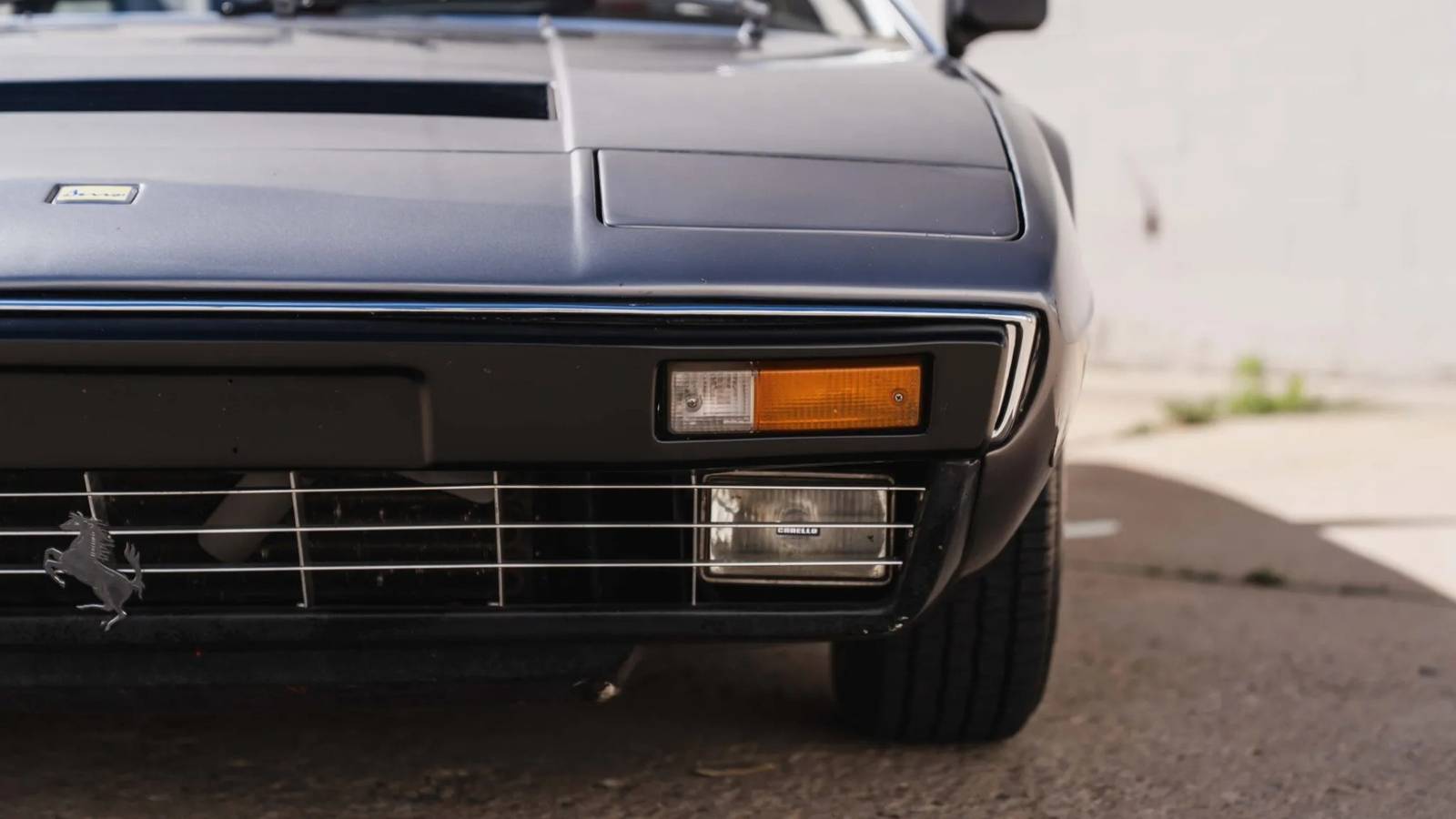
The Ferrari Dino 208 GT4 remains a technical marvel primarily due to its mid-mounted, 90-degree V-8 engine, which holds the distinction of being the smallest displacement production of its kind ever manufactured. Ferrari created this engine specifically to circumvent the aforementioned tax. Measuring 1,991 cubic-centimeters, this engine was a de-stroked version of its larger 2.9-liter siblings.
Available Models
Ferrari
- Founded
-
1939 (as Auto Avio Costruzioni)
- Founder
-
Enzo Ferrari
- Headquarters
-
Maranello, Italy
- Owned By
-
Publically Traded
- Current CEO
-
Benedetto Vigna
The engine was mated to a five-speed manual transaxle in a transverse rear-wheel-drive configuration, a layout that optimized weight distribution for agile handling. Despite its diminutive size, the high-revving unit produced 170 horsepower at 7,700 RPM, allowing the car to reach a top speed of roughly 137 MPH and achieve 0 to 60 MPH acceleration in 7.7 seconds. Ferrari produced a total of 840 units of the 208 GT4 between 1975 and 1980, making it a rare and focused response to the unique economic constraints of its era.
A Masterclass Of Downsizing Design

The Ferrari 2.0-liter V-8 remains an engineering masterclass in mechanical downsizing, representing a direct evolution of the 2.9-liter engine found in the 308 series. To remain under the critical tax threshold, engineers reduced the bore from 81 mm to 66.8 mm, while maintaining a 71 mm stroke. The engine features a 90-degree configuration with an all-aluminum block and heads cast from Silumin, which is a high-silicon alloy chosen for its superior thermal conductivity and light weight.
This naturally aspirated unit employs a double overhead camshaft design and is fed by four Weber 34 DCNF carburetors, which were meticulously tuned to maintain the brand’s signature throttle response despite the smaller combustion chambers. To ensure reliability during spirited driving, the assembly includes a wet sump lubrication system with internal baffles to prevent oil starvation.

The American V8 Engine That Has Powered Cars And Trucks For 70 Years
For seven decades, the GM small-block V8 has powered cars and trucks with legendary reliability, strong performance, and an unmatched legacy.
How Ferrari Evolved The Engine For Performance

Introduced at the 1982 Turin Motor Show, the Ferrari 208 GTB Turbo marked a radical shift in the brand’s small-displacement strategy by adopting turbocharging technology directly from its Formula One division. This was a very limited and specialized follow-up to the GT4, with a stronger focus on performance and competition. While it retained the same basic architecture as the 208 GT4, the engine was heavily modified to handle the forced induction provided by a single KKK turbocharger.
The most significant departure from the GT4 was the move away from Weber carburetors in favor of a Bosch K-Jetronic mechanical fuel injection system and a lower compression ratio of 7:1, down from the GT4’s 9:1 ratio, to accommodate the boost. These changes transformed the tax-special engine from a peaky, naturally aspirated unit into a much more potent powerplant, raising output to 220 hp at 7,000 RPM. This injection of power allowed the 208 GTB Turbo to achieve a top speed of 150 MPH, effectively bridging the performance gap with its 3.0-liter siblings while remaining within the lower 18 percent tax bracket.
The Dino’s Disruptive Market Presence

Ferrari positioned the Dino 308 GT4 as its first mid-engine 2+2, intended to bridge the gap between dedicated two-seaters and traditional grand tourers. It was also intended to compete directly with the practicality of the Porsche 911. Its key demographic was a slightly younger, more family-oriented enthusiast who sought the exotic appeal of a Maranello-built V-8 but required the utility of occasional rear seating.
While the Bertone-designed wedge styling initially polarized traditionalists, the model proved to be a commercial success, with 2,826 units of the 3.0-liter version produced, outselling its contemporary mid-engine rivals from Maserati and Lamborghini. In the U.S., where it often served as the only federally compliant model in dealer showrooms during the mid-1970s, it carried an original MSRP of $22,000. This pricing made it a premium entry into the brand’s lineup, and despite early resistance to its Dino-specific badging, its strong sales helped establish the mid-engine architecture that would define Ferrari’s core business for decades to follow.

This V8 Is So Reliable It’s Still In Production After More Than 20 Years
This iconic American V-8 is enjoying new popularity levels.
Values Are Steadily Climbing
The Dino GT4’s market trajectory over the past decade has evolved from its long-standing status as an affordable entry-level Ferrari into a respected collectible with steadily climbing valuations. While once overlooked in favor of Pininfarina’s curves, the trademark Bertone wedge has gained significant traction, with average market benchmarks now hovering around $68,000 to $75,000 for driver-quality examples, according to the Hagerty valuation tool.
In today’s market, RM Sotheby’s and Bring A Trailer indicate that well-maintained units frequently sell for anywhere between $60,000 and $95,000, with exceptional or low-mileage original units occasionally breaking the six-figure barrier. Recent months have seen a flurry of activity reflecting this upward trend: for instance, a 1978 model sold for $61,000 in March 2026, while a highly original 1975 example reached $63,500 in late 2025. Higher-end transactions are becoming more common as the model’s historical importance is reevaluated, highlighted by a notable record of $450,500 for a pristine 1973 unit in August 2023.
How The Dino Set The Stage For The 296 GTB

The Dino GT4’s legacy as a more accessible and practical disruptor has come full circle with the introduction of the modern 296 series, which mirrors its predecessor’s philosophy of prioritizing technical ingenuity over sheer cylinder count. Just as the GT4 revolutionized the brand’s lineup by standardizing the mid-engine V-8 to meet the economic and fiscal challenges of the 1970s, the 296 GTB has redefined the modern supercar by pairing a compact twin-turbocharged 2.9-liter V-6 with a plug-in hybrid system.
This downsized approach has been a resounding commercial and critical success. As of 2026, the 296 GTB continues to uplift Ferrari’s record-breaking financial performance, with the model fueling a backlog of orders that extends into late 2027. By delivering 818 hp and securing numerous Supercar of the Year accolades, the 296 GTB proves that Ferrari’s ability to turn regulatory constraints into performance benchmarks. This is a strategy pioneered by the 208 and 308 GT4 and remains the hallmark of the brand’s enduring market dominance.
Sources: Ferrari, Hagerty, RM Sotheby’s, and Bring A Trailer.