
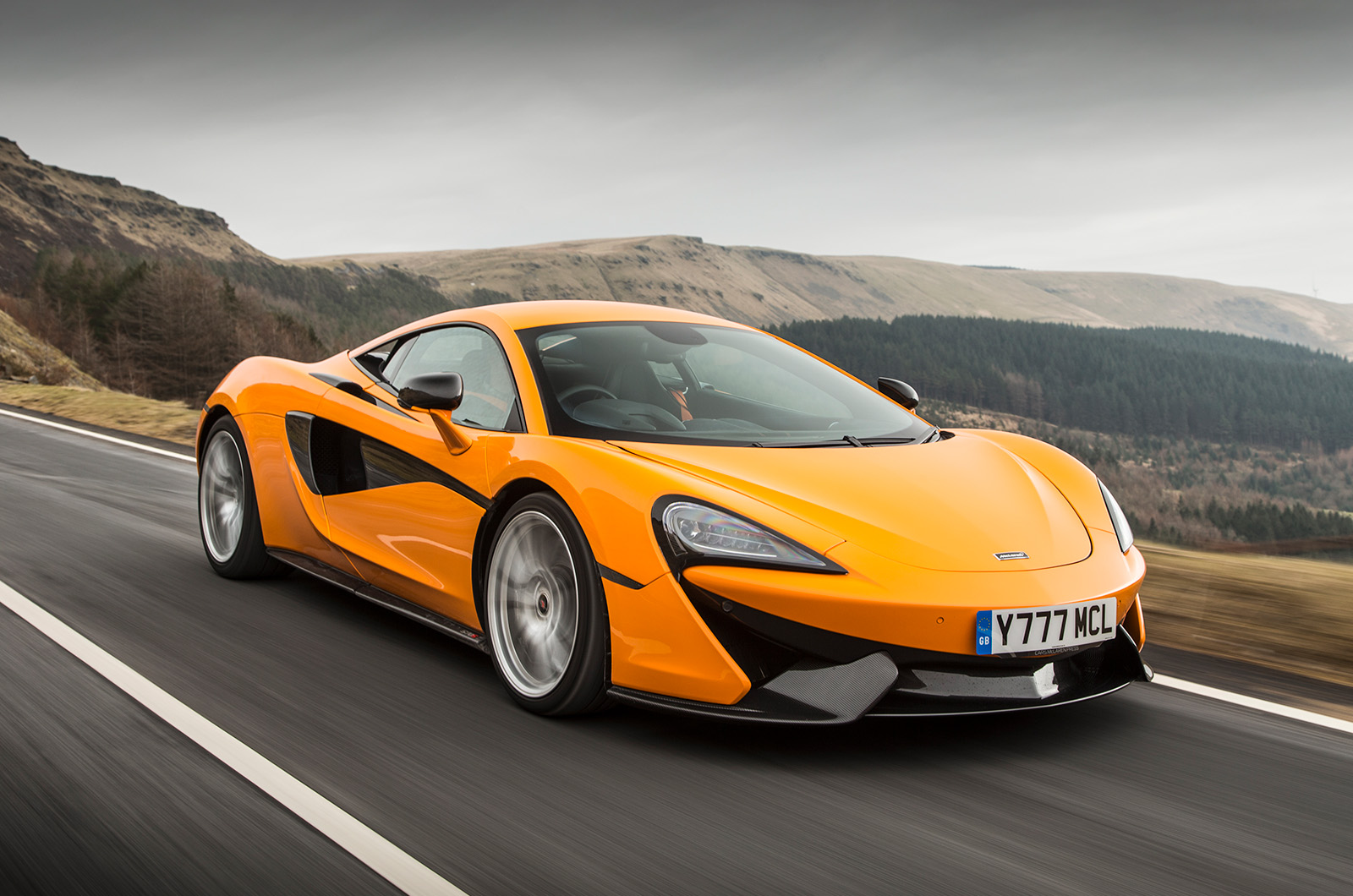
In applying a supercar engine (albeit slightly detuned) and bona fide supercar construction to what’s technically the highest stratum of the sports car market, McLaren clearly set out to break rules and, by doing so, to explode the class pecking order on out-and-out pace with this car. It has emphatically succeeded.
Appreciation of that starts to form as early as your first dip beyond the mid-point of the accelerator pedal travel. The twin-turbo V8 feels both relatively unstressed yet more highly developed than when we’ve sampled it before. It’s crisper in response to small throttle applications and still monumentally, rushingly, addictively potent in its wilder moments. It could sound better, yes, but it could never be expected to punch harder.
Standing quarter-mile times provide a good yardstick here. The previous three hypercars we’ve figured (Bugatti Veyron Super Sport, McLaren P1, Porsche 918 Spyder) have all come tantalisingly close to going under 10.0sec over a standing quarter. For a supercar, an even 11.0sec clocking (Ferrari F12, McLaren 650S) is where the mustard is cut.
For a top-echelon sports car, a few tenths under 12.0sec (Mercedes-AMG GT S 11.7sec, Porsche 911 Turbo S 11.4sec) would have sufficed. But the debutant 570S smashes its way to an order-upsetting time of 11.0sec – significantly more urgent pace than its rivals and precisely the kind that exotics costing many tens of thousands of pounds more trade on.
That there remains a wee bit of turbo lag below about 3000rpm and an absence of the sort of theatrical aural character you get from a new R8 or a GT are very minor black marks, but as part of an overall package this strong, they’re easily forgiven. In the upper half of the car’s formidable 8000rpm rev range, there’s now remarkable speed and proportionality about the engine response – as well as plenty of drama and crescendo as the revs rise.
The dual-clutch gearbox works brilliantly whichever mode you’ve got it in.
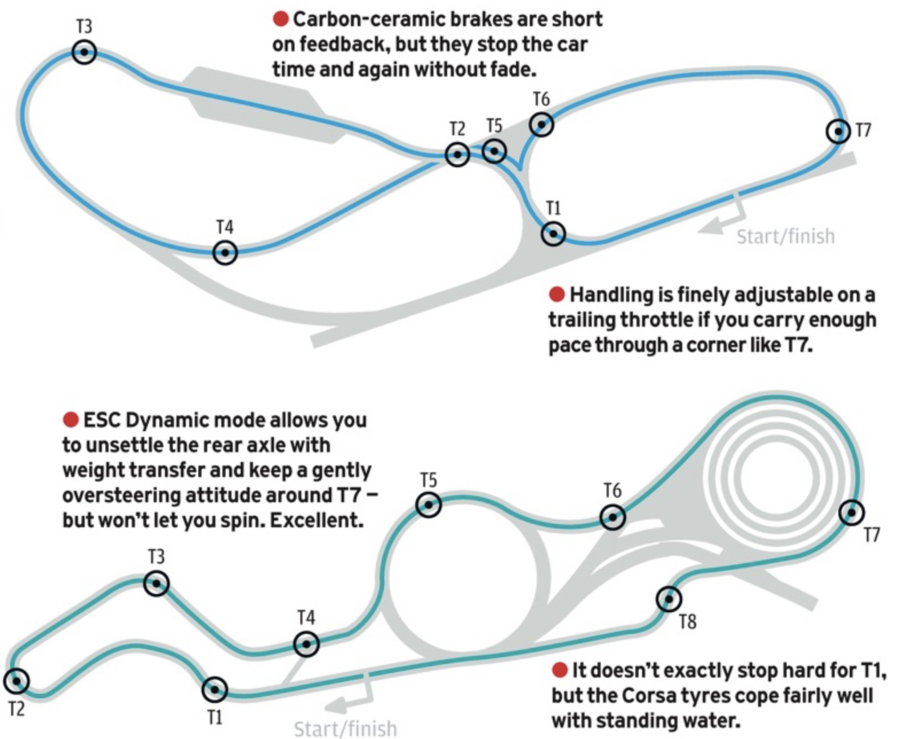
The standard carbon-ceramic brakes are powerful enough to easily haul in every bit of sudden velocity you might inadvertently accrue either on road and track. The pedal needs a hard press to give of its best, though, and doesn’t impress as much with feel as with ultimate retardative urge.
In the wet, the standard Pirelli P Zero Corsa tyres don’t provide them with abundant longitudinal grip with which to work, but regular P Zeros were a no-cost option.
Track notes
The standard carbon-ceramic brakes and Corsa tyres give the 570S searing pace and real staying power on track. The drive computer relays live tyre temperatures and pressures, letting you know when its rubber is in peak condition. And when it is, outright lateral grip is breathtaking, matched by perfect steady-state cornering balance and brilliant feel for all four contact patches through the wheel and seat.
McLaren’s ESC Dynamic mode for its stability control deserves praise, too. Seldom do you find software so cleverly tuned to allow enough adjustability of cornering attitude to be useful, but not so much as to slow you down or allow you to get into trouble.
Creditable initial throttle response at higher engine revs makes the limit handling more playful than we’ve found with some of its forebears, but it’s still not a car for exuberant tailslides. The rush of boost and lack of a locking rear diff allow it to pitch into an unrecoverable slide quickly if you’re overzealous. Be judicious with the throttle, though, and more delicate slip angles are available.
Dry circuit: McLaren 570S 1min 8.7sec (Audi R8 V10 Plus 1min 11.7sec)
R8 had damp track conditions to contend with, explaining some of its lap time deficit but not all. The McLaren is awe-inspiringly rapid — only 0.4sec behind a 650S Spider.
Wet circuit: McLaren 570S 1min 22.7sec (Audi R8 V10 Plus 1min 19.7sec)
A very respectable showing, considering the Corsa rubber. Secure under braking, with well-telegraphed understeer adding stability in corners.
Source link