
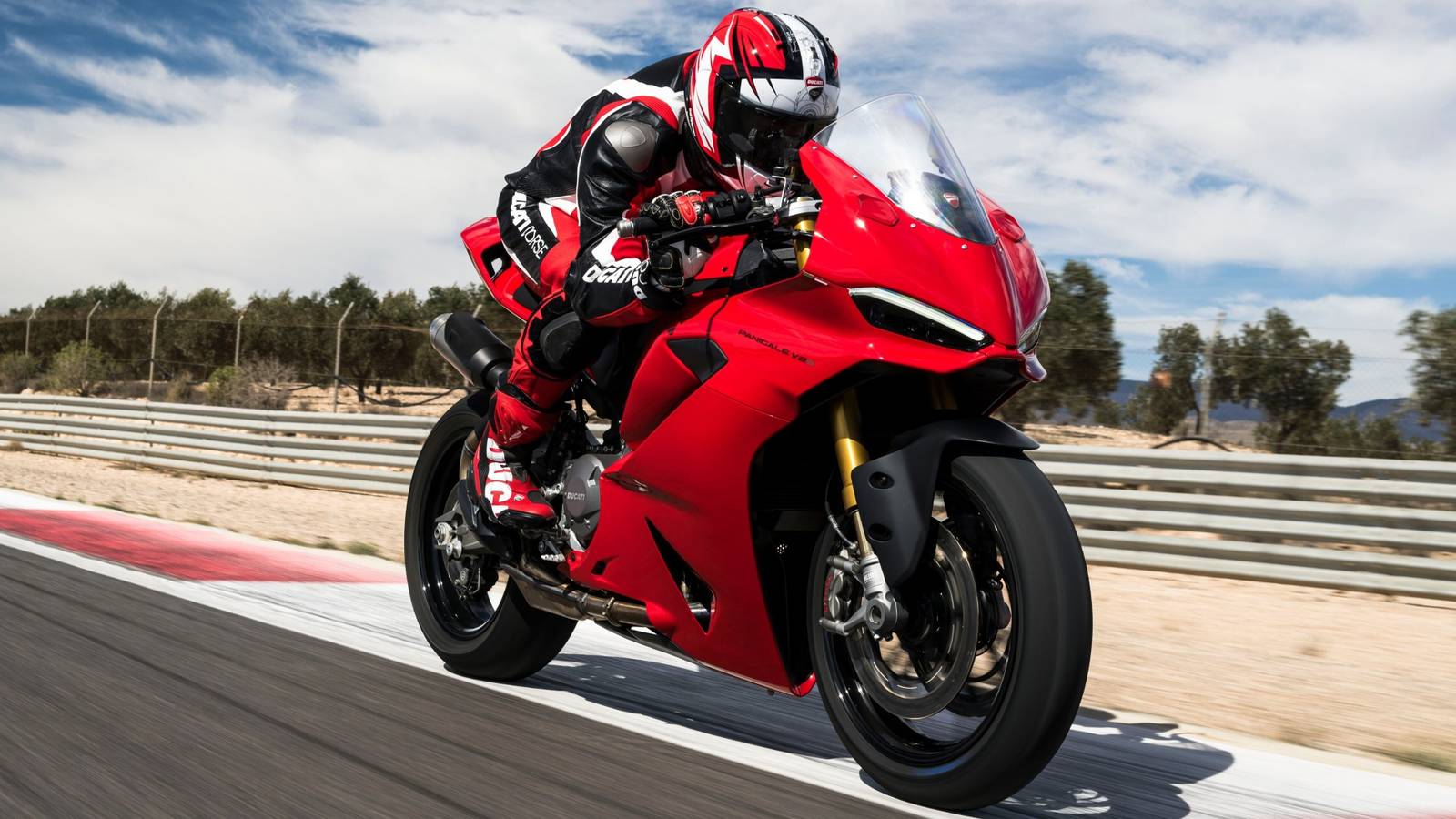
There was a time when sports bikes felt like they were built with one goal in mind. Go fast on a racetrack and nothing else. They were aggressive, uncomfortable, and honestly a bit of a pain to ride anywhere that didn’t involve apexes and lap timers. That’s no longer the case. Modern sports bikes have evolved into something far more usable without losing their edge. They’re still incredibly fast, but they’re also smarter, more forgiving, and much easier to ride in the real world.
The shift isn’t accidental. Manufacturers now understand that most riders aren’t chasing lap records every weekend. They want a bike that feels exciting on a twisty road, but doesn’t feel like a liability in traffic or during a longer ride. That balance has become the new benchmark.
Electronics Have Changed The Game For Everyday Riders

The biggest reason for this shift is electronics. Today’s sports bikes are packed with rider aids that constantly monitor and adjust how the bike behaves. What used to be raw, unforgiving power is now something that can be managed and explored with confidence. We’re talking lean-sensitive traction control, cornering ABS, wheelie control, engine brake management, and multiple riding modes.
All of it is tied together by a six-axis IMU that tracks the bike’s movement in real time, making adjustments before things get out of hand. This doesn’t make bikes boring. It makes them more accessible. Riders can push harder and explore more of the bike’s performance without feeling like they’re on a knife-edge. It’s performance with a safety net, and it works.
Comfort And Rideability Aren’t Afterthoughts, Either

Alongside electronics, manufacturers have also refined the riding experience itself. Ergonomics is still sporty, but not punishing. Seats are more usable, throttle response is smoother, and low-speed behavior has improved significantly. Heat management is better, fueling is cleaner, and overall refinement is on a completely different level compared to older superbikes. These are the things that make a bike enjoyable beyond the track. It means you can actually spend a few hours riding without feeling like you’ve just completed a workout. And that’s a big deal for riders who want to use their bikes more often.

The Sports Bike With Honda Reliability And Ducati-Level Handling
This Japanese sports bike has a proven inline-four engine, along with cutting-edge riding dynamics proven on track
The Fine Line Between Performance And Practicality

Balancing performance and usability is where things get complicated. It’s easy to build a fast bike. It’s much harder to build one that’s fast and approachable at the same time. Too much focus on performance and the bike becomes intimidating. Too much focus on comfort and it loses its edge. The best sports bikes today sit right in the middle, delivering excitement without sacrificing usability. And this is something middleweights do better than liter-class machines.
Power Is Easy, Usability Is The Real Challenge

Horsepower numbers don’t tell the full story. What matters more is how that power is delivered. A smooth, predictable engine is far more usable than something that only comes alive at high rpm. Modern engines are tuned to offer broader power bands, making them more flexible across different riding conditions. That means you don’t always have to push the bike hard to enjoy it. This approach makes bikes feel faster in the real world, even if the peak numbers don’t look as impressive on paper.
The Ducati Panigale V2 S Is Ready For The Track And Your Weekend Ride

This is exactly where the Ducati Panigale V2 S comes in. It represents a major shift in Ducati’s approach to middleweight sports bikes, moving away from the old Superquadro philosophy and toward something more usable and refined. At the heart of the bike is an all-new 890cc 90-degree V-twin engine. It produces 120 horsepower at 10,750rpm and 69 lb-ft of torque at 8,250rpm, with a strong emphasis on midrange usability rather than peak output.
This new engine also drops the traditional desmodromic valve system in favor of spring-actuated valves with intake variable timing. The result is a lighter, more efficient motor that delivers power in a smoother and more accessible way, with a large portion of torque available early in the rev range.
Ducati’s New V-Twin Brings Performance With Real-World Manners

Despite the lower headline numbers compared to the old 955cc engine, the new V2 will feel more usable where it matters. Around 70 percent of its torque is available as low as 3,000rpm, giving it a strong pull even at everyday speeds. The engine itself is significantly lighter, contributing to an overall weight reduction.
The Panigale V2 S comes in at around 388 pounds without fuel, making it one of the lightest bikes in its class and giving it an impressive power-to-weight ratio. You also get a full electronics package that includes Ducati Traction Control, Wheelie Control, Engine Brake Control, multiple riding modes, and a bidirectional quickshifter. Everything is adjustable, letting you tailor the bike to suit your riding style.
|
Engine |
90-degree V-twin, liquid-cooled, 4 valves per cylinder, intake variable timing |
|
Displacement |
890cc |
|
Output |
120hp @ 10,750rpm | 69 lb-ft @ 8,250rpm |
|
Transmission |
6-speed, chain drive, slipper clutch, quickshifter |
Chassis, Electronics, And Design That Balance Both Worlds

The chassis is a lightweight aluminum monocoq design, using the engine as a stressed member. This keeps the bike compact and rigid, improving both handling precision and feedback. On the V2 S, suspension duties are handled by Öhlins components, including a NIX30 fork and a TTX36 rear shock. This setup gives the bike excellent composure on track while still absorbing imperfections on real roads. Braking comes from Brembo radial monobloc calipers paired with dual 320mm discs up front, delivering strong and consistent stopping power. Combined with cornering ABS, it provides both performance and safety.
|
Frame |
Aluminum monocoque |
|
Suspension |
Front: Öhlins NIX30 fully adjustable fork | Rear: Öhlins TTX36 fully adjustable shock |
|
Brakes |
Front: Dual 320mm discs, Brembo monobloc calipers | Rear: 245mm disc, 2-piston caliper |

10 Cheap And Fuel-Efficient Sports Bikes For The City
The most fuel-efficient sports bike on this list, and also the cheapest, is a futuristic-looking Chinese motorcycle.
What Makes It Surprisingly Livable Off The Track
For a bike that looks this aggressive, the Panigale V2 S is surprisingly manageable for everyday riding. The seat height sits at 32.9 inches, and the riding position, while sporty, isn’t extreme. The engine’s smoother delivery makes it easier to ride in traffic, and the electronics help keep everything under control in less-than-ideal conditions. It doesn’t feel like it’s constantly demanding your full attention. Even things like heat management and throttle response have been improved, making it less tiring to ride for extended periods. It’s still a sports bike, but it’s one you can realistically enjoy more often.
Other Sports Bikes That Try To Do The Same Thing

The Panigale V2 S isn’t alone in trying to balance track performance with real-world usability. Several bikes in the segment are chasing the same goal, each with its own approach.
Yamaha R9

The Yamaha R9 builds on the credible CP3 platform, combining strong midrange torque with a more relaxed riding experience. It’s likely to lean more toward everyday usability while still delivering plenty of performance.
Aprilia RS 660

The Aprilia RS 660 has already proven that less can be more. With a lightweight chassis and approachable power, it offers one of the most balanced sports bike experiences available today.

10 Most Overlooked Sports Bikes That Will Last A Lifetime
In the world of sports bikes, reliability is not always a priority, and that is why these motorcycles continue to get overlooked
Performance Comes At A Price, But So Does Versatility

The Ducati Panigale V2 S starts at $19,995 in the US, placing it firmly in premium territory for a middleweight sports bike. But what you’re paying for isn’t just outright performance. You’re paying for balance. The ability to have a bike that feels at home on a racetrack, yet doesn’t punish you for riding it on real roads. That’s a rare combination, and it’s what makes the V2 S stand out. In a segment that’s constantly evolving, the Panigale V2 S feels like a clear statement of intent. It proves that you don’t need to sacrifice usability to get a truly engaging sports bike.
Source: Ducati