
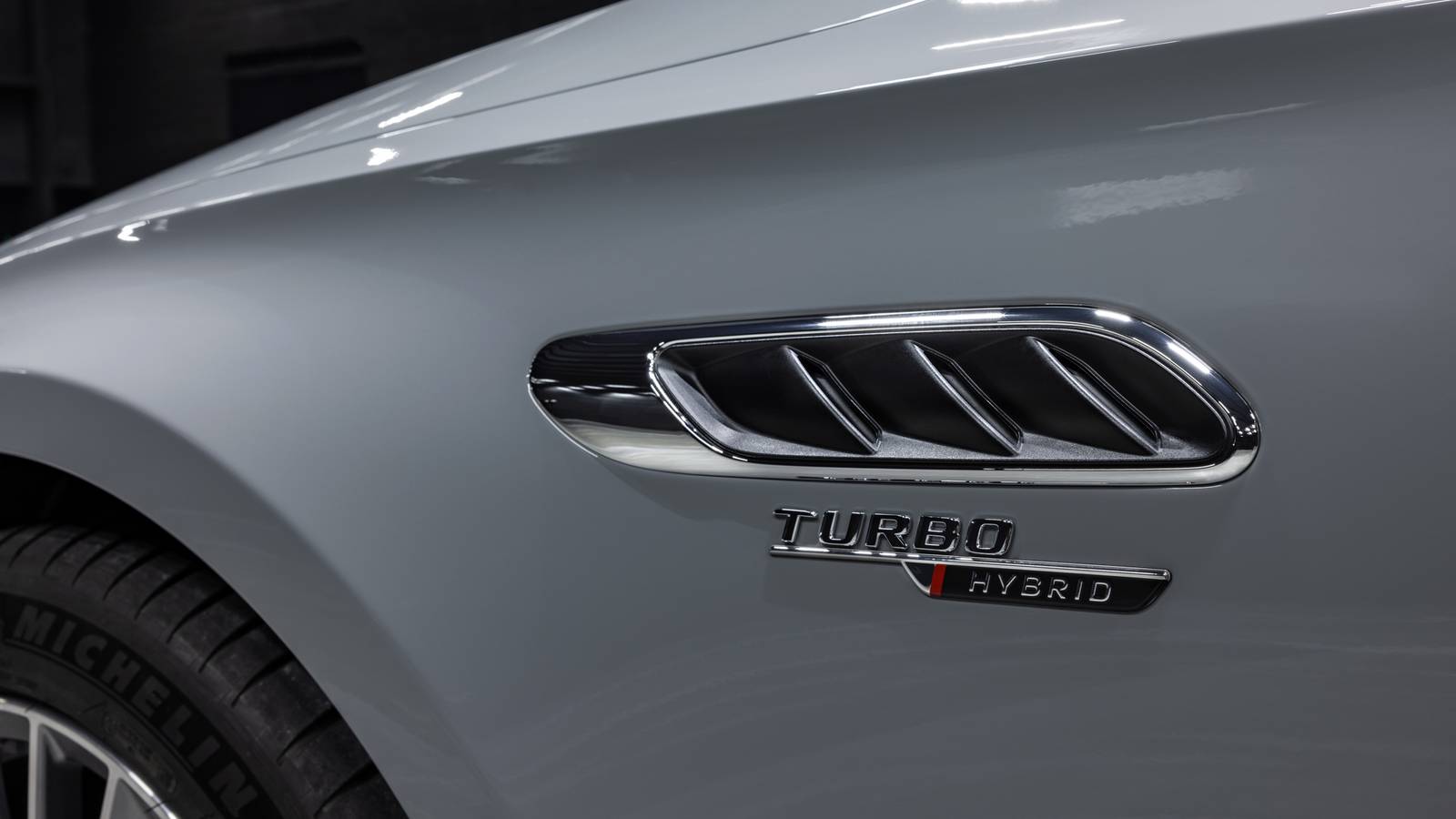
Plug-in hybrids started as a compliance exercise, providing extended driving on electric power in order to satisfy emissions mandates primarily in California, but have grown to become an important part of the driving world, in segments ranging from compact hatchbacks to flagship sedans and hypercars. Today, the conversation surrounding PHEVs is more about the benefits they provide the everyday driver than it is about the compromise those drivers make for environmental consciousness.
Chief among their performance traits is how they hold enough electricity to negotiate everyday driving chores without having to dip into the gasoline tank. In the early days, PHEVs provided short bursts of electric driving outside the familiar gasoline propulsion. Just as early EVs bragged about being able to drive 20-odd miles, early plug-in conversions like CalCars’ 2004 Prius+ could extend electric-only range to 10 miles. Today, the conversation about PHEV electric range is about realistically functioning as an EV most of the time, with gasoline backup for longer trips.
Why Electric Range Matters And How It Affects Sedan Buyers

The plug-in hybrid has taken on a dual role in today’s auto market—the traditional role is to provide as much electric-only range as possible, but in some cases, it’s also enhancing power and performance. The combination is becoming increasingly important in performance sedans, which want to continue to entice buyers with their power, but also want to be conscious of their drivers’ needs to save fuel and money.

Going back a couple decades, the Academy Awards ceremony had celebrities arrive in Toyota Priuses to demonstrate support for California’s environmental initiatives. But with more cars adopting PHEV powertrains (some surprisingly), celebrities can once again arrive in style without increasing tailpipe emissions. That’s not the reason to have plug-in hybrid sedans, but it demonstrates how PHEVs can adapt to all needs and sedans still have a place in society (although their numbers are diminishing with every passing year).
The Engineering Behind Longer EV Range

Regardless of a PHEV’s intent, extending electric-only range is the primary driving factor. In the early days, dropping in a larger battery was the only option, but today’s PHEVs balance that with other efficiency enhancers, such as battery management software and electric motor proficiency. On the subject of the latter, motor placement is important, with most makers placing the motor between the engine and the transmission to effectively mimic true EV driving while also making smoother transitions between gasoline and electricity and enhancing energy recapture.

Batteries now mostly fall in the 15–25 kWh bracket in line with the “bigger is longer” mindset, but managing their temperature has become a hot topic. Larger batteries generate more heat, especially when paired with the performance ambitions of sedans. Sophisticated cooling systems ensure the consistent power output these cars strive for, while keeping the electric range from degrading noticeably. The end result is a PHEV optimized to handle everyday driving without ever engaging the combustion engine.
Electric Range Trade-Offs: Weight, Cost, and Performance

However, larger batteries add weight, often pushing sedans whose smaller statures make them lithe and nimble into weight categories eclipsing those of past 5,000-pound full-size SUVs. That has implications for efficiency, but perhaps more importantly for a sedan, for handling, braking, and overall driving feel. Granted, engineers have worked wonders in masking mass, but as a great space engineer once said, “You cannot change the laws of physics.”

Cost also becomes a factor. Bigger batteries and more complex hybrid systems drive prices upward, and luxury vehicles are better at masking those costs than mass-market family vehicles. That narrows potential buyer demographics down considerably, but it also aligns with the car’s identity, making performance luxury cars more attractive. However, they have their own challenges—lean too far into efficiency, and you lose the driving aficionado; tilt toward performance, and you lose the everyday drivability. One sedan got it right.

The PHEV With The Highest Electric Range In 2026
Depending on their use, today’s PHEVs are capable of driving a whole day without using their gasoline engines, and none go as far as this compact SUV.
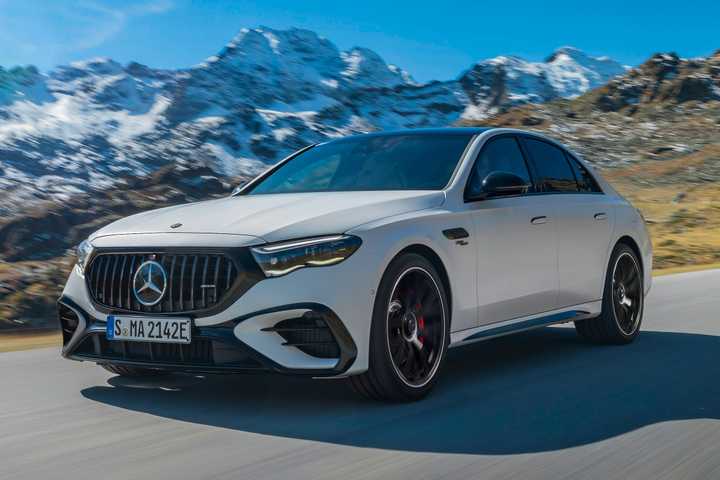
The Mercedes-AMG E 53 Hybrid Has The Longest Electric Range Of All Plug-In Sedans

- Base Trim Engine
-
3L AMG I6 Hybrid
- Base Trim Transmission
-
9-speed automatic
- Base Trim Drivetrain
-
All-Wheel Drive
- Base Trim Horsepower
-
443 HP @5800 RPM
- Base Trim Torque
-
413 lb.-ft. @ 2200 RPM
- Base Trim Battery Type
-
Lead acid battery
- Make
-
Mercedes-Benz
- Model
-
AMG E53 Sedan
- Segment
-
Midsize Luxury Performance Sedan
EPA Rated At 44 Miles
The Mercedes-AMG E 53 Hybrid doesn’t just edge out competitors—it reframes what a performance-oriented plug-in hybrid sedan can do. For efficiency, it leads the segment with an EPA-rated electric range of 44 miles, which is nine more than its nearest competitor. But it’s also important to note that it’s an AMG model, from the Mercedes division responsible for higher-performance variants, all the way to Stuttgart’s racing ventures.

That matters because the new generation Mercedes-AMG E-Class PHEV replaced the previous generation’s twin turbo V-6 and V-8 ICE powertrains, eclipsing both of those configurations in power output and acceleration times … and then adding the ability to complete most daily commutes and errand runs without dipping into the gasoline tank. Known for its powertrain calibrations, AMG set about prioritizing electric operation in the E 53 Hybrid.
The Performance Luxury Sedan As Efficiency Leader

Make no mistake, electric range has become the performance metric for PHEVs, and the 2026 Mercedes-AMG E 53 Hybrid is the undisputed performance leader in that regard. But that doesn’t mean it’s an eco-special. It delivers a combined output of 577 horsepower—pairing a turbocharged three-liter inline-six engine with a substantial electric motor ahead of the nine-speed transmission—so you know performance wasn’t an afterthought or even a side benefit.

But the electric motor that silently enables the midsize luxury sedan to complete most everyday driving tasks also grants immediate and forceful acceleration through immediate torque off a launch, then fills in lags and enhances throttle response. You can look at the E 53 AMG as a super-efficient luxury sedan that behaves like an EV in the city, or you can see it as a sports sedan that can outmuscle most of its ICE rivals around a track. That duality is special.
Mercedes and AMG Prove Efficiency And Performance Aren’t Mutually Exclusive

It would have been very easy for Mercedes-Benz to make an ultra-efficient E-Class simply because the world demands action on auto emissions and fuel consumption, but it chose a different path that enhanced its midsize sedan without forsaking environmental consciousness. AMG approached the transition as an evolution of the E 53’s and the division’s performance goals (as it will with future AMG models), rather than an abandonment of its core values.

The shift away from large-displacement engines toward efficient electrification is well underway, driven by a desire to be less dependent on natural resources. Many have called the transition inevitable, but the mindset that only a decade ago was planning a teary farewell to the performance car has kept a stiff upper lip and welcomed electrification as a performance enhancement for sedans like the Mercedes-AMG E 53 Hybrid and its primary rivals (as you’ll read about later).

2026 Mercedes-AMG E 53 Hybrid Wagon Interior And Exterior Picture Gallery
With up to 604 horses, and a sprint time of 3.8 seconds the 2026 AMG E 53 Hybrid Wagon is the perfect blend between luxury, performance and technology
The Technology That Enables The Mercedes-AMG E 53 Hybrid

Batteries usually get the starring roles in PHEV stories, but there’s a talented supporting cast backing it up, with software playing a key role in keeping the storyline moving. The 2026 Mercedes-AMG E 53 Hybrid’s energy management system intelligently prioritizes electric driving, but directs energy flow as necessary to make the entire driving experience efficient.

And it’s not just about managing the various aspects of the powertrain, but also how the car is used. The E 53’s predictive systems can optimize energy usage based on route and driving conditions, further enhancing real-world efficiency. This means the car behaves like an EV when it should and like a performance sedan when it’s called upon.
One Of The Largest PHEV Batteries In The Market

At the core of the 2026 Mercedes-AMG E 53 Hybrid is a 28.6-kWh battery that’s large by any PHEV standard, and usually seen in larger SUVs, where 1,000 pounds can be partially masked by the vehicle’s bulk. Here, it’s the foundation for the sedan’s ability to function as both a long-distance city commuter and an open-road sports sedan. It’s also designed for sustained usable electric power, meaning it can provide consistent output without rapid depletion or thermal loss.

Although most experts advise against DC fast charging a PHEV battery (ideally taking advantage of gasoline for longer trips), the 2026 Mercedes-AMG E 53 Hybrid is prepared to handle that, meaning you can take a mid-trip 20-minute energy stop to drive on electric power more often. Home charging makes sure the E 53 is ready to go in less than three hours, while regenerative braking draws on AMG’s track expertise to effectively trickle charge the battery on the fly.
Putting It All Together To Take On Impressive Rivals

|
Mercedes-AMG E 53 Hybrid |
BMW 550e xDrive |
|
|
Starting Price |
$89,600 |
$75,500 |
|
Powertrain |
3.0-liter twin turbo I-6 + 1 motor |
3.0-liter twin turbo I-6 + 1 motor |
|
Transmission |
9-speed automatic |
8-speed automatic |
|
Power |
577 hp |
483 hp |
|
Torque |
553 lb-ft |
516 lb-ft |
|
Driveline |
All-wheel drive |
All-wheel drive |
|
Battery Capacity |
28.6 kWh |
22.1 kWh |
|
Electric Range |
44 miles |
35 miles |
|
Combined Efficiency |
60 MPGe |
68 MPGe |
|
Charging (Fast/Home) |
20 minutes/2.75 hours |
Not applicable/3 hours |
|
Fuel Tank Capacity |
15.9 gallons |
15.9 gallons |
|
Overall Range |
420 miles |
430 miles |
|
Efficiency Combined |
24 mpg |
25 mpg |
|
0-60 MPH |
3.9 seconds |
4.1 seconds |
For as long as anyone can remember, the Mercedes E-Class has locked horns with the BMW 5 Series, so it’s appropriate they both now go head-to-head on the PHEV playing field. The BMW 550e xDrive takes a different approach to PHEVing, playing up the BMW “ultimate driving machine” credo. It blends performance with everyday usability and efficiency, prioritizing that order. Though the range is still solid for the segment, electric driving isn’t the centerpiece, as it is in the E 53. The BMW 5 Series Hybrid behaves like the traditional BMW sports sedan … with hybrid assistance.

Mercedes-AMG E 53 Hybrid Keeps The High-Po Wagon Wars Going In America
It’s not quite a BMW M5 Touring fighter, but a 604-horsepower AMG wagon will still do.
The Mercedes-Benz E 53 Hybrid Sets The PHEV Electric Range Standard For A Sedan

Electric range has quietly become the metric by which PHEVs are rated, regardless of whether they improve energy efficiency or enhance performance. In the performance luxury sedan segment, it supplements ownership with everyday utility that, in the past, has been an accepted compromise for owning a car like the Mercedes-AMG E 53, endowing it with exceptional efficiency when it’s simply commuting in stop-and-go traffic and running predictable routes to school or around town.

But there’s more to it, in this case. With its superb electric range, the Mercedes-AMG E 53 Hybrid doesn’t just top a specification chart—it redefines what a performance sedan can be, maintaining the speed, responsiveness, and character expected of an AMG, while delivering the longest electric range of any plug-in hybrid sedan. It also throws down the gauntlet for future PHEVs and sports sedans, demonstrating that electrification strengthens a brand’s identity, rather than diluting it.
The future of the performance sedan may well be fully electric, but as these other plug-in hybrid sedans show, compelling PHEVs are not simply ultra-efficient compact SUVs.
|
BMW 750e xDrive |
Bentley Continental GT Hybrid |
|
|
Starting Price |
$110,000 |
$250,000 |
|
Powertrain |
3.0-liter twin turbo V-6 + 1 motor |
4.0-liter twin turbo V-8 + 1 motor |
|
Transmission |
8-speed automatic |
8-speed automatic |
|
Power |
483 hp |
771 hp |
|
Torque |
516 lb-ft |
738 lb-ft |
|
Driveline |
All-wheel drive |
All-wheel drive |
|
Battery Capacity |
22.1 kWh |
25.9 kWh |
|
Electric Range |
35 miles |
30 miles |
|
Combined Efficiency |
70 MPGe |
46 MPGe |
|
Fuel Tank Capacity |
17.2 gallons |
21.1 gallons |
|
Overall Range |
460 miles |
440 miles |
|
Efficiency Combined |
24 mpg |
19 mpg |
|
0-60 MPH |
4.6 seconds |
3.1 seconds |
The BMW 750e xDrive Embraces The Serene Qualities Of Electrification

Like the smaller BMW 550e, the BMW 750e xDrive approaches the plug-in hybrid luxury sedan segment from a different angle, but in its case, the priorities lie not in track-worthy performance but in comfort, refinement, and flagship luxury. In the 750e’s case, the welcome extended electric range serves to further the serenity of the executive interior, with the EV traits playing a supporting role, rather than a starring one.
The Bentley Continental GT Hybrid Saves Its Gasoline For Extended Grand Tours

At the Grand Touring end of the spectrum, the ultra-luxury Bentley Continental GT Hybrid uses its PHEV powertrain to deliver impressive electric capability, both in range and efficiency. Although it isn’t treated as an EV with gasoline back-up, as is the E 53 Hybrid, the Continental GT Hybrid welcomes its newfound abilities as a daily driver, filling in the week before it can stretch out its legs on comfortable and effortless long-distance runs.
Sources: EPA, Car and Driver, Edmunds