
If you need an affordable daily driver for your commutes, your most likely choices are the Toyota Corolla or Honda Civic. The thing is, with North American consumers heavily preferring sedans to hatchbacks, the hatchback versions of these two popular compact cars don’t sell as much as the sedan body style.
Unfortunately, neither Honda nor Toyota provides a sales breakdown of the sedan and hatchback versions of their compact cars. Honda, however, did state during the current Civic hatchback’s launch in 2022 that in the previous 10th generation model, hatchbacks accounted for 20 percent of Civic sales. In Toyota’s case, they never, at any point, revealed how many Corolla hatchbacks have been sold versus the sedan, but if a Reddit thread is to be trusted, anecdotal accounts report the Corolla hatch only accounts for 2 percent of Corolla sales.

- Base Trim Engine
-
2L Dynamic Force I4 ICE
- Base Trim Transmission
-
10-speed Dynamic Shift automatic/CVT
- Base Trim Drivetrain
-
Front-Wheel Drive
- Base Trim Horsepower
-
169 HP @6600 RPM
- Base Trim Torque
-
151 lb.-ft. @ 4400 RPM
- Base Trim Fuel Economy (city/highway/combined)
-
32/41/35 MPG
- Make
-
Toyota
- Model
-
Corolla Hatchback
- Segment
-
Compact Hatchback
Of course, take this information with a grain of salt, but if this is indeed the Corolla hatchback’s sales reality, then this vehicle is indeed Toyota’s most underrated daily driver. The question now is, is there a reason why the sales disparity between the hatchback and sedan versions is significant, or is this simply a reflection of North American consumers preferring sedans to hatchbacks?

2025 Honda Civic Vs Toyota Corolla: Close Fight But We Know Who Wins
Looking for the best compact car in 2025? We break down the key differences between the Honda Civic and Toyota Corolla.
Why Americans Prefer Sedans

North American buyers prefer sedans to hatchbacks, but when you visit nations or regions like Japan or Europe, you will see that hatchbacks outnumber sedans, particularly in more compact segments. Why do Americans prefer sedans to hatchbacks, and what advantages do hatchbacks provide?
Americans Simply Prefer Trunks In Low Cars

When focused on lower passenger cars, American consumers tend to prefer vehicles with a trunk, according to CarParts. A hatchback may have a higher trunk area with a larger cargo opening, but the longer cargo area provided by a longer sedan enables bigger cargo space behind the rear seats. Additionally, the trunks of sedans mean that your cargo also has more privacy. In a hatchback, your cargo is visible from the rear windshield—particularly if it already exceeds the parcel shelf or cargo cover height.
And then there’s also the supposed refinement benefit of a sedan. We’re already in an era of crossovers and SUVs anyway, so I don’t see this to be a concern, but a sedan’s trunk means that there’s a clear separation between cargo and passengers. It allows for less rattles and other noise sources to be heard by passengers if there are loose items in the cargo area. Also, when someone opens the trunk of a sedan, the cabin remains quiet, which is enough of a selling point for some buyers.
The Pros Of A Hatch

For others, going the hatchback route is a style choice. Design is subjective, plus it also heavily depends on how an automaker splits the design brief of its hatchback and sedan models. Most of the time, however, the hatchback version is treated as the sportier version, and that’s the case with both the Civic and Corolla. The other pro of a hatch is cargo flexibility. Yes, in terms of the cargo area itself, a sedan is often bigger, but since a hatchback has a tailgate instead of a trunk lid, and the cargo area is inherently part of the passenger cell, this body style provides unparalleled cargo flexibility.
Hatchbacks often have folding rear seats, and doing so essentially turns a hatchback into a two-seater compact cargo van. Do that in a sedan—even if it has folding rear seats—and you’ll have a challenging time carrying long items due to the trunk being a separate entity from the passenger cell. A hatchback’s shorter rear end also means better maneuverability, which makes these vehicles popular in places where the roads aren’t as wide as North America’s.

How The Small Toyota Corolla Cross Is Quickly Becoming A Giant In America
The Toyota Corolla Cross quietly stands out as a balanced choice in a market chasing electrification and larger SUVs.
Why The Corolla Hatch Is Underrated

This now leads us to the Toyota Corolla hatchback. Though it’s already been established that sedans always outsell hatchbacks in North America, the Corolla hatchback tends to receive less attention, whether in terms of sales or through social media, compared to the Honda Civic. By the end of this article, we hope that more people get to appreciate the Corolla hatchback for what it is, plus we’ll also highlight key areas where this vehicle is lacking.
Sportier Than The Sedan

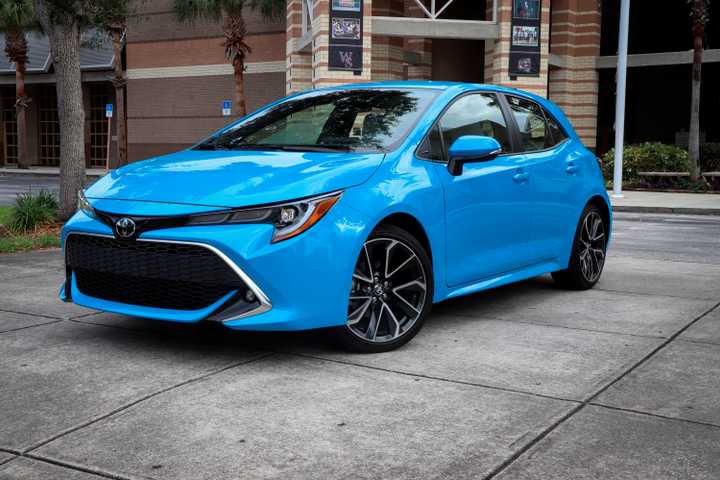
The Toyota Corolla hatchback is only available in three variants in the United States: SE, FX, and XSE. All three versions have a sportier focus versus the sedan, particularly with the way they look. Because of their sportier orientations, the Corolla hatch has a higher base price that’s already equal to a base LE Corolla hybrid sedan. That sportier orientation already begins with their suspension setups, because a base non-hybrid Corolla LE sedan comes with a torsion beam rear suspension, while the base Corolla hatchback SE already gets a multi-link rear suspension.
Also, even when comparing apples to apples, the Corolla hatch in general has a sportier tune for the suspension. Whether it results in a sporty drive that matches its sporty looks remains to be seen, since the Corolla hatch we’ve driven so far is the GR Corolla—not exactly a variant that’s for the mass market. Even with the sportier orientation, the Corolla hatchback retains the comfort and efficiency qualities that the nameplate has always been known for. Its 2.0-liter four-cylinder and Dynamic-Shift CVT with an actual first gear doesn’t just result in a very direct driving feel, but also good fuel efficiency numbers. The SE has a combined efficiency rating of 35 MPG, while the FX and XSE with their larger 18-inch wheels still achieves 33 MPG combined.
Where It Needs Improvement

But of course, not everything in life is perfect. If there are areas where the Corolla hatchback can improve, that would be its rear seat space. As it stands, the Corolla hatchback offers one of the smallest rear seat spaces in the segment—comparable to a Mazda 3 hatchback. This is in stark contrast to the sedan, which offers considerably more rear seat space. The Civic hatch is probably more popular than the Corolla hatch because in terms of passenger space, it is still nearly as spacious as the Civic sedan. Here’s a comparison table between the Civic and Corolla in their hatchback body styles, and we added the Mazda 3 for good measure.
|
Honda Civic Hatchback |
Toyota Corolla Hatchback |
Mazda 3 Hatchback |
|
|
Cargo Space |
24.5 cu. ft. |
17.8 cu. ft. |
20.1 cu. ft. |
|
Front Headroom |
39.3 in. |
38.4 in. |
38.0 in. |
|
Front Legroom |
42.3 in. |
42.0 in. |
42.3 in. |
|
Front Shoulder Room |
57.0 in. |
53.9 in. |
55.7 in. |
|
Rear Headroom |
37.1 in. |
37.6 in. |
37.2 in. |
|
Rear Legroom |
37.4 in. |
29.9 in. |
34.4 in. |
|
Rear Shoulder Room |
56.0 in. |
54.5 in. |
53.4 in. |
Finally, and this is also probably a major reason for its reduced appeal, the Corolla hatchback isn’t offered with a hybrid drivetrain. That’s unlike the Civic hatchback, which also comes as a hybrid. Toyota has always pitched the Corolla hatch to be the sportier version versus the sedan, which is why it was one of the last non-GR passenger cars in its lineup to feature a manual transmission.
|
Toyota Corolla Hatchback |
Honda Civic |
||
|
Engine |
2.0-liter four-cylinder |
2.0-liter four-cylinder |
2.0-liter four-cylinder hybrid |
|
Horsepower |
169 hp |
150 hp |
200 hp |
|
Torque |
151 lb-ft |
133 lb-ft |
232 lb-ft |
|
Transmission |
CVT |
CVT |
e-CVT |
|
Layout |
FWD |
FWD |
FWD |
|
Fuel Economy (Combined) |
35 MPG (SE) 33 MPG (FX, XSE) |
34 MPG |
49 MPG |

The Affordable Hybrid Car That’s Perfect For Urban Drivers
This accomplished hybrid sedan excels at urban cruising and should be a contender if you’re looking for a hybrid city commuter.
A Solid Daily With Slight Sportiness

As a whole, the Toyota Corolla hatchback is still a solid daily driver, as it offers the fundamentals that buyers of this nameplate look for, while adding a slight dose of sportiness. It also certainly helps that it served as the foundation of one of Toyota’s halo hot hatches—the GR Corolla.
Consider The FX And Its Charm

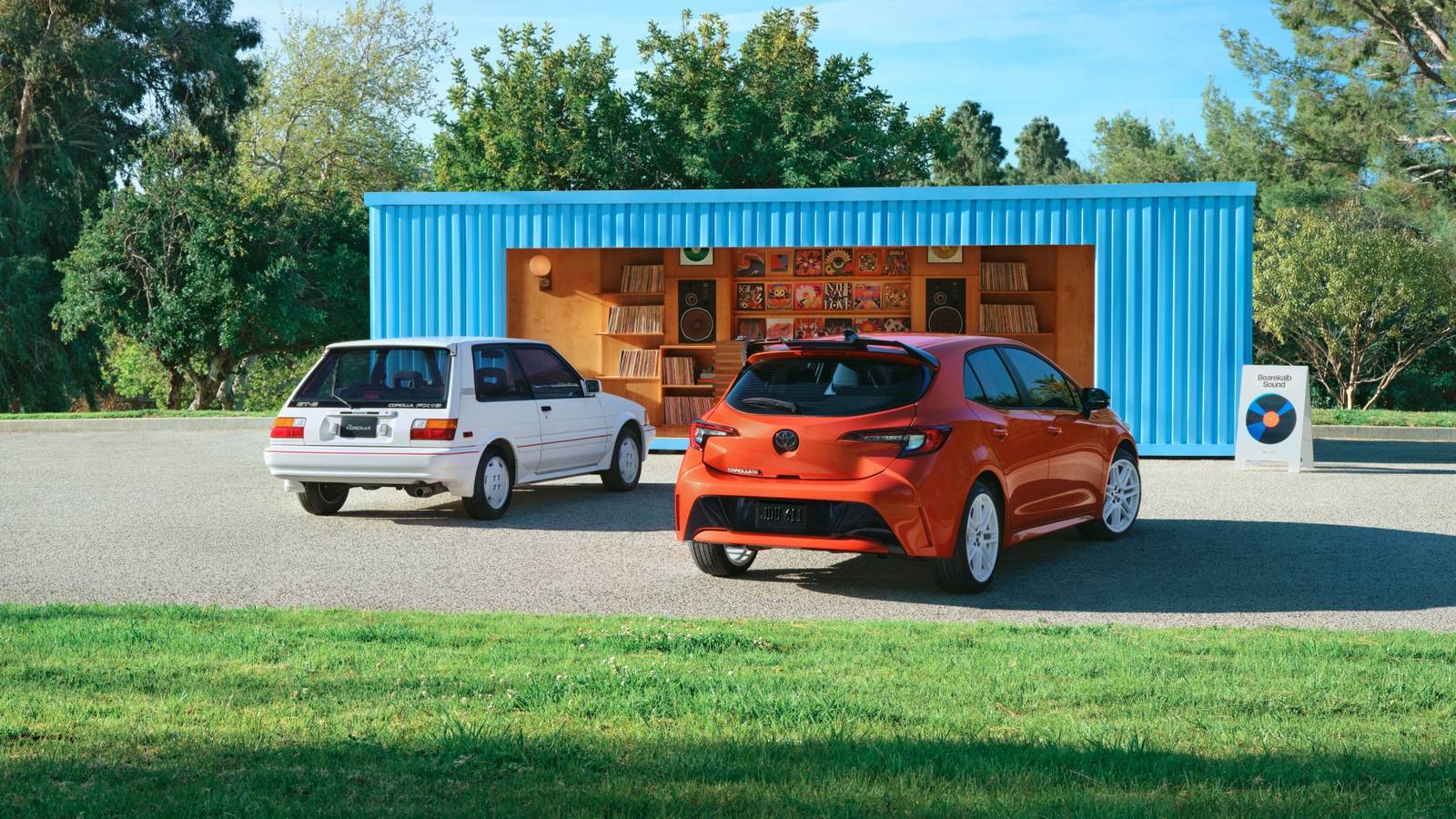
Dominating Toyota’s marketing and billboard materials for the Corolla hatchback is the FX variant, which is very sporty and stylish in all the right ways. First up, the design. All Corolla hatchbacks feature a sporty front bumper that’s coupled with a wide mesh grille and sharp LED headlights. 16-inch alloy wheels are fitted in the base SE, while XSE and FX models get 18-inch wheels. The FX, in particular, has lovely gloss white multi-spoke wheels, and these are coupled with a black rear spoiler and an FX-exclusive Inferno (orange) paint.
Also worth noting in the FX is its Corolla badging at the tailgate, because it uses a font that was used on older Corollas, particularly the AE92. It’s a nice vintage touch, we think, but if leaning on nostalgia isn’t your thing, then the XSE’s progressively sporty exterior may match your preferences.
But Another Corolla Might Be Its Biggest Foe

Unfortunately, though the FX variant is certainly charming, the biggest challenge that the Corolla hatchback is facing isn’t the vehicle’s uncompetitiveness (because it’s a nice hatchback, really). The Corolla hatchback’s biggest challenge is another Corolla model that’s only slightly more expensive, but significantly more practical and is keeping up with the times. I’m talking about the Corolla Cross, which is a crossover SUV that perfectly fits the American buyers’ needs.
The Corolla hatchback starts at $24,580, while a base Corolla Cross is only about $455 more expensive at $25,035. To the customer who simply needs A to B transportation, the Corolla Cross will be the more attractive choice. Otherwise, if you care about a vehicle’s emotional aspects like design, sportiness, and character, then we’d argue that you’ll have a more swell time owning the Corolla hatch. Your choice, then. Do you want a more practical and taller Corolla, or do you want a sportier but more emotionally rewarding Corolla hatch?