
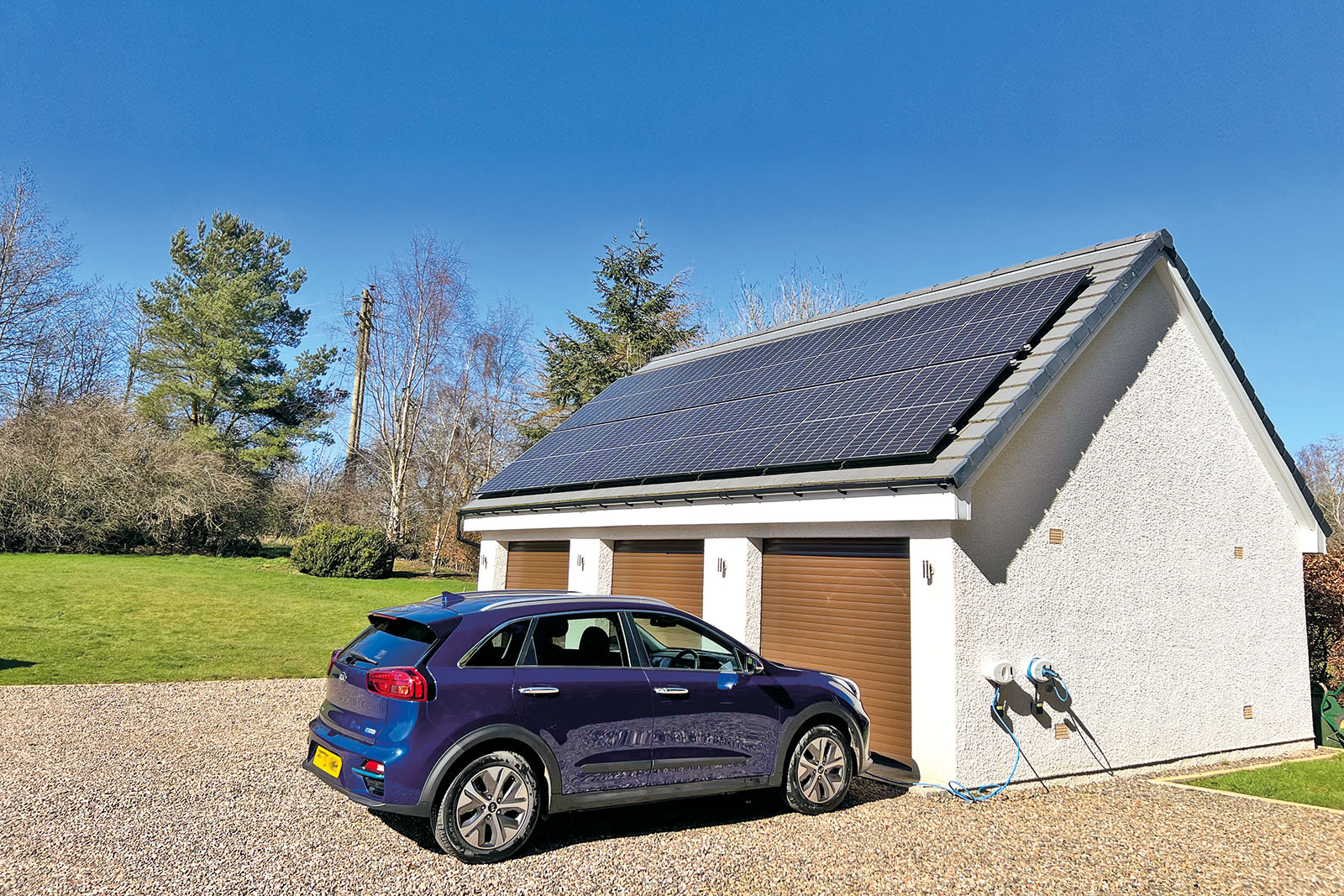
Installing solar panels may have seemed like an expensive luxury to most of us some time ago. But now it seems like a way out of the fuel crisis hitting the UK.
I had made the switch to EVs in 2021, and although it wasn’t part of a master plan, suddenly the idea of turning the house into a mini power station became strangely compelling.
If a solar system is producing more energy than can be used there and then, EV batteries are an ideal place to store it.
Solar systems come in various types. The most popular option is to install a hybrid system, integrating inverter, solar panels and battery storage together. The inverter also manages the flow of power between house, batteries and, when excess power is produced, back into the grid.
Batteries can also be charged from the grid on a low tariff, then the power used during peak periods, but they’re not that big, which is why EVs with their huge storage capacity are an ideal accessory.
My starting point was to check the household energy bills, which told me that over the past 12 months, including charging two EVs at home, we had used around 6500kWh (units) of electricity.
For solar systems to be effective, they ideally need to be facing south or thereabouts, and my garage faces south-south-west and is free of shade for most of the day. So far so good, and I thought it might be possible to generate around 6000kWh a year.
Interest-free loans for solar systems are available from the government in Scotland, where I live, via the Energy Savings Trust, but even using a commercial low-interest loan would still stack up. To qualify, I had to use an MCS-certified installer (Microgeneration Certification Scheme), who should adhere to a set of standards for installation and equipment.
I opted for hybrid (solar plus batteries) and my chosen installer, Locogen Energy Services, came back with a quote that included several pages of information such as expected daily energy flows for the area I live in, system performance predictions and environmental benefits.

Locogen’s specification was for 16 420W solar panels giving an ‘installed capacity’ of 6.72kW capable of producing an estimated 6008kWh (units) per year.
They would be hooked up to a 5kW-rated Solis hybrid inverter to convert DC electricity from the panels to AC, a 48V, 4.8kWh Pylontech lithium-iron-phosphate battery (Locogen recommended two of these and I would upgrade later) and a wi-fi dongle to connect the system to the phone app via the Solis cloud.