
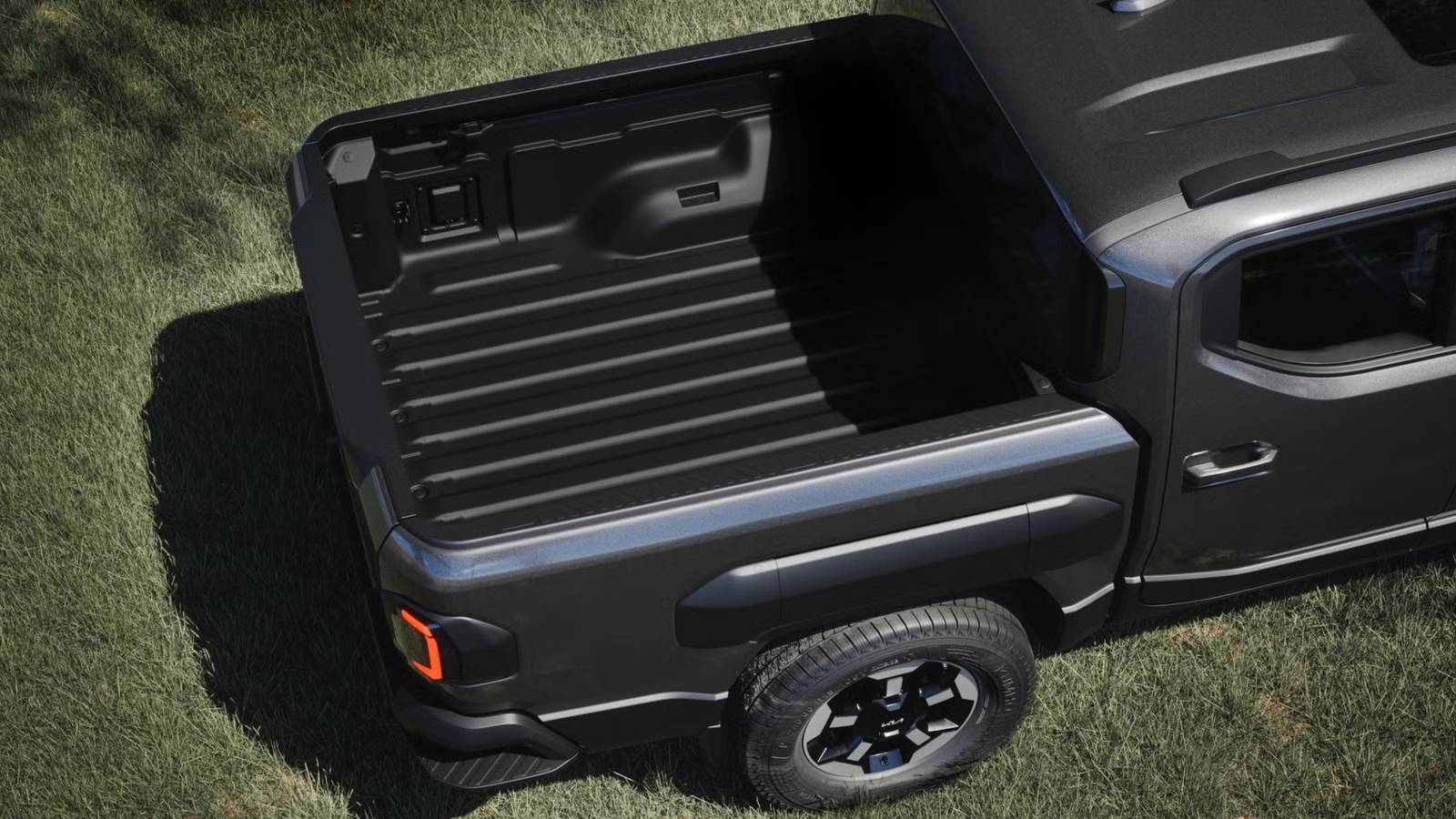
Kia and Hyundai have revealed big plans for the future, with the latter planning at least 36 new vehicles by 2030. Kia has plans of its own, which largely align with Hyundai’s, and like its parent company, has released plans to enter the midsize truck segment. We’ve heard of Hyundai’s body-on-frame pickup that’s said to arrive by 2030; now we have news of Kia’s version. However, Kia adds a dash of versatility with a rarely used powertrain setup.
Kia’s Body-On-Frame Pickup Is Set To Feature An REEV Option

Hyundai revealed the Boulder SUV concept at the 2026 NY Auto Show, which wore the “Art of Steel” design philosophy, boasting a smooth yet rugged appearance. The Boulder rides on Hyundai’s newly developed body-on-frame platform, which is said to underpin its upcoming midsize pickup that will also take design cues from the Boulder concept. We expect Kia will also use this platform, since Hyundai is Kia’s parent company and they’ve been known to share parts between their respective lineups.

Where Kia strikes out on its own path is under the hood. The Hyundai Boulder concept and midsize pickup materials, while not explicitly stating which powertrain will be utilized, did not mention a range-extended electric vehicle setup (REEV or EREV). Kia did, along with mentioning a standard EV option for those hesitant about the REEV setup. This is big news for midsize pickups, as many brands are exploring the idea of introducing their own REEVs, including Jeep, Ford, and Nissan, to name a few. RAM has also entered the REEV fray, with the RAM 1500 REV plans being re-ignited.

As a refresher, a range-extended electric vehicle uses both standard gas-combustion and electric motors to increase the range of a standard electric powertrain by basically turning the gas engine into a generator that charges the battery when it’s low on charge. Some REEVs can achieve more than 600 miles before their fuel tank and batteries are depleted, making it a promising powertrain for adventure vehicles that travel far off the grid—rugged trucks.
Kia (And Hyundai) Knows What Americans Want

The body-on-frame platform has been the backbone of American grit, whether you need a tough vehicle for towing, off-roading, or to conquer the job site. In the press release for the Boulder concept, Hyundai made sure to mention its body-on-frame models were aimed at the American market for those reasons exactly — to satisfy our need for tough, no-nonsense capability. On top of that, the Korean brand also mentioned that the BoF models, at least the Boulder SUV, will be designed in America, developed for America, built in America, and forged with Hyundai-produced US steel. This is also of note, as tariffs still contribute to price hikes across many brands, and sidestepping import taxes by localizing production could make the upcoming models from Hyundai and Kia more affordable.
How The Kia Pickup Could Disrupt The Midsize Truck Market

We already spoke about Hyundai’s midsize body-on-frame truck and how it could put stalwarts like the Ranger, Colorado, and Tacoma on notice. The Kia truck sits in the same boat. It’s fair to assume that a midsize body-on-frame pickup that looks and feels modern, has genuine tough/off-road capabilities, and a competitive price point would warrant more than a few test drives.

According to Hyundai, when speaking about its midsize pickup due by 2030, they’re taking what they’ve learned from both the Boulder concept and the Tasman to make a competitive pickup, and we can expect more comfort for all passengers, physical controls, and better fuel economy. Again, we expect something very similar from Kia. It should also be noted that Hyundai Group is listening to truck buyers and is aware that they value power and capability over fuel efficiency.
Sources: Hyundai, Kia