
“To date, the EV market has been driven mainly by early adopters of new technology,” he said. “However, as growth has slowed relative to initial expectations, global EV penetration reached approximately 16% last year.”
Song said that to overcome this ‘chasm’ and drive EV uptake, “the focus must be on improving affordability and expanding charging infrastructure in ways that deliver tangible value to a wider customer base”.
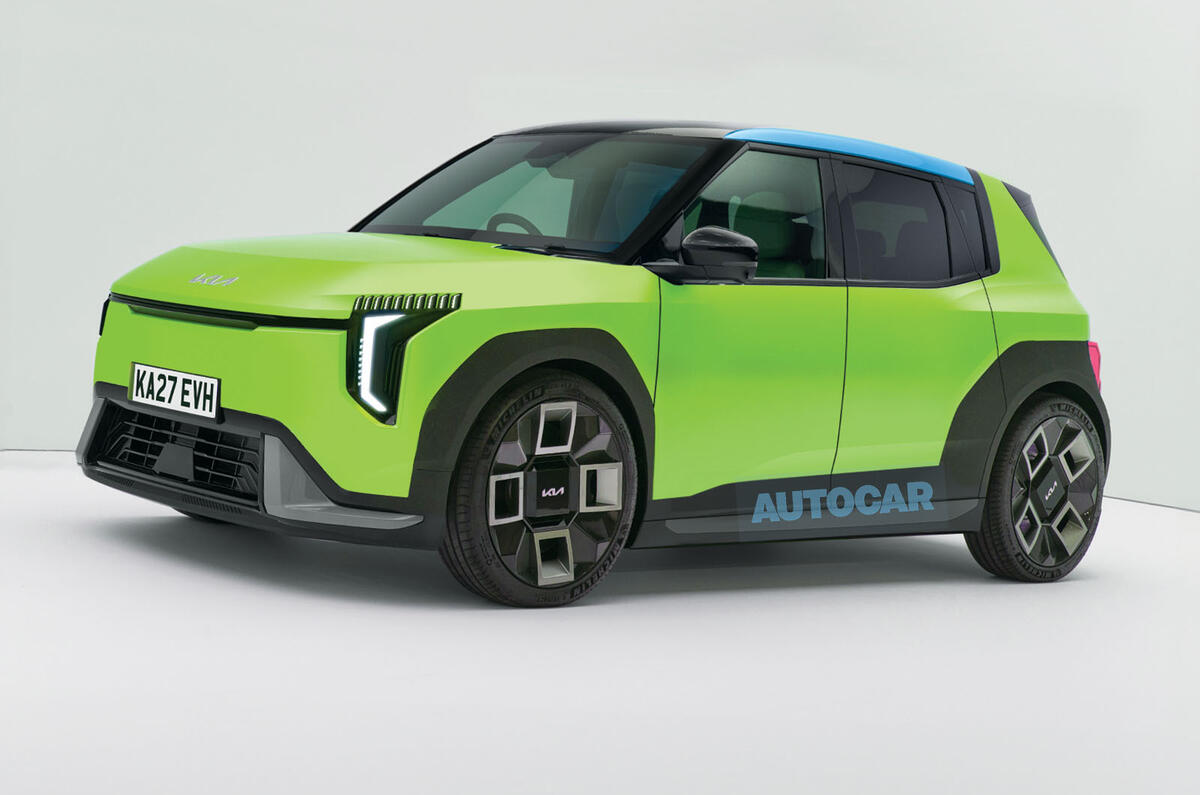
Affordable models like the EV1 and high-volume mainstream contenders including the electric SUV in 2029 will play a significant role in this context, but Kia said it is also crucial that it “strengthens EV competitiveness by improving the overall product quality of our EV offerings”.
To that end, the company will introduce a new platform in the coming years to replace the E-GMP architecture that underpins all of its current EVs.
This new structure is said to bring a 40% increase in battery capacities, offer a 9% boost in motor output and be capable of offering ‘level-two-plus-plus’ self-driving functionality, whereby the vehicle can effectively drive itself with no human input, though the driver must remain focused at all times.
The new platform will also accommodate what Kia calls ‘fifth-generation’ batteries – with 15% greater energy density and 30% cheaper chemistry – and contain an advanced new software structure that underpins a new infotainment system.