
Modern luxury sedans have evolved rapidly over the past decade. Larger infotainment systems, softer suspension setups, and increasingly advanced driver assistance features have redefined what buyers expect from the segment.
Comfort has improved. Technology has advanced. Daily usability has never been better. But that progress has come with a subtle trade-off.
As refinement and isolation have taken priority, many sedans have lost some of the connection that once defined the driving experience. Steering feel has softened, chassis feedback has been reduced, and overall engagement has taken a back seat to smoothness. For most buyers, that shift makes sense. But for those who still value how a car feels to drive, it creates a gap in the segment—one that fewer manufacturers are actively trying to fill.
Why Driving Engagement Is Fading From Modern Luxury Sedans
Comfort and Technology Have Replaced Connection Behind the Wheel

Over the past decade, the luxury sedan segment has undergone a noticeable shift. Manufacturers have increasingly prioritized refinement, technology, and ease of use—driven largely by changing buyer expectations. According to industry trend analyses from organizations like J.D. Power and McKinsey, modern consumers place greater emphasis on comfort,infotainment, and driver-assistance features than on outright driving dynamics.

This has had a direct impact on how these cars are engineered. Electric power steering systems have become lighter and more isolated, reducing feedback in favor of ease of use. Suspension setups have been tuned to prioritize ride comfort, often softening the connection between the car and the road. At the same time, advanced driver-assistance systems—from adaptive cruise control to lane-keeping assist—have shifted the focus toward semi-autonomous convenience rather than driver involvement.

Even performance-oriented sedans have followed this trend. Recent generations of cars like theBMW 5 SeriesandMercedes-Benz E-Classhave become noticeably more refined and quieter, with improved cabin insulation and smoother ride characteristics. While these changes enhance daily usability, they also contribute to a more filtered driving experience. There’s also a broader market influence at play.

Luxury buyers are getting older on average, and many prioritize comfort and technology over engagement. In parallel, the rise of SUVs has shifted expectations across the industry, with even sedans adopting a more relaxed, comfort-first character to remain competitive. The result is a segment that excels at isolation—but often at the expense of connection. And that’s exactly where a different kind of luxury sedan begins to stand out.

The Cleanest Example Of Honda’s VTEC V6 Is A Budget Luxury Sleeper
This sleek sedan boasts a 3.5-liter V6 engine and is a budget luxury sleeper that delivers on all fronts.
The 2024 Acura TLX Takes a More Driver-Focused Approach
Designed Around Engagement Instead of Isolation

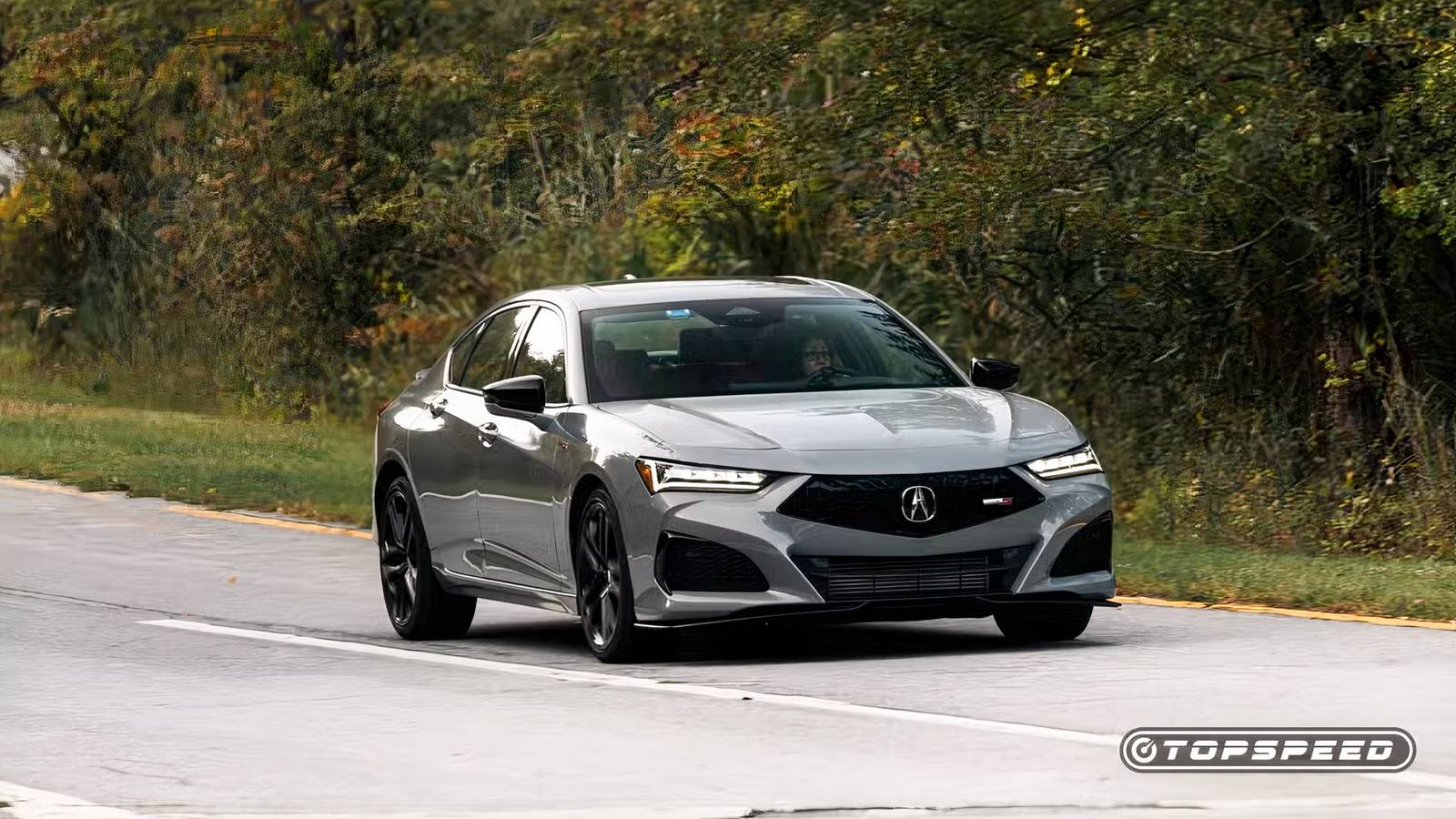
The 2024 Acura TLX positions itself differently within the luxury sedan segment. Rather than prioritizing isolation and comfort above all else, it focuses on delivering a more connected and engaging driving experience. It doesn’t try to out-luxury its German rivals—instead, it aims to out-drive them in everyday conditions.

That intent was clear from the start. The TLX sits lower and wider than many competitors, giving it a more planted stance. Its proportions feel purposeful, and its design leans toward performance rather than pure elegance. More importantly, its engineering supports that direction. Compared to rivals that prioritize refinement, the TLX is tuned to feel more responsive and composed, offering a stronger sense of connection between driver and car. It’s not trying to be the most luxurious option. It’s trying to be one of the most engaging.

This Luxury Car Blends Classic Styling With Modern Tech
A sedan that whispers luxury, not screams it. Discover the car that stays true to its roots while embracing modern advancements.
Turbocharged Performance and SH-AWD Give the TLX Its Edge
Engine Specs and Power Output

At the heart of the 2024 Acura TLX lineup is a range of turbocharged engines, with the standout being the Type S model. It features a 3.0-liter turbocharged V6 producing 355 horsepower and 354 lb-ft of torque, paired with a 10-speed automatic transmission and Acura’s Super Handling All-Wheel Drive (SH-AWD) system. This setup gives the TLX a distinctly performance-oriented character.

But what truly defines the TLX is how it uses that power. The SH-AWD system actively distributes torque across the rear axle, improving cornering balance and stability. Rather than simply maximizing traction, it enhances agility—helping the car rotate more naturally through corners. The result is a sedan that is composed, responsive, and more engaging than most of its competitors.

10 Reasons Why The Acura TLX Type S Is Still A Top ICE Sports Sedan In 2025
With a lower price than competitors from German brands, the TLX Type S has some major selling points.
A Sportier Approach to Design and Cabin Layout
Exterior: Low, Wide, and Performance-Oriented

The TLX’s exterior design reinforces its dynamic intent. Its wide stance, long hood, and sharp body lines give it a more aggressive and athletic appearance than many luxury sedans. Where some rivals lean toward understated elegance, the TLX embraces a more performance-inspired identity. This visual direction aligns with how the car drives—focused, planted, and purposeful.
Interior: A Cabin Focused on the Driver

Inside, the TLX continues that theme with a driver-oriented layout. The seating position, control placement, and overall ergonomics are designed to prioritize engagement rather than pure isolation. Rather than relying entirely on large touchscreens and layered menus, the TLX retains physical controls for key functions, making the interface more intuitive to use. This approach helps maintain a sense of focus behind the wheel, supporting the car’s more performance-oriented character rather than distracting from it.

The Crossover That Delivers BMW Performance At Honda Prices
The Mazda CX-5 delivers BMW-like driving excitement at Honda-level prices, making it one of the most rewarding compact SUVs in its segment.
How It Compares to Rivals — And Where It Stands on Value
BMW 5 Series, Audi A4, and Pricing Differences

The Acura TLX competes with models like the Audi A5 and sits just below larger sedans such as the BMW 5 Series, both of which take a more traditional luxury-focused approach. The BMW 5 Series has long been the benchmark for balance in this class. In its current form, it offers a wide range of powertrains—including turbocharged four- and six-cylinder engines, as well as plug-in hybrid options—while maintaining a strong focus on comfort and technology.

Features like BMW’s latest curved display and advanced driver-assistance systems reinforce its position as a tech-forward luxury sedan. However, recent generations have shifted toward refinement, with softer suspension tuning and increased cabin isolation reducing some of the driver engagement that once defined the model.

The Audi A5 approaches the segment from a design and technology perspective. Built on the MLB platform shared with several Volkswagen Group products, it prioritizes interior quality, clean design, and intuitive infotainment. Audi’s Virtual Cockpit remains one of the most highly regarded digital instrument clusters in the segment, offering crisp graphics and customizable layouts. But while the A5 delivers a polished and premium experience, it places less emphasis on dynamic involvement, favoring composure over outright engagement.

This is where the Acura TLX creates separation. Unlike many of its rivals, the TLX was engineered with a clear focus on driving dynamics. Its platform features a double-wishbone front suspension—an uncommon setup in this segment—that helps improve steering precision and front-end grip. Combined with Acura’s Super Handling All-Wheel Drive (SH-AWD) system, which can actively distribute torque across the rear axle, the TLX offers a more responsive and connected driving experience than many comfort-oriented competitors.

Reviewers often describe the TLX as being composed and deliberate, with sharper responses and a chassis that encourages driver input. It’s not just about speed—it’s about how confidently and naturally the car changes direction, which gives it a distinct identity in a segment increasingly defined by isolation. But there are trade-offs. The TLX doesn’t match the BMW 5 Series in overall interior space or rear-seat comfort, and it lacks some of the cutting-edge technology and seamless digital integration found in its German rivals. It also doesn’t carry the same level of brand prestige, which still plays a significant role in this segment.

The Luxury Hybrid SUV That Perfectly Balances Performance And Low Running Costs
A rare blend of speed, sophistication, and sensible ownership costs makes this hybrid SUV a standout in a segment often defined by excess.
A Luxury Sedan That Still Prioritizes Driving Feel
Pricing, however, shifts the conversation

The 2024 Acura TLX starts at around $45,000, with the performance-focused Type S model reaching approximately $58,000. By comparison, the BMW 5 Series starts closer to $57,000, with higher trims and options pushing it well beyond that range. The Audi A5 begins at around $41,000, but similarly climbs as features are added. This places the TLX in an interesting position. It offers a more engaging driving experience than many of its rivals while remaining competitively priced—particularly when comparing similarly equipped models.

For buyers who prioritize driving feel over outright luxury or brand recognition, that balance makes it a compelling alternative in a segment where engagement is becoming increasingly rare. What makes the 2024 Acura TLX stand out isn’t just its performance figures—it’s its philosophy. In a segment that has shifted toward comfort and isolation, it takes a different approach by prioritizing connection and responsiveness. It doesn’t try to be the most advanced or the most luxurious option.

Instead, it focuses on delivering a more engaging experience behind the wheel. That decision comes with compromises. It’s not as refined as some rivals, and it doesn’t offer the same level of technological sophistication. But for drivers who value how a car feels rather than just how it looks on paper, those trade-offs are easy to accept, because ultimately, the TLX offers something increasingly rare. A luxury sedan that still understands what it means to be driven.
Sources: Edmunds, Car And Driver, MotorTrend