
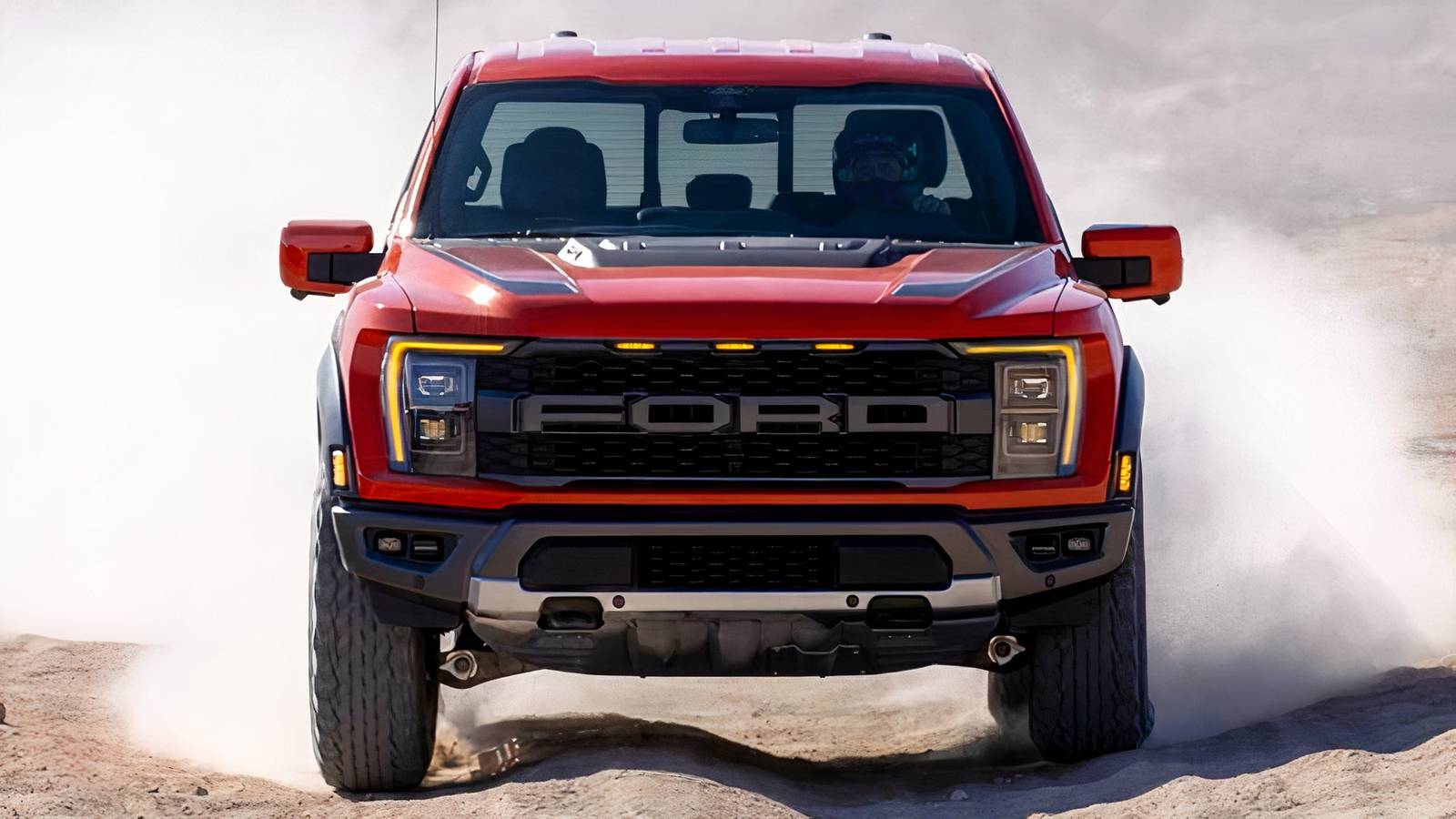
No, it’s not just you—every year trucks get bigger. The bed sizes have stayed more or less the same, but the cab gets higher every generation, and the hoods could accommodate V-12 engines if automakers really wanted to. Most people just accept the fact that trucks are big and are meant to get even bigger, like it’s a natural occurrence. Yet, have you ever stopped to wonder why this is happening? No specific brand is advocating for size increases with every new model, yet like clockwork, the new one is always bigger. The answer is ingrained deep in the fabric of the automotive industry.
America—Land Of The Free, Home Of The Truck

Can you guess which market segment is one of the most profitable in the automotive industry? That’s right, it’s trucks. Pickup trucks have never been treated like commuter cars by consumers and, more importantly, not by the people who write the laws that govern them.
The Consequential Regulatory Loophole

When Congress enacted the Energy Policy and Conservation Act of 1975 (EPCA), it had good intentions. The act established a federal program designed to protect consumers—or so they told us. With the new regulations and the aftermath of the 1973 oil embargo, automakers were forced to build more fuel-efficient vehicles. The EPCA dictated the rules automakers had to follow and establishedCorporate Average Fuel Economy (CAFE) standards, which set required MPG targets for passenger vehicles. However, thanks to the interests of some strong lobbyists, lawmakers carved out a separate, laxer standard for “light trucks”. This category was originally intended for commercial vehicles like cargo vans and farm trucks.

The original intent was purely based on practicality. Commercial vehicles made primarily for use on private property didn’t seem like a segment worth tightening restrictions for. At the end of the day, these vehicles were supposed to be tools for working, not commuter cars for getting to the office and back. Thus, the regulations shouldn’t treat them the same. With a little bit of American logic, it all made sense to Congress, and the light truck category received a lower fuel economy standard compared to standard passenger vehicles. According to NHTSA data, in the mid-1980s, light-truck CAFE standards were around 20 mpg, while passenger cars required 27.5 mpg. That gap may not seem like much, but that difference meant billions of dollars in potential revenue if you played your cards right.
Owning A Truck = Real American Values

Just as the CAFE standards started to come into play in the 1980s, the American public started to acquire a taste for buying trucks—not for any commercial venture, though, but simply as a lifestyle choice. The fact is that automakers did everything they could to make trucks more appealing to the public than ever before. Trucks in the 1980s finally felt comfortable to the average person, and interiors began offering premium features like audio and A/C. The American truck had evolved from a piece of farm equipment to a family vehicle that happens to have a cargo bed attached.

As soon as automakers saw the increasing positive public reaction to the consumerization of pickup trucks, they capitalized. The reason for the shift in focus was simple: trucks were cheaper to produce than passenger cars and had more lenient emissions standards. Once automakers started offering crew-cab configurations with premium features, American consumers were lining up out the door of dealerships to get their hands on one. The very regulations that were meant to protect consumers were functioning to subsidize the most profitable segment in the auto industry. The light truck revolution would reach one of its peaks when, in 1995, the Ford F-Series became the best-selling vehicle in America. As of 2026, it has been 31 years, and it still holds that title. Ford, along with other American automakers, turned a loophole into a lucrative business model that still reaps profits today.

8 Sleeper Trucks That Look Like Work Horses But Drive Like Sports Cars
Just because a pickup looks like a work vehicle doesn’t mean it can’t kick some ass, and here are some sports cars with a truck bed to prove it.
The Regulations That Were Meant To Fix These Problems

With the dramatic explosion of new truck sales in the 1990s and 2000s, the government had to take notice. CAFE standards for the light truck category were tightened, and by the mid-2000s, the Bush administration adopted a new framework meant to make the system fairer—or so they told us.
The Introduction Of The Footprint-Based Standard

In 2010, American emissions regulations reached a pivotal moment. Instead of fuel economy targets being based on a single fleet-wide average, they became a function of each vehicle’s individual “footprint”. This footprint was defined as wheelbase multiplied by track width. Sounds simple enough, right? With this new framework, all new vehicles could be considered on a case-by-case basis. On paper, it totally made sense. Larger, heavier vehicles should not have to abide by the same rules as crossover SUVs, so a graduated scale would provide better, more efficient standards for automakers with diverse vehicle lineups.
However, the unintended consequence was a mathematical incentive to build bigger trucks. The larger the wheelbase and track width, the lower the fuel-economy target. Scholarly studies on this topic have demonstrated that this system effectively rewards automakers for making trucks bigger. The bigger the vehicle becomes, the less stringent the regulations. American automakers had been pursuing aggressive lobbying efforts to create their next cash cow, and these new standards made them hit the jackpot.
Manipulation And Playing The Game Smart

You may have heard the expression, “if you ain’t cheatin’, you ain’t tryin’.” Yet, in this case, American manufacturers weren’t breaking any rules at all. That was entirely the point. By making trucks grow bigger with every new generation, automakers got the best of both worlds. They simultaneously satisfied consumer demand for more road presence while reducing their own regulatory burden. Sounds like cheating, doesn’t it? The automakers would disagree. They would say they were simply manipulating the game within the confines of the law. That’s not cheating, that’s just being smart and good at your job.

The EPA acknowledged this situation in its annual Automotive Trends Report, where it noted the continued growth in average vehicle footprint across the light truck category. Did they do something to make an active change? Not at all. As we stated—everything automakers were doing was 100% by the book. The fact is that this system enables building bigger trucks because it is the path of least resistance. The real reason trucks keep getting bigger is not consumer demand or engineering ambition. Our current regulations simply encourage the practice, and Washington is completely on board with that.

Auto Start/Stop Is Gone—Now There’s One More Regulation We Should Copy From China
China just did something that makes good sense: it told automakers their car doors must work like…well, doors.
More Big Means More Money

Footprint-based emissions regulations were not a government oversight that happened to slip through the cracks. This current system was a deliberate design choice from the start that was meant to level out the playing field—or so they told us. Once you study politics and government long enough, you realize that there is a large gap between intent and outcome. Footprint-based targets sound reasonable on paper, but the results are something entirely different.

NHTSA publishes model-year compliance targets that demonstrate the calculation method for the footprint curve. For the 2024 model year, a light truck with a footprint of 41 square feet, roughly the size of a compact SUV, faces a target of almost 40 mpg under the current framework. For comparison, a truck with a footprint of 67 square feet, which is closer to a full-size crew-cab long-bed truck, requires a target closer to 26 mpg. That 14-mpg difference is determined by only one thing: size. The logic is simple: you no longer have to make a product better each year; you can simply make it bigger. Many current full-size trucks fall into the most lenient tier of the compliance curve for this reason. Why make it smaller when it’s more profitable to increase the size? That’s not just logic anymore, that’s good business.
The New Generation Of Bloating For Profit

With every generation, new trucks get bigger. There are no exceptions. The way the system is currently set up, it’s too easy not to exploit. The even more genius tactic is the way these changes are editorialized and marketed to average consumers. In press releases, size increases are always framed as improvements to capability, cargo space, or towing capacity. Indeed, this is often true. Yet, automakers aren’t making these changes because the marketing department thinks it’s a good idea. These changes exist to suit compliance. CAFE standards were designed to protect consumers, but what they actually did was effectively make actual engineering solutions invalid and unprofitable.

Trump’s EPA Begins Dismantling Biden’s Emissions Regulations
The Trump-era EPA has begun efforts to reverse many of President Biden’s emissions rules.
Bigger Is Better (And You Better Like It)

Next time you are sitting in traffic, and you can’t get a good indication of road conditions because the massive pickup truck in front of you is blocking damn near the entire road, remember, bigger is better. You might feel that doesn’t apply to you personally, but to the regulators and lobbyists who are raking in profits thanks to this current framework, life has never been sweeter.
The Electric Truck Conundrum

Every current trend in the truck segment points toward increasing size, not the opposite. Yet, you must think, why would a for-profit business go against its own financial interests? If anything, automakers are constantly finding new ways to produce more profits with how the system functions today. Take, for example, electric trucks. The Ford F-150 Lightning and Chevrolet Silverado EV all weigh substantially more than their combustion counterparts. The Lightning weighs over 6,000 pounds in certain configurations while the heaviest SuperCrew combustion models weigh at most 5,600 pounds. Heavier vehicles tend to have larger footprints, which in turn lowers their fuel-economy targets. That means even lower efficiency targets for the next generation of electrified trucks, which are being marketed as a “green” solution.
The Method To Promote Real Change

Emissions regulations that actually do what they are intended to do could be enacted right now, but the powers that be aren’t interested in that. Lobbyist groups spend billions ensuring the status quo remains intact, and as long as they do that, profits will grow. If profits grow, their bosses are happy, and they get to keep their cushy jobs. If we really wanted something to get done, a flat-rate mpg standard would be the way to go. The system of building bigger and more profitable products instead of actually using your brain for positive change has gone on for too long already. The intention of CAFE regulations has been undermined since the outset. Until we stop rewarding the production of larger vehicles, this systemic issue will continue to plague American bureaucracy.
Sources: Ford, Chevrolet, Dodge, NHTSA, EPA