
Toyota is a Japanese automaker, but its operations and presence have a global reach. It doesn’t offer just a single family of vehicles either, and that’s key to its global appeal. Different regions have different needs and wants, and Toyota’s diverse product planning is what made it a dominant force worldwide.
As such, Toyota also has a wide variety of powertrains to suit each market and niche. For those who want something affordable and efficient, that’s where the NR and NZ engines come in. Certain markets got the Dynamic Force engines with D-4S direct and port injection, while markets like the United States got a series of UZ and UR V-8 engines.
Even for performance cars, Toyota has a family of engines, its latest one being the G series engines for the GR Yaris and GR Corolla. This brings us to the question: Among Toyota’s current crop of models for 2026, which model has the biggest engine you can buy from a dealership? Well, you’ll probably be surprised that it is no longer as big as you imagined.

Every Toyota 7-Seater SUV You Can Buy Today
Toyota’s rugged and roomy SUVs deliver modern comfort, convenience, tech, and more. Here are the ones that seat seven.
Toyota Engines In Superlative Sizes

Before we talk about today’s biggest Toyota engine, let us take a look at the biggest Toyota engines ever produced, as this gives us a context for what to expect today.
At Most, Toyota Had A V-12

Fans of the Toyota Century will know that the flagship and elusive luxury sedan for Japan’s VIPs, business elites, and government officials, pushed the boundaries for what was possible from the brand in terms of drivetrains. That’s because in its second generation from 1997 to 2017, it had the 1GZ-FE 5.0-liter V-12 engine. It was advertised in Japan to produce 276 horsepower due to a gentleman’s agreement between their domestic automakers. In reality, the engine produces 295 horsepower, which was already being advertised in the limited overseas markets where it was sold.
This engine also produces 339 pound-feet of torque, which isn’t that powerful compared to the nearly 400 horsepower figures that the V-12 engines of the German luxury brands were cranking out at the time. What this engine stood for was easy and smooth power delivery, along with Toyota’s signature reliability. How reliable is it? Well, the engine has two ECUs, controlling each bank of six cylinders. If one engine bank fails (which is a very unlikely scenario for a Toyota model), the engine can run solely on just one bank.
But A V-8 Dwarfed The V-12

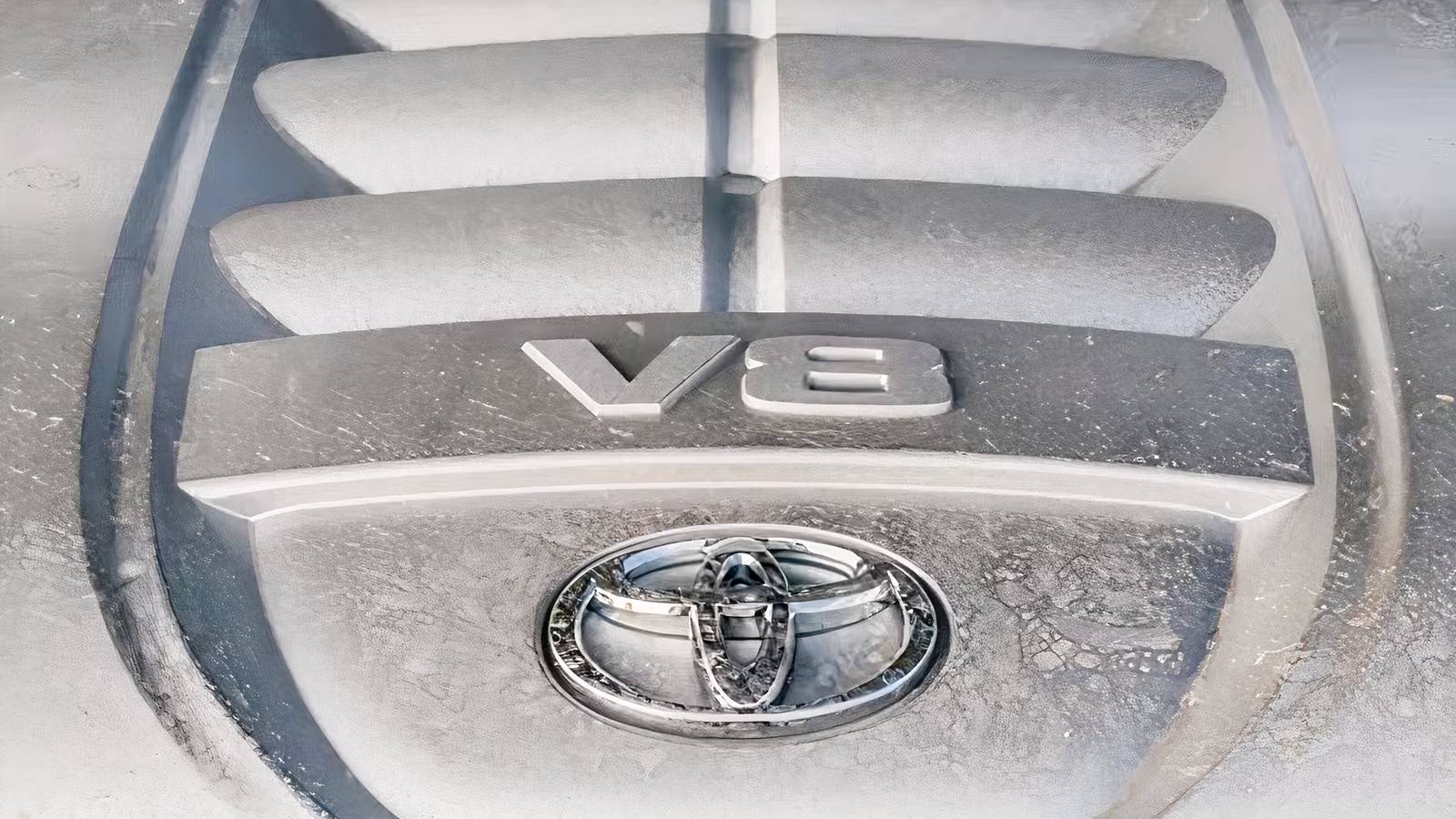
The GZ engine, however, isn’t Toyota’s biggest engine ever produced. That honor goes to the 3UR-FE, a 5.7-liter cross-plane crank V-8 that was fitted to the Toyota Tundra, Sequoia, Land Cruiser 200, and Lexus LX 570. The engine was produced from 2007 to 2021, and it even got a version that ran on E85 ethanol fuel. For a V-8, this engine’s power output was modest, producing 381 horsepower and 401 pound-feet of torque, but oh boy is this engine such a reliable workhorse.
Did you also know that Toyota’s TRD performance division (prior to the Gazoo Racing era) offered a TRD Eaton bolt-on supercharger? This enables you to boost its output to 504 horsepower and 550 pound-feet of torque, while keeping your vehicle’s warranty intact. Magnuson built upon the bolt-on supercharger kit, which raised the output further to 550 horsepower.

Why Toyota Dropping The Boxer Engine Is A Huge Deal
The next generation of the Toyota GR86 will not utilize Subaru’s boxer engine, which should be a big deal for the small sports car. Here’s why.
This Is Toyota’s Biggest Engine In 2026

Considering we came from V-12s, and then V-8s, you’ll probably be shocked to see that the biggest engine today in Toyota’s 2026 lineup isn’t even packed with eight cylinders. What you get instead in 2026 is at most a V-6 engine.
Say Hello To The V35A

Since this engine is now part of Toyota’s Dynamic Force family of engines, its engine code now follows a pattern where the displacement is dictated in between the two letters. Say hello to the V35A-FTS, which should mean it has a 3.5-liter V-6, but oddly enough, it’s actually a 3.4-liter V-6 with twin turbos. Anyway, the V35A-FTS succeeds the 3UR-FE 5.7-liter V-8 as the pinnacle of Toyota’s engine family in terms of size and output. The engine debuted in 2017 in the flagship Lexus LS 500, which had the most powerful application of this engine at 416 horsepower.
Its most powerful version, however, will be realized with the application of a parallel hybrid system in 2022. Called i-Force Max, the electric motor in the 10-speed automatic bumps the power output to 437 horsepower and 583 pound-feet of torque. This is what powers the Tundra and Sequoia, though in the Tundra, this engine has a non-hybrid version that produces 349 to 389 horsepower. The Lexus LX 700h gets the most powerful version of this engine, with 457 horsepower, while the LX 600 also gets the non-hybrid version that has 409 horsepower.
Reliable, But Was Recalled

With the engine nearing 10 years old since it first appeared in the Lexus LS (which is being discontinued this year), there’s a good amount of data to showcase its reliability. iSeeCars says that the LS 500 and its twin-turbo V-6 engine give it an average lifespan of 148,431 miles, or about 13.6 years. So far, the Sequoia, which comes standard with the hybrid i-Force Max version, has also been given a 3.5 out of 5 reliability and repairability score by RepairPal. The annual repair and maintenance cost of the Sequoia is $642, which is average for the segment. However, when issues do arise, the complex nature of the parallel hybrid system means they have a higher chance of being expensive versus the previous Sequoia.
Unfortunately, in the non-hybrid version of this engine, specifically from Tundras, GX 550s and LX 600s produced from 2022 to 2024, was the subject of a major recall. Toyota says that machining debris from the engine’s manufacturing process wasn’t removed, which can cause the engine to knock, run rough, lose power, or, worse, even result in engine failure. This recall has also cast doubt on Toyota’s reputation for durability, especially coming from the highly reliable and cheap-to-maintain 3UR-FE 5.7-liter V-8. But of course, that engine was discontinued due to ever-stricter emissions and fuel economy standards.

Japanese Cars With The Most Horsepower Per Liter
These 10 Japanese cars have engines that maximize power and efficiency.
Something Bigger Is Coming In 2027

Now, for those who want the V-8 to return, folks will have to wait for 2027 in order to purchase a new Toyota with such an engine. Hopefully, there’s also going to be enough time for you to save up, because this engine powers a very capable sports car that definitely won’t be cheap.
A 641-Horsepower Monster

Say hello to Toyota’s new parallel hybrid 4.0-liter twin-turbo V-8, which doesn’t yet have an engine code, as it’s still under development. This engine is what will power the upcoming GR GT sports car. The hybrid V-8 has a targeted output of at least 641 horsepower and 627 pound-feet of torque. It’s targeted because, again, this engine is still in development. It is then hooked up to a multi-plate-clutch eight-speed automatic with a wet start clutch that eliminates the need for a torque converter. The electric motor is also mounted at the transaxle, hence the parallel hybrid arrangement.
Personality And Emissions Compliance

There are already numerous videos on YouTube showcasing the engine sound of the GR GT, and you’ll be thankful that there’s a lot to like about this engine from a sound perspective. Toyota says that the engine was acoustically designed in a way that it “conveys change in thermal energy” and “synchronizes with the state of the vehicle.” The engine is matched to what should feel like a vehicle that offers linear yet responsive power output, especially since the electric motor in the transaxle offsets the turbo lag of the gear-change interruption. Yet all of this engineering prowess and personality has resulted in a sports car with, at least on paper, tons of personality, while being emissions compliant.