
There’s a point in every enthusiast’s journey where driving stops being about simply going fast and starts becoming about understanding why a car behaves the way it does. It’s the moment when concepts like weight transfer, grip, and momentum stop being abstract ideas and start revealing themselves through the steering wheel, the chassis, and the seat of your pants. No textbook or driving simulator can fully replicate that sensation, the feeling of a car shifting its mass under braking, or the delicate balance required to hold a perfect line through a corner.
While modern performance cars are faster and more capable than ever, many of them filter out these sensations in the pursuit of speed and safety. Electronic aids step in early, smoothing over mistakes before drivers even realize they’ve made them. That’s great for lap times, but it often comes at the expense of learning. The greatest driver’s cars take the opposite approach. They demand your attention, punish your errors, and reward precision. In doing so, they transform every drive into a real-world lesson in physics, one that sharpens your instincts and fundamentally changes how you approach the road.
Why The Purest Driver’s Cars Have Always Been The Best Teachers

There’s a fundamental truth in performance driving that no simulator or classroom session can fully replicate: the best way to understand physics is to feel it. For decades, the purest driver-focused cars have served as rolling laboratories, translating abstract concepts like weight transfer, inertia, and grip into something tangible through the steering wheel, the seat, and the pedals. These machines don’t isolate you from physics; they expose you to it.

Modern performance cars, with their layers of electronic assistance and high limits of grip, are astonishingly capable. But they often insulate drivers from the raw mechanical interactions happening beneath them. Stability control intervenes before mistakes escalate, all-wheel-drive systems mask poor throttle discipline, and adaptive suspensions flatten the learning curve. While this makes them faster in absolute terms, it also dulls their ability to teach.
In Contrast, A Truly Engaging Driver’s Car Communicates Constantly

It punishes clumsy inputs and rewards precision, forcing you to adapt and refine your technique. Among these machines, one stands above the rest as the ultimate instructor, a car that has spent decades humbling drivers and sharpening skills.

One Of The Last Fast Cars That Still Feels Analog
A rare breed of performance car that demands your full attention and rewards skill, not just speed.
The Porsche 911: How Rear-Engine, Rear-Drive Layout Turns Every Corner Into A Physics Lesson

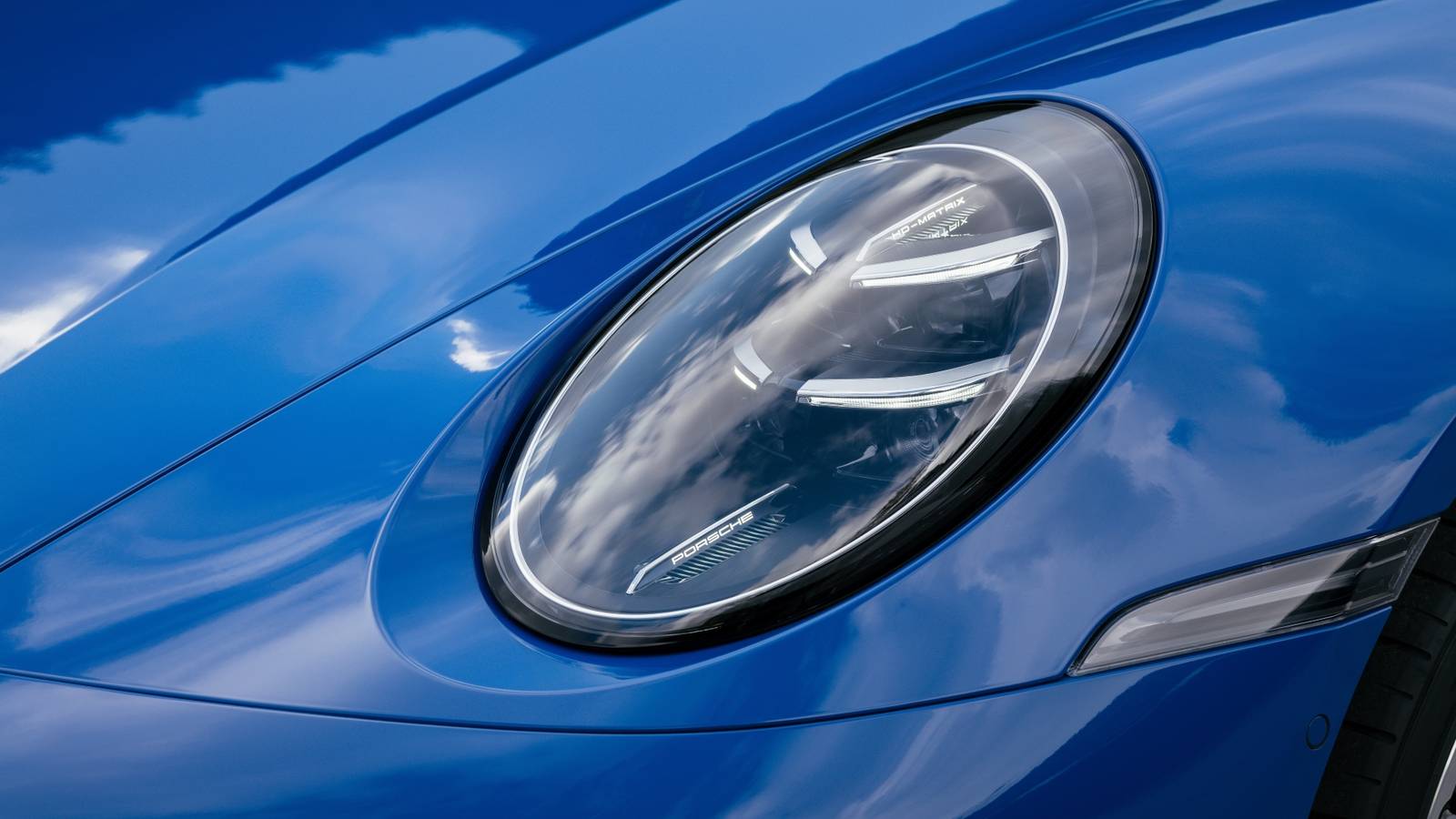
The defining characteristic of the 2026 Porsche 911 is also the very thing that makes it such an exceptional teacher: its rear-engine, rear-wheel-drive layout. Unlike most performance cars, which place their engines between the axles or up front, the 911 carries a significant portion of its mass behind the rear axle. This unusual configuration fundamentally alters how the car behaves under braking, acceleration, and cornering. At first glance, this setup seems counterintuitive. Placing so much weight at the rear creates a natural tendency for the car to rotate, particularly when grip is reduced. Early versions of the 911 earned a reputation for being unforgiving, especially in the hands of inexperienced drivers. But that reputation is precisely what makes the car such an effective teaching tool.
Every Corner In A 911 Becomes A Lesson In Balance

As you approach a turn, you quickly realize that your inputs must be deliberate and measured. Brake too hard or too late, and the rear begins to feel light. Turn in too abruptly, and the weight distribution exaggerates the car’s rotation. Apply throttle too early, and you risk unsettling the delicate balance between grip and slip.

What makes the 911 unique is how transparently it communicates these forces. The steering is alive with feedback, the chassis constantly shifting as weight moves around the car. You don’t just drive a 911, you interact with it. And in doing so, you begin to understand how mass, momentum, and tire grip work together in a way that no theoretical lesson could ever replicate.

Best Of The Best: Greatest Porsche 911 Models Of All Time
Within the 911 lineage, certain models stand out as definitive highlights with milestones that pushed the boundaries of design, technology, and speed.
Weight Transfer, Pendulum Effects, And Why Lifting Mid-Corner Can Make Or Break Your Line

One of the most critical lessons the 911 teaches is the concept of weight transfer. Every time you accelerate, brake, or turn, the car’s mass shifts, altering how much grip each tire has available. In a front-engine car, these shifts are relatively predictable. In a rear-engine 911, they are amplified.

Under braking, weight moves forward, reducing the load on the rear wheels. Because the 911 starts with so much weight at the back, this transition can be dramatic. If you release the brakes abruptly or turn in while the rear is still unloading, the car can quickly become unstable. This is where the infamous “pendulum effect” comes into play. With the engine mass sitting behind the rear axle, the car behaves like a pendulum when it begins to rotate. Once that rotation starts, it can build rapidly, making recovery difficult if you’re not prepared.

Perhaps the most important lesson here is the danger, and utility, of lifting off the throttle mid-corner. In many cars, lifting slightly tightens your line without much drama. In a 911, lifting abruptly can shift weight forward so quickly that the rear loses grip, causing oversteer. Done incorrectly, it can spin the car. Done correctly, it becomes a powerful tool for adjusting your line with precision. This dynamic forces you to think ahead. Smoothness becomes essential. You learn to manage weight transfer proactively rather than reactively, anticipating how the car will respond before it happens. It’s a lesson in cause and effect, delivered in real time and at speed.

Best Bang For Your Buck Modern Porsche 911 That Money Can Buy
If you are in the market for a bargain supercar killer, it’s hard to do better than the 996 generation 911 Turbo
Traction, Throttle Steering, And The Fine Art Of Balancing Grip Over The Rear Axle

If the Porsche 911 punishes careless inputs, it also rewards mastery in a way few cars can. Nowhere is this more evident than in how it teaches traction and throttle control. With so much weight over the rear axle, the 911 enjoys exceptional traction under acceleration. This allows you to deploy power earlier when exiting corners compared to many other rear-wheel-drive cars. But this advantage comes with responsibility. The same rear weight bias that provides traction also demands precision. Too much throttle, too quickly, and the rear tires can become overwhelmed, especially if they are already working hard to maintain lateral grip.
This Is Where The Concept Of Throttle Steering Comes Into Focus

In a 911, the throttle is not just a means of accelerating, it’s a tool for controlling the car’s attitude. Applying more throttle can stabilize the rear and push the car outward, while easing off can help the front tuck in and tighten your line. Learning to balance these inputs is an art form. You begin to sense how much grip the rear tires have available and how your right foot can either preserve or exceed that limit. It’s a constant negotiation between power and traction, one that requires finesse and awareness.

Over time, the car teaches you to be patient and deliberate. You stop making abrupt inputs and start feeding in power progressively, feeling for the point where the tires are working at their maximum without slipping. It’s a delicate balance, but once mastered, it unlocks a level of control and confidence that carries over into every other performance car.

12 Affordable Alternatives To The Porsche 911 In 2026
These sports cars prove that you can still find the magic and thrill of a proper sports car for less than the price of a Porsche 911.
Mastering Momentum: How Understanding The 911’s Physics Ultimately Makes You A Faster, Smarter Driver

Perhaps the most profound lesson the 911 imparts is the importance of momentum. Because of its unique characteristics, the car rewards drivers who prioritize smoothness and efficiency over aggression. Every unnecessary input, every abrupt brake, every sudden steering correction disrupts the car’s balance and costs time. Driving a 911 quickly isn’t about forcing it into submission; it’s about working with it. You learn to brake in a straight line, to trail off the brakes smoothly as you turn in, and to carry just the right amount of speed through the apex. You begin to see corners not as isolated events, but as part of a continuous flow where each action influences the next.
This Mindset Transforms How You Approach Driving As A Whole

You become more aware of the relationship between speed, grip, and control. You start to think in terms of energy management, how to conserve momentum where possible, and deploy it where it matters most. The beauty of the 911 is that these lessons don’t stay confined to one car. Once you’ve learned to manage weight transfer, balance throttle inputs, and maintain momentum in a 911, those skills translate directly to other vehicles. In fact, they often make other performance cars feel easier to drive.
In the end, the Porsche 911 is a masterclass in motion. It strips away the abstractions of physics and presents them in their purest form, demanding that you understand them if you want to unlock its potential. And in doing so, it turns every drive into a lesson, one that no classroom or driving course could ever hope to match.
Sources: Porsche U.S.