
When it comes to big power outputs from large displacement sports car engines, the first manufacturers that come to mind are typically the Americans and Europeans. Japanese carmakers have produced some exceptional large displacement engines, but it’s common knowledge that downsized performance is just what they do best.
Available Models
Toyota
- Founded
-
August 28, 1937
- Founder
-
Kiichiro Toyoda
- Headquarters
-
Aichi, Japan
- Owned By
-
Publicly Traded
- Current CEO
-
Koji Sato
Over the decades, we have seen no shortage of impressive engine creations from the likes of Toyota, Nissan, Honda, Mazda, and more. In recent years, most of these brands have drastically scaled back their performance engine developments, focusing on just one or two units. Toyota remains one of the most dedicated Japanese enthusiast brands, with a compact turbocharged engine lineage that dates back more than 30 years.
Why Downsizing Is A Game-Changer

Performance car enthusiasts are often drawn to downsized, compact engines because they facilitate a superior power-to-weight ratio and more favorable weight distribution, which directly enhances the vehicle’s agility and cornering dynamics. By reducing the physical mass over the axle, these smaller engines allow for a lower center of gravity and sharper turn-in response, creating a grip-focused driving experience that larger and heavier engines can rarely replicate.
However, manufacturers face significant engineering hurdles when developing these high-output, small-displacement units, most notably in managing the extreme thermal loads and cylinder pressures required to extract competitive performance. Packaging these engines within compact proportions also presents a heat dissipation challenge, as engineers must find room for robust cooling systems, complex turbocharger piping, and emissions hardware without compromising the vehicle’s aerodynamic profile or cabin ergonomics.
Toyota’s Flawless Engine Development Process

Toyota’s engine building philosophy is deeply rooted in the principle of Monozukuri, which emphasizes a relentless pursuit of manufacturing excellence through the integration of Kaizen, or continuous improvement, and the brand’s current production system.
By prioritizing long-term durability and thermal efficiency over sheer peak performance, Toyota has consistently engineered powerplants that favor over-engineered internal components and conservative tuning, ensuring that their vehicles exceed industry averages for longevity.
This commitment to reliability was most notably demonstrated by the refinement of lean manufacturing and the rigorous testing of engine materials, which allowed the brand to set a global benchmark for low maintenance costs and mechanical resilience.

The Toyota Engine That Still Dominates 1,000-HP Builds
It’s Toyota’s beloved, fan-favorite engine that readily supports four-figure horsepower builds.
Toyota’s Niche But Legendary Rally Engine

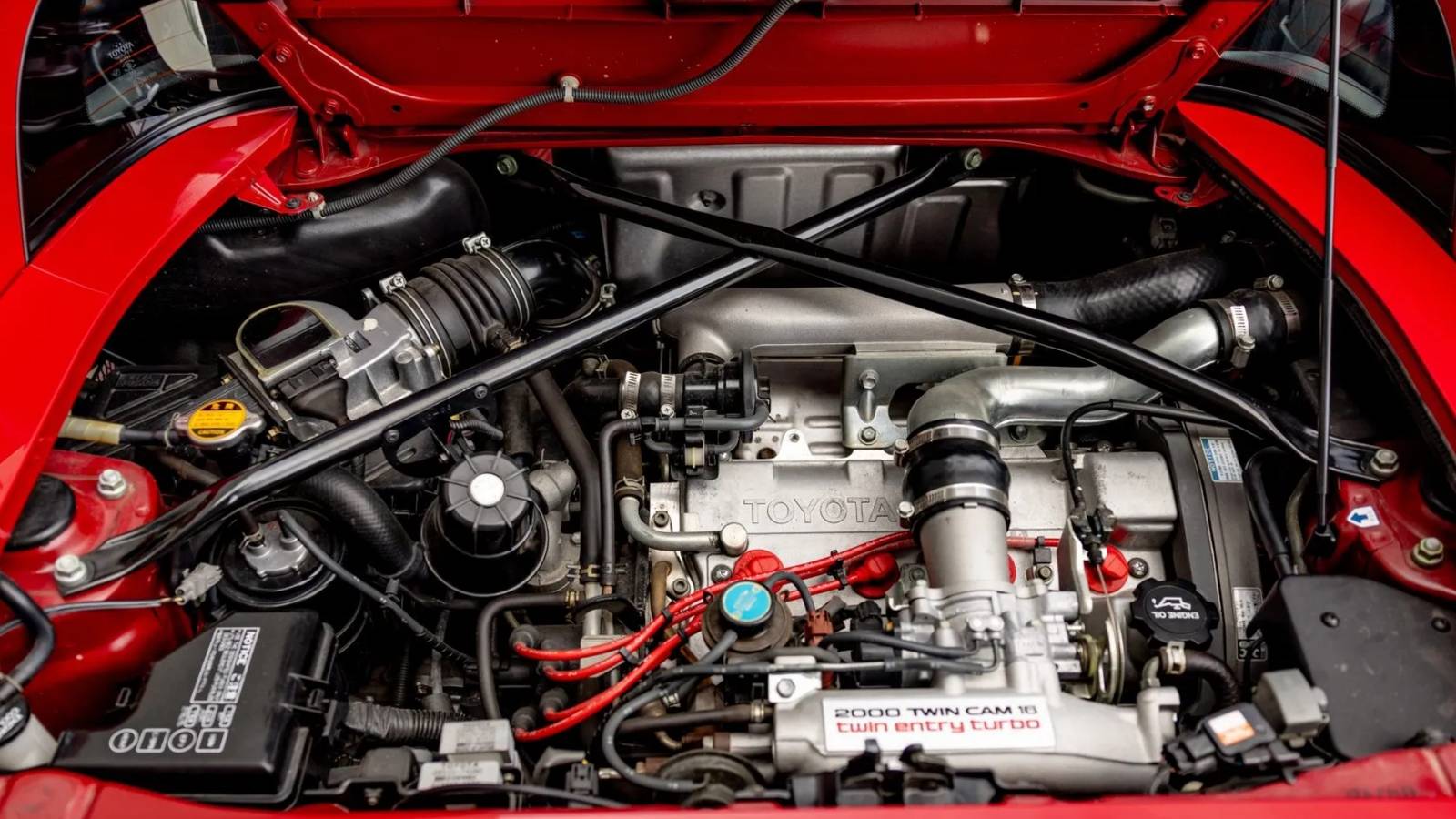
Toyota introduced the 3S-GTE in 1986 as a high-performance, turbocharged evolution of the 2.0-liter 3S-GE, quickly establishing it as a cornerstone of the brand’s sporting identity through its debut in the ST165 Celica GT-Four. This dual-overhead-cam, sixteen-valve inline-four was eventually utilized across five distinct generations, powering legendary models such as subsequent iterations of the Celica GT-Four, the mid-engined SW20 MR2 Turbo, and the Japan-exclusive Caldina GT-T and GT-Four wagons.
Owners and enthusiasts gravitated toward the 3S-GTE because of its exceptionally robust iron block and Yamaha-designed aluminum cylinder head, which provided a reliable foundation for significant aftermarket power gains while maintaining the daily-driver civility and longevity typically associated with more conservative Toyota powerplants. The engine’s success in World Rally Championship competition further cemented its reputation, offering a race-bred pedigree that translated into a rewarding ownership experience defined by punchy mid-range torque and a remarkably durable mechanical design.
What Makes The 3S-GTE So Formidable

The 3S-GTE is engineered around a robust cast-iron cylinder block that provides the high structural rigidity necessary to handle forced induction, paired with an aluminum alloy, cross-flow cylinder head designed in collaboration with Yamaha. This square engine design utilizes an 86 mm bore and stroke, featuring a five-bearing crankshaft and high-strength connecting rods that are often compared to those found in much larger V-8 engines for their durability. To manage the thermal loads of turbocharging, Toyota integrated under-piston oil injectors and utilized aluminum alloy pistons with recessed tops to prevent valve interference.
The valvetrain consists of a dual-overhead-cam configuration with 16 valves, driven by a single timing belt that also powers the water and oil pumps. Turbocharger hardware evolved through the generations, beginning with the CT26 unit which featured a twin-scroll turbine housing. This is a design choice that separates exhaust pulses to reduce interference. Toyota transitioned to the CT20B and CT15B units, which utilized various turbine materials, including steel for early models and lightweight ceramic for specific Japanese-market iterations to improve response, while the compressor wheels remained primarily aluminum alloy.

Every Toyota Engine That Excels In Reliability And Longevity
Toyota’s most legendary engines revealed: Which powerplants outlasted their vehicles?
What Toyota’s Rally Engine Was Capable Of

The 3S-GTE’s performance evolved significantly across its twenty-year lifespan, beginning with the first-generation ST165 Celica GT-Four which produced between 182 and 190 horsepower and 184 pound-feet of torque, resulting in a 0 to 60 MPH time of 8.2 seconds and a top speed of 137 MPH. The second-generation powerplants, found in the ST185 Celica and early SW20 MR2 Turbo, saw outputs climb to 200 to 225 horsepower and between 200 and 224 pound-feet of torque. In the MR2, this resulted in a 0 to 60 MPH time of 6.1 seconds and a quarter-mile completion in 14.7 seconds, while reaching a top speed of 150 MPH.
By the third generation ST205 Celica and late SW20 MR2, output reached between 242 and 252 horsepower and 224 pound-feet, dropping the Celica’s 0 to 60 MPH time to 5.9 seconds with a top speed capped near 152 MPH. The final iterations of the ST215 Caldina GT-T and ST 246 GT-Four represented the engine’s peak factory tune, delivering between 256 and 260 horsepower and 239 pound-feet of torque, which allowed them to achieve 0 to 60 MPH in 6.4 seconds and a standing quarter-mile in the low 14-second range.

The Toyota Engine So Reliable That It Could Outlast The Car
Toyota’s old four-cylinder Is a reliability and versatility king.
Toyota’s Downsized Powerhouse Isn’t Perfect

While the 3S-GTE is celebrated for its stout iron block, it is not without noteworthy age-related vulnerabilities, including coolant hose leaks, oil starvation from failing pump seals, and cracked ceramic turbine wheels in specific JDM iterations. The ignition system is a frequent pain point, as the high heat and cylinder pressures of a turbocharged environment can lead to rapid spark plug electrode erosion and distributor cap or rotor wear, often necessitating plug replacements as frequently as every 5,000 to 10,000 miles to prevent misfires.
Long-term reliability is strictly contingent on a rigorous maintenance schedule, headlined by a critical timing belt and water pump service every 60,000 miles. Owners are generally advised to perform oil and filter changes every 3,000 to 5,000 miles using high-quality synthetic lubricants to protect the turbocharger bearings, while coolant flushes and valve clearance inspections should be conducted every 30,000 miles to ensure the valvetrain and cooling system remain within factory tolerances.
How Toyota Reinvents The GTE With Its G16E-GTS

The G16E-GTS serves as the spiritual successor to the 3S-GTE by reviving Toyota’s homologation-first engineering philosophy, where a high-output, turbocharged engine is purpose-built to dominate the World Rally Championship before being adapted for the street. Much like the 3S-GTE was the heart of the legendary Celica GT-Four and MR2, this turbocharged 1.6-liter three-cylinder was developed from the ground up to power the GR Yaris and GR Corolla, prioritizing a compact, lightweight footprint and extreme structural rigidity to handle immense boost pressures.
It mirrors the 3S-GTE’s heritage by delivering world-class power density that exceeds the specific output of even the final Black Top 3S-GTE. The system also utilizes advanced cooling and lubrication systems, such as multipoint oil jets and a high-efficiency head design, to ensure track-ready durability. By pairing this race-bred engine with the GR-Four all-wheel-drive system, Toyota has effectively modernized the formula of the 1990s GT-Four, offering a mechanical resilience and tuning potential that captures the same enthusiast cult status as its four-cylinder predecessor.
Sources: Motor Reviewer, Kelley Blue Book, Edmunds