
There’s something inherently appealing about products that serve multiple purposes. Consider smartphones, which now combine high-quality cameras for weekend trips with virtually unlimited digital storage. In the 1990s, cameras were bulky, battery-operated, and limited to 36 exposures. Today, devices in our pockets manage both photography and storage seamlessly. Technology has advanced to the point where even everyday tools provide extraordinary utility, and this principle extends beyond electronics to other domains, including motorcycles.
Why Sport-Touring Motorcycles Are So Versatile

A similar philosophy is evident in modern motorcycle design. Across small, mid-size, and large-capacity segments, manufacturers have developed machines that combine the best qualities of different types of motorcycles—touring, off-road, and sporty cornering. These sport-touring motorcycles prioritize long-distance comfort and cruising capability, but they are engineered to offer performance versatility, allowing riders to confidently tackle multiple riding conditions without compromise.
Flexible Performance, Forgiving Ergos, And Right Pricing

While long-distance cruising is central to sport-touring, urban usability is equally important. Many riders rely on a single motorcycle for commuting, errands, and weekend trips. Accordingly, price and value play a key role: the machine should be accessible without sacrificing quality. The engine must provide tractable power, ensuring smooth performance at low speeds and high-speed stability on highways. Comfort for both rider and passenger is essential for extended journeys, ensuring fatigue is minimized while exploring.

The Middleweight Touring Bike With Honda Reliability And BMW-Level Road Manners
The Tracer 9 is all that is good about Honda and BMW, and it is in an affordable package.
The Yamaha Tracer 9 Can Do It All

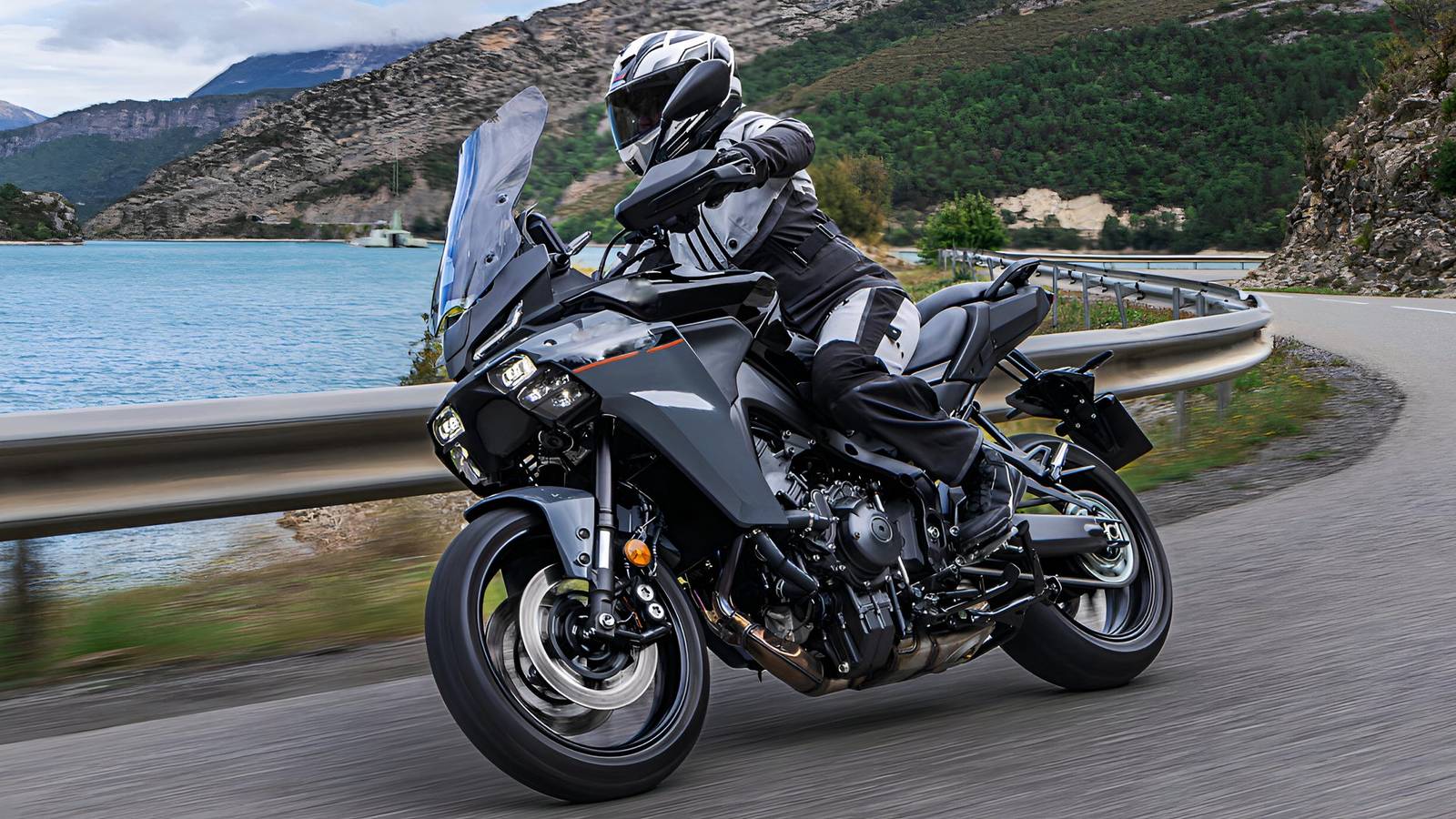
The Tracer 9 debuted around the time the Yamaha V‑Max was discontinued, as part of a broader refresh of Yamaha Motor Company’s motorcycle portfolio. The concept was straightforward yet effective: combine the upright ergonomics and comfort of a touring motorcycle with the agility and performance of a sporty naked bike. The engine delivers strong, usable torque, while practical features enhance long-distance comfort. By leveraging the MT‑09 platform and adding wind protection and a larger TFT display, Yamaha created a motorcycle capable of extended touring without compromising sporty character.
Starting Price Is Aggressive By Segment Standards

With a starting price of $12,599, the Tracer 9 sits between value-oriented and premium middleweight sport-tourers. Although Yamaha offers multiple variants globally, the U.S. market receives only the base model with standard luggage, omitting features like radar-based adaptive cruise control. Nevertheless, even in its simplest configuration, the Tracer 9 provides exceptional value within its segment.

This Gorgeous Yamaha Motorcycle Will Leave Americans Jealous
A special paint job evokes more nostalgia than ever on this Yamaha XSR900.
Yamaha’s 890cc Triple-Cylinder Engine Brings The Firepower

The Tracer 9 is powered by Yamaha’s CP3 inline-three engine, a distinctive unit that combines performance characteristics of high-end machines in a more accessible format. It provides a broad and easily manageable spread of torque, delivering a lively and engaging ride. Engineering improvements—including forged pistons and connecting rods, ceramic-composite cylinder liners, and offset pistons—enhance efficiency and performance. With a five-gallon tank and claimed efficiency of 48 MPG, the motorcycle can cover over 200 miles on a single tank.
No Major Hiccups

The engine produces strong low-end torque while maintaining a responsive top end, resulting in a balanced and enjoyable riding experience. Modern electronics, including ride-by-wire throttle and a six-axis IMU, allow multiple ride modes, some of which can be tailored individually to the rider’s preferences.
Loaded With Features To The Gills

Cruise control is standard, and the six-axis IMU continuously monitors dynamics to support cornering traction control, wheelie mitigation, slide control, and back-slip regulation. Each system can be adjusted independently, providing an unprecedented level of customization and rider control.
But Only A Single Variant In The US

The Tracer 9 features a six-speed manual transmission with an assist and slipper clutch, while a bidirectional quickshifter is offered as an option. Globally, even the base model can be equipped with Yamaha’s Y-AMT automatic gearbox, though this configuration is not available in the U.S.

Why This Touring Motorcycle Is the Ultimate All-Rounder In 2025
This middleweight Yamaha is practical and fun in equal measure – exactly what you’d want from a tourer
Modern Underpinnings Ensure The Bike Is Quick On Its Feet

The Tracer 9 utilizes a diamond-type frame, sharing the MT‑09’s Deltabox architecture, known for precision, feedback, and stability. Suspension is handled by KYB components with adjustable preload and rebound damping front and rear, offering more travel than a typical street bike—5.1 inches at the front and 5.2 inches at the rear.
The Dimensions Are Compact
The bike rides on 17-inch wheels front and rear with sport bike-spec tires for a strong grip. Braking is managed by dual 298mm front discs with radially mounted four-piston calipers and a 267mm rear disc with a single-piston floating caliper. Measuring 85.6 inches long, 35.4 inches wide, and a wheelbase just over 59 inches, the Tracer 9 is compact yet tall, with a seat height of 33.3 inches and 5.3 inches of ground clearance. Its 483-pound wet weight, combined with the chassis and dimensions, makes it versatile, agile, and suitable for a one-bike garage.

10 Sport Tourers That Balance Passenger Comfort And Solo Performance
These ten touring motorcycles aren’t just comfortable for your pillion, they’ll plaster a big grin on your face when you set out by yourself!
If Not The Yamaha Tracer 9, Then What Else?

In the middleweight sport-touring category, notable alternatives include the BMW F 900 XR and Triumph Tiger 900 GT, both delivering refined, capable touring performance. The Honda NT1100 DCT is another contender, offering full-size touring comfort with an automatic transmission at a competitive price.
Triumph Tiger 900 GT: $15,195

The Tiger 900 GT is designed for paved-road touring while remaining competent on light off-road terrain. Its 888cc triple-cylinder engine produces 106 horsepower at 9,500 RPM and 66.4 pound-feet of torque at 6,850 RPM, paired with a six-speed gearbox. Features such as a seven-inch full-color TFT display, multiple riding modes—including rider-configurable settings—cruise control, and heated grips make it ideal for long journeys.

Ergonomics and a generously sized fuel tank enhance comfort and touring range. Wheels measure 19 inches front and 17 inches rear, with adjustable Marzocchi suspension tuned for stability and comfort. Braking is handled by dual 320mm front discs with Brembo Stylema calipers and cornering-optimized ABS.
BMW F900 XR: $12,695

The BMW F 900 XR is officially listed as a sport-oriented model on BMW’s website, highlighting its emphasis on performance. Built upon the F 900 R naked platform, the XR introduces additional fairings and enhanced wind protection, making it better suited for extended rides. It occupies the crossover category, offering the agility to handle sharp corners while maintaining the stability and confidence needed for sustained high-speed highway travel.

The F 900 XR comes equipped with a 6.5-inch full-color TFT display, connectivity options, multiple riding modes, and standard safety aids such as ABS and traction control. Powered by an 895cc parallel-twin engine delivering 105 horsepower (at 8,500 RPM) and 68 pound-feet of torque (at 6,750 RPM), the bike uses a six-speed gearbox. BMW also offers an optional quickshifter. This combination ensures a positive shift feel, reliability, and smooth performance, reinforcing the bike’s versatility as a capable all-around sport-tourer.
Sources: Yamaha, BMW, Triumph