
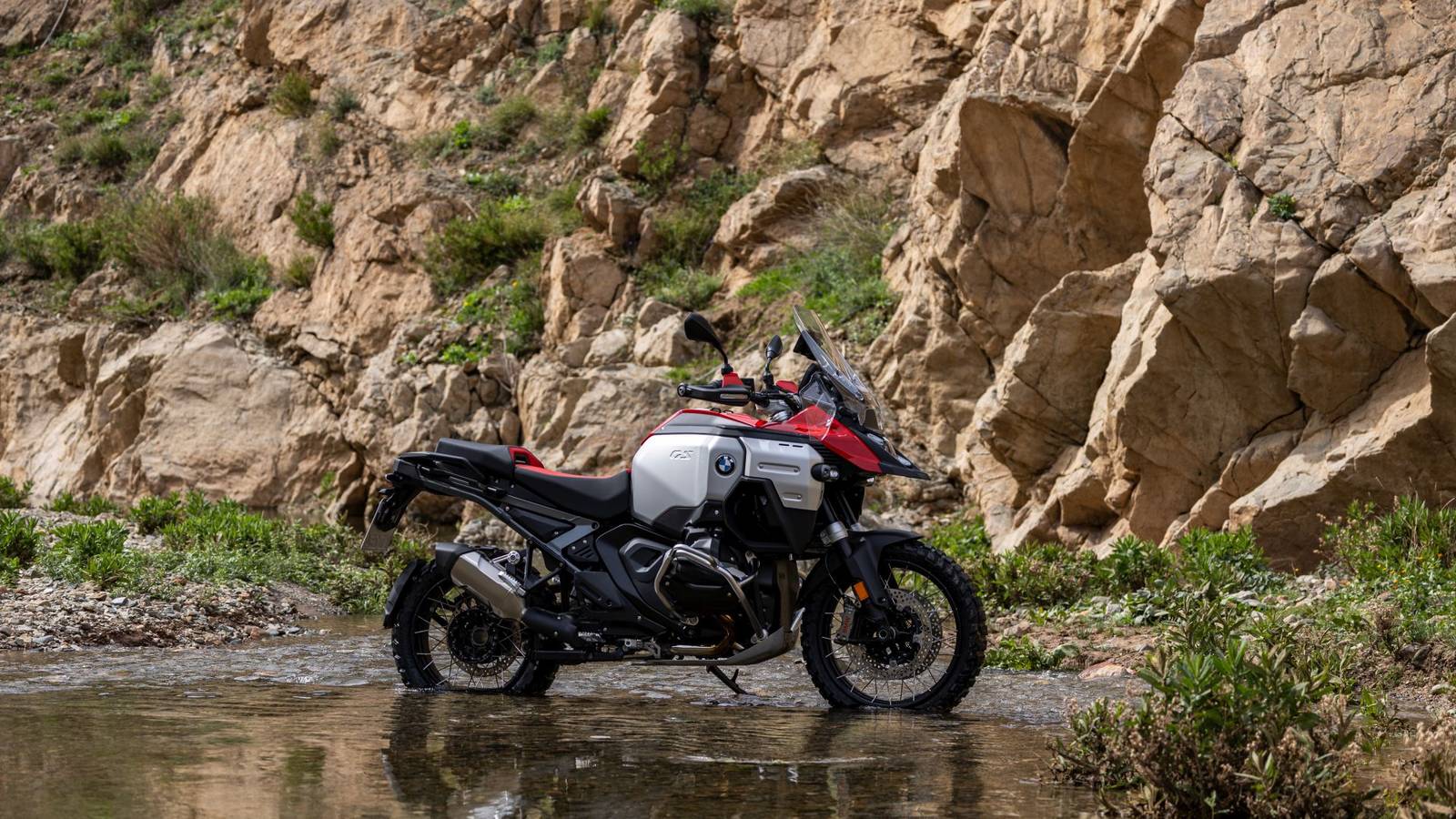
Adventure motorcycles sit at the top of the freedom mindset that a lot of riders have. They combine the ability to travel long distances for hours and hours in a single day, and yet, when the next day comes calling, they are all set to go out again. Over the course of a single day, these bikes can traverse mountains, go on endless highways, and, every once in a while, hit a patch of road so bad that it barely qualifies as one.
But ADVs today aren’t just about getting out and getting there. They come with a level of sophistication usually reserved for four-wheelers. Of course, you won’t get the protection four doors offer you, but you will get very similar technology and a nice cushy seat, too. Most ADVs are capable of this, but there is one that stands out, whether it comes to touring comfort or its ability to kick things up in the dirt.
What Defines A True Adventure Motorcycle

Adventure bikes occupy a fascinating middle ground in the world of motorcycling. They’re not the fastest bikes on the track, and they’re not the lightest of off-roaders. Additionally, they’re not even as luxurious as a full-dress tourer. But they hit a kind of balance right at the center. These machines are built for versatility. Riders expect upright ergonomics, long-travel suspension, and engines that deliver usable power in a wide range of conditions. They’re meant to feel equally at home on a winding mountain road as they are navigating unpaved trails.
Performance Expectations On And Off The Tarmac

On paved surfaces, the ADV is expected to behave like a refined touring machine. It should offer stability at high speeds, smooth power delivery, and sufficient wind protection, so the rider doesn’t feel blown back constantly. Because ADV riders spend hours in the saddle, the bike also has to offer a level of comfort that is not easy to get on conventional single-minded motorcycles.

The saddle should be cushy, the riding position should be upright, the suspension needs to be tuned right, and a host of other things. Off the tarmac, the comfort factor goes away. Here, the ADV needs to be capable enough to climb over high rocks and go through deep ruts. Suspension tuning makes an appearance here again, as well as off-road worthy engine performance, high ground clearance, and tall handlebars for riders who stand on the footpegs. Weight distribution is another key factor here that allows a rider to balance his bike well in loose dirt sections.

The Time Japan Made A Better Adventure Motorcycle Than The Rest Of The World
This Honda adventure bike offers the best balance of performance, capability, and smart pricing.
The Different Types Of ADVs

Yes, you’re going to find a variety even within this segment, but it’s not really as vast as you think. Some bikes like the Triumph Tiger 1200 Explorer and the Kawasaki Versys 1100 are tuned for road use, offering suspension dynamics and wheels and tires made for asphalt. On the other hand, you have the Yamaha Tenere 700 and the Honda Africa Twin Adventure Sports that are biased towards the dirt.

They have thinner seats, taller suspension, and larger wheels and tires for better traction. All of these bikes are capable wherever you push them, sure, and they all come with comfort levels that far surpass any other bike that’s not a tourer. But there is one standout bike that manages to blend everything together. It is amazingly comfortable when out and about on the streets and highways, but it has a level of capability in the dirt that few others seem to possess.

10 Adventure Bikes With The Longest Riding Range
The most affordable 300+ mile adventure touring bike on this list is priced under $7,000 and is powered by a single-cylinder engine.
Engineering That Balances Strength And Comfort
Enter The BMW R 1300 GS Adventure

The BMW R 1300 GS Adventure steps into this world with a clear purpose: to be able to do everything the rider asks of it. And for that, we begin with the engine. At its core sits a 1,300cc boxer twin capable of producing 145 horsepower and 110 pound-feet of torque. The horizontally opposed cylinder layout has been a defining characteristic of the brand, but this new iteration is more compact and lighter than before. Power delivery is linear, and there is as much top-end speed for the highways as there is low-end grunt for tight technical trails. The gearbox has also been redesigned, and the weight distribution has been optimized for a more responsive and controlled ride regardless of the environment.
The GS’s Chassis And Suspension Are Top-Notch

BMW has introduced a completely new chassis with the R 1300 GS. The sheet-metal main frame and aluminum sub-frame centralize the mass and improve rigidity. There’s also the signature Telelever front and Paralever rear suspension setup, which reduces dive under braking, especially when the terrain gets rough. The addition of BMW’s latest Dynamic Suspension Adjustment allows the motorcycle to adapt damping and spring rates automatically, and while on the street, this makes the bike smoother; on the dirt, this can be invaluable. All of this contributes to a bike that feels planted on the streets even at higher speeds while still being able to maintain control on loose or rocky terrain.
There’s Advanced Electronics And Rider Aids

The GS gets a comprehensive suite of electronic aids to cater to the different, sometimes unpredictable, situations the rider is going to put the bike through. There are multiple riding modes that adjust throttle response, ABS, traction control, and suspension settings to suit different terrains. The Dynamic Traction Control and Engine Drag Torque Control work together to maintain the bike’s stability in low-grip situations, and cornering ABS ensures you don’t slide out under heavy braking in a corner. But one of the standout features is the optional radar-based system, which brings in adaptive cruise control and forward collision warning, adding a layer of security usually found in cars.

10 Adventure Bikes That Get Surprisingly Good Fuel Economy
The most fuel-efficient adventure motorcycle on this list is a city-friendly bike with an automatic gearbox and an under-$9,500 price tag.
Long-Distance Comfort And Practicality Are Baked Into The Bike

Comfort on the R 1300 GS isn’t an afterthought. BMW has a long history with adventure bikes ever since the R 80 G/S the company has only refined the segment. On the new R 1300 GS, the seating position is upright and neutral with a cushy, yet supportive seat designed for reduced strain on the back. Handlebars are positioned well to strike a balance between comfy highway touring and trail winding. Wind protection is refined as well with the adjustable windscreen. Heated grips, heated seats, and cruise control all make the journey that much less tiring for the rider.
Efficiency And Real-World Usability

Now, despite this ADV’s performance capabilities, it doesn’t shy away from being fairly mindful of its drinking habits, too. According to BMW, the bike is capable of returning a fuel efficiency figure of 48 MPG. Combine that with the Adventure’s 7.9-gallon fuel tank, and you’ll be traveling at least 379 miles before needing to stop for fuel. Maintenance and service intervals have also been considered, allowing you to stretch your riding days further.

10 Adventure Bikes That Can Truly Handle The Wild
These adventure bikes are more at home away from home
The R 1300 GS Adventure Redefines Exploration And Endurance

The modern ADV is not defined by compromise; it never was. While some trade a few characteristics in favor of others, they all perform manageably well in any situation. But with the BMW R 1300 GS Adventure, what you get is not one of those bikes that favor the road for the dirt or vice versa. It can and will do either. What it does tend to do better than most, however, is give the rider comfort and joy, the levels of which you will see on a small touring machine with a bigger engine.
Sources: BMW Motorrad