
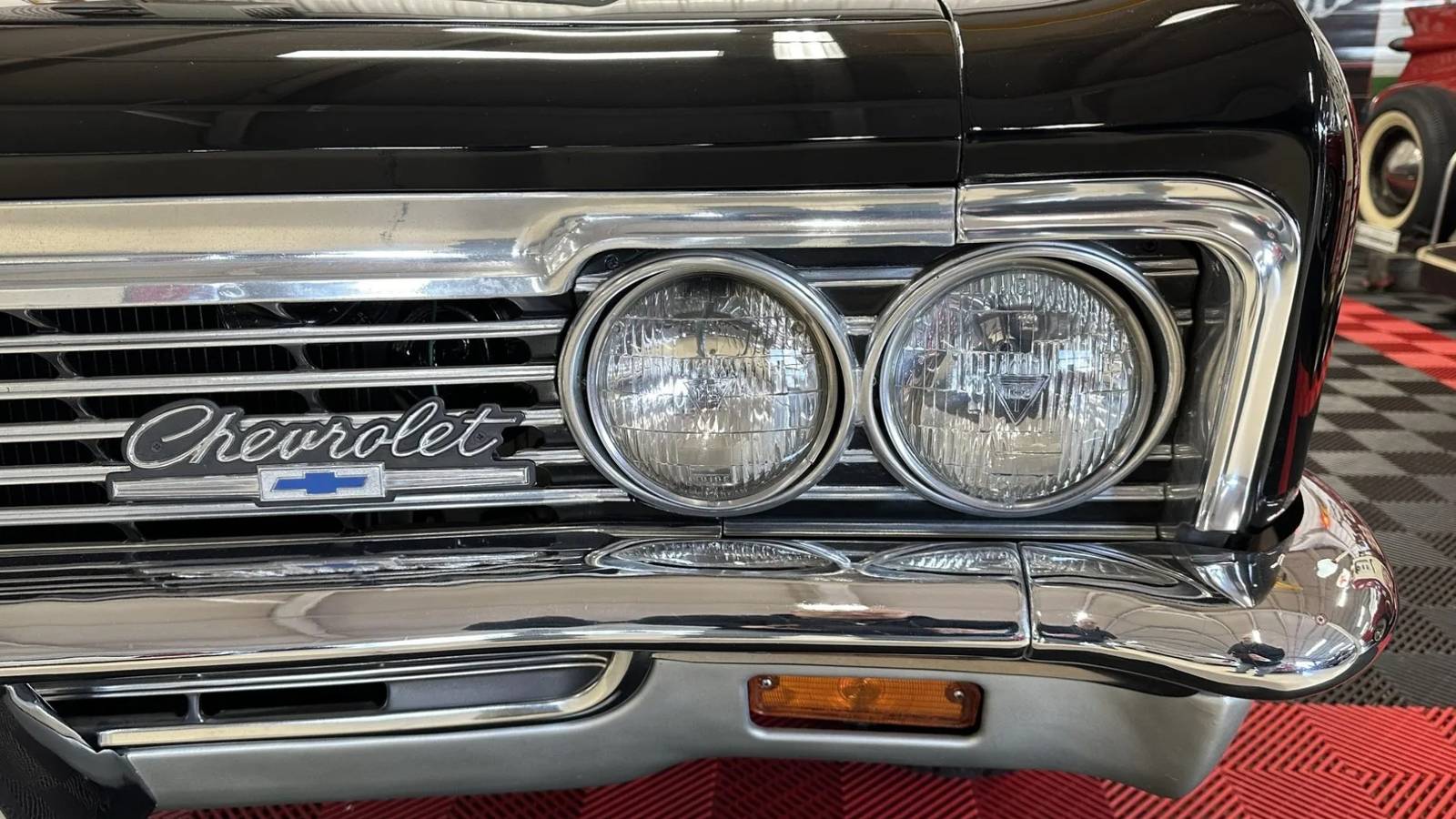
The muscle car era of the mid-to-late 60s and early 70s was truly a one-in-a-lifetime automotive phenomenon. There were so many legends of high-performance history in this era, like the Chevelle SS, the “Judge” GTO, and, of course, the Ford Mustang. These cars now litter auction halls and headline coverage — they defined one of the greatest eras of American performance. Yet, what about the unsung heroes who never got their flowers? Cars that didn’t grab the spotlight but were just as fast and cost less than the popular models? The deeper cut, that one cool car that the average person would have missed. In the mid-1960s, Chevrolet built one of the greatest performance cars of its era, and it went almost completely unnoticed by the public.
Anything But Conventional

If you want to be fast, it’s not about being pretty. Results mean everything if you want to win, and everyone who goes racing wants to win. Once you hang out at a drag strip or racetrack long enough, you realize that a car’s exterior has no relation to its performance capability. Looks can be deceiving, and racers love to use this to their advantage.
The 1960s Drag Racing Scene Was Pure Cinema

By the mid-1960s, factory drag racers like the 1964 Ford Fairlane Thunderbolt were pushing low eleven-second quarter-mile times–a feat previously thought to be incomprehensible for a car of its era. Yet even crazier were the people who drove these vehicles. These weren’t weekend warriors; they were amateur engineers obsessing over obtaining the last tenth like true racing drivers. Power-to-weight ratios were everything, and any component that didn’t contribute to speed had to go. These enthusiasts shopped for objective performance rather than badge appeal. Oftentimes, that meant picking the option with the least interest from the public.
The Peak Of The Big-Block Era

All the while, Detroit’s engineers were fighting among themselves. The reason? Everyone wanted to be the company to fit the biggest engine possible into the smallest car possible. Was it safe? Absolutely not. Was it reckless? Undoubtedly so. Did they do it anyway? Yes. By 1966, the big-block V-8 was the ultimate weapon of choice, defining American muscle. Chevy’s lineup at that time included some of the most intimidating big-blocks ever put into a production vehicle. The L72 427 was one of them, a 425-horsepower behemoth with solid lifters, high-rise intake, and an 800-cfm Holley carburetor. Its power would put the fear of God back into your heart. With closed-chamber heads and a very high compression ratio, this engine was one of the quickest V-8 units of the era. The only question was which car Chevy was going to put it into.

10 Quiet Looking Sleeper Sedans That Offer The Best Bang For Your Buck
Sleeper cars are a lesson in confidence and non-conformity. These cars blend into traffic, cruise through suburbia, and sit quietly in parking lots.

Back in the 1960s, there were almost too many amazing muscle cars available at your disposal. Most people were lining up outside the dealership for something like a Chevy Chevelle, something that had both the speed and the looks. Yet, what if you wanted to go just as fast without any of the attention? Well, there was a perfect option waiting; you just had to look a little harder for it.
A Hidden Race Car For The Road

If we look back at Chevy’s vehicle lineup in the mid-1960s, they offered more practical vehicles than they did race cars for the road. The Chevy Impala was the brand’s star with its good looks, impressive features, and competitive pricing. Then, below that sat the Chevy Bel Air, a mid-level offering that was more focused on comfort and economy. Then, at the bottom of the barrel, there was something even more stripped down, built for anonymity. These were fleet cars, taxis– the kind of car that is ordered in bulk. These fleet cars were never intended to be performance vehicles. If you looked at their marketing, you still wouldn’t have a clue about their capabilities. These models never made the showroom floor, but if you looked at the order sheet, you may have been shocked to see what was offered. The only limiting factor was knowing how to read it.
The Cheaper, The Better

Once you understood the logic, it became painfully simple. Because Chevy’s full-size bodies were larger than the Chevelle, many assumed they would be slower, but stripped-down trim often made them lighter.The result was a near-gutted interior–and we mean it. No power windows, no sound deadening, no luxury door panels. Critically, the massive engine bay of the full-size body meant that it could handle the biggest and baddest big-block engine imaginable. The drag racing enthusiasts who realized the potential of this platform were not doing anything out of the ordinary– they just knew how to read the order sheet. Remember that we talked about power-to-weight ratios? They simply ordered the cheapest, lightest version of a full-size Chevy and checked the option for the biggest engine available. The car in question was the 1966 Chevrolet Biscayne– one of the first “hidden option” sleeper vehicles ever built.
The Chevrolet Biscayne L72 Was One Of The First Sleepers

The 1966 Chevrolet Biscayne equipped with the L72 427 big-block V-8 was never intended to be a high-performance machine. It was more of a loophole that came as a heaven-sent for the racers who discovered it. Chevy offered a 425-horsepower engine in a car that looked like a nondescript unmarked taxi.
The L72 Was Built For Racing

The L72 427 was not some heavily modified Chevy economy V-8 with an extra dose of power to make it feel special. The L72 427 big-block was a full-blown racing engine that was a factory option on a car that came standard with bench seating, rubber floor mats, and dog-dish hubcaps. With a solid-lifter camshaft, it chopped at idle just like a racecar, but it looked like a government fleet vehicle. Once you opened up the throttle, all hell would break loose. A well-set-up Biscayne L72 could run mid-13-second quarter-mile times in 1966. That may not sound fast now, but at the time, these figures put the Biscayne L72 in direct competition with pure sports cars that often cost twice as much and were a pain to maintain. The Biscayne wasn’t about looking fast; it simply was fast.
The Biscayne L72 Outpaced Muscle Car Legends

Back in the mid-1960s, the Chevy Chevelle SS 396 was a top-tier performance car, and the Pontiac GTO was the muscle car litmus test. The Biscayne L72 was faster than both of them by a quarter mile at the drag strip, even without the best launch. The Biscayne L72’s secret to its success was its weight. Despite its size, the bare-bones body and gutted interior meant that it was much lighter than it looked. Remember, power-to-weight ratio is everything, and the Biscayne L72 mastered the perfect balance. The fact that you could order next to no features on the Biscayne made it the perfect lightweight shell for racing — unintentionally. The lack of features was not considered a compromise by the racers who purchased them, but rather, the very reason they made the decision. Doing whatever it took to go faster was all that mattered.

10 Cars That Dominated Drag Racing In The 1970s
The looking cool and going fast ethos of the classic muscle car era translated well to the drag strip as Golden Age rides dominated the ’70s.
Why The Biscayne L72 Deserves A Place In The Muscle Car Valhalla

Nowadays, when people talk about muscle cars, they often mention well-known greats, like the 1968 Dodge Charger R/T or the 1969 Plymouth Road Runner. Yet, what about the amazing cars that didn’t steal the headlines? If you hear someone mention the Biscayne L72 in a muscle car discussion, you know they are a true muscle car scholar.
The Biscayne L72 Is Still A Sleeper, Even Now

The Chevrolet Biscayne L72 currently sits in a weird place between forgotten and legendary. Yet, that lack of public appeal is part of what makes it so alluring, even today. Its history was never truly lost, and somehow it managed to stay hidden in the shadows, even decades later. The Biscayne L72 is just as anonymous today as it was back in the 1960s. If you were to show up at a car show in a restored example with dog-dish caps with no badging, most enthusiasts wouldn’t even give a second glance. That is, until you open up the hood and expose one of the biggest and baddest big-block V-8 engines ever produced. The L72 427 is the type of engine that turns heads, even for spectators who don’t know every last detail about Chevy’s performance heritage. Finding one in a Biscayne? You may as well buy a lottery ticket later that day. The Biscayne L72 is a true purpose-built performance car that hid its true potential well before the era of true sleeper sedans.
The Biscayne L72 Is Rarer Than Most Popular Muscle Cars

Only about 200 units of the 1966 Chevrolet Biscayne L72 were ever produced. In a relatively recent listing, Mecum Auctions stated that only about 11 remain in existence today in the entire world. That means you have a better chance of being struck by lightning than seeing a numbers-matching Biscayne L72. Since these cars were raced hard and production was short-lived, not many survived. Some examples had the valuable engine stripped from them for what was considered a more worthy chassis. Others were simply discarded. The few that remain are time capsules of a different time, a specific moment in American history we will never repeat. Even if it never had the true success it deserved, the Biscayne L72 inspired an entire future generation of sleepers and has never been forgotten by real muscle car historians.
Sources: Chevrolet, Pontiac, Chrysler, Plymouth, Ford, American Muscle Car Museum, Mecum Auctions