
Solid-state may be the next frontier when it comes to electric vehicle (EV) battery technology, but a group of Australian scientists are already well-advanced in the development of next-generation quantum batteries that can charge even faster – and even over long distances wirelessly.
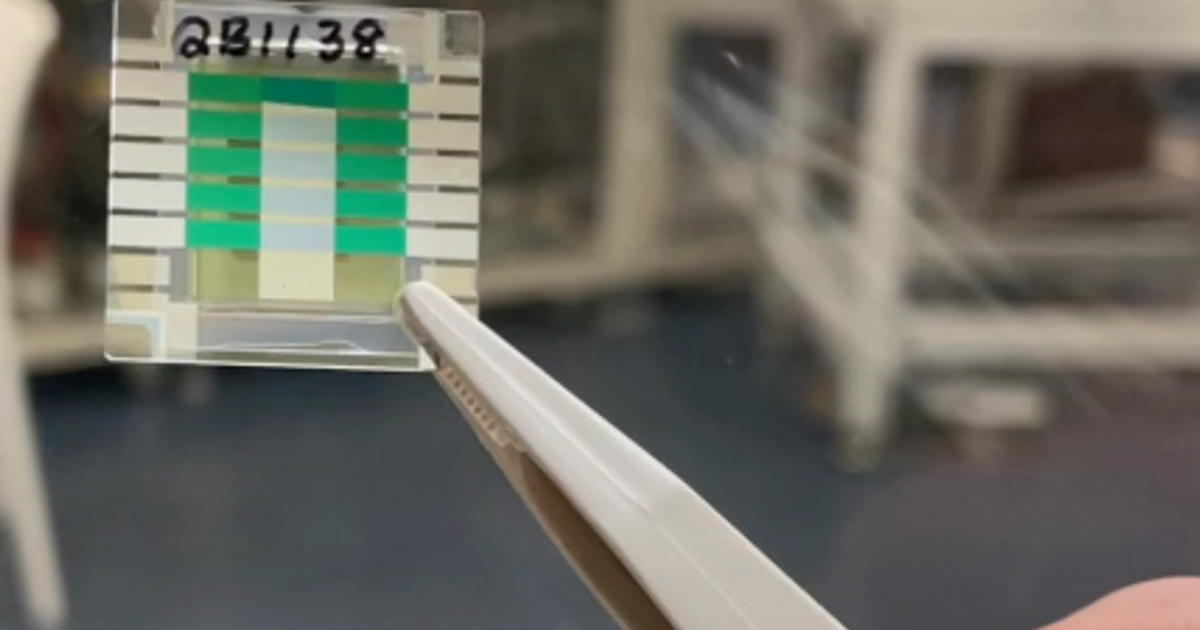
Marking a major step towards the future of energy storage, a group led by the Commonwealth Scientific and Industrial Research Organisation (CSIRO) has unveiled what it claims is the world’s first proof-of-concept quantum battery – a technology that could one day dramatically reduce EV charging times.
Australia’s national science and innovation research agency, in collaboration with RMIT University and the University of Melbourne, has demonstrated a functioning prototype capable of charging, storing and discharging energy using quantum mechanics rather than traditional chemistry.
CarExpert can save you thousands on a new car. Click here to get a great deal.
While still in its infancy, the CSIRO says the technology could eventually underpin next-generation EVs and consumer devices with near-instant charging capabilities.
“My ultimate ambition is a future where we can charge electric cars much faster than fuel petrol cars, or charge devices over long distances wirelessly,” said Dr James Quach, CSIRO’s quantum science and technologies leader.
How a quantum battery works
Unlike today’s lithium-ion batteries – which rely on chemical reactions – quantum batteries take advantage of quantum phenomena such as superposition and entanglement.
The prototype developed by the Australian team uses a multi-layered organic microcavity and is charged wirelessly via a laser, highlighting the potential for cable-free energy transfer in the future.
One of the most intriguing findings is how the battery behaves as it scales.

“Our findings confirm a fundamental quantum effect that’s completely counterintuitive: quantum batteries charge faster as they get larger. Today’s batteries don’t function like that,” Dr Quach said.
This counterintuitive property could be key to enabling rapid charging for larger systems, including electric vehicles.
“The research validates the exciting potential of quantum batteries for unprecedented efficient and rapid energy storage,” added Dr Quach.
What it means for EVs
If successfully developed for commercial use, quantum batteries could address one of the biggest barriers to EV adoption: charging time.
Instead of waiting 20 to 40 minutes at a DC fast-charger – or hours at home with an AC power outlet – future EVs equipped with quantum batteries could theoretically charge in seconds or minutes, potentially even faster than refuelling a petrol- or diesel-powered car.
There’s also potential for wireless charging over long distances, removing the need for physical charging infrastructure altogether.
Still a long road ahead
Despite the breakthrough, fully functional quantum batteries are still a long way from production.
The current prototype has demonstrated promising behaviour, including the ability to retain stored energy for millions of times longer than its charging duration.
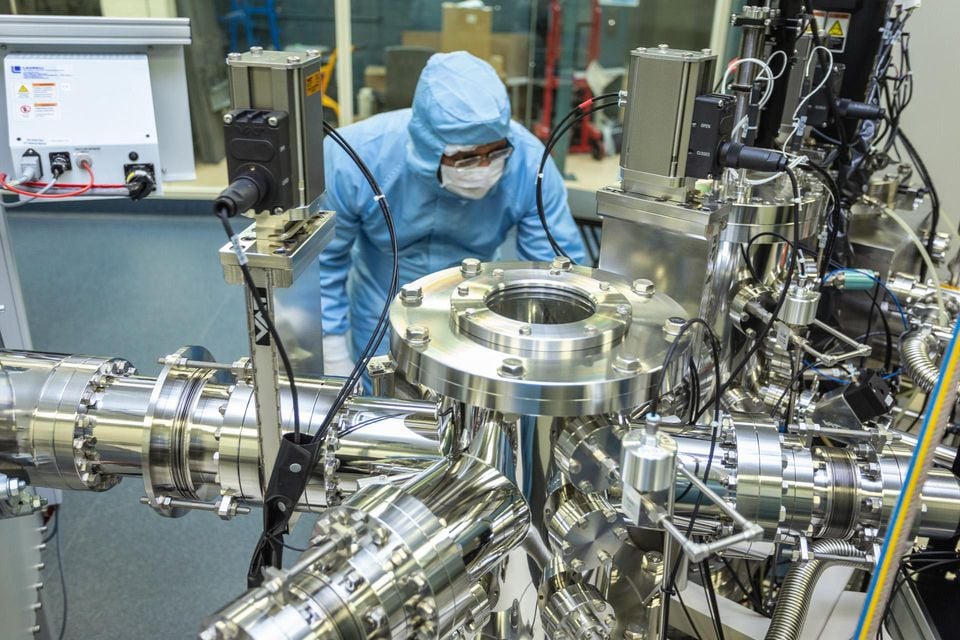
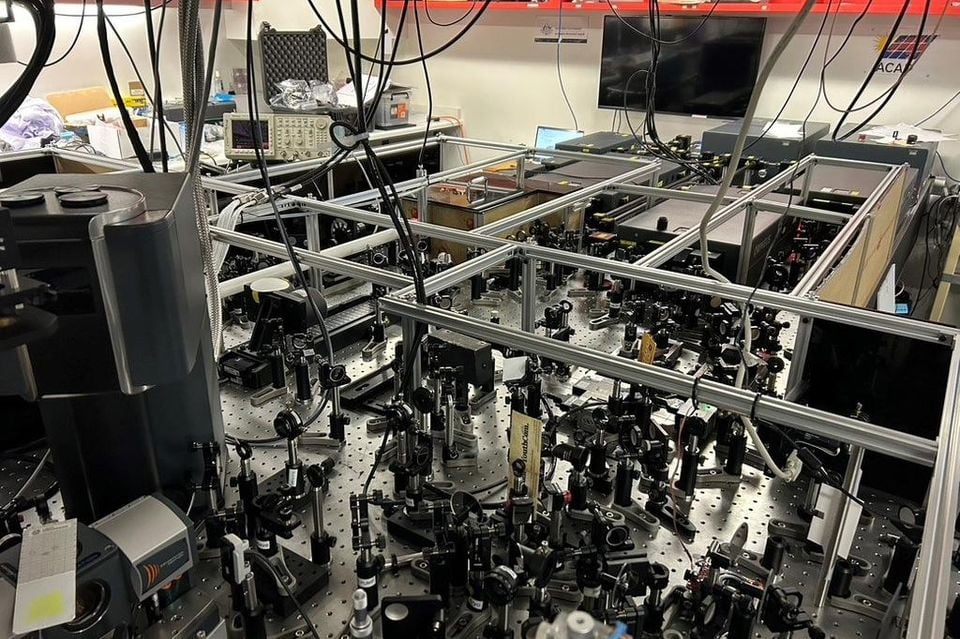
The research team used advanced spectroscopy techniques to confirm the prototype’s charging behaviour, which showed it retained stored energy for six orders of magnitude longer than it took to charge.
However, there are still major hurdles to overcome.
“The next step for quantum batteries right now is extending their energy storage time,” Dr Quach said.
“If we can overcome that hurdle, we’d be that bit closer to commercially viable quantum batteries.”
The bigger picture
The CSIRO says it’s now seeking industry partners to help further develop quantum battery technology.
So while commercialisation may be years away, the research confirms key theoretical predictions and provides a glimpse into a future where energy storage is faster, more efficient, and potentially wireless.
For the automotive industry, it could represent a fundamental shift – not just improving EV charging speeds, but redefining how vehicles are powered altogether.
“Our proof-of-concept device showcases rapid, scalable charging and energy storage at room temperature, laying the groundwork for next-gen energy solutions,” Dr Quach said.
“While there’s still much work to be done in quantum battery research, we’ve made an important move towards realising the possibilities,” he said.
MORE: World-first solid-state EV battery to offer 600km of range from a 10-minute charge