
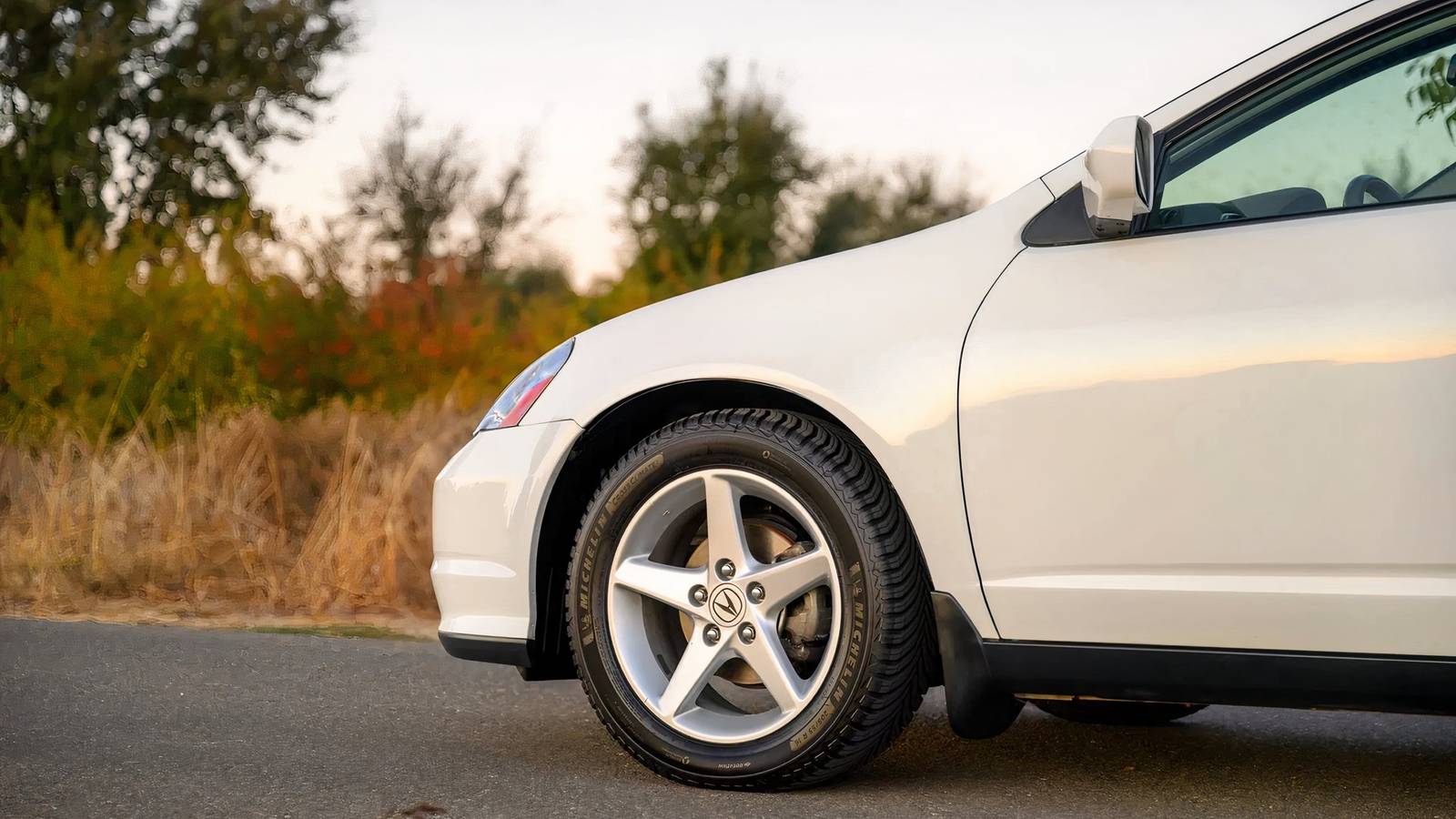
If you want to buy an affordable, typically reliable, and fun sports car, you’ll be hard-pressed not to find one from a Japanese brand. Some of the stalwart Japanese sports models, like the Toyota Supra, the Mazda MX-5, the Nissan 240SX, and certain models of the Subaru Impreza, offer a lot of bang for your buck and typically staunch reliability. But isn’t it time that we went for something a bit different?
Acura may not be the first Japanese brand you think of when you think of sports cars, but in the early 2000s, it released a limited run of a very impressive and luxurious sports coupe. Today, they are very cheap to buy, but still exceptionally fun to drive and built as tough as their parent company, Honda.
Why We Love A Japanese Sports Car

Japanese sports cars are loved by a lot of drivers, and it is easy to see why. Unlike a lot of performance machines that may feel distant or intimidating behind the wheel, Japanese sports cars want us to drive them. Combining usually smart engineering, typically easy driving feedback, a style that makes them stand out as clearly Japanese, and a following that is hard to compete with, some iconic sporty Japanese models continue to roam the roads with a huge amount of respect.
Part of the appeal also lies in balance. Cars like the Nissan 240SX and the Mazda MX-5 show that you don’t need immense horsepower to have fun in a car. Lightweight construction, sharp handling credentials, and rear-wheel drive are all you need. On a twisting back road, this is the setup you want, not just brute power.

Then there is reliability and typical maintenance commitments. Brands like Toyota, Lexus, Honda, Nissan, and Mazda all triumph in the world of dependability, and while German brands like Porsche are also exceptionally reliable, there is usually a massive difference in how much you’ll have to spend on garage bills. So, if you are looking for a fun car that is generally cheaper to maintain, some models turned out by Japanese brands (of course, some are still very expensive to buy and run) are stereotypically a smarter buy.
Finally, while some Japanese sports cars are epic out of the box, they can also be modded to extreme levels. Many models are built with an after-market-friendly engineering philosophy, balanced credentials, and relatively simple designs. This makes it slightly easier (if you know what you’re doing) to swap out engines, bolt on turbos, create unique designs, and change a lot of the characteristics of a Japanese sports car without ruining it.
Why The Most Popular Japanese Sports Cars Have Lasted So Long

Some Japanese models have earned near-mythical status in terms of on-road fun and iconic status amongst JDM fans. More literally, some Japanese sports cars like the Nissan 240SX have lasted because of their durable engineering prowess. Under the hood, the KA24DE engine is simple, robust, and relatively easy to maintain, which means you can still get an awesome drift-ready car with minimal work.
Similarly, the timeless classic that is the Mazda MX-5 is built with lightweight parts; its small 1.6- and 1.8-liter engines are simple and bulletproof; you can pick up early generations very cheaply, and it is the kind of car that never loses sight of what it was built for: accessible and easy-to-handle fun.

Then you have pop culture to blame for the enduring nature of some Japanese sports cars. Movies like Fast and Furious helped to solidify the reputation of the already immense Subaru Impreza WRX STI; video games like JDM: Japanese Drift Master continue to let us have a go with iconic models like the Toyota AE86, Mazda RX-7, and the Nissan Fairlady, and manga series like Initial D showcase some of the best JDM models ever, like the Mitsubishi Lancer, the Nissan 180SX, the Subaru BRZ S, and the Mazda RX-8 Type S. While the experience of a Japanese sports car has a feel of its own on the road, for decades, they have excelled at staying relevant outside of just hands-on driving.

10 Turbocharged Japanese Classics Worth Every Penny
This selection isn’t often the top pick, but the picks that offer the most value.
Rediscovering The Forgotten Acura RSX Type-S

With so many legendary Japanese sports cars still available, and many more constantly becoming available as legal JDM imports to the U.S., we aren’t surprised that models like the Acura RSX Type-S sports coupe are overlooked. However, despite its short model year lineage and relatively unknown nameplate compared to the likes of the Impreza and Z-car lineup, the 2002–2006 Acura RSX Type-S should not be shunned. It is the true epitome of the affordable, fun, and reliable Japanese sports coupe.
The Untold Story Of This Underrated Japanese Luxury Coupe

As the sportier and plusher successor to the Honda Integra, the Acura RSX Type-S is one of the most underrated Japanese coupes of the early 2000s. It blends performance, precision engineering, and everyday usability in a way that few sports coupes can muster.
There were two flavors of the RSX lineup originally available between 2002 and 2006 in the U.S.: the RSX and the RSX Type-S. Both boast a K-Series inline-four, but the Type-S is the far more powerful and aggressive ride. With roots directly stretching back to the Honda Integra, the RSX Type S is built on Honda’s lightweight and rigid DC5 chassis; it gets double wishbone suspension, and it benefits from Honda-grade reliability.

In essence, the Acura RSX Type-S is more than just a sporty coupe; it is a model designed to work both everyday in practical terms and when you want to let loose on the weekend. If that doesn’t say Japanese sports coupe, we don’t know what does, and this is why it shouldn’t be as forgotten as it is today.
The Acura RSX Type-S Is Fun, Affordable, And Very Reliable

According to Classic.com, a 2002–2006 Acura RSX Type-S can be bought for the average auction price of $11,896. The lowest price a Type S has fetched at auction in the last five years is $7,100, while the highest was just $28,250, but this was a mint condition 2006 model with just 43,000 miles on the clock. iSeeCars says that the average mileage for used Acura RSX Type-S models is 144,914 miles.
When the RSX Type-S was originally released, it only boasted an MSRP of $23,650, while the last model year in 2006 cost $24,460 new. So, while average prices have dropped (it was never seen as a particularly high-priced model), if you find a very good-condition model, you could be paying over what it cost originally.

However, considering the immense amount of fun you can have with it and how reliable it is, we’d say it is worth the money. Today, Acura takes a big luxury swing at the mainstream, reliable Japanese market for dependability, and while it has taken a while for them to reach the levels of their parent company, the RSX Type-S is a special sports coupe from the 2000s because of how reliable owners find it.
According to owner reviews on Kelley Blue Book, all model years of the RSX Type-S are rated 4.9 out of 5 for reliability, while one of the main reasons for its bulletproof status is the K20 engine utilized across the whole lineage. These engines are some of Honda’s finest, and have been reported to last for over 400,000 miles when looked after.
I literally beat the brakes off this car nonstop, and it won’t break at 280,000.
– Owner review of their 2006 Acura RSX Type-S on Kelley Blue Book

The German Sports Car With Lexus-Level Reliability
Germany’s favorite sports car icon is built to last.
Engine, Performance, And Hands-On Thrills

There are two engine options for the 2002–2006 RSX Type-S; both are K20 inline-fours, but with slightly different flavors. The 2002–2004 models come equipped with a 2.0-liter DOHC i-VTEC K20A2 inline-four, and the 2005 and 2006 model years get a 2.0-liter DOHC i-VTEC K20Z1 inline-four. The main differences are in horsepower and torque output, with the earlier model years kicking out slightly less; the 2005 and 2006 model years are linked up with a smoother transmission, and the last two model years get a larger intake manifold.
The Legendary High-Revving K20 Engines Under The RSX Type-S’s Hood

The first thing to know about the K20 engines utilized in the RSX Type-S is that they have a high redline for a relatively mainstream sports coupe, at around 8,000 rpm (in true Honda-engine fashion). That means a snappy feel underfoot and decent sprint times of between 6.5 and seven seconds.
|
2002–2004 Acura RSX Type-S |
2005–2006 Acura RSX Type-S |
|
|---|---|---|
|
Engine |
2.0-Liter NA Inline-Four |
2.0-Liter NA Inline-Four |
|
Horsepower |
200 Horsepower @ 7,400–7,800 RPM |
210 Horsepower @ 7,800 RPM |
|
Torque |
142 LB-FT @ 7,000 RPM |
143 LB-FT @ 7,000 RPM |
Both sets of K-Series engines boast Honda’s i-VTEC, which combines variable valve timing with a high-lift cam profile. At slow speeds, you get a smooth ride and impressive fuel efficiency for a naturally aspirated sports coupe from the 2000s, while at higher speeds, you get a more aggressive cam profile for better airflow and stronger top-end poke.
Both the K20A2 and K20Z1 used for the RSX Type-S boast a relatively high 11.0:1 compression ratio, an aluminum block and head, a forged steel crankshaft, and a roller-rocker valvetrain, but the latter K20Z1 is the slightly more refined of the two. You get sporty guts and Honda reliability in one package; win-win.
In my opinion, the RSX Type S was a perfect mix of reliability, performance, style, and quality, seriously lacking in today’s vehicles. I loathe the day I have to give it up.
– Owner review of their 2004 Acura RSX Type-S on Kelley Blue Book
Both versions of the Acura RSX Type-S boast a close-ratio six-speed manual transmission designed to complement the high-revving nature of the K-Series engines. The transmission used is part of Honda’s K-Series transaxle family, transversely mounted in a compact aluminum housing, lightweight and strong.
2002–2004 models with the K20A2 engine get a transmission with short, performance-oriented gearing, typically boasting 3.266 (first), 2.130 (second), 1.517 (third), 1.147 (fourth), 0.921 (fifth), and 0.738 (sixth), with a 4.389 final drive. It also features triple-cone synchronizers on the lower gears for smooth shifts and strength under load, a hydraulic clutch, and a cable-actuated shift system. In other words, precise and engaging shifts.

The final two model years also get a similar transmission rig, but with revised gear ratios and a shorter 4.764 final drive, so you get slightly punchier sprints and more time in the higher power band between shifts. This transmission also gets carbon-coated synchronizers, updated shift forks, and a better linkage feel.
Lightweight, Sharp Handling, And Pure Honda Precision

The RSX Type-S is a lightweight coupe; the 2002–2004 model years have a maximum curb weight of 2,778 pounds, and the 2005–2006 model years have a maximum curb weight of 2,840 pounds. For the most powerful variants, that means you get 0.074 horsepower-per-pound, which doesn’t sound a lot, but this is a Honda-designed beast.
The RSX Type-S backs up its lightweight platform with a chassis that is Honda through and through: balanced, predictable, and rewarding when pushed. Up front, it features a MacPherson strut suspension with a stabilizer bar, while the rear gets an independent double-wishbone suspension, so you get good tire contact and a planted feel through the corners.

Stopping power is handled by ventilated front discs and solid rear discs; ABS and electronic brake force distribution are included, and the whole chassis is set up for technical driving when you want it. The Type-S is front-wheel drive, but thanks to the hydraulic rack-and-pinion setup and an open differential, if you control the throttle properly, you get decent traction and grab out of corners. You can’t rely on mechanical torque distribution here, and that’s why this sports coupe should be regarded a lot higher than it currently is; it is a proper driver’s car that rewards learning the craft.

Mid-Engine Marvel: Japan’s Lost Sports Car Concept
This lost concept’s performance and technology may have been a real threat to European and American sports cars, but it never got a chance.
Acura RSX Type-S Luxury Features And Interior Comfort

Alongside the sporty prowess you get for a relatively small amount of money, you also get a plush ride for its age. Don’t expect something like a new Acura coupe inside, but for its age, the RSX Type-S is very generously equipped. You get leather sports seats with heavy bolstering, a leather-wrapped steering wheel, and a metallic-finished center stack that matches the slightly undercover performance coupe stance.
Standard equipment is also decent; the Type S gets automatic climate control, cruise control, power windows, and a power moonroof, all as standard. There is also a six-disc in-dash CD changer that was originally standard fare, but a lot of used examples have had this changed out for something more modern already. Despite being a small coupe, we think the RSX Type-S certainly punches above its weight class in terms of 2000s luxury.
Premium Details That Punch Above Their Class

One of the most notable features in the cabin is the short-throw six-speed shifter topped with a weighted aluminum knob, giving you a crisp, mechanical feel that matches the high-revving K20 ahead of you. Audio quality was also an area that Acura paid attention to; later models were originally available with a Bose audio system, which, of course, has probably been swapped out by now, but it does show the original luxury intention.
Soft-touch materials on the large surfaces, tight-fitting interior panels, and well-damped switchgear give the impression that the RSX Type-S was built with the same level of detail as the only Acura SUV offering of the time, the Acura MDX. To put things into perspective, the 2002 BMW 325Ci coupe (the base model 3 Series coupe that year) had a starting price of just shy of $34,500, making the RSX Type-S a bargain when it was released, and a bargain today.
Driver-Focused Cabin That Still Feels Sporty Today

On top of the luxury fittings, you also get a very focused feel behind the wheel. The dashboard subtly angles toward you, creating a cockpit-like place to sit, with everything in easy reach. The instrument cluster gets a large tachometer at the center, giving an athletic look to the cabin when you plant your foot, and the three-dial instrument cluster finished with clear white-on-black graphics and red needles not only makes them easy to read, but also looks very sporty.
You also get aluminum-looking pedals, a three-spoke steering wheel, and metallic trim accents in the cabin. As we find with a lot of 2000s Japanese sports cars the RSX Type-S blends comfort, a fair bit of grace, and sporty touches that make it all feel more expensive than it really is.

The “Slow” Sports Car That Teaches You To Drive Like A Pro
This sports cars proves that power figures are of the least importance when it comes to driving a sports car.
RSX Type-S Ownership, Costs, And Rising Collector Buzz

The Acura RSX Type S wouldn’t be the all-rounder it is unless it possessed some of the other qualities that make other Japanese cars so good. If you are looking for a 2000s sports coupe that can be used every day and don’t want to spend lots of money on it, this is the coupe for you. Firstly, it boasts 43.1 inches of front legroom, 50/50 split rear seats, and a maximum cargo capacity of 17.8 cubic feet. Rear legroom is considerably tighter, at around 29.2 inches, though, so if you are looking to ferry people around, it may be a squeeze.
Secondly, despite having a very fun, revvy engine under the hood, the Type S can achieve 26 combined mpg (23 mpg in the city and 31 mpg on the highway). That puts it nearly on par with the average modern car, and FuelEconomy.gov says that it will cost you just $1,700 for gas. While that is $750 more over five years compared to the average modern vehicle, the retro looks, fun build, and low used prices more than make up for it.
Bulletproof Reliability And Dirt-Cheap Maintenance

While we may always think of Toyota as the go-to brand for cheap-to-maintain cars, the Acura RSX Type-S, even with its sporty credentials, takes some beating. RepairPal says it will cost just $367 a year to maintain. Or, in other words, $285 a year cheaper than the average modern vehicle, and a lot cheaper than the $567 a year it costs to maintain a Toyota Supra.
A lot of owners on Kelley Blue Book have mentioned putting over 160,000 miles on their Type-S models with just simple maintenance and replacing parts here and there, but the highest recorded mileage comes in at a whopping 385,000 miles. In typical Honda/Acura fashion, these coupes are made to last the miles, especially in the hands of dedicated owners.
Why The RSX Type-S Is Becoming A Hidden Gem For Collectors

According to the 565 current reviews of the Acura RSX Type-S on Kelley Blue Book, this forgotten Japanese sports coupe is rated 4.8 out of 5. This includes the already mentioned rating of 4.9 out of 5 for reliability, 4.7 out of 5 for comfort, and 4.8 out of 5 for performance, value, quality, and styling. 98 percent of owners who left a review recommend buying one, and there are a lot of owners mentioning how they regret giving their model up. So, owners’ love for it is very high.
But what makes the RSX Type-S a real hidden gem in today’s sports car market? On today’s market, there are only a handful of manual transmission sports cars left, and while the modern auto box is very handy and easy, there’s nothing quite like an engaging manual transmission in the hands of a purist. One of the main reasons why the Type-S should be getting more attention is that it is configured to be a fun car to drive with real feeling.

According to Classic.com, there are also not many of these coupes available at the moment. In the last five years, only 12 have been sold via online auction, so whilst we are not saying that it is one of the rarest Japanese sports cars ever, it is very seldom seen on the road despite offering a bit of everything you could ask for from a 2000s JDM model.
For a low average auction price, the RSX Type-S offers decent sprint times, a balanced ride, a characterful and revvy naturally aspirated engine, rock-hard dependability, a hands-on feel behind the wheel, and an agile-looking build. In short, the Acura RSX Type-S should be getting the attention that the MX-5 Miata and Supra have gotten so used to.
Sources: Classic.com, J.D. Power, FuelEconomy.gov, Kelley Blue Book, and Bring A Trailer