

The boss of Suzuki Australia has explained why the latest Swift arrived Down Under with a sub-par safety specification that led to a one-star ANCAP safety rating, and prompted subsequent upgrades to get it to three stars.
“When we received the opportunity to have the new model Swift in Australia, we chose the specification set that was available for the Australian and New Zealand market – we took that on board not knowing there were some structural differences to the vehicle for the European market,” Michael Pachota, general manager for Suzuki Australia, told CarExpert.
“[The] European car got a three-star [Euro] NCAP safety rating, our car got one star. We then fed that back to the manufacturer, and they said “well, there is a slight specification difference in the vehicle itself”, to which point we then said “okay, that’s the car we need” – so we phased out the one-star car and brought in the three-star car.”
CarExpert can save you thousands on a new car. Click here to get a great deal.
When asked if that set a precedent for Suzuki Australia to demand the safest and best-performing NCAP versions of new models from now on, Mr Pachota said “definitely”.
“It wasn’t ideal. It wasn’t ideal. And yes, we did definitely strongly voice that opinion [to Suzuki HQ]. But with that said, Suzuki Motor Corporation immediately worked with us to rectify our position and future product,” Suzuki’s local boss added.
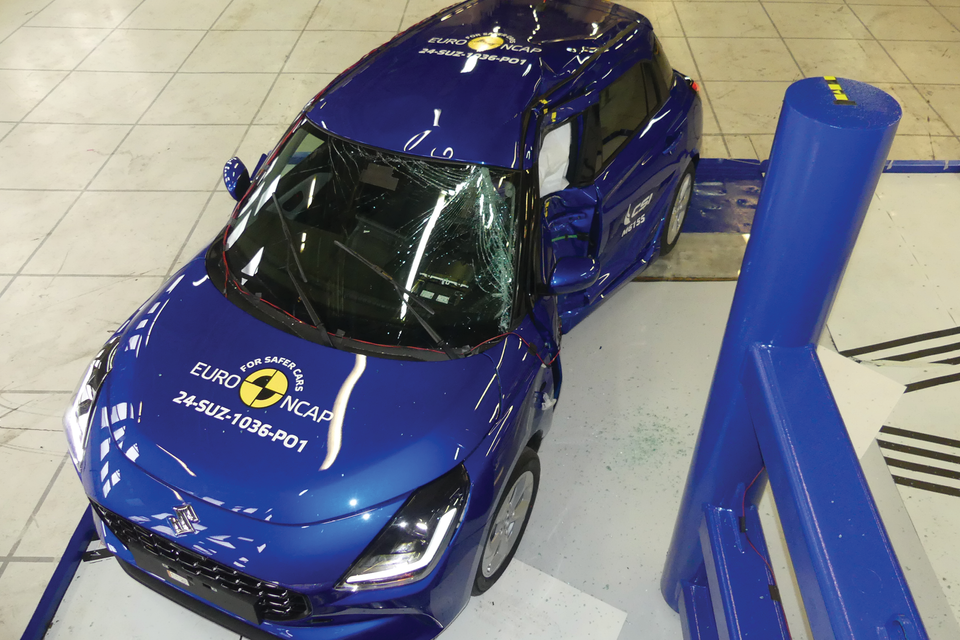
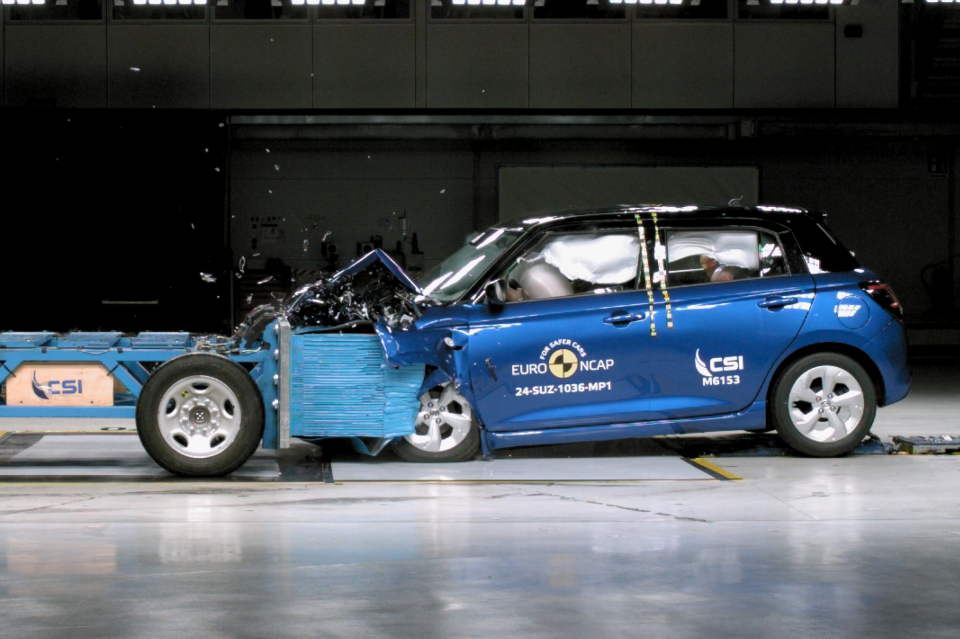
After launching in June 2024, the fourth-generation Suzuki Swift initially scored a disappointing one-star ANCAP safety rating, with physical crash testing revealing stark discrepancies in crash performance between the Australian- and New Zealand-delivered model versus the three-star rated car sold in Europe.
Key issues were noted in the frontal offset and full-width crash tests, with the local safety authority finding “higher chest loads and leg injury risk (excessive pedal movement) to the driver in the frontal offset test, and a significantly greater rear passenger chest compression measurement recorded in the full-width test which exceeded allowable limits”.
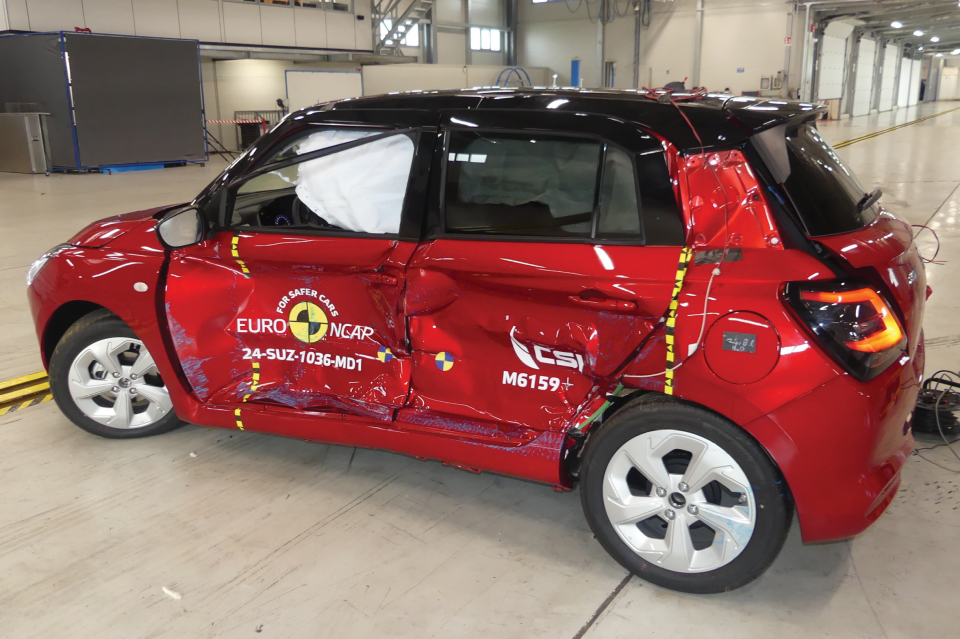
“Protection of the chest – a critical body region – was therefore assessed as Poor and the score capped, resulting in 0 points awarded for this test,” ANCAP added in its media release.
Suzuki Australia then updated the specification of the Swift to align it with its European equivalent, and subsequently had the vehicle re-tested and re-rated by ANCAP in August 2025 – resulting in an improvement to three stars.
“The updated ANCAP three-star rating reflects changes to the Australian-spec Swift, which now incorporates the same safety reinforcements as the Euro-spec model,” a Suzuki Australia spokesperson told CarExpert in September.
“The Euro spec vehicle included additional front-end reinforcements that were not present in the earlier Australian-spec version. These reinforcements have now been applied to Australian models.”

In its original 2024 ANCAP test, the Swift managed a 47 per cent score for adult occupant protection, 54 per cent for safety assist, and 59 per cent for child occupant protection. However, its vulnerable road user protection result was a commendable 76 per cent.
The 2025 update improved that to a 67 per cent score for adult occupant protection, 55 per cent for safety assist and 65 per cent for child occupant protection – but the same 76 per cent score for vulnerable road user protection.
Mr Pachota maintained that “safety is paramount” for Suzuki Australia, adding that the brand is “absolutely” committed to vehicle safety despite none of the brand’s models currently wearing five-star ratings.
You can read more about that here.
MORE: Suzuki Swift safety upgrades bring better crash-test rating, no change to pricing