
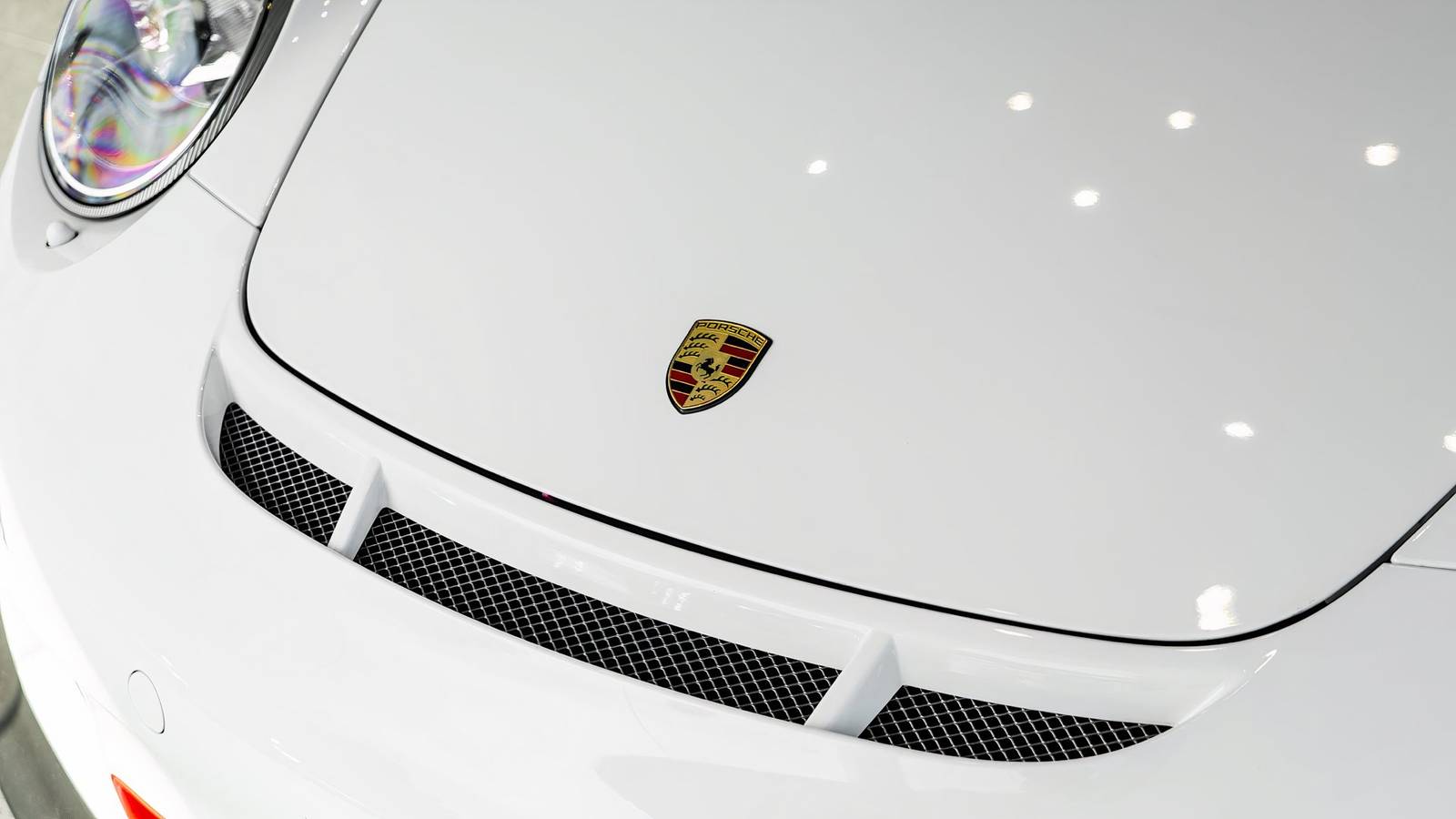
The debate over which Porsche 911 generation is “the best” is one of the most enduring in the automotive industry. The solution may be found in the air-cooled era for certain individuals. The modern 992, with its stunning performance and daily usability, is the preferred choice for others.
That said, one generation consistently emerges as the sweet spot among a specific subset of sports car enthusiasts, often discreetly but consistently. It is not the most rapid. It is not the most sophisticated. It does not possess the most expansive displays or the most powerful horsepower figures. However, it is perfectly acceptable to a significant number of motorists.
Why The “Best” Porsche 911 Is Hard To Define
Newer Isn’t Always The Automatic Favorite

Defining the “best” 911 depends entirely on what you value. Performance? Technology? Daily usability? Or something harder to quantify — like steering feel, engine character, and emotional connection? The 911 has evolved dramatically over the decades. Each generation grew slightly larger, more refined, more powerful, and more technologically complex. The 992 Carrera now produces up to 379 horsepower in base form and well over 500 in higher trims. Acceleration figures once reserved for supercars are now routine. But progress doesn’t always mean preference.

For some drivers, the increasingly digital nature of modern performance cars introduces distance. Electric steering replaces hydraulic feedback. Turbocharging replaces naturally aspirated throttle response. Larger bodies and heavier chassis subtly change the way the car communicates with its driver. That’s where the debate begins. The “best” 911 isn’t simply the fastest one. For purists, it’s the one that balances capability with connection — a car that still feels mechanical rather than computational. And that’s precisely where the 997 enters the conversation.

12 Sedans That Can Outrun The Porsche 911 In A Straight Line
The quickest sedan on this list that can outrun a Porsche 911 does 0-60 in under 2 seconds.
The Generation Many Enthusiasts Still Prefer
Why The 997 Hits A Sweet Spot

Produced from 2005 to 2012, the 997 represented a critical turning point in the 911 evolution. It corrected the controversial styling of the 996 — most notably replacing the polarizing “fried-egg” headlights with classic round units — while retaining relatively compact dimensions and analog driving characteristics. The 997 was produced in two distinct phases. The early 997.1 models (2005–2008) featured a 3.6-liter flat-six producing 325 horsepower in the Carrera and a 3.8-liter flat-six delivering 355 horsepower in the Carrera S, paired with either a six-speed manual or a five-speed Tiptronic automatic transmission.

The updated 997.2 generation (2009–2012) introduced direct fuel injection (DFI) engines, increasing output to 345 horsepower for the 3.6-liter and 385 horsepower for the 3.8-liter, while also bringing Porsche’s seven-speed PDK dual-clutch transmission into the lineup. Turbo and GT3 variants elevated performance further.

The 997 Turbo (especially the Mezger-powered early models) produced 480 horsepower, while the GT3 delivered naturally aspirated, high-revving performance that many still consider among Porsche’s finest modern engines. Crucially, the 997 retained hydraulic steering — a detail that has become increasingly significant in enthusiast discussions. It was modern enough to feel solid and refined, yet old enough to preserve a largely analog driving experience.

Best Bang For Your Buck Modern Porsche 911 That Money Can Buy
If you are in the market for a bargain supercar killer, it’s hard to do better than the 996 generation 911 Turbo
What Makes The 997 So Appealing To Drive
Steering Feel And Classic Character

Ask longtime Porsche drivers why they gravitate toward the 997, and the answer often starts with steering. The hydraulic steering system delivers nuanced feedback that many believe was diluted in later electric setups. There’s texture through the wheel — subtle variations in grip, weight transfer, and surface changes — that make the car feel alive. In comparison to the 991 and 992, the 997 also maintained relatively modest proportions. Its reduced footprint and narrower track contribute to a feeling of agility that is less filtered.
Then There Is The Powertrain

The 997 lineup is primarily comprised of naturally aspirated flat-six engines. Throttle response is immediate. Power increases gradually as it approaches the redline, without any turbocharged torque surges. The 3.8-liter engine of the Carrera S generates a steady surge that appears mechanical rather than augmented.

One of the most renowned naturally aspirated experiences in the 911 lineage is provided by the Mezger-derived engine in GT3 form, which revs beyond 8,000 rpm. The atmosphere is also a factor. The flat-six’s characteristic wail at high RPM continues to be a defining feature. In contrast to contemporary turbocharged 911 Carreras, which prioritize efficiency and torque, the 997 incentivizes drivers to operate within the rev range. Engagement is necessary. The driving experience that many purists characterize as “just enough modern, still fully 911” is the result of the combination of hydraulic steering, naturally aspirated engines, and compact dimensions.

One Of The Last Fast Cars That Still Feels Analog
A rare breed of performance car that demands your full attention and rewards skill, not just speed.
Where Newer 911 Generations Improve
Performance And Technology Advantages

To be clear, the newer 911 generations are objectively superior in measurable ways. The 991 introduced electric steering, increased chassis rigidity, and more advanced suspension systems. The 992 further improved aerodynamics, digital interfaces, and turbocharged efficiency. Today’s Carrera models accelerate faster, handle more predictably at the limit, and offer vastly superior infotainment and driver-assistance technology.
Modern 911s Are Easier To Drive Quickly

The 992 Carrera S, for example, produces 443 horsepower and reaches 60 mph in roughly 3.3 seconds with the Sport Chrono. Grip levels are immense. Electronic stability systems are more advanced. Cabin refinement rivals luxury sedans. Interior quality has also progressed significantly.
The electric turbocharger isn’t dependent on exhaust gas pressure. Instead, it is mostly based on your throttle input. Combined with the electric motor filling in the gaps of the 3.6-liter electrically turbocharged flat-six, there’s an instantaneous response that’s near EV-like.
– Isaac Atienza, TopSpeed Journalist Testing The 2025 911 GTS T-Hybrid
Larger displays, digital gauge clusters, advanced connectivity, and improved materials bring the 911 firmly into the contemporary era. From an engineering perspective, Porsche has only refined and strengthened the formula. But refinement can come at the cost of rawness.

Some drivers argue that as performance increased, involvement subtly decreased. Steering feel became lighter and more insulated. Turbocharged engines deliver torque effortlessly, reducing the need to chase revs. The car became more capable — but also more polished. And that polish is not universally preferred.

12 Affordable Alternatives To The Porsche 911 In 2026
These sports cars prove that you can still find the magic and thrill of a proper sports car for less than the price of a Porsche 911.
Why The 997 Still Holds Strong Appeal Today
A Balance Many Drivers Appreciate

The 997 911 is in an unusual middle ground. It has modern build quality, great durability (especially in 997.2 form), a usable cabin room, and is easy to drive every day. It doesn’t lose the tactile features that fans love. It’s fast, but not too much. Polished, yet not cold. Interesting, but livable.

That balance is more important than ever in today’s market. The 997 feels like a snapshot of Porsche‘s transitional period, when mechanical purity and modern engineering momentarily came together. This is because performance cars are becoming more computerized and electric.
Its Competitors At The Time Made It Even More Appealing

The BMW E92 M3 had a V8 engine that revved high and rear-wheel drive. The Audi R8 V8 has a lot of drama in the middle of the engine. The 997, on the other hand, kept its unique rear-engine identity and usefulness in everyday life. Prices for clean 997 models are still high today, especially for manual cars and GT versions. People are starting to think of them as modern masterpieces. Not because they are the fastest. But because they stand for a way of thinking that seems to be getting less common.

The 997 might not do better than the 991 or 992 in every performance measure. But for a lot of drivers, it gives them something that those cars take away: texture. How much it weighs. Honesty in machines. It is a 911 that still feels close. That closeness is important in a world that is always looking for data and screens. And maybe that’s why, when people stop talking about marketing and start talking honestly, the 997 quietly becomes the generation that many purists secretly like the most.
Sources: Porsche, Classic.com, Stutt Cars