
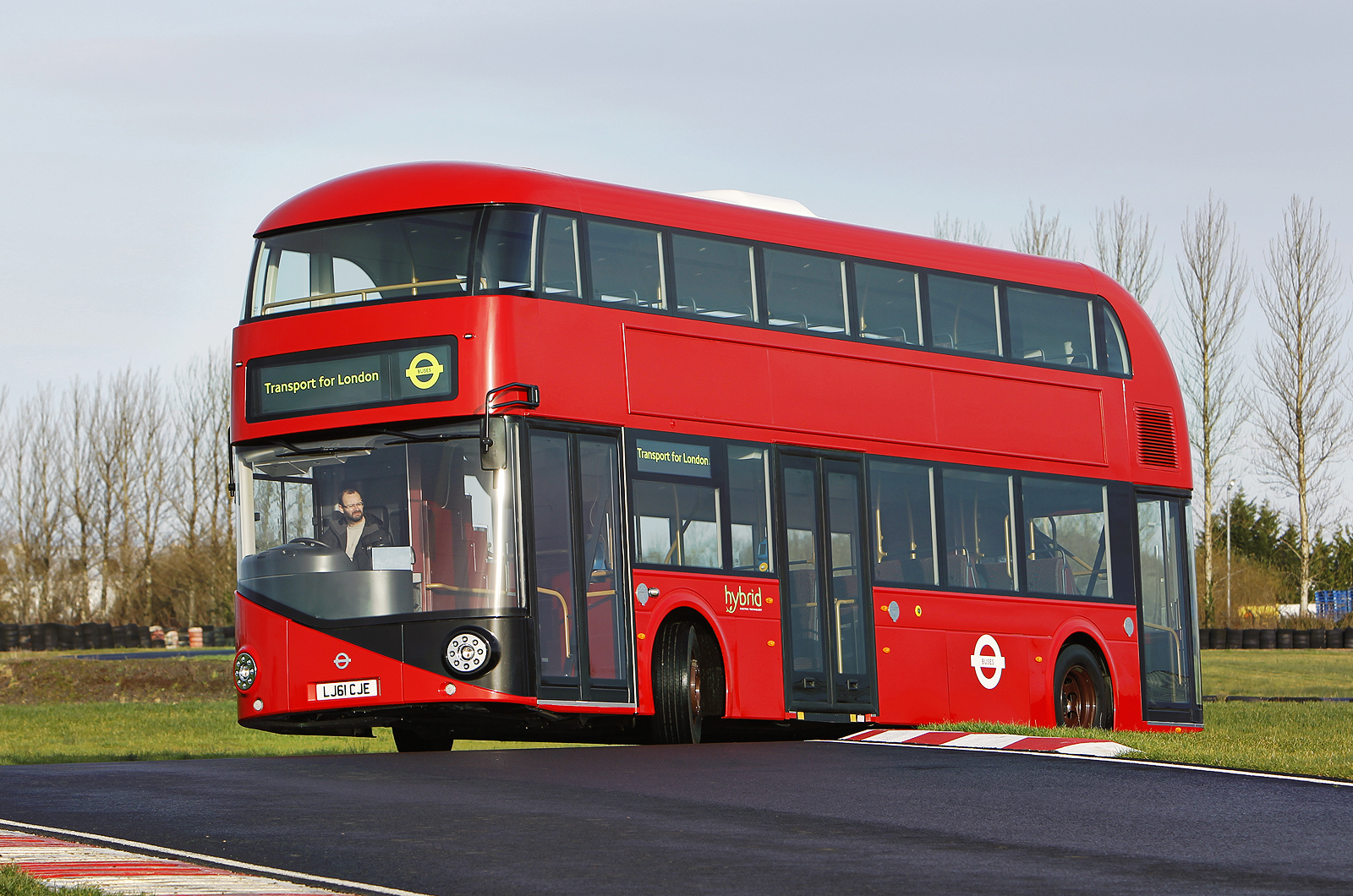
London is preparing once again to say goodbye to the Routemaster bus – two decades after the iconic AEC original was taken off the city’s streets.
The New Routemaster, launched in London in 2012, is being removed from several key routes in the capital as part of a city-wide transition to full-electric alternatives.
The Standard reports that the Wrightbus-manufactured diesel hybrid is being taken off four important routes this year, and another in 2028, with operators lining up pure-EV alternatives as replacements.
London mayor Sadiq Khan was robust in his criticisms of the departing double-decker, orders for which he cancelled upon replacing Boris Johnson in the role in 2016.
Slamming the so-called ‘Boris Bus’ as a “legacy of the mess made by the previous mayor”, he pledged to introduce a new fleet of zero-emission alternatives to London’s roads, which would provide better value to users and taxpayers and rectify some of the New Routemaster’s notorious design flaws.
“I want to make sure we have value for money when it comes to TfL’s expenditure. I know there were huge challenges that the New Routemaster had in relation to windows that don’t open, air conditioning that doesn’t work. They have been incredibly expensive.
“What we have tried to do is make sure the buses we buy aren’t these inefficient diesel buses but are zero emission and have windows that open, that are value for money,” he told The Standard.
Bus companies in London are turning to new alternatives including the Wrightbus Electroliner and BYD BD11, with EVs now making up around 30% of the city’s 8500-strong bus fleet.
However, an anticipated 14-year usable life cycle means the youngest Routemasters in operation could still be carrying passengers past 2030, and the latest forecast from Transport for London (TfL) cites 2034 as the final year of operation for diesel buses.
Nonetheless, the Routemaster’s gradual withdrawal from service marks the beginning of the end for an icon of the city’s modern era, whose conception Autocar was closely involved with.
In 2007, we commissioned bus designer Capoco to imagine a replacement for the recently decommissioned Mk1 Routemaster, resulting in the RMXL – an aluminium-spaceframed hydrogen-fuelled hybrid with more seats and standing space than its predecessor, while retaining the trademark open rear platform and various retro-themed design cues.
Johnson liked the proposal so much that upon taking office in 2008. he launched the New Bus for London competition to identify a design in the same vein that could be taken forward to production.
The final result was the New Routemaster, of which Northern Ireland’s Wrightbus started mass production in 2012 – but not before Autocar was allowed behind the wheel for a road test, in recognition of its contributions to the programme, which you can read in full below.
Boris Bus: the full Autocar road test
Public bodies have a tendency – understandably so, given that they’re spending our money – to commission products on very specific and objective sets of factors. A jet fighter, for example, is measured by its ability to blow up other jet fighters; road signs are chosen for their clarity, not their beauty. Public procurement cares little for sentimentality.