
The Porsche 911 is the undisputed headliner of the range. It’s easily their most iconic car, and if you’re aspiring to own a Porsche, it’s the one you set your sights on. Sure, there are exceptions, such as the hypercar 918, and if you’re looking for more time with passengers, you’d opt for the Macan or the Taycan. But for a two-seat sports car, it’s a 911 — everything else is surely a downgrade. The Boxster is the baby and budget option; so is the Cayman just in the middle? Is it just the Porsche that’s cheaper and just not quite as good as a 911?
At first glance, you would think so, but the answer is no. This isn’t just the car you buy if you can’t afford a 911. The Porsche Cayman is an excellent and unique car in its own right. It has its own identity, provides a unique, world-class driving experience, and features some characteristics that actually make it better than the base version of its big brother.
The Cayman Offers Mid-Engined Balance

Before the avid 911 enthusiasts get angry, it should be noted that the historic philosophy of its rear-engined design is exceptional in its own right. Such a concept shouldn’t work, yet Porsche has perfected it over the decades to make a truly unique and world-beating driving experience. But the fact is, a mid-engined arrangement is the more sensible thing to do; providing an even weight distribution and balance is how you make a well-handling car.

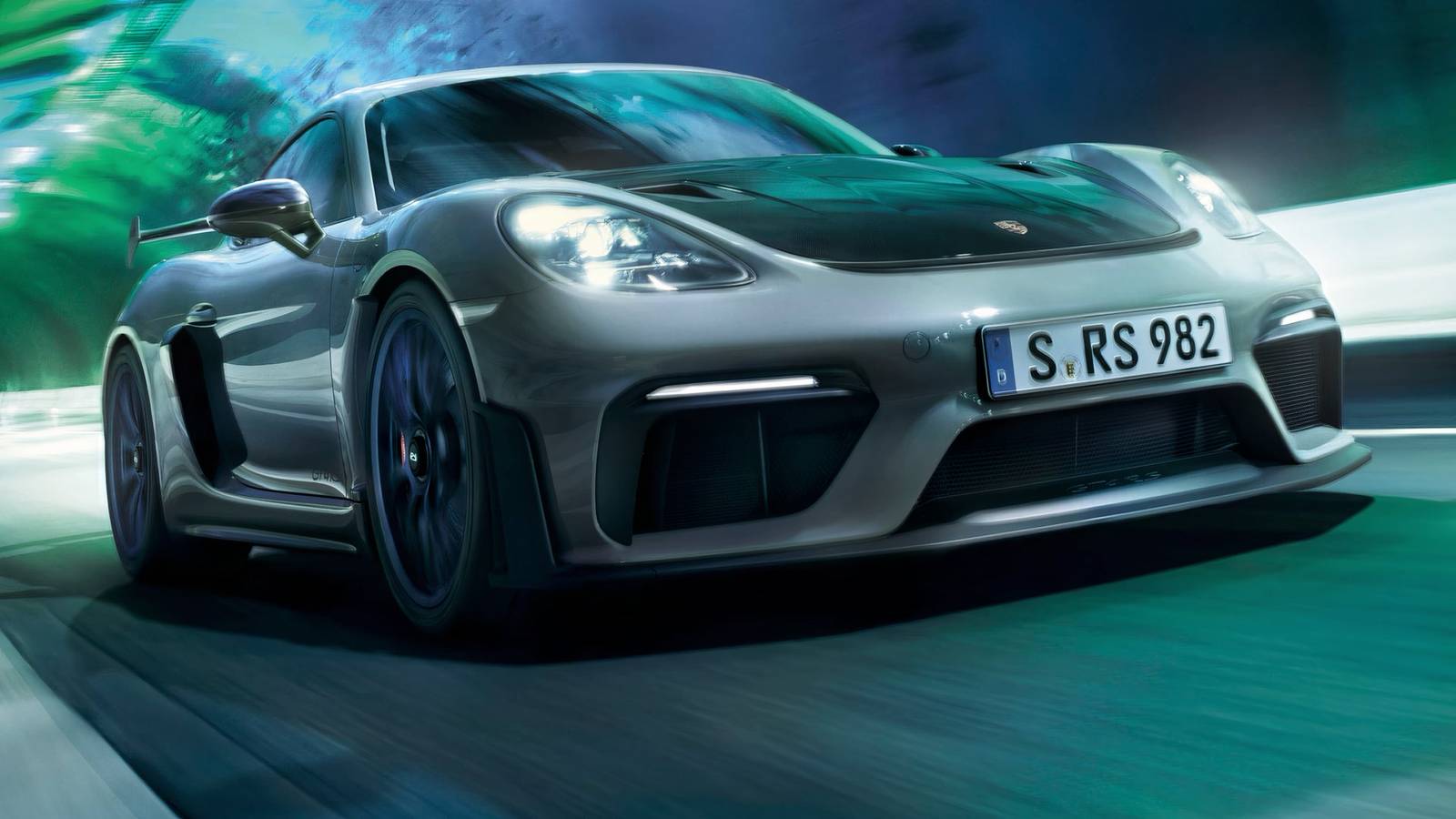
The Cayman still has all the Porsche engineering greatness for a pure and visceral driving experience, such as one of the best manual transmissions on the market, an athletic chassis, and options of either turbocharged four-cylinder engines with 300 and 350 horsepower or the more soulful flat-sixes with the 394 horsepower GTS 4.0 and 493 horsepower GT4 RS versions. The Cayman offers all of that, but with a mid-engined design instead. This completely transforms the handling and overall driving experience. Of course, the Cayman will never beat a 911’s traction coming out of the corners, but its even weight distribution, telepathic steering, and incredible suspension provide it with stunning grip, balance, and stability. It is for this reason that the Caymans, particularly the higher spec versions, are among the greatest drivers’ cars in the world.
Daily Driveability

Inside the Cayman, there are simple gauges, comfortable seats, and a cozy cabin in which everything is positioned perfectly. The shifter, steering wheel, and pedals are in the ideal locations for driver involvement. An infotainment touchscreen, cruise control, heated seats, an eight-speaker audio system, and Apple CarPlay are all featured as standard. It’s low down and a snug fit to get in, but there’s decent cargo space considering it’s a sports car, and the engine layout makes it different from a 911, so there are two places for your luggage. There’s a 5.2-cubic-foot luggage compartment and a hatchback trunk providing 9.7 cubic feet of storage.

On the road, you’d think it would be harsh after witnessing the Gs that it can pull on the track, but it’s actually well-mannered, easy to see out of, and fairly comfortable. It’s a little firmer than a 911, and thus less appropriate for longer journeys, but its noticeably smaller size makes it much easier to drive about and park in the real world. The engine layout also makes a difference here. On the roads, the neutral stability and predictable handling are still noticeable. As for fuel economy, it varies across the engine range. The base model’s four-cylinder achieves an average of 27 MPG, and even the highest-spec Cayman will achieve 24 MPG.

The Sports Car With Everyday Comfort And Weekend Track Talent
The Porsche 718 Cayman GTS 4.0 proves that a true sports car can deliver everyday comfort and uncompromising track performance.
Lower Maintenance Costs

As you’d expect, the Cayman is generally cheaper to buy than a 911. But Porsche models range so much. The top-of-the-range Cayman, the savage GT4 RS, roughly matches the price of a mid-range 911 such as the Carrera GTS. So, not only is the Cayman initially cheaper to buy, but you can actually get much more of a thorough driver’s car if you’re not going high up the 911 range. As it’s generally the smaller and cheaper car, it’s no surprise that the Cayman is also cheaper to maintain throughout ownership, saving you even more.
Porsche 718 Cayman Range – U.S. Starting Prices
|
Model |
Starting Price (USD) |
|---|---|
|
718 Cayman |
$75,400 |
|
718 Cayman Style Edition |
$82,100 |
|
718 Cayman S |
$87,900 |
|
718 Cayman GTS 4.0 |
$103,300 |
|
718 Cayman GT4 RS |
$170,100 |
The reliability of the 718 Cayman has been rated highly, receiving an excellent J.D. Power Quality & Reliability score of 86 out of 100. It’s rated as the second-best ‘premium sporty car’, beaten by only the 911. While cars of this caliber are never cheap to run, the Cayman’s pristine German engineering means it’s very unlikely to go wrong, saving from the costly repair jobs and frequent replacements that often come with premium sports cars.
Less Depreciation Than A 911

The 911 is actually one of the most varied and evolving car models out there. Porsche continues to refine it, frequently releasing newer or slightly different models. But surprisingly, Porsches are among the lowest depreciating cars in the industry. The Cayman is no exception; it currently has a depreciation rate of just 20.3 percent over five years. This means that even if you bought the base-level model, in five years, you could still sell it for roughly $61,700.

911s are equally exceptional in their minute levels of depreciation, actually depreciating less, but with higher price tags to begin with, they lose more money in absolute terms. Additionally, a unique aspect of the Cayman is that, in time, it may actually increase in value due to the uncertainty of its future. There is mounting pressure on Porsche to make it into an EV, despite the brand’s and consumers’ reluctance, so the novelty of this analogue driving experience may grow with the lesser alternatives.

The German Sports Car With Lexus-Level Reliability
Germany’s favorite sports car icon is built to last.
On-Track Handling

The Cayman, like all Porsche models, is massively varied throughout the range. If you spend more money, you’ll get more performance figures, but the basic handling philosophy remains the same — and the fact is, the epic chassis balance, acceleration (with the flat six), braking, and steering all combine to make this one of the greatest driver’s cars of all time, and a manual gearbox option is the cherry on top.
Porsche 718 Cayman Range – Performance Specs
|
Model |
Engine |
Horsepower |
0–60 mph |
Top Speed |
|---|---|---|---|---|
|
718 Cayman |
2.0-liter turbo flat-4 |
300 |
4.7 seconds |
171 mph |
|
718 Cayman Style Edition |
2.0-liter turbo flat-4 |
300 |
4.7 seconds |
171 mph |
|
718 Cayman T |
2.0-liter turbo flat-4 |
300 |
4.7 seconds |
171 mph |
|
718 Cayman S |
2.5-liter turbo flat-4 |
350 |
4.2 seconds |
177 mph |
|
718 Cayman GTS 4.0 |
4.0-liter naturally aspirated flat-6 |
394 |
3.8 seconds |
179 mph |
|
718 Cayman GT4 |
4.0-liter naturally aspirated flat-6 |
414 |
3.9 seconds |
188 mph |
|
718 Cayman GT4 RS |
4.0-liter naturally aspirated flat-6 |
493 |
3.2 seconds |
196 mph |

Most of the Cayman’s mass is within the wheelbase, so it’s extremely agile, there are always impressive grip levels, and its balanced weight helps it change direction with ease. There is a slight sensation of understeer as you begin to reach the limit, but this isn’t a frustrating limitation, but more a way for the driver to register how hard they’re pushing the car, resulting in an immensely satisfying feeling.