
Engine durability often feels overlooked today. Modern engines are smaller and far more complex, using turbochargers, direct injection, hybrid systems, and strict emissions technology. While these advances improve performance and efficiency, they can also make long-term ownership more complicated and expensive, and the legendary simplicity of older engines has largely disappeared.
That’s why a few older four-cylinder engines still stand out. While high-mileage legends are usually V8s or diesels, some inline-fours have quietly built reputations for incredible longevity. Found in everything from family sedans to tuner cars, they earned loyalty the old-fashioned way—by starting every day and continuing to run long after most engines would have worn out. In some cases, these durable four-cylinders have been known to surpass 500,000 miles.
Toyota 22R / 22RE
The Pickup Engine Known For Extreme Longevity

If there is one four-cylinder that deserves to be mentioned whenever durability comes up, it is Toyota’s 22R and later fuel-injected 22RE. This 2.4-liter inline-four powered Toyota pickups and 4Runner models through the 1980s and into the mid-1990s, and it became one of the most respected truck engines of its time. Some of the 22R’s reputation stems from its low drama. It wasn’t powerful, advanced, or trying to impress with cutting-edge tech. For a long-lasting engine, Toyota gave it a sturdy design, simple construction, and the capacity to withstand misuse. Truck owners who valued dependability above speed bought it in carbureted 22R or electronic-fuel-injected 22RE trim.

That approach helped make the engine famous in Toyota’s tiny pickups, which were hard-used and routinely maintained. These trucks hauled tools, covered rugged roads, were farm vehicles, and were used everyday in situations where durability trumped luxury. Amazingly, the 22R/22RE handled that life. Owners who maintained oil changes and cooling systems have seen engines reach 300,000 or 400,000 miles, and half-a-million miles is normal.

Being easy to live with helped these engines last. Maintenance was simple, parts were plentiful, and the design prevented complex problems that plague many newer engines. These motors were true workhorses. Persistence was their talent, not excitement. Today, the 22R and 22RE are remembered as symbols of an era when Toyota’s compact trucks built their reputation on sheer toughness. Plenty of engines offer more power, better fuel economy, or smoother operation. Few have built a stronger name for simply refusing to die.
Notable Features And Aspects
- Known to regularly exceed 300,000–500,000 miles with basic maintenance.
- The simple, overbuilt design made it extremely resistant to abuse.
- Became legendary in Toyota pickups and 4Runners used in tough conditions.
Honda K24
A Modern Honda Four-Cylinder That Refuses To Quit

The Honda K24 feels more modern than some of the other engines on this list, but it has already earned its place among the great long-lasting inline-fours. Used in vehicles such as the Honda Accord, CR-V, Element, Acura TSX, and several other models, this 2.4-liter DOHC engine became one of Honda’s most versatile and dependable powerplants. Honda was already known for its powerful four-cylinder engines, but the K24 stood out for its longevity and practicality. It had good torque, fuel efficiency, and Honda-like smoothness. Most significantly, it covered tremendous mileage without developing catastrophic faults that might ruin an engine’s reputation.

Core engineering contributes to its strength. The K24 has sturdy internals, a simple design, and easy maintenance. Oil changes, cooling-system inspections, and valve-train service help owners achieve high mileage with minimum major issues. Many K24-powered Accords and CR-Vs have over 250,000 miles, and high-mileage examples have made the engine legendary among Honda aficionados. The K24 benefits from being employed in practical cars rather than specialized performance variants. That matters because repetition builds durability legends. The reputation rises naturally when thousands of commuters, families, and long-distance drivers get reliable outcomes.

The K24 engine became that. It appeared in reliable used Hondas, high-mileage daily vehicles, and forum postings where owners nonchalantly reported extraordinary odometer readings. Enthusiasts also helped the K24’s legacy because it responded well to modifications and engine swaps. It gained a second life outside normal commuter duty. That tuner credibility made people pay even more attention to how strong the engine’s foundation really was. But even without the aftermarket praise, the K24 would still deserve recognition here. It is one of those rare modern inline-fours that feels equally at home in a reliable family car and a serious enthusiast’s build.
Notable Features And Aspects
- Widely regarded as one of Honda’s most reliable modern engines.
- Commonly reaches 250,000+ miles in daily-driven Accords and CR-Vs.
- Strong enough for both commuter duty and high-performance tuning builds.

The Japanese Six-Cylinder Engine Is So Reliable It’s Still In Production After Almost 25 Years
Toyota’s venerable turbodiesel remains a cornerstone for one of its most iconic vehicles.
Volvo “Redblock” B230
The Turbo Four That Built Volvo’s Reliability Reputation

The Volvo B230 is one of the most revered redblock four-cylinder engines ever installed in a practical European automobile. The 2.3-liter inline-four in the Volvo 240 and 740 helped establish Volvo’s durability in the 1980s and 1990s. Its overbuilt feel and longevity made the redblock remarkable. With its iron block, strong bottom end, and conservative tuning, the B230 looked designed for long service life rather than a happy coincidence. Even turbocharged versions were durable, which is surprising given turbo engines’ stress and short lifespans.

Volvo 240s and 740s found new owners as family haulers, commuter sedans, winter beaters, and hand-me-downs. The engine kept going through all that. If owners maintained timing belts and simple maintenance, these Volvos could easily reach high mileages without losing engine internals.

The redblock also earned affection from mechanics because it made sense. It was accessible, durable, and forgiving in ways that many later European engines were not. Even when surrounding components aged, the engine itself often remained the least worrying part of the car. That kind of consistency turns an engine into folklore over time. Today, the B230 is one of those engines that enthusiasts bring up with a kind of quiet respect. It may not get the same mainstream nostalgia as some Japanese icons, but among people who know old Volvos, its reputation is secure. It helped prove that a practical European turbo four could be engineered for longevity first and performance second without losing character in the process.
Notable Features And Aspects
- Built with a heavy-duty iron block designed for long-term durability.
- Turbo versions remained surprisingly reliable compared to rivals.
- Helped establish Volvo’s reputation for bulletproof longevity.
Toyota 2AZ-FE
A Camry Engine Known For Long-Term Durability

Toyota appears again on this list with the 2AZ-FE, a 2.4-liter inline-four that powered vehicles such as the Camry, RAV4, Scion tC, and several others through the 2000s. It is easy to overlook because it lived in such ordinary vehicles, but that normality is part of what makes its durability story so compelling. The 2AZ-FE was never meant to excite anyone. It was designed to deliver reliable, efficient transportation to millions of drivers, and in that role, it succeeded. The engine became especially familiar in the Camry, a car already famous for low-stress ownership and long service life. That pairing created countless high-mileage examples, many of which are still on the road today.

The simple mission was part of the engine’s attraction. Toyota tuned it conservatively, used it in numerous high-volume vehicles, and made it easy to drive daily. As a midsize sedan, the Camry offered comfortable cruising, good fuel efficiency, and a reputation for surviving years of neglect better than many competitors. Half-million-mile stories generally start with an engine that proved it could handle real-world ownership, not a babied one.

Note that some 2AZ-FE models have oil-consumption issues. Even so, the engine was known for its long-term reliability when properly maintained. It became a popular term in the used-car market for cars that kept going. Taxi service, long commutes, family use, and cross-country driving bolstered that reputation. Its real legacy is scale. Because Toyota sold so many vehicles with the 2AZ-FE, owners had endless chances to prove what the engine could do. And what it did, again and again, was last. It may not be the most romantic engine on this list, but it is one of the clearest examples of how ordinary engineering done well can result in extraordinary longevity.
Notable Features And Aspects
- Powered millions of Camrys and RAV4s, proving durability at scale.
- Frequently survives high-mileage commuting and taxi use.
- Known for longevity despite some oil consumption issues.

Toyota’s Most Reliable Truck That Regularly Hits 400,000 Miles
Toyota’s unconventional approach to truck engineering has created a vehicle that lasts for decades.
Mitsubishi 4G63
A Legendary Performance Engine That Also Lasts

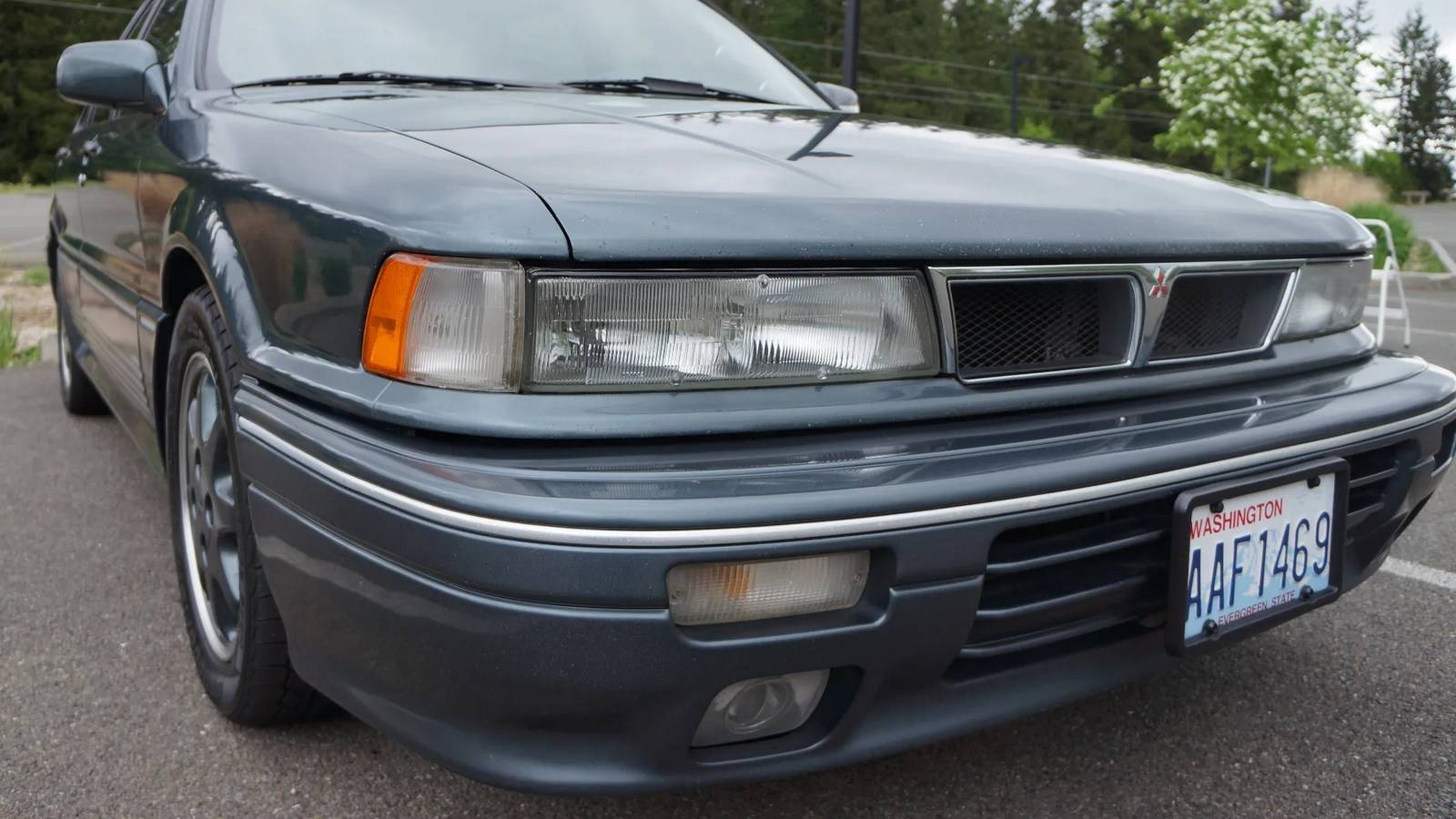
The Mitsubishi 4G63 is usually remembered as a performance engine, and for good reason. This 2.0-liter turbocharged inline-four powered icons such as the Mitsubishi Lancer Evolution and Eclipse, and it became one of the most respected four-cylinders in the tuning world. But beneath the performance reputation lies another important truth: it is also incredibly durable when maintained properly.

That combination is what makes the 4G63 so remarkable. Performance engines are not usually associated with half-a-million-mile durability because they tend to live harder lives. They are modified, pushed, raced, and tested far more aggressively than the average commuter engine. Yet the 4G63 built a name for having the strength to handle both power and mileage, thanks to a stout block, strong internals, and a design that could tolerate serious stress.

In factory form, the 4G63 already showed impressive toughness. In performance applications, it provided the kind of robustness enthusiasts look for when judging whether an engine is worth building. That same strength also translated into longevity in less dramatic real-world use. Cars equipped with the 4G63 often proved they could survive long ownership cycles without major engine drama, provided they were not abused and received the oil and cooling-system attention turbo engines always demand.

Its reputation grew because so many people saw both sides of its character. Mechanics respected its strength. Enthusiasts respected its tuning potential. Owners respected how durable it could be compared with many other turbocharged engines. That three-way credibility is rare. The 4G63 also stands as proof that longevity and performance are not always opposites. An engine can be exciting and durable if the underlying engineering is strong enough. That is exactly why the 4G63 still holds such an important place in automotive history. It was not just a great turbo four because it made power. It was a great turbo four because it could keep doing it for a very long time.
Notable Features And Aspects
- Legendary for handling high boost and heavy tuning without failure.
- One of the few performance engines known for both power and longevity.
- Built a cult following through Lancer Evolution and Eclipse models.
Why These Engines Still Matter

What ties all five of these engines together is not just mileage. It is trust. The Toyota 22R/22RE, Honda K24, Volvo B230, Toyota 2AZ-FE, and Mitsubishi 4G63 earned their reputations because owners kept seeing the same result: with proper care, these engines lasted far longer than most people expected.

That matters even more now because long-term durability feels less guaranteed than it once did. As engines grow more complex, the appeal of older, proven designs only becomes stronger. These inline-fours remind us that greatness is not always about output figures, 0–60 times, or cutting-edge features. Sometimes, greatness is measured by how many years and miles an engine can survive while still doing the job it was built to do. And in that respect, these five have already said everything they need to say.
Sources: iSeeCars, Consumer Reports, Bring a Trailer