
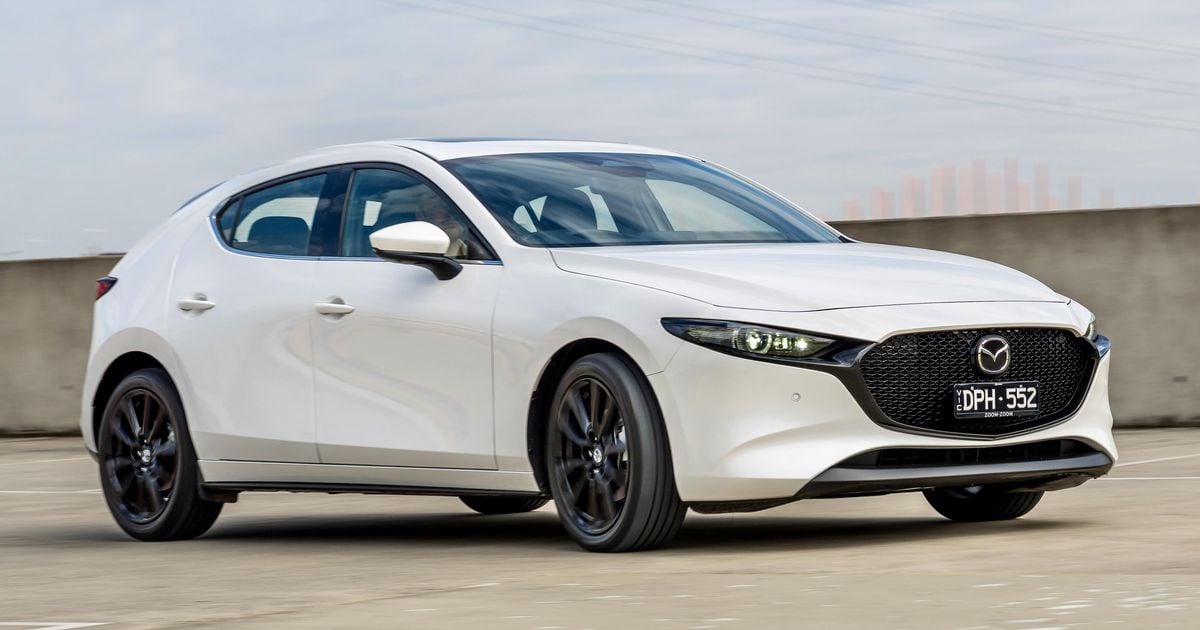
The Mazda 3 is a quiet achiever in the small car world.
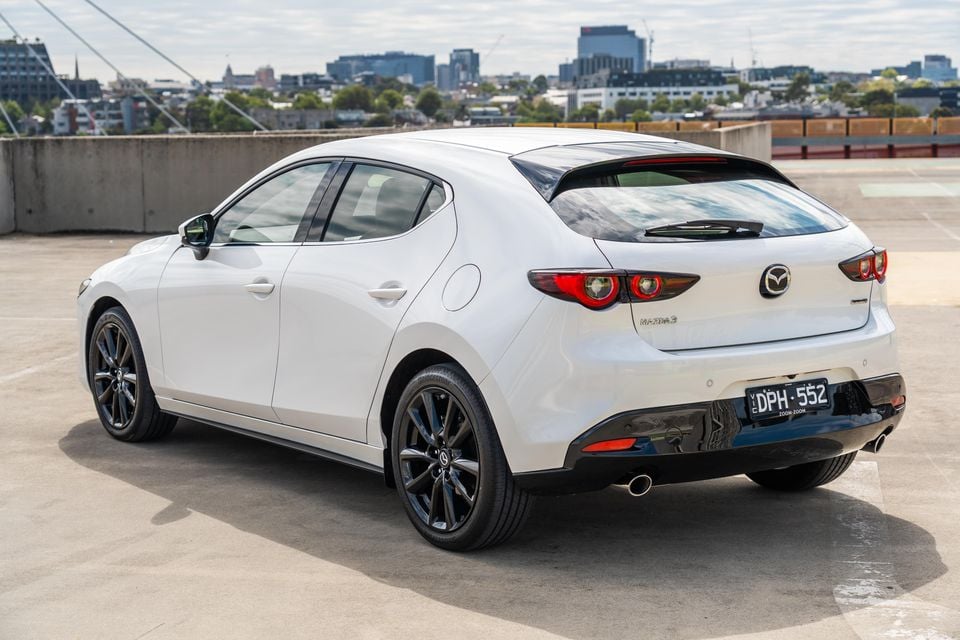
In a market where SUVs and dual-cab utes dominate the sales charts, small hatchbacks aren’t at the forefront of most people’s minds. Ask a random passerby to name one, and they’ll probably respond with the Toyota Corolla.
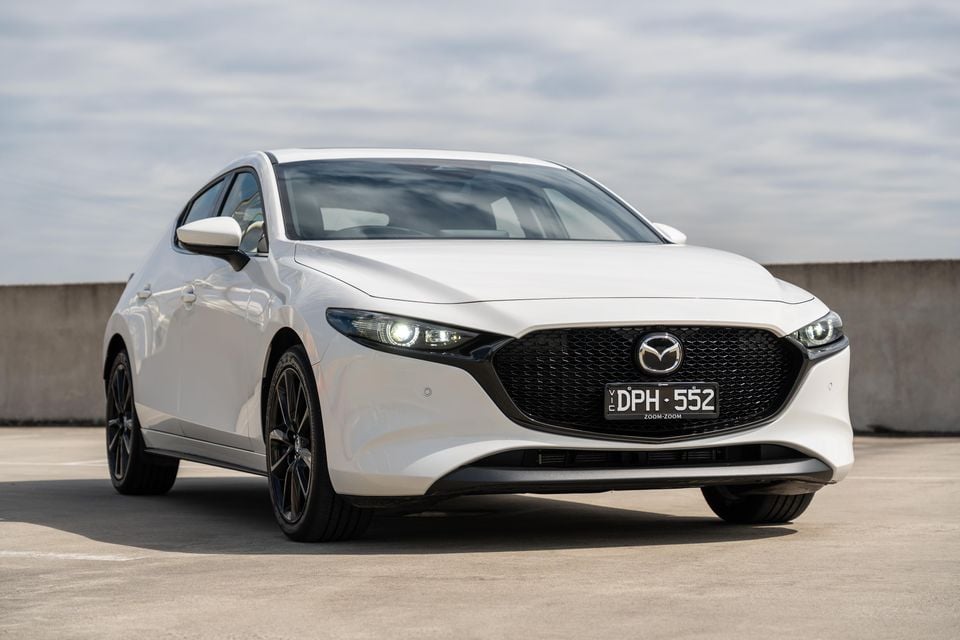
That’s a shame, because while the Corolla is an objectively good car and deserves its segment-leading status, there’s a cohort of quality alternatives for buyers who dare to disembark the Toyota train. Among them are the Honda Civic, Hyundai i30, Kia K4, and this: the 2026 Mazda 3 G25 Astina Hatch.
It’s currently the fourth-best selling affordable small car in Australia, and the flagship Astina has entered 2026 without any major specification changes – but warrants a slight price increase of $300 from December 2025.
With that in mind, is the Mazda 3 still worth considering, even in top-spec guise?
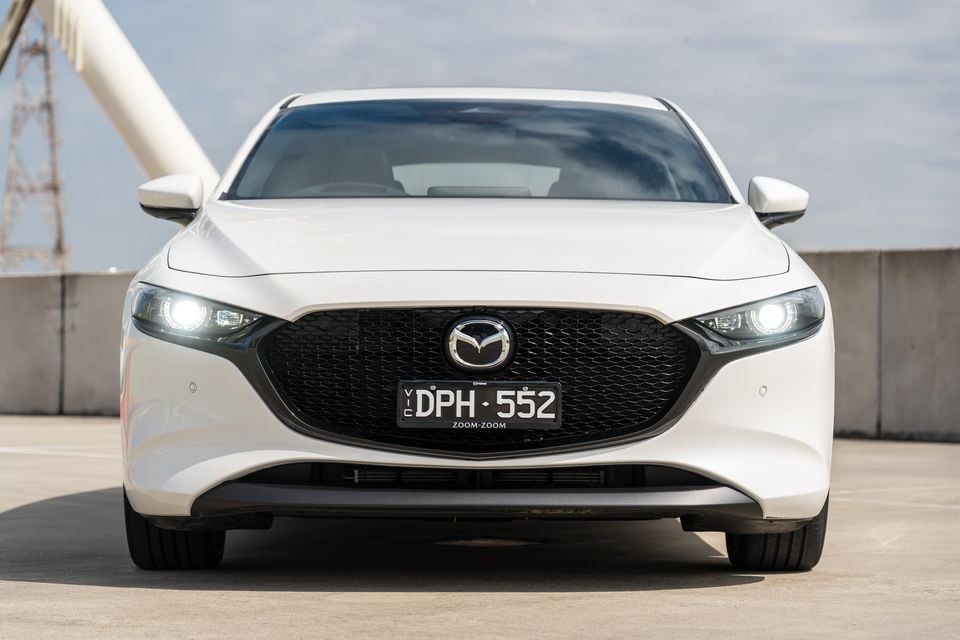
How much does the Mazda 3 cost?
The Astina is the flagship Mazda 3 trim, priced at $43,610 before on-road costs. Mazda offers both hatch and sedan bodies at no extra cost.
| Model | Price before on-road costs |
|---|---|
| 2026 Mazda 3 G20 Pure | $31,610 |
| 2026 Mazda 3 G20 Evolve | $33,410 |
| 2026 Mazda 3 G20 Touring | $37,410 |
| 2026 Mazda 3 G25 Evolve SP | $37,410 |
| 2026 Mazda 3 G25 GT | $40,410 |
| 2026 Mazda 3 G25 Astina | $43,610 |
The Mazda 3 is the fourth-best selling model in Australia’s small car segment, behind the Toyota Corolla, Kia K4, and Hyundai i30.
The Corolla Hybrid hatch tops out at $39,100 before on-roads for the ZR, while the K4 Hatch equivalent is the GT-Line at $43,790 before on-roads.
The i30, meanwhile, has been discontinued and only dealer stock remains. The flagship non-performance hatch variant is the N Line Premium, priced at $41,250 before on-roads, or currently $41,990 drive-away.
To see how the Mazda 3 stacks up against the competition, use our comparison tool
Let us help you find your new car
Buy your new car without the stress. It’s fast, simple and completely free.

Great service from Travis and team, second time I have used this business would not hesitate to recommend them to anyone
Craig C.
Purchased a Ford Ranger in Sunshine Coast, QLD
CarExpert helped Craig save thousands on his Ford Ranger, now let us save you on your next new car.
What is the Mazda 3 like on the inside?
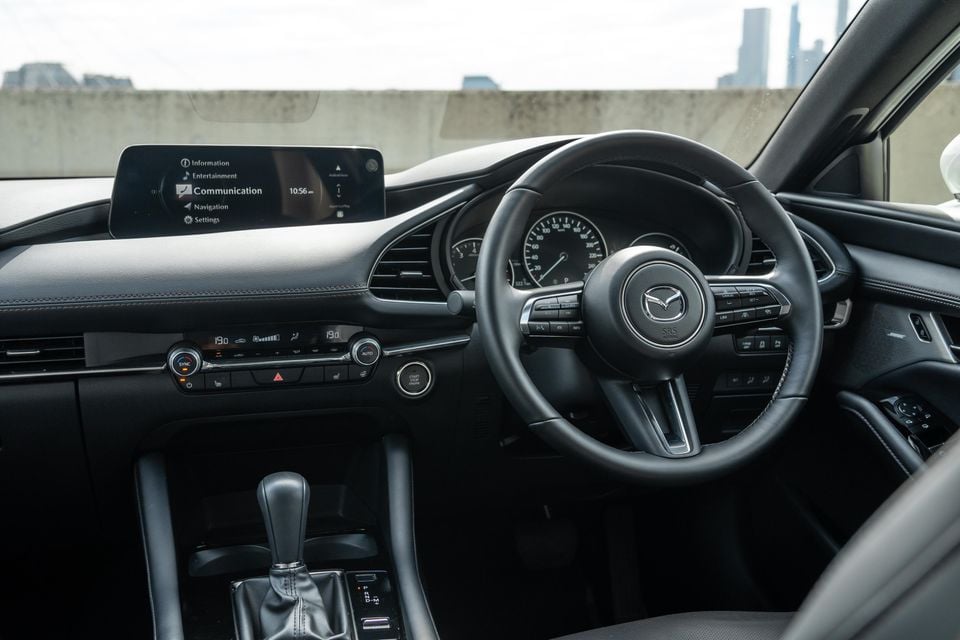
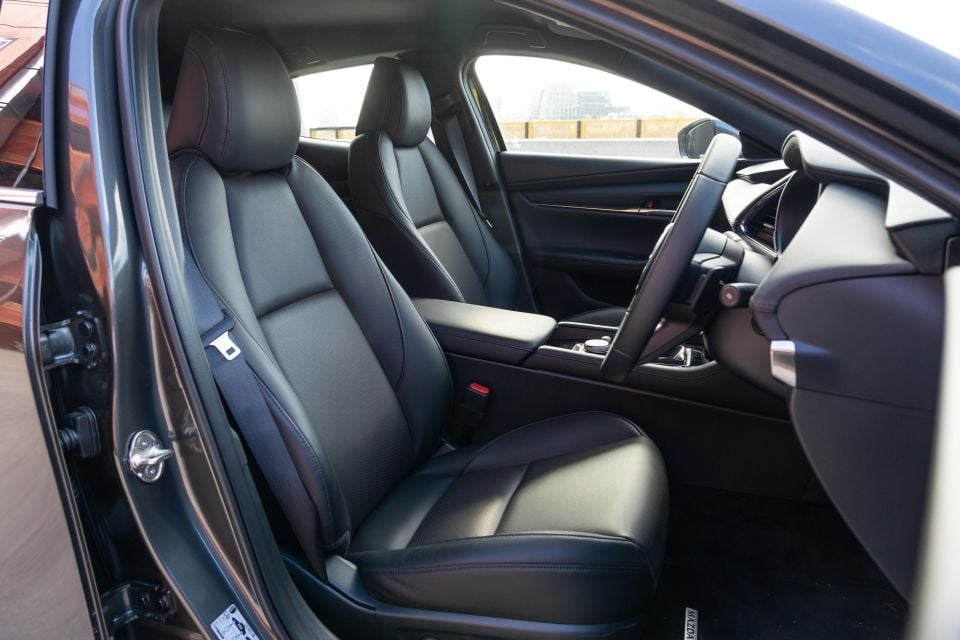
The Mazda 3 continues to outdo its rivals by offering an interior level of luxury that comfortably exceeds its price tag.
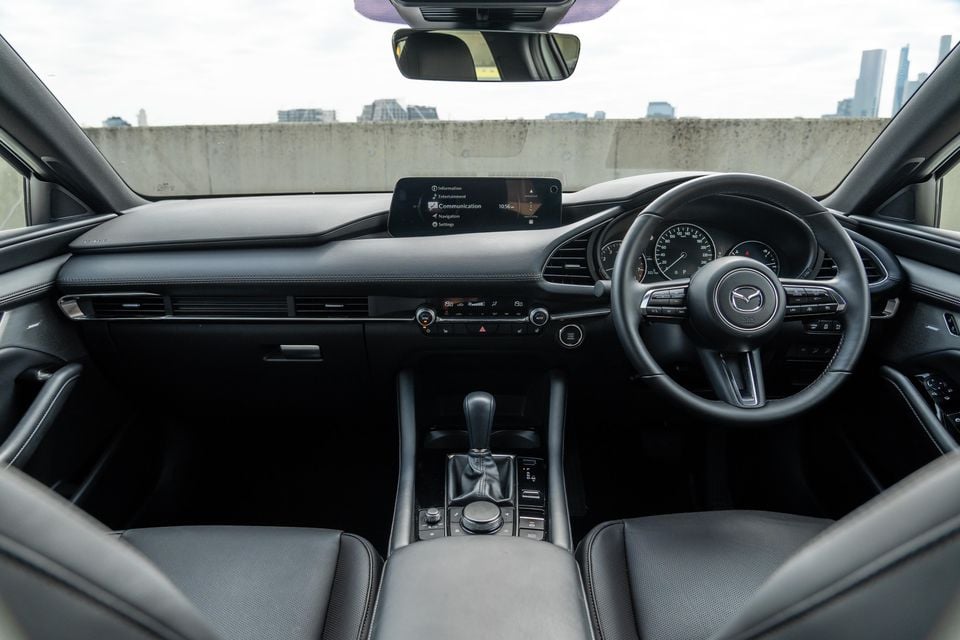
The cabin layout is logical (apart from the infotainment arrangement) and material choice is generally solid. All the key touchpoints – the steering wheel, seats, and gear selector – are nice to the touch, and most other surfaces are soft-touch in places that even higher-end brands often overlook.
Mazda has fitted extra padding to the sides of the centre console where your knees rest, and all armrests are generously plush. The only real downside is the slab of piano-black plastic on the centre console, which was already scratched in our low-mileage tester.
The low roofline, high dashboard, and black headliner contribute to a compact feel from the driver’s seat, but it’d be unfair to call the Mazda 3 cramped. Instead, the cosy feel adds to the premium vibe and echoes the car’s size once you’re on the move.
It won’t take long to notice how far away the infotainment system is on its perch atop the dashboard, however, nor will the fact that Mazda continues to rely on its centrally mounted rotary dial instead of touch.
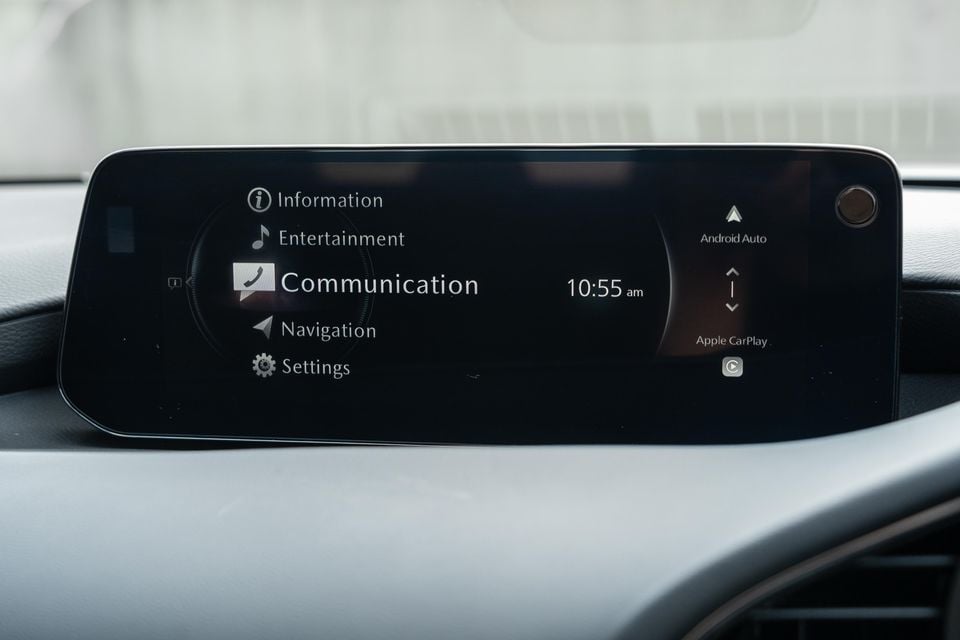
As has been the case in other Mazdas, I like this setup and find it convenient when I can’t be bothered to lift my arm to the screen, but even I can’t deny that it’s cumbersome when using either Apple CarPlay or Android Auto – both of which are wireless as standard.
Of course, touchscreen functionality is available, but the display’s placement means you’ll probably have to lean forward out of the seat to use it. That’s hardly ideal from both an ergonomic and safety standpoint.
The screen itself measures 10.25 inches and is the largest on offer across the Mazda 3 range. Its native graphics look the part, it’s fairly elegant in its simplicity, and it’s aided by sharp resolution and the absence of any observable lag to inputs. Even the connectivity niggles I’ve experienced in Mazda 3s previously appear to have been ironed out.
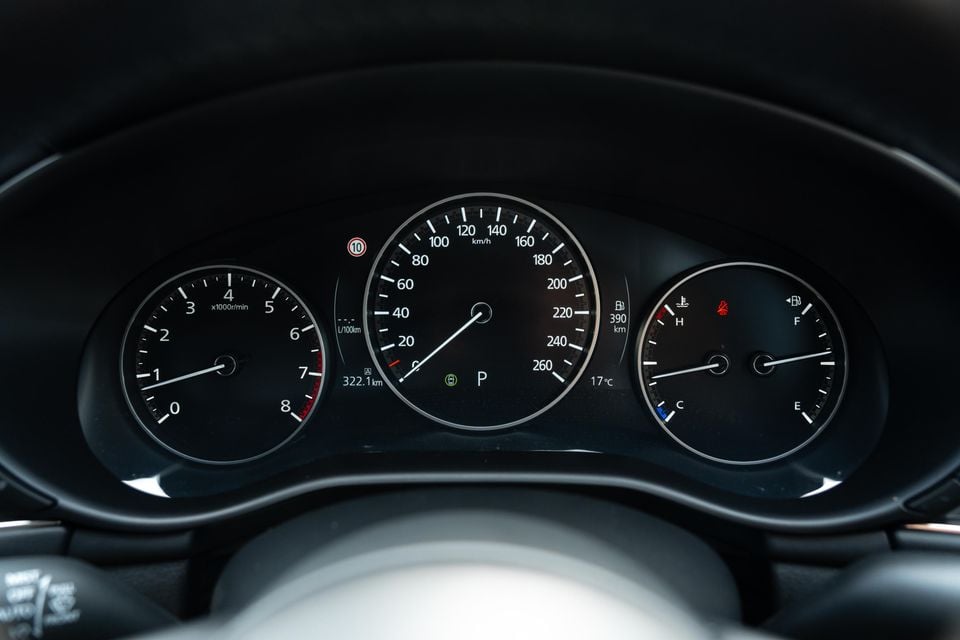
The only other screen you’ll find in here is part of the instrument cluster, where a central digital panel is flanked by two real gauge housings. You can flick through just a handful of displays on said panel, and I like that it’s a little different to what you get in most other new cars.
Beyond the screen arrangement, cabin ergonomics are generally strong. Everything falls to hand nicely, and it’s easy to settle in thanks to the wide range of powered adjustment from the supportive seats.
There are plenty of physical buttons fitted as standard, too. Most are on the centre console or climate panel, as mentioned, but there are also a fair few on the steering wheel, all of which are robust and clearly legible.
We find the tiller’s old-school thin rim and large diameter to be nice to hold, thanks to its narrow spokes and quality finish. Almost everything about this interior is just nice, and it’s an easy place to spend time.
Storage up front is also acceptable. The central storage box has a sliding lid so you can access the USB-C ports inside without fully opening it, while there are also two cupholders ahead of the gear selector and bottle holders in the door cards.
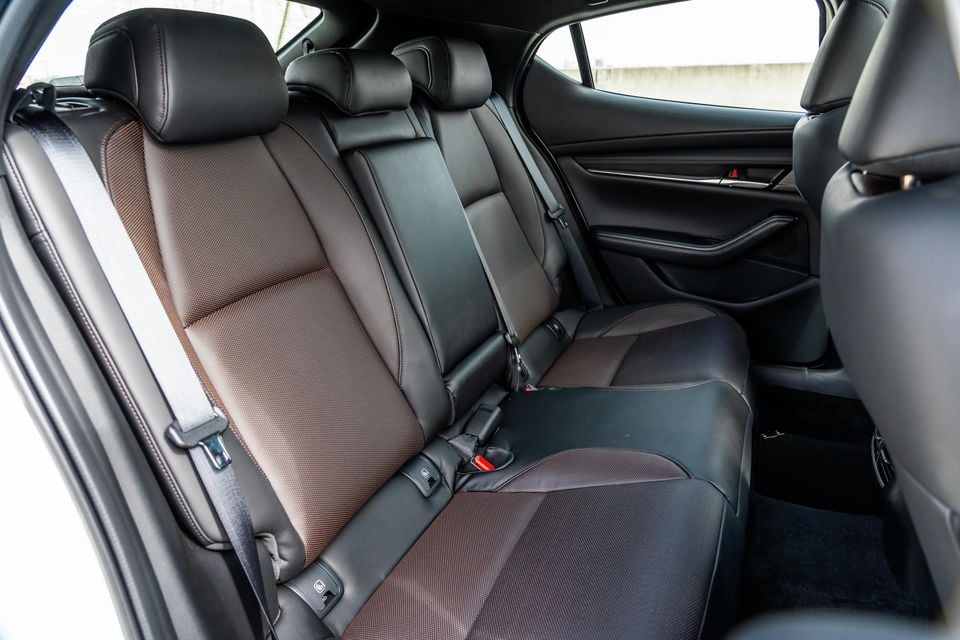
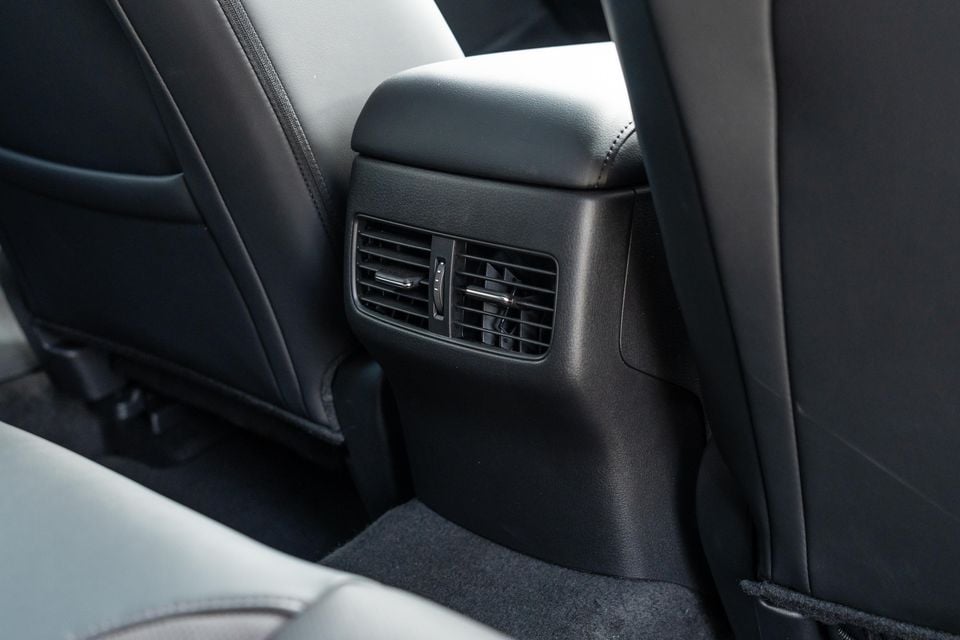
The Mazda 3’s rear doors open to nearly 90 degrees and there’s a decent amount of space when climbing in. The thick C-pillars, high beltline, and dark headliner make the second row feel quite closed-in, but not at all claustrophobic – in fact, it creates a feeling of privacy which aids the semi-luxury vibe.
At 173cm tall, I still had no problems with headroom or legroom, though taller people may feel a little more cramped. While it’s more spacious than the sedan, the hatchback’s roof does start to slope down at the rear and could limit headroom for taller folk.
There’s reasonable amount of toe room under the front seats, though the floor is split by a driveline hump. Dual air vents feature on the back of the centre console, but the only other amenities are a fold-down armrest and one seatback map pocket.
You get three top-tether and two ISOFIX anchor points for child seats as standard, along with small bottle holders in the doors.
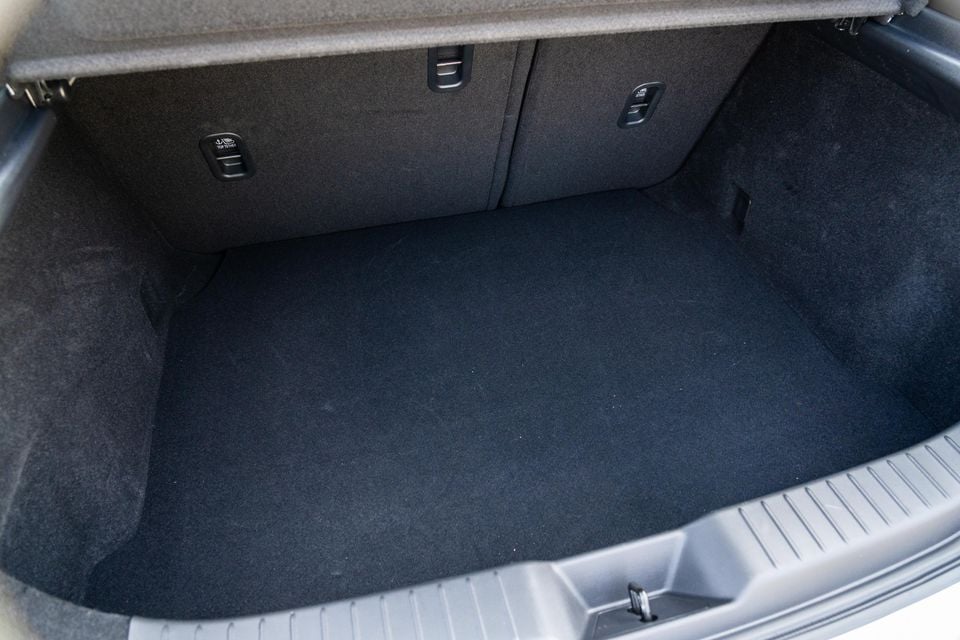
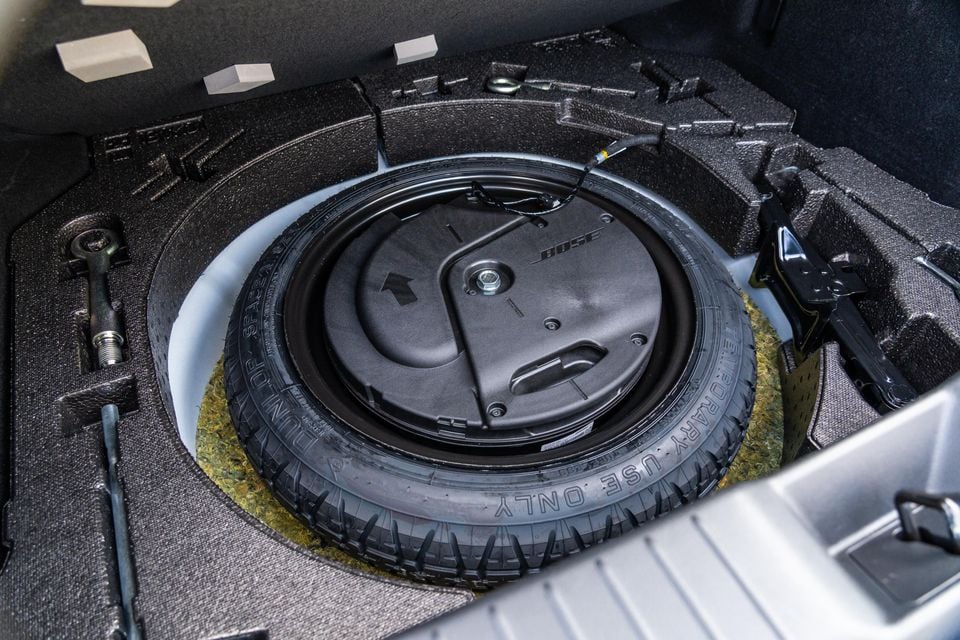
The Mazda 3 Hatch’s boot seems somewhat compromised compared to its rivals, at least on paper. Its opening looks an odd size too, because of the car’s peculiar rear-end proportions, and its 295 litres of quoted capacity is smaller than that of the Hyundai i30 (395L) and Kia K4 (438L) hatches.
In reality, it’s a practical size that’s easy to live with. The load floor sits quite low compared to the entry lip, and while that means you’ll have to lean over to place things carefully, it unlocks plenty of space for larger suitcases.
All that, and a space-saver spare is still included across the range.
| Dimensions | Mazda 3 Hatch |
|---|---|
| Length | 4460mm |
| Width | 1795mm |
| Height | 1435mm |
| Wheelbase | 2725mm |
| Cargo capacity | 295L |
To see how the Mazda 3 stacks up against the competition, use our comparison tool
What’s under the bonnet?
Powering the Mazda 3 G25 is a 2.5-litre non-turbo four-cylinder petrol engine, which produces 139kW of power and 252Nm of torque. Drive is sent to the front wheels via a six-speed automatic transmission.
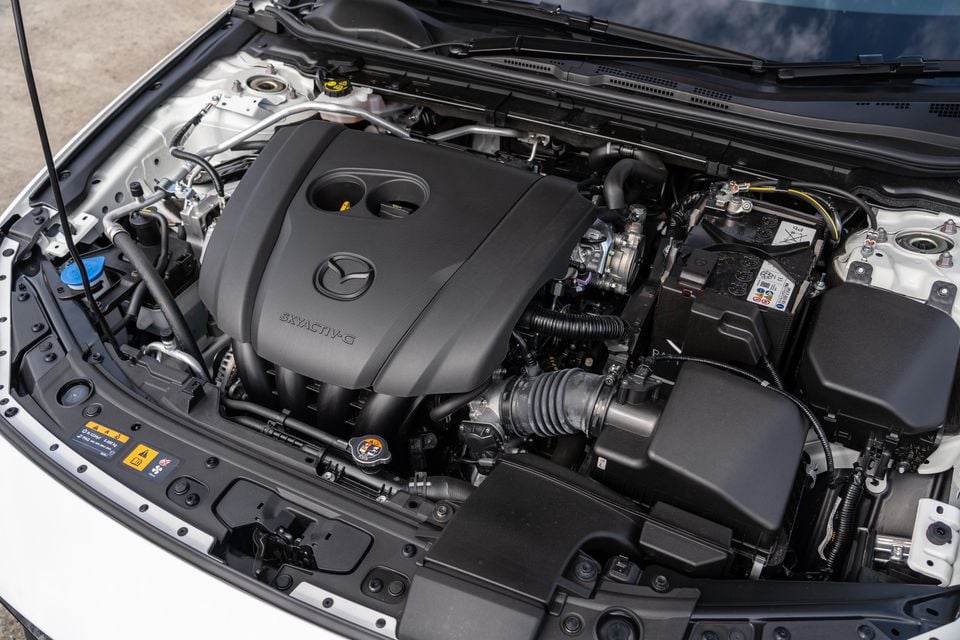
| Specifications | Mazda 3 G25 |
|---|---|
| Engine | 2.5L 4cyl non-turbo |
| Power | 139kW |
| Torque | 252Nm |
| Transmission | 6-speed auto |
| Drive type | Front-wheel drive |
| Kerb weight | 1429kg |
| Fuel economy (claimed) | 6.6L/100km |
| Fuel economy (as tested) | 6.8L/100km |
| Fuel tank capacity | 51L |
| Fuel requirement | 91-octane regular unleaded |
| CO2 emissions | 154g/km |
| Emissions standard | Euro 5 |
| Braked tow capacity | 1200kg |
G20 variants, meanwhile, are fitted with a 2.0-litre non-turbo four that produces 114kW and 200Nm. It retains the same six-speed auto and front-drive configuration.
Our week with the G25 involved highway commuting, city driving, and higher-speed country driving. That varied mix of conditions resulted in a recorded fuel economy that was nearly identical to Mazda’s claim.
To see how the Mazda 3 stacks up against the competition, use our comparison tool
How does the Mazda 3 drive?
The Mazda 3 backs up its plush interior with an undeniably sporty driving character, which is far more pronounced with the beefier 2.5-litre engine under the bonnet.
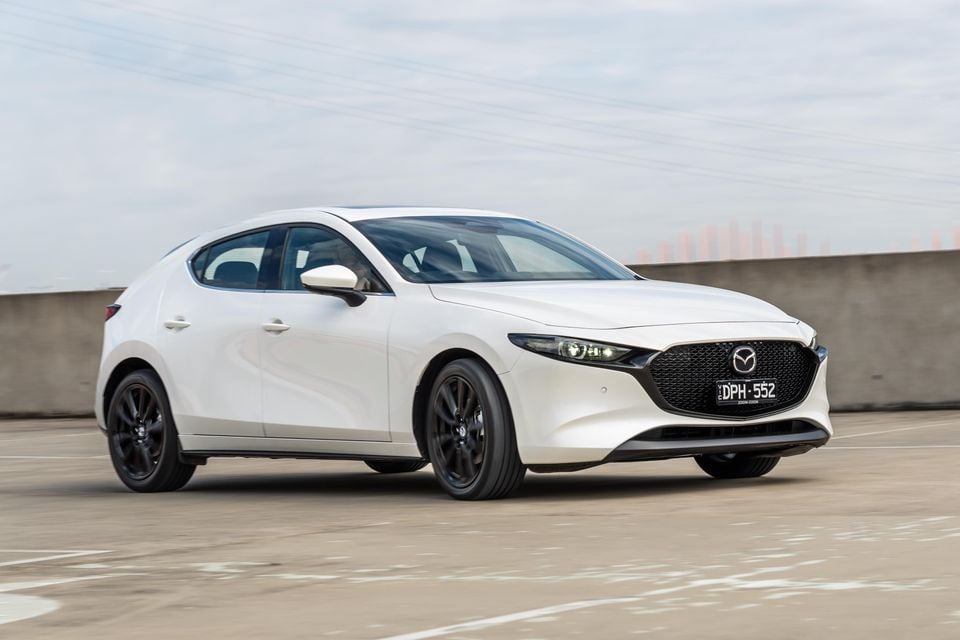
It’s by no means a powerhouse, but it offers a noticeable boost over the 2.0-litre alternative. It’ll still fire up into the same abrasive, high-RPM idle when cold, and it’s just as shouty when you lay into the throttle – the difference is that it has the performance to better justify the noise.
We can best describe it as the most appropriate powertrain for this application. It’s efficient enough not to break the bank (provided you don’t spend too much time in the city) and quick enough to keep you entertained without trying to set the world on fire.
Planting the loud pedal provides a decent push in the back, moving the car along at a pace that, put simply, just feels right. It provides all you need when it comes to making a quick overtake or getting yourself out of trouble, with a bonus being that the G25 doesn’t feel as strained as the G20.
If you like a spirited drive, the Mazda 3’s capabilities may surprise you. We often praise the Corolla for its commendable chassis engineering and the solid handling package that delivers, and there’s no reason why this Mazda shouldn’t be similarly applauded.
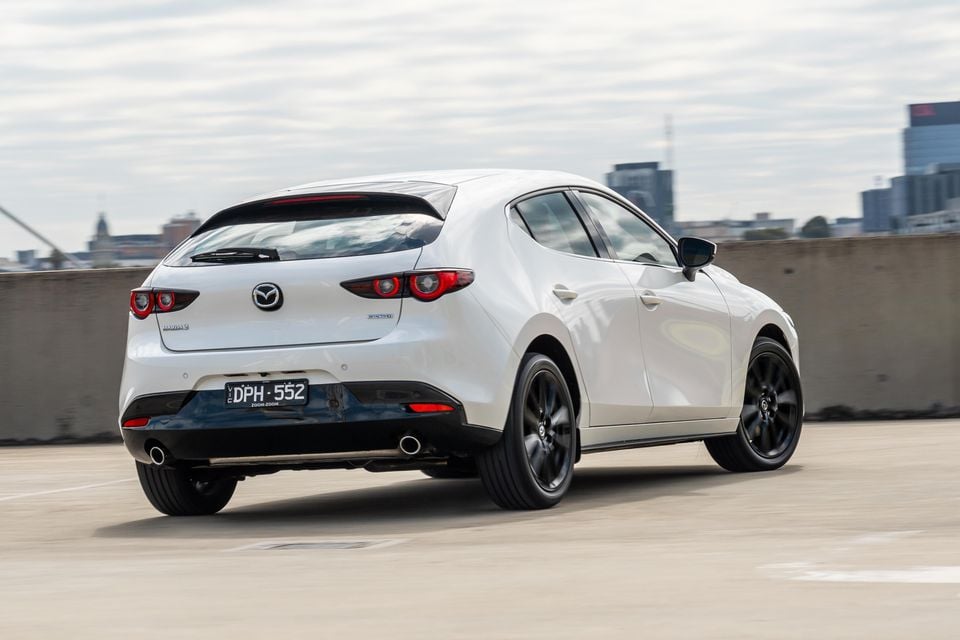
The speed at which the Mazda 3 can be thrown into corners is genuinely impressive, and we noticed complaints from the tyres far before the body showed any hint of wanting to tip over.
Combine that with the supportive seats and well-weighted steering and you have a hatch that’s more than capable of holding its own in the twisties. Mazda has clearly followed through on its sporty ‘Zoom-Zoom’ marketing here, but it’s a shame there’s no hotter version to realise the chassis’ full potential, as the GR Corolla does for its donor vehicle.
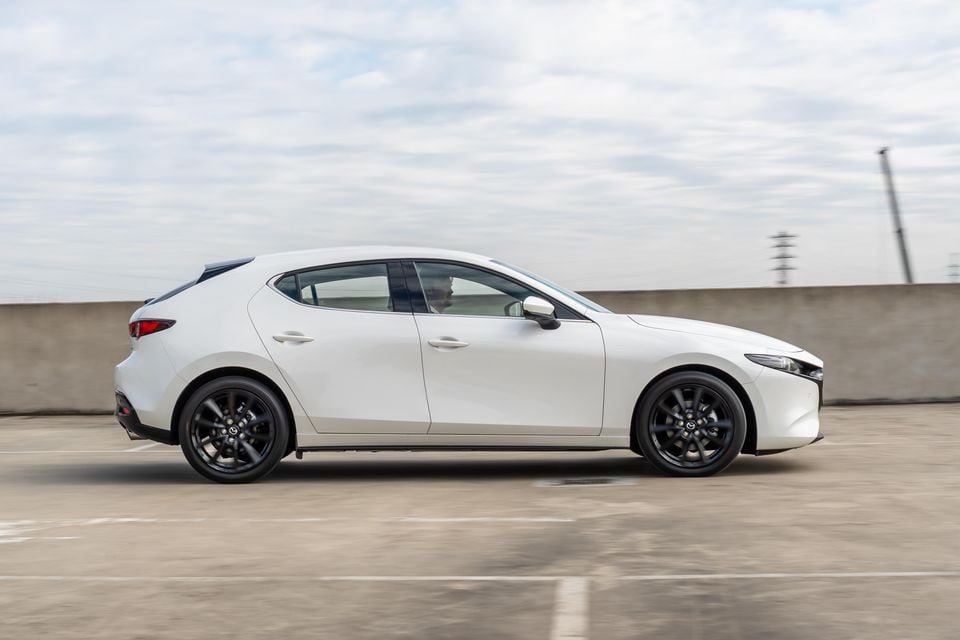
In normal driving, you’ll notice the suspension is on the firmer side. It’s not unbearably firm, but it’s certainly more taut than a K4 or a Corolla Hybrid – underlining its sporty intent.
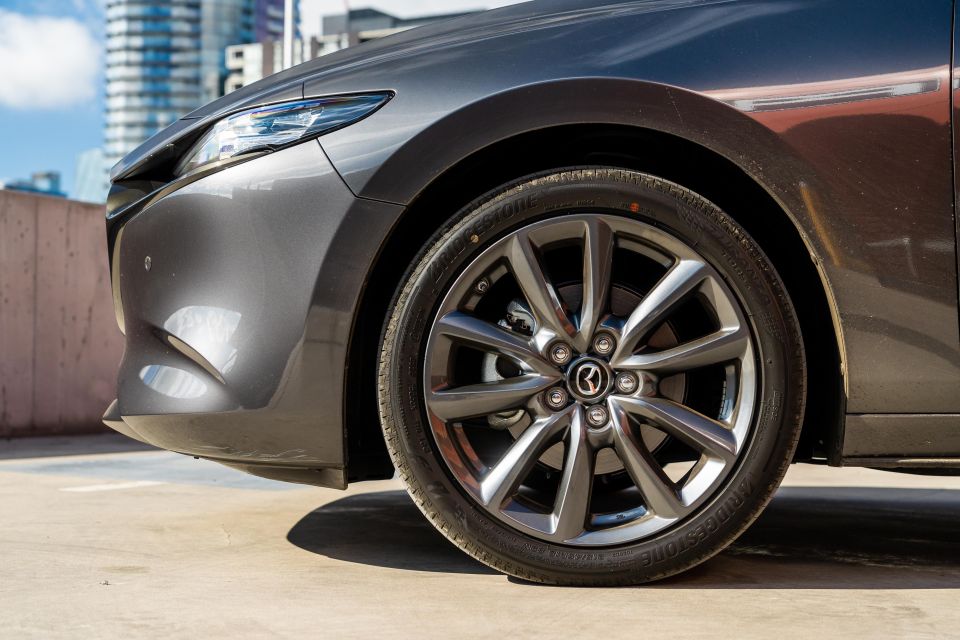
Road noise is also louder on the 18-inch tyres of our press car than on lower-end models but, once again, it’s still livable. That’s the recurring theme of the Mazda 3: it’s a hatch that’s easy to live with but has plenty in reserve if you ask for it.
There are downsides, though, and one of the most significant is the transmission. It lacks the polish we’d expect from a fairly traditional six-speed torque-converter auto and is instead characterised by rough shifts and some difficulty crawling in traffic.
It generally feels indecisive, as shifts can sometimes be delayed. The caveat here is that its default priority is efficiency and it therefore does its best to work with its longer ratios to keep the engine frugal, but it sharpens right up under high load or in Sport mode.
Exacerbating to the transmission’s lazy behaviour is the idle stop/start system, which can be a bit clunky. We found ourselves turning it off whenever we hit heavy traffic.
Another is small gripe is visibility, as the thick C-pillars create larger blind spots than you get in some rivals. All grades make up for this by including blind-spot monitoring as standard, but you may still feel a little closed-in when checking to see if you’re about to move into someone’s lane.
From expert reviews to the right deal
CarExpert brings together reviews, research tools and trusted buying support, guiding you from research to delivery with confidence.
Fortunately, that blind-spot system is just one part of a well-calibrated suite of safety gear. None of the 3’s driver-assistance gear annoyed us during our week with the car, which made it very easy to hop in and drive without any further thought.
When there is a beep or a bong, it’s easy to tell what the car is upset about. For instance, the blind-spot monitoring system will conveniently show if there’s something alongside you via the head-up display, giving the driver a clear picture of their surroundings.
Additionally, the adaptive cruise system is reliable and competent when adapting to traffic and following lanes, while the passive lane-keeping and driver attention monitoring systems only pipe up if there’s a legitimate issue.
The Astina’s cherry on top is a punchy, well-balanced audio system, which sounds great at all volumes and has no issue cutting through the road and engine noise.
To see how the Mazda 3 stacks up against the competition, use our comparison tool
What do you get?
The Mazda 3 is available in six trim levels locally, with Astina at the top.
2026 Mazda 3 G20 Pure equipment highlights:
- 16-inch silver alloy wheels
- Automatic LED headlights
- Automatic high-beam
- Power exterior mirrors – auto folding
- Leather-wrapped gear shifter, steering wheel
- Black cloth upholstery
- 7.0-inch instrument cluster screen
- 8.8-inch Mazda Connect display
- Wired Apple CarPlay, Android Auto
- 8-speaker audio
- DAB+ digital radio
- Satellite navigation
- USB-C input and charging port
- Mazda Connected Services
- MyMazda app compatibility
- Vehicle locator
- Geofencing function
- Flash lights
- Curfew notifications
- Remote locking
- Vehicle health report
- Vehicle status report
- Vehicle tracking assistance
- SOS call
- Keyless start
- Air-conditioning
G20 Evolve adds:
- 18-inch metallic grey alloy wheels
- Auto-dimming interior rear-view mirror
- Paddle shifters
- Rear centre fold-down armrest
- Overhead sunglasses storage box
- Wireless Apple CarPlay
- Wireless Android Auto
- Wireless phone charger
- Dual-zone climate control
- Rear air vents
G20 Touring adds:
- Driver mirror – auto dimming
- Exterior mirrors – heating function
- Exterior mirrors – reverse tilt-down function
- Exterior mirrors – position memory
- Black leather upholstery
- 10-way power driver seat incl. lumbar, memory
- Vanity mirrors with illumination
- Vision Pack
- Surround-view camera
- 10.25-inch Mazda Connect display
- Cruising & Traffic Support
- Driver monitoring
- Front cross-traffic alert
- Keyless entry
G25 Evolve SP adds (over G20 Evolve):
- 18-inch metallic black alloy wheels
- Driver mirror – auto dimming
- Exterior mirrors – reverse tilt-down function
- Exterior mirrors – position memory
- Exterior mirrors in black
- 10-way power driver seat incl. lumbar, memory
- Keyless entry
G25 GT adds (over G25 Evolve SP):
- 18-inch metallic grey alloy wheels
- Heated side mirrors
- Heated front seats
- Heated steering wheel
- Black leather upholstery
G25 Astina adds:
- 18-inch gloss black alloy wheels
- 12-speaker Bose sound system
- Power sunroof
- Optional burgundy leather upholstery
To see how the Mazda 3 stacks up against the competition, use our comparison tool
Is the Mazda 3 safe?
The Mazda 3’s five-star ANCAP safety rating from 2019 has now expired, which means 2026 models are currently unrated.
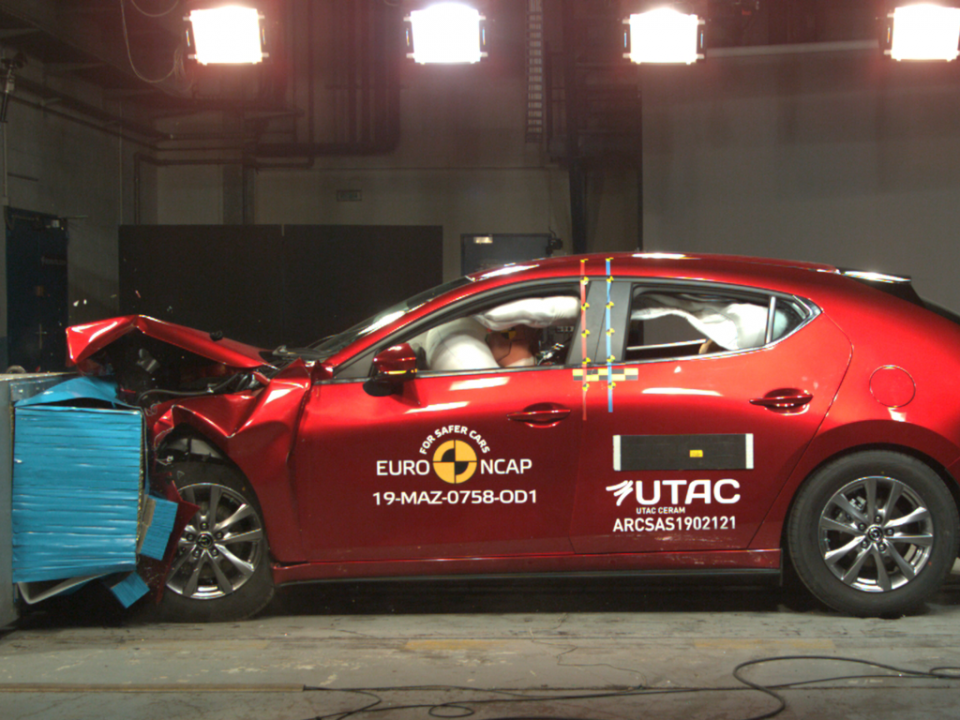
Standard safety features include:
- 7 airbags, incl:
- Front
- Front-side
- Curtain
- Driver’s knee
- Adaptive cruise control with stop/go
- Autonomous emergency braking (forward, reverse)
- Blind-spot monitoring
- Lane departure warning
- Lane-keep assist
- Rear cross-traffic alert
- Rear parking sensors
- Reversing camera
- SOS emergency call
- Traffic sign recognition
- Tyre pressure monitoring
Vision Package* adds:
- Cruising & Traffic Support
- Driver monitoring
- Front cross-traffic alert
- Front parking sensors
- Surround-view camera
* $2000 on G20 Pure, G20 Evolve
To see how the Mazda 3 stacks up against the competition, use our comparison tool
How much does the Mazda 3 cost to run?
Mazda Australia backs its range with a five-year, unlimited-kilometre warranty. Servicing for the Mazda 3 is required every 12 months or 15,000km, whichever comes first.
| Servicing and Warranty | Mazda 3 G25 |
|---|---|
| Warranty | 5 years, unlimited kilometres |
| Roadside assistance | 5 years |
| Service intervals | 12 months or 15,000km |
| Capped-price servicing | 7 years |
| Average annual service cost | $471.14 |
| Total capped-price service cost | $3298 |
Mazda’s individual service costs are detailed below:
| Service | Price |
|---|---|
| 12 months, 15,000km | $362 |
| 24 months, 30,000km | $566 |
| 36 months, 45,000km | $438 |
| 48 months, 60,000km | $566 |
| 60 months, 75,000km | $362 |
| 72 months, 90,000km | $642 |
| 84 months, 105,000km | $362 |
As for rivals, seven years of servicing for the Kia K4 costs $3877 for variants fitted with the 1.6-litre turbocharged engine, while naturally aspirated 2.0-litre vehicles are cheaper to maintain at $3407. Servicing for the non-N Hyundai i30 hatch is cheaper still at $3177 over seven years.
Toyota details five years of capped-price servicing for the Corolla Hybrid, which costs $1325 in total.
To see how the Mazda 3 stacks up against the competition, use our comparison tool
CarExpert’s Take on the Mazda 3 G25 Astina Hatch
The Mazda 3 remains a sensible choice, and it’s arguably at its best with the 2.5-litre engine under the bonnet.
While the 2.0-litre is solid, the G25 delivers that little extra kick that the smaller engine lacks. That allows the chassis to shine; its commendable handling prowess is easier to exploit when you have a powerplant that can get you up to speed confidently.
Then there’s the premium interior and well-calibrated safety gear, all of which makes this car a simple but fun daily driver. That said, maintenance and running costs are higher than those of many rivals, the latter mostly due to the higher-displacement engine and the lack of hybrid tech.
The transmission and idle stop/start system could also do with some fine-tuning, as they’re the only real flaws on an otherwise enjoyable driving experience.
As ever, the top-spec Astina is nice, but if you can live without the Bose sound system and sunroof, you’ll probably be better off saving a few grand and going for Evolve SP or GT – both of which maintain the peppier G25 mill.
CarExpert can save you thousands on a new Mazda 3. Click here to get a great deal.
Click the images for the full gallery